


The landscape of corporate governance and reputation management is undergoing a fundamental transformation as global organizations face an era of unprecedented volatility. According to the Deloitte 2026 Corporate Affairs Report, which synthesized insights from extensive interviews with corporate affairs (CA) leaders—primarily representing the FTSE 100—there is a decisive shift in how companies prioritize their strategic resources. The data indicates that traditional pillars of communications, such as media relations and purpose-driven social campaigning, are being de-emphasized in favor of change management, geopolitical acumen, and rigorous business impact measurement. As the corporate world moves toward the end of the decade, the corporate affairs function is being redefined not merely as a communications department, but as a critical early-warning system and a driver of organizational resilience.
The Dominance of Change as a Strategic Threat
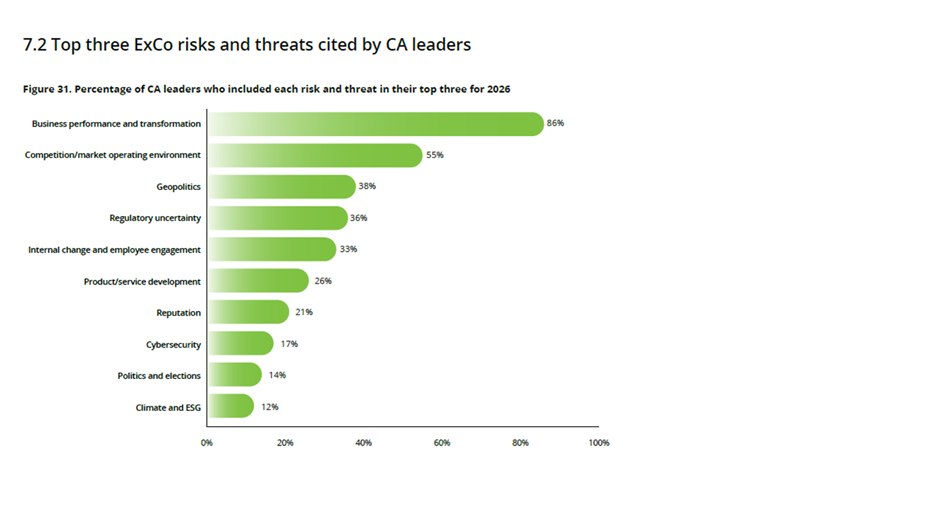
One of the most striking revelations in the Deloitte data is the overwhelming consensus on the primary threat facing modern organizations. A significant 86% of corporate affairs leaders identified business performance and organizational change as the greatest risk to their companies. This category far outpaced other traditional concerns, such as market competition or even direct geopolitical conflict. The “change” cited by these leaders is multifaceted, encompassing the internal upheaval caused by digital transformation, the integration of generative artificial intelligence, and the structural shifts required to remain competitive in a low-growth global economy.
The intensity of this concern reflects a world where the pace of change has arguably exceeded the human and organizational capacity to adapt. Corporate affairs leaders are increasingly tasked with managing the “reputation of the transition.” When a company pivots its business model or undergoes a massive restructuring, the risk is not just financial; it is a risk of losing the trust of shareholders, employees, and regulators simultaneously. To mitigate this, CA functions are moving away from reactive crisis management toward proactive change leadership, utilizing crisis playbooks and contingency plans that assume a state of permanent volatility rather than occasional disruption.

The Evolution of Corporate Affairs: A Five-Year Chronology
To understand the current state of the discipline, it is necessary to view the evolution of the corporate affairs role over the first half of the 2020s. This period has been marked by a series of “macro-shocks” that have forced the function to mature rapidly.
- 2020–2022: The Crisis Management Era. Triggered by the global pandemic and the initial invasion of Ukraine, corporate affairs focused heavily on internal communications, employee safety, and immediate supply chain transparency. Reputation management was largely defensive.
- 2023–2024: The Purpose and ESG Peak. During this window, organizations leaned heavily into Environmental, Social, and Governance (ESG) commitments. Corporate affairs leaders were the primary architects of “purpose-led” narratives, often engaging in social issues campaigning as a means of building brand equity.
- 2025–2026: The Realignment toward Pragmatism. The current era, as highlighted by the Deloitte report, shows a cooling of social campaigning. In its place is a focus on “geopolitical experience” and “measurement rigor.” The focus has shifted from what a company says it believes to how a company performs and survives in a fractured global market.
This chronology demonstrates a move from the idealistic to the operational. As one leader noted in the report, the “polycrisis” environment has made it impossible to maintain a focus on every social issue; instead, companies are narrowing their focus to the geopolitical and economic factors that directly impact their license to operate.
Internal Culture and the Concept of the “Delivery Multiplier”
While external reputation remains the top priority for 26% of respondents, the second most cited priority—internal culture and employee experience—marks a significant shift in corporate strategy. In previous decades, internal communications was often viewed as a secondary function compared to external media relations. In 2026, however, corporate affairs leaders view employee belief as a “delivery multiplier.”
This shift is rooted in the realization that organizational transformation—whether it involves adopting AI or entering new markets—fails without the buy-in of the workforce. The Deloitte report highlights the risk of “change fatigue,” where constant restructuring leads to a decline in productivity and a subsequent erosion of customer service quality. When employees lose faith in the corporate mission, the internal rot eventually manifests as an external reputational crisis. Consequently, CA leaders are now deeply involved in human resources and operational strategy, ensuring that the internal narrative aligns with the external promise.

The AI Readiness Paradox: Upskilling vs. Governance
Artificial Intelligence presents a unique paradox for corporate affairs. Despite the global discourse surrounding AI’s transformative potential, only 11% of CA leaders ranked AI among their top strategic priorities for 2026. Furthermore, only 26% of organizations reported having a formal, comprehensive AI policy in place. The report notes that many leaders are still in the “experimenting” or “playing” phase, suggesting a lack of maturity in how the technology is being integrated into the corporate affairs toolkit.
However, there is an acute awareness of the skills gap. An overwhelming 95% of respondents identified “upskilling” as their primary focus regarding AI over the next 12 months. This suggests that while CA leaders may not yet have the governance structures in place, they recognize that their teams must become “AI-literate” to manage the reputational risks and opportunities the technology presents. The focus is shifting from using AI as a simple productivity tool for writing press releases to using it for sophisticated sentiment analysis, predictive modeling of reputational risks, and stakeholder mapping.
The Decline of Traditional Media and the Rise of Owned Channels
The Deloitte data confirms a trend that has been simmering for years: the declining importance of traditional media relations within the corporate affairs function. In the past, the success of a CA leader was often measured by the volume of positive coverage in top-tier financial publications. Today, that metric is losing its luster.
While media relations are being de-emphasized, there is a surge in investment in “owned media” and direct-to-stakeholder platforms, such as corporate podcasts and long-form thought leadership on platforms like LinkedIn. This shift allows organizations to bypass the traditional media “filter” and communicate directly with investors, employees, and regulators. This trend is particularly pronounced in the corporate affairs space, where the nuance of a policy position or a complex business transition is often lost in a 30-second news clip or a short-form digital article. By controlling the medium, CA leaders can maintain the integrity of their messaging in an increasingly fragmented information environment.

Proving Impact: The New Executive Mandate
Perhaps the most significant change for corporate affairs is its growing presence at the highest levels of corporate leadership. The survey found that 64% of corporate affairs heads now sit on their organization’s executive committee. This “seat at the table” brings with it a new level of accountability.
CEOs are no longer satisfied with “good counsel” or vague metrics like “brand sentiment.” The modern mandate for corporate affairs is to prove tangible business impact. This requires a level of measurement rigor that was previously the domain of finance or marketing departments. CA leaders are now expected to demonstrate how reputational capital correlates with stock price, how internal communications reduce employee turnover costs, and how government relations efforts have successfully mitigated the financial impact of new regulations. One CEO quoted in the report summarized the sentiment: “The ability to interpret complexity and distill it for the leadership team is where CA earns its seat.”
Analysis of Implications: The Rise of the “Corporate Diplomat”
The findings of the Deloitte 2026 report suggest the emergence of a new professional archetype: the Corporate Diplomat. This individual is no longer just a spokesperson but a strategic advisor who understands the intersection of global politics, technology, and organizational psychology.
The implications for the future of the discipline are clear. First, the “siloed” model of communications is dead. Corporate affairs must be integrated into every facet of the business, from R&D to human resources. Second, the reliance on “purpose” as a shield for reputation is fading. In a more cynical and polarized world, stakeholders are looking for competence and consistency over lofty social goals.
Finally, the focus on geopolitics suggests that the “global” corporation is being replaced by the “geopolitically aware” corporation. As trade barriers rise and regional conflicts disrupt supply chains, the corporate affairs function will be the primary navigator of these stormy waters. The organizations that thrive in the coming years will be those that view reputation not as a veneer to be applied by a PR team, but as a core business asset that is built through disciplined change management, employee alignment, and an sophisticated understanding of a rapidly changing world.









