Automated drip campaigns have emerged as a pivotal force in e-commerce, transforming the landscape of customer engagement from sporadic interactions to meticulously planned, highly effective revenue streams. Moving beyond the limitations of one-off email blasts, these automated sequences deliver pertinent messages precisely when they matter most, effectively converting customer actions into sustained financial growth. This strategic shift is underscored by compelling industry data: a 2026 e-commerce marketing report by Omnisend revealed that automated messages, despite constituting merely 2% of all email sends in 2025, were responsible for a remarkable 30% of total email revenue. Furthermore, these automated communications generated an astounding 16 times more revenue per send compared to their one-off counterparts, illustrating their disproportionate impact on profitability.
While traditional promotional campaigns demand constant manual effort and iterative creation, well-orchestrated automated drip campaigns are designed for longevity, generating revenue consistently long after their initial setup. This guide delves into the fundamental definition of drip campaigns, elucidates their efficacy, explores various types, showcases real-world brand examples, provides practical templates, and outlines a comprehensive setup methodology. The overarching goal is to equip e-commerce businesses with the knowledge to leverage these powerful tools for enhanced customer lifecycle management and significant revenue uplift.
Understanding the Mechanics of a Drip Campaign
At its core, a drip campaign is a meticulously planned sequence of automated emails dispatched in a predetermined order, activated by a subscriber’s specific action or a predefined schedule. This represents the simplest yet most potent definition of a drip campaign. Marketers may interchangeably refer to them as drip marketing campaigns or drip email campaigns, but the underlying mechanics remain consistent: a single setup ensures autonomous operation for every qualified individual. When questioned about the nature of an “email drip campaign,” the answer is straightforward—it is a drip campaign executed exclusively via email, with each message serving as a distinct step within an automated sequence.
The operational framework of each drip campaign revolves around a specific trigger and a series of timed delays. The trigger initiates the sequence—be it a new subscriber signup, an abandoned shopping cart, or a customer’s inaugural purchase. The subsequent delays meticulously control the intervals between successive messages. Each email within the sequence is assigned a singular, strategic objective: to welcome, remind, educate, or facilitate the next transaction. For instance, in a practical scenario, a new subscriber might receive Email 1 immediately upon signup, Email 2 three days later, and Email 3 a week subsequent to that, all automatically and based on the initial, one-time configuration. This structured approach ensures a consistent and relevant communication flow tailored to the customer’s journey.
Drip Campaign vs. Broadcast Email: A Fundamental Distinction
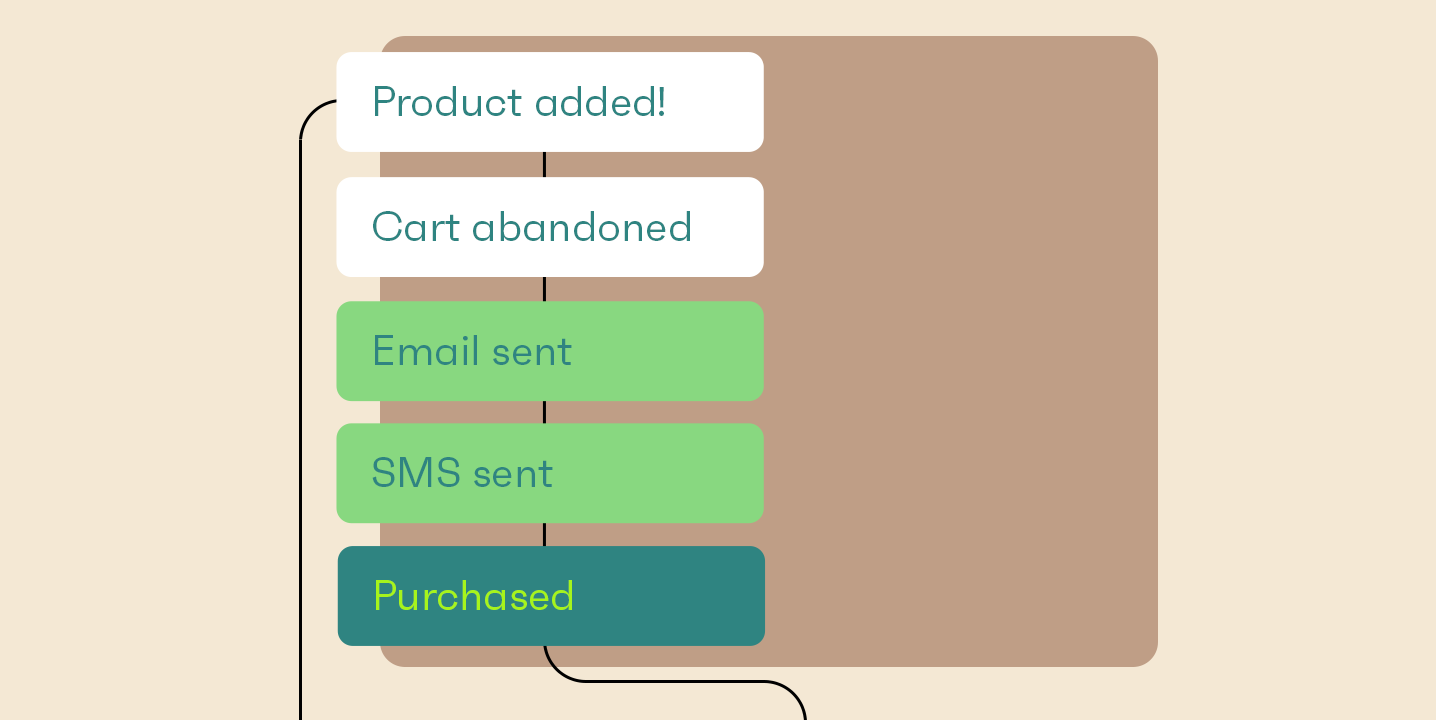
To fully appreciate the strategic value of drip campaigns, it is crucial to differentiate them from broadcast emails. A broadcast email is a singular message disseminated simultaneously to an entire mailing list—such as a general newsletter or a company-wide sale announcement that all recipients view on the same day. In stark contrast, a drip campaign operates on an individualized basis. It reaches one subscriber at a time, with each message triggered by their unique position within their customer journey. This inherent relevance allows the message to resonate effectively long after its initial creation and setup, offering a tailored experience that broad communications cannot replicate.
| Comparison Point | Drip Campaign | Broadcast Email |
|---|---|---|
| Send Trigger | A subscriber’s specific action or set schedule | Manual selection of date and time by marketer |
| Timing | Matched to each subscriber’s unique journey | Identical moment for all recipients |
| Personalization | High – based on individual behavior and stage | Low – one general message for the entire list |
| Purpose | Nurture, convert, and retain over time | Announce immediate promotions or updates |
The Compelling Rationale for Adopting Drip Campaigns
Drip campaigns unequivocally earn their prominent position in modern marketing strategies due to their unparalleled ability to deliver sustained returns on a single investment of effort. Four primary benefits underscore their critical importance for initial setup:
- Automated Personalization at Scale: Drip campaigns empower businesses to deliver highly personalized content to individual customers based on their specific actions and stage in the buying cycle. This level of personalization, traditionally labor-intensive, becomes automated and scalable, fostering stronger customer relationships and increasing engagement.
- Increased Relevance and Timeliness: By triggering messages based on customer behavior (e.g., browsing a product, abandoning a cart), drip campaigns ensure that communication is always timely and relevant. This contextually appropriate messaging significantly boosts open rates, click-through rates, and conversion rates, as customers receive information that directly addresses their current needs or interests.
- Efficiency and Resource Optimization: Once configured, drip campaigns operate autonomously, requiring minimal ongoing manual intervention. This “set it and forget it” nature frees up marketing teams from repetitive tasks, allowing them to allocate resources to more strategic initiatives, content creation, and overall campaign optimization.
- Enhanced Customer Lifecycle Management: Drip campaigns facilitate a structured approach to guiding customers through their entire journey—from initial awareness and onboarding to conversion, retention, and re-engagement. This continuous nurturing process maximizes customer lifetime value (CLTV) by ensuring consistent communication and preventing customer churn.
Cumulatively, these advantages position drip campaigns as one of the highest-return tools available in the e-commerce arsenal. Across integrated channels such as email, SMS, and push notifications, Omnisend merchants consistently report generating an average of $79 for every $1 invested, a testament to the potent efficiency and profitability of automated multi-channel communication strategies.
Diverse Applications: Types of Drip Campaigns
The versatility of drip campaigns is evident in their ability to be triggered by nearly any subscriber action or lifecycle stage. E-commerce brands predominantly rely on eight key types, each meticulously designed to fulfill a specific strategic objective:
- Welcome Series: Triggered the instant a new subscriber joins a mailing list, a welcome series serves as the foundational introduction to the brand. It establishes expectations, showcases brand values, and gently encourages the inaugural purchase. The initial email typically expresses gratitude and delivers any promised signup incentive. Subsequent messages often delve into the brand’s unique story, highlight best-selling products, and articulate compelling reasons to choose the brand.
- Abandoned Cart: Activated when a shopper adds items to their cart but fails to complete the checkout process, this critical drip campaign is designed to recover revenue that is on the verge of being lost. The first email typically reminds the shopper of the items left behind, often within an hour of abandonment. Follow-up messages strategically incorporate customer reviews, provide detailed shipping information, or offer a modest incentive to overcome lingering hesitation and finalize the purchase.
- Order Confirmation: An often-overlooked yet highly impactful type, this drip is triggered immediately following a purchase. Beyond simply confirming transaction details, it serves to reassure the buyer and strategically pave the way for future orders. The initial email verifies order specifics and provides tracking information. Subsequent communications can effectively cross-sell related products or invite the customer to leave a review while their purchase excitement is still high.
- Re-engagement (Winback) Series: Initiated by a period of subscriber inactivity, a re-engagement drip targets dormant customers before they are permanently lost. The first email aims to rekindle interest by reminding them of the value that initially prompted their subscription. Later messages may escalate the offer with a more compelling incentive or highlight new product releases, serving as a final persuasive effort before list segmentation for inactive contacts.
- Onboarding Series: Launched after a signup or first purchase, an onboarding drip is crucial for helping customers derive maximum value from their acquisition. The initial email guides them toward a quick win or a critical setup step. Subsequent messages introduce core features, offer usage tips, and help establish habits that foster repeat purchases and long-term customer loyalty.
- Lead Nurturing: Triggered when an individual expresses interest but has not yet made a purchase, a lead nurturing drip focuses on building a relationship through helpful, low-pressure content. The first email delivers genuinely useful resources, such as a guide or an expert tip. Subsequent emails gradually introduce social proof and clear value propositions to gently guide the lead toward the next stage of the buying journey.
- Birthday and Milestone Emails: Activated by a specific date recorded in the subscriber’s profile, these drips celebrate personal milestones such as a birthday, a signup anniversary, or a loyalty program achievement. The initial email extends warm wishes, often accompanied by a small reward or exclusive discount, which significantly boosts engagement and provides a timely impetus for customers to revisit the store.
- Educational Series: Triggered by a signup or a demonstrated interest in a particular topic, an educational drip is designed to teach subscribers how to maximize the utility or enjoyment of products. The first email shares practical “how-to” advice or addresses a common customer query. Later messages build expertise and reinforce trust, ultimately leading to informed purchase decisions.
Empirical Evidence: Drip Campaign Success Stories
Real-world applications powerfully demonstrate the efficacy of high-performing drip campaigns. Case studies from Omnisend customers offer tangible evidence of the revenue-generating potential of these automated sequences.
-
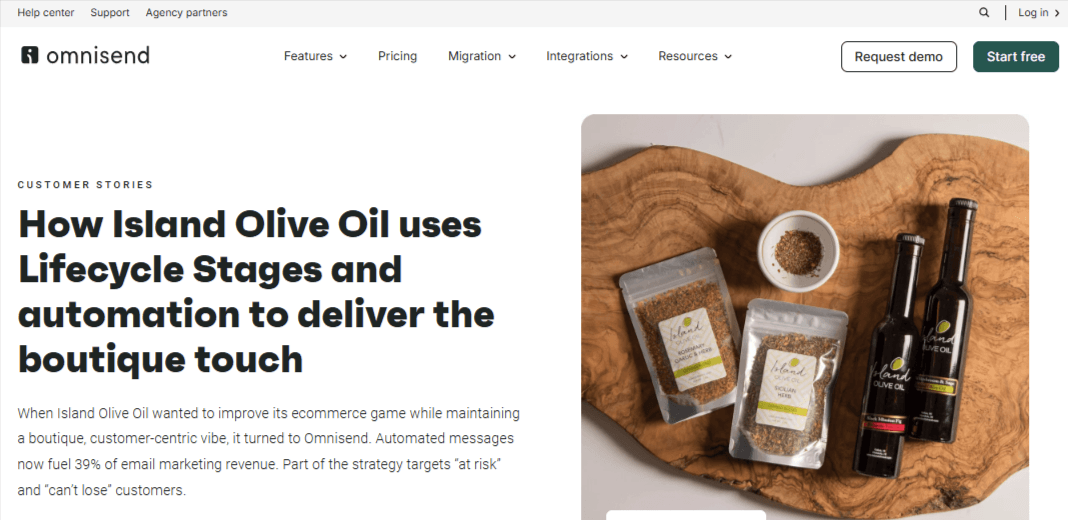
Island Olive Oil’s Welcome Series: This brand crafted a customer-centric welcome series that prioritized a boutique experience over an aggressive sales pitch. Instead of pushing for an immediate purchase, the series integrated educational content, product introductions, and brand storytelling, mirroring the personalized in-store experience. The results were extraordinary: a 998% higher click rate and 3,274% greater revenue per email compared to promotional campaigns, coupled with an 11% conversion rate. Most notably, this welcome series generated 39% of the company’s total email revenue from a mere 1.22% of its email sends, starkly illustrating the disproportionate return a well-constructed drip campaign can deliver.
- Email 1 (Immediately): Warm welcome + signup incentive. CTA: Shop the collection.
- Email 2 (Day 3): Brand story + product differentiation. CTA: Learn the story.
- Email 3 (Day 7): Bestsellers + social proof. CTA: Browse bestsellers.
-
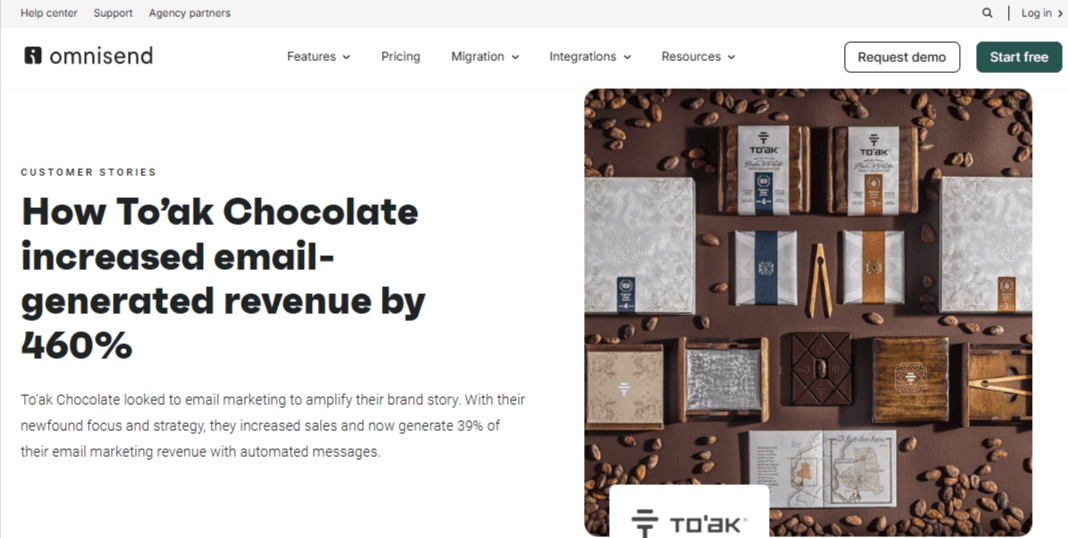
To’ak Chocolate’s Abandoned Cart Recovery: Recognizing that a single reminder was insufficient for its luxury audience, To’ak Chocolate developed a multi-message abandoned cart series. This sequence incorporated detailed shipping information, compelling customer reviews, and even chocolate pairing suggestions to reignite desire. This additional context transformed a standard recovery email into an immersive brand experience. The series achieved a 43.9% open rate, an impressive 44% conversion rate, and a revenue per email (RPE) of $3.64—an astounding 2,195% higher than the brand’s general promotional campaigns. This strategy effectively recovered lost revenue while simultaneously deepening customer relationships, particularly vital for a premium brand where follow-up communications justify pricing and reinforce brand narrative.
- Email 1 (1 hour): Friendly reminder of items left. CTA: Return to cart.
- Email 2 (24 hours): Reviews + shipping reassurance. CTA: See why buyers love it.
- Email 3 (72 hours): Pairing ideas / gentle incentive. CTA: Complete your order.
-
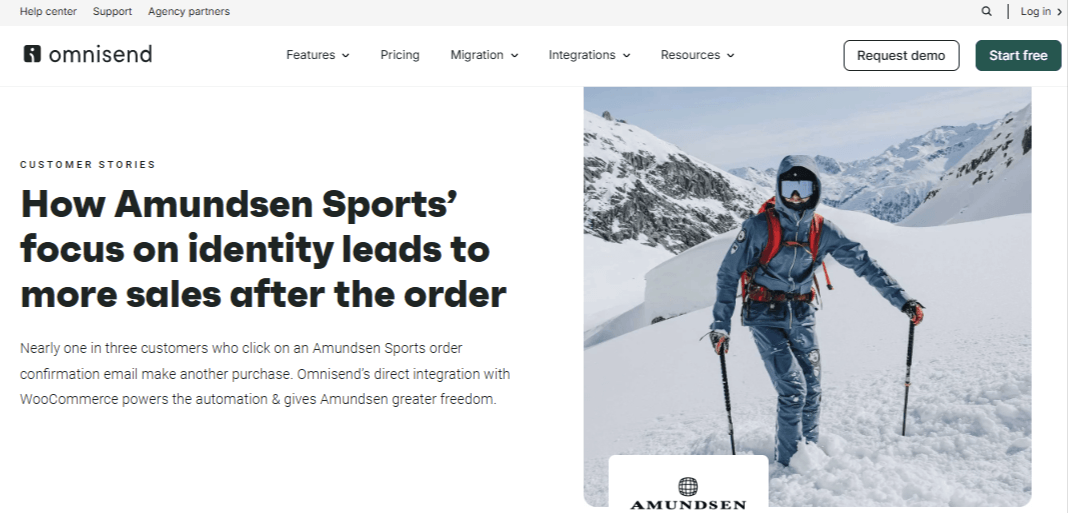
Amundsen Sports’ Order Confirmation Strategy: The order confirmation workflow is consistently one of the most frequently opened emails in e-commerce. Amundsen Sports, an outdoor apparel brand, masterfully capitalized on this attention to generate additional revenue. Leveraging Omnisend’s customization tools, they maintained a clean, brand-focused email design. The payoff was remarkable: despite accounting for only 2.4% of Amundsen’s email sends, the order confirmation email generated 16.7% of its Omnisend-attributed yearly revenue. Nearly one in three customers who clicked this email made another purchase—a 32% conversion rate—and the RPE was 9.5 times higher than their promotional emails. Amundsen attributed this success to simplicity: a clean, on-brand design that encourages customers to revisit the site without distracting them with excessive offers.
- Email 1 (Immediately): Clear order confirmation + details. CTA: Track your order.
- Email 2 (Day 3): Helpful product/care tips. CTA: Explore related gear.
- Email 3 (Day 10): Invitation to review/reorder. CTA: Leave a review.
-
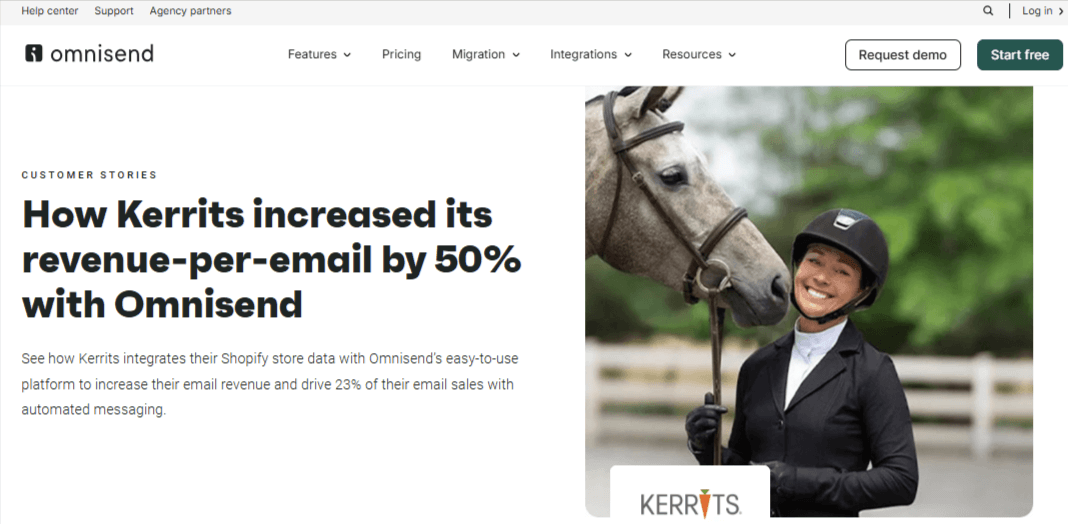
Kerrits’ Re-engagement Initiative: Equestrian apparel brand Kerrits employed re-engagement emails to win back customers who had become inactive. This drip campaign was triggered after a predefined period of dormancy, providing a timely nudge to disengaged subscribers. The financial impact was substantial: these messages delivered an RPE of $2.86, representing a 676% increase over the brand’s promotional campaigns. Beyond direct revenue, the workflow effectively rekindled relationships with valuable existing customers. Most tellingly, this reactivation flow accounted for 23% of Kerrits’ total email sales, despite comprising less than 4% of its email sends. This data unequivocally demonstrates that re-engaging existing customers is a significantly more cost-effective strategy than acquiring new ones.
- Email 1 (After 90 days inactive): “We miss you” + what’s new. CTA: See what’s new.
- Email 2 (7 days later): Stronger incentive / bestseller spotlight. CTA: Claim your offer.
- Email 3 (14 days later): Last-chance prompt before list cleanup. CTA: Come back today.
Practical Implementation: Drip Campaign Templates
These foundational drip campaign templates serve as robust starting points for any e-commerce business. Each template meticulously outlines the recommended number of emails, their optimal send timing, and the primary objective of each message. Businesses can readily adapt these structures, infusing them with their unique brand voice and specific offers. The key to success lies less in rigid adherence to the template and more in correctly aligning the timing and goal of each email with the overall campaign objective, tailoring them to the specific needs of the store.
-
Welcome Series Template:
- Purpose: To make a strong initial impression and convert a new subscriber into a confident first-time buyer within a week.
- Email 1 (Immediately): Welcome the subscriber, express gratitude, and deliver any promised signup discount to encourage immediate purchase. CTA: Shop the collection.
- Email 2 (Day 3): Share the brand’s unique story and articulate what differentiates it from competitors. CTA: Learn more about [Brand/Product Origin].
- Email 3 (Day 7): Showcase best-selling products and incorporate compelling customer reviews to convert interest into a first order. CTA: Browse bestsellers.
-
Abandoned Cart Template:
- Purpose: To recover lost sales by addressing potential doubts and prompting completion of purchase while intent is still high.
- Email 1 (1 hour): Remind the shopper of the exact items left behind, featuring clear images and a one-click link back to their cart. CTA: Return to cart.
- Email 2 (24 hours): Provide reassurance by including positive customer reviews, clear shipping details, and the returns policy to mitigate friction. CTA: Complete your order.
- Email 3 (72 hours): Offer a small incentive (e.g., free shipping, minor discount) or a gentle urgency nudge to finalize the sale. CTA: Finish checkout.
-
Re-engagement Template:
- Purpose: To recapture the attention and encourage a purchase from inactive subscribers before they are permanently removed from the active list.
- Email 1 (30 days inactive): Begin with a warm “we miss you” message and a reminder of the value the brand offers. CTA: See what’s new.
- Email 2 (45 days inactive): Elevate the stakes with a stronger offer or highlight the latest best-selling products. CTA: Claim your offer.
- Email 3 (60 days inactive): Send a clear “last chance” message before list cleanup, explicitly asking them to confirm continued subscription. CTA: Stay subscribed.
Step-by-Step: Setting Up a Drip Campaign
Building a drip campaign is a systematic process that can be broken down into six manageable steps. While this walkthrough utilizes Omnisend, the overarching approach is universally applicable to any robust email and SMS automation platform. By following these steps sequentially, businesses can establish a campaign ready for testing and deployment.
- Choose Your Trigger: The initial and most crucial step is to define what action will initiate the sequence. This could be a new subscriber signup, an abandoned shopping cart, a customer’s first purchase, or a specific date such as a birthday. The chosen trigger fundamentally dictates who enters the drip campaign and when, making it imperative to select an action that genuinely signals intent aligned with the campaign’s goal.
- Define Your Audience Segment: Refine who qualifies for the campaign beyond the initial trigger by applying additional conditions. These might include demographic filters like location, behavioral data such as purchase history, or engagement metrics. Sending the same sequence to an unsuitable audience will inevitably lead to underperformance; therefore, tighter, more relevant audience segments consistently yield superior results.
- Map Your Email Sequence: Before commencing the actual build, meticulously outline each message. Determine the total number of emails, the specific objective of each one, and the desired progression from the first touchpoint to conversion. Articulating the goal for every email ensures that no message is included merely to fill a calendar slot; each must contribute strategically to the campaign’s overarching aim.
- Configure Delays and Timing: Establish the intervals between messages using delay nodes within the automation builder. Time-sensitive campaigns, such as abandoned cart recovery, necessitate short waits—often as little as an hour. Conversely, nurture or onboarding sequences can space emails days apart, allowing ample time for content consumption and action.
- Write and Design Your Emails: Develop compelling copy and visually engaging designs for each message. Maintain a clear, singular goal and one primary call to action per email to avoid confusion. Employ your brand’s distinct voice, ensure the key message is immediately visible “above the fold,” and design every email for effortless skimming, accommodating modern consumption habits.
- Test, Activate, and Monitor: Prior to live deployment, send test versions of the campaign to yourself and team members. Verify all links, check content accuracy, and confirm timing sequences. Once thoroughly validated, activate the drip campaign. Continuously track key performance indicators (KPIs) such such as open rates, click-through rates, and conversion rates. For transactional drips, closely monitor actual sales and revenue generated. Based on this performance data, be prepared to adjust copy, refine timing, or modify audience segments. Ongoing optimization is crucial for maximizing revenue without the need to rebuild the entire workflow from scratch.
Optimizing Performance: Email Drip Campaign Best Practices
Certain habits consistently distinguish highly effective drip campaigns from those that languish unnoticed. Adhering to these four best practices during the construction and refinement phases is paramount for achieving optimal results.
- Segment Before You Send: Segmentation is arguably more critical for drip campaigns than for almost any other marketing initiative. A perfectly crafted sequence will underperform if delivered to the wrong audience. Group subscribers based on granular criteria such as behavior, purchase history, and lifecycle stage to ensure each drip reaches a truly relevant audience. Vigilantly monitor for potential overlaps, preventing a new subscriber from being simultaneously enrolled in multiple, potentially conflicting drip campaigns.
- Keep the Main Message Above the Fold: The primary objective of each drip email is to prompt a specific action from the subscriber. To maximize the likelihood of this action, the core message and its associated call to action must be immediately visible upon opening the email, without requiring scrolling. This ensures that the value proposition is instantly communicated. For example, a headline offering “$20 off” prominently displayed at the top of an email immediately conveys value to the recipient.
- Make Emails Easy to Skim: Contemporary digital consumption habits indicate that most recipients do not read entire emails; instead, they rapidly skim for information that captures their attention. Consequently, lengthy, dense emails rarely achieve their intended impact. To facilitate quick comprehension and engagement, structure every drip email for effortless skimming by incorporating:
- Concise Headlines and Subheadings: Break up text and provide clear navigation points.
- Short Paragraphs: Improve readability and reduce visual fatigue.
- Bullet Points and Numbered Lists: Present information in an easily digestible format.
- Ample White Space: Enhance visual clarity and prevent overwhelm.
- Visually Engaging Images/Graphics: Break up text and convey information quickly.
- An email from Stitch Fix, for instance, effectively combines a headline, subheading, a brief paragraph, and compelling visuals to ensure its message is absorbed at a glance.
- Evaluate and Adjust Continuously: While drip campaigns offer significant time savings through automation, they should never be treated as “set it and forget it” initiatives. Consistent monitoring of results and iterative refinement of messages and targeting are essential for sustained success. Key email marketing metrics such as open rates, click-through rates, and unsubscribe rates provide insights into engagement levels. For transactional drips, closely track conversion rates and the revenue generated. Platforms like Omnisend offer granular reporting, allowing for separate tracking of orders and revenue for each automation. This capability simplifies workflow comparisons and enables marketers to double down on strategies that demonstrate proven efficacy.
Leading Software Solutions for Drip Campaigns
The effectiveness of drip campaigns is inextricably linked to the quality of the automation software employed. Such platforms must possess the capability to accurately trigger, personalize, and measure messages across the entire customer lifecycle. For e-commerce brands, Omnisend stands out as a purpose-built solution, offering native integrations with leading platforms like Shopify, WooCommerce, BigCommerce, and Wix. Its comprehensive suite includes pre-built workflows for essential campaigns such as welcome series, abandoned cart recovery, and post-purchase follow-ups, seamlessly integrating email, SMS, and push notifications within a single, unified platform.
Omnisend consistently receives high praise from users, evidenced by its 4.6 out of 5 rating on G2 and 4.7 out of 5 on Capterra as of June 2026. This user satisfaction translates into tangible results, with merchants generating an average of $79 for every $1 spent across its integrated email, SMS, and push channels. The platform further distinguishes itself with 24/7 customer support available on all plans and one of the most generous free plans in email marketing, which includes access to most e-commerce features.
A comparative analysis with other widely utilized platforms highlights Omnisend’s strengths in the context of drip campaigns:
| Feature | Omnisend | Klaviyo | Mailchimp |
|---|---|---|---|
| Automation Depth | Pre-built e-commerce drips for cart, welcome, and post-purchase | Advanced, highly customizable flows | Mid-level automations |
| SMS Capability | Native email, SMS, and push in one workflow | Email and SMS | Email-first, limited SMS |
| Free Plan | Free plan with most e-commerce features | Free tier with contact cap | Free tier with feature limits |
| E-commerce Integrations | Native Shopify, WooCommerce, BigCommerce, Wix | Strong Shopify focus | General-purpose, fewer native e-commerce |
While Klaviyo remains a strong contender, particularly for Shopify-centric stores due to its advanced, highly customizable flows, and Mailchimp caters well to general-purpose marketing with its more foundational automation capabilities, Omnisend is specifically engineered to cater to the nuanced needs of e-commerce drip campaigns, providing a robust and integrated solution across multiple communication channels.
Conclusion: The Enduring Power of Automated Engagement
Drip campaigns represent one of the most effective and high-ROI tools available to e-commerce businesses today, fundamentally because they ensure the delivery of the right message at the precise moment, all without demanding continuous manual intervention. Once meticulously set up, these automated sequences continue to perform tirelessly for every new subscriber, every abandoned cart, and every recent buyer, fostering sustained engagement and driving consistent revenue.
Key takeaways for businesses seeking to leverage this powerful marketing strategy include:
- Strategic Automation: Drip campaigns transition marketing from reactive bursts to proactive, customer-journey-aligned automation.
- Unmatched ROI: The data unequivocally supports the superior return on investment from automated messages compared to one-off communications.
- Customer-Centricity: By responding directly to customer actions, drip campaigns create a personalized and relevant experience that builds loyalty.
- Omnichannel Synergy: Integrating email, SMS, and push notifications within a single drip workflow maximizes reach and impact.
- Continuous Optimization: Success is not a static state; ongoing monitoring, evaluation, and adjustment are crucial for maximizing campaign effectiveness over time.
By embracing the strategic implementation of automated email and SMS drip campaigns, e-commerce brands can effectively transform one-time buyers into loyal, repeat customers, securing long-term growth and competitive advantage in an increasingly dynamic digital marketplace.
Frequently Asked Questions
What exactly is a drip campaign?
A drip campaign is a series of pre-written emails that are sent automatically based on a subscriber’s specific behavior or a predefined schedule. Each message is triggered by an action—such as a newsletter signup or an abandoned shopping cart—ensuring that the most relevant email reaches the right person at the right time without requiring any manual sending.
How many emails should typically be included in a drip campaign?
There is no universal fixed limit, but most effective drip campaigns typically consist of between four and eleven emails, spaced at least a few days apart. The optimal number is highly dependent on the specific campaign type and its objectives. For instance:
| Email Drip Campaign | Time Period | Number of Emails | Goal |
|---|---|---|---|
| Welcome Series | One week | 3-5 | Introduce new subscribers to your products |
| Abandoned Cart | Three days | 2-3 | Encourage completion of abandoned purchases |
| Winback Emails | Three months | 6-8 | Re-engage inactive or dormant customers |
| Seasonal Promotions | Two weeks | 3-4 | Highlight offers during holidays or events |
| Loyalty Program | Monthly | 4-5 | Reward loyal customers with exclusive perks |
What is considered the best email drip campaign software for e-commerce?
For e-commerce brands, Omnisend is widely regarded as a leading choice due to its comprehensive integration of email, SMS, and push notifications, combined with pre-built workflows and native integrations with popular e-commerce platforms. While Shopify-heavy stores often favor Klaviyo for its advanced customization, and Mailchimp serves general-purpose marketing well, Omnisend is specifically designed for the unique demands of e-commerce drip campaigns, providing a unified platform for multi-channel automation.
What is the difference between a drip campaign and a nurture campaign?
While the two terms often overlap, their definitions differ. A drip campaign is defined by its structure—an automated sequence of messages sent over time. A nurture campaign, conversely, is defined by its goal—to guide a lead through the sales funnel by building a relationship and providing valuable content. Many nurture campaigns are delivered as drip sequences, meaning a single campaign can fulfill both a structural and a strategic purpose.
Can drip campaigns incorporate SMS messages?
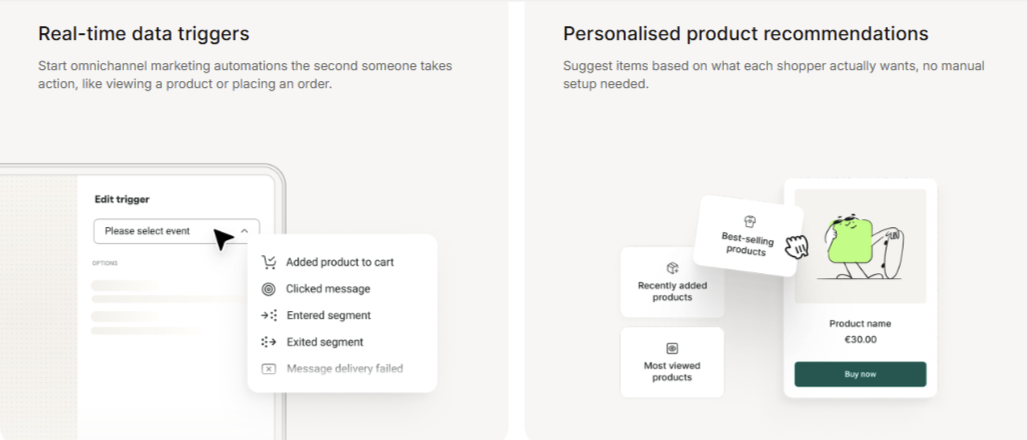
Absolutely. A modern, effective drip campaign can seamlessly combine email, SMS, and even push notifications into a single automated sequence. This multi-channel approach allows businesses to reach subscribers on the platform where they are most likely to respond. Platforms like Omnisend offer unified workflows that enable marketers to easily integrate a text reminder into an abandoned cart or winback drip, enhancing the campaign’s overall reach and impact.


 Ammar Sabilarrohman
 Asro
Asro