The digital landscape for global enterprises has reached a point of saturation where marginal gains in user experience can translate into millions of dollars in incremental revenue. However, a persistent paradox remains: organizations with the most significant traffic, the most robust data sets, and the largest budgets often struggle to deliver consistent results from their experimentation programs. While smaller startups may pivot quickly based on a single test, the enterprise environment is frequently hampered by organizational friction, fragmented data silos, and a reliance on subjective decision-making. The transition from a “testing” mindset to a comprehensive “experimentation culture” is no longer a luxury but a strategic necessity for maintaining market relevance in an increasingly volatile digital economy.
The Structural Challenges of Enterprise Optimization
The primary obstacles to successful large-scale experimentation are rarely technical or statistical; rather, they are structural. In many major corporations, the experimentation backlog is driven by the “HiPPO” (Highest Paid Person’s Opinion) rather than empirical evidence. Furthermore, technical debt and lack of cross-departmental communication often lead to overlapping tests where different teams target the same audience segments simultaneously without mutual awareness. This creates “polluted” data environments where attribution becomes impossible and valuable insights are relegated to slide decks that are rarely revisited.
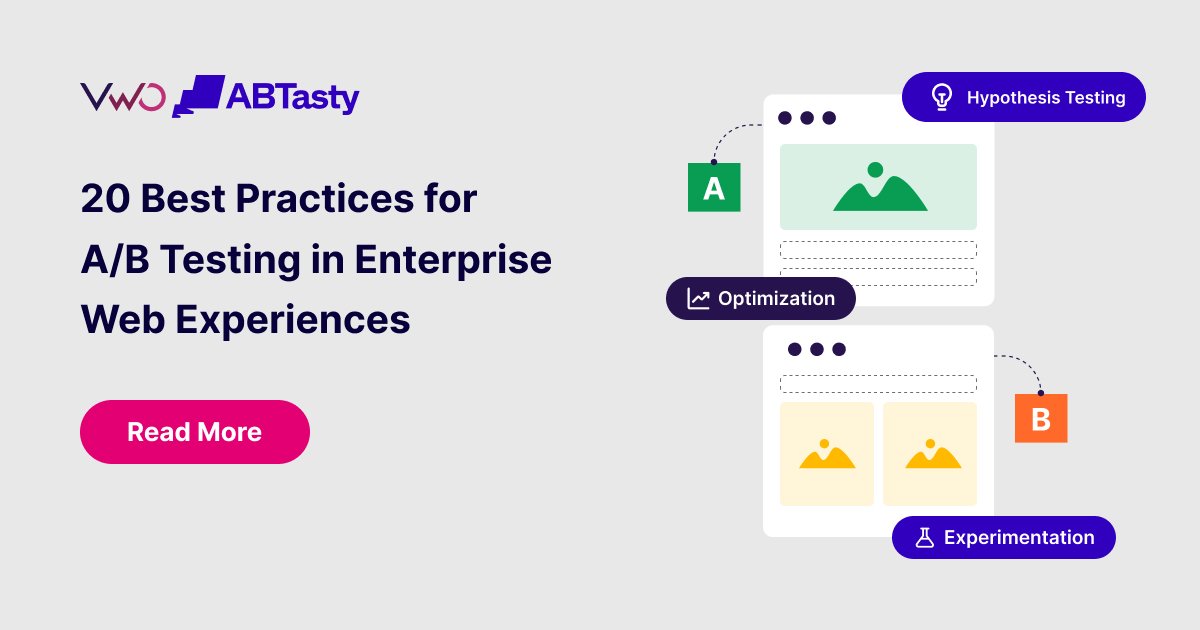
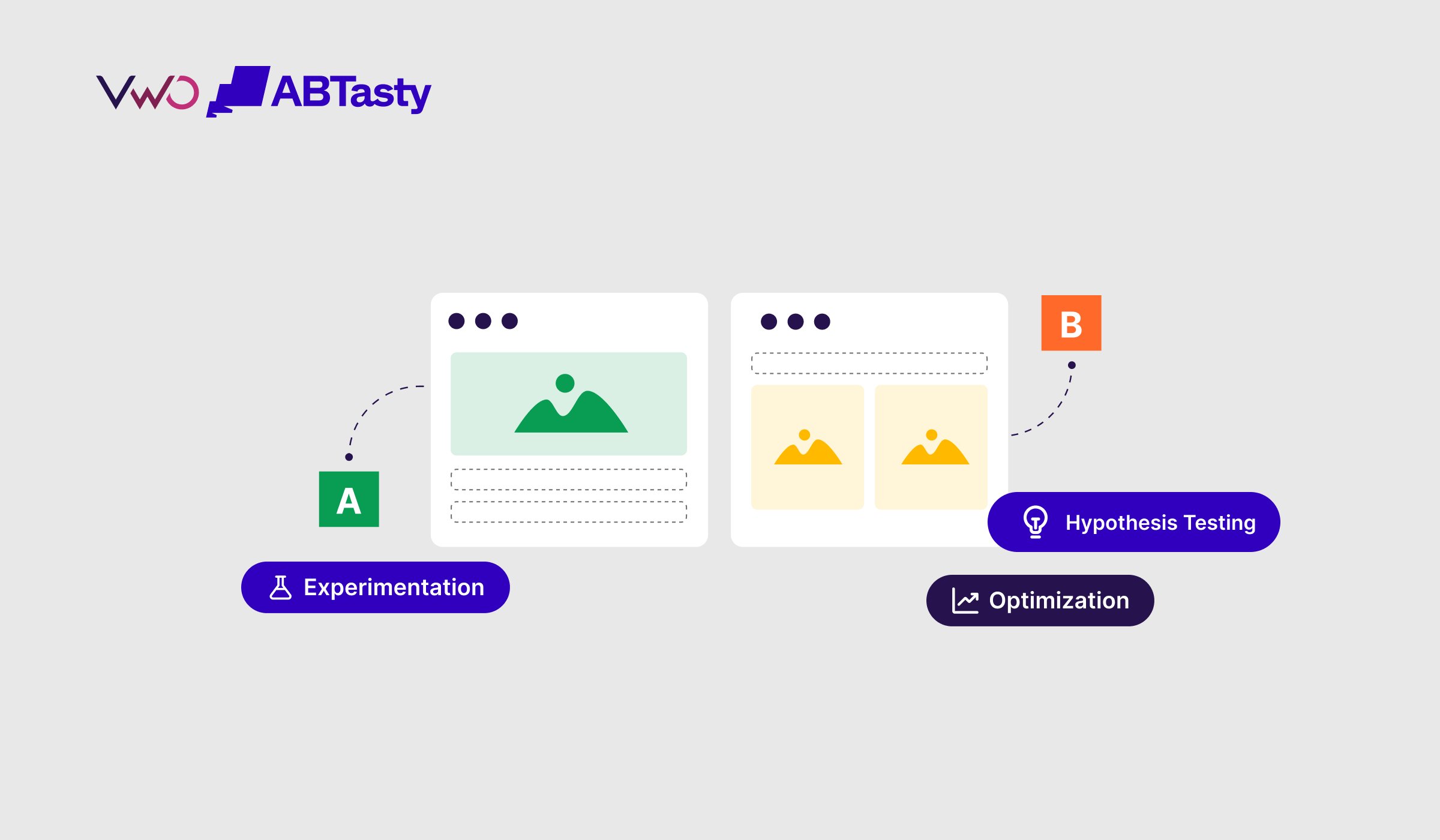
To address these gaps, industry leaders are adopting a rigorous, stage-based approach to optimization. This framework moves beyond simple A/B testing—comparing version A against version B—and integrates qualitative insights, statistical safeguards, and centralized knowledge management to ensure that every experiment contributes to a broader corporate intelligence.
Phase I: Strategy and Hypothesis Development
The foundation of a world-class experimentation program lies in the transition from observation to a testable hypothesis. For enterprises, this requires a dual-pronged approach that combines quantitative data (what users are doing) with qualitative insights (why they are doing it).
Modern optimization suites, such as VWO Insights, have revolutionized this phase by allowing teams to deploy heatmaps, session recordings, and form analytics to identify specific friction points. For instance, if quantitative data shows a high drop-off rate on a checkout page, session recordings might reveal that users are hesitating at a specific form field. By utilizing pulse surveys and direct user feedback before an experiment goes live, teams can validate customer friction points, ensuring that the testing pipeline is fueled by genuine user needs rather than internal assumptions.
Prioritization is the second pillar of strategy. Enterprise teams must utilize frameworks such as ICE (Impact, Confidence, Ease) or PIE (Potential, Importance, Ease) to rank ideas. As Andres Pinate, a noted expert in the field, observes, the best prioritization processes create focus and alignment, transforming experimentation from a “creative playground” into a disciplined decision-making tool. This disciplined approach protects organizational capital and prevents the dilution of momentum on low-impact tests.
Phase II: Experimental Design and Statistical Integrity
Statistical validity is the cornerstone of enterprise-grade testing. One of the most common pitfalls in large-scale programs is the “peeking” problem—stopping tests early because interim results appear promising. This practice significantly inflates false-positive rates, leading organizations to implement changes that do not actually drive growth.
To combat this, enterprises are shifting toward more sophisticated statistical models. Bayesian-powered sequential testing frameworks, such as VWO’s SmartStats engine, allow for more flexible decision-making without compromising the integrity of the results. These engines continuously monitor for Sample Ratio Mismatch (SRM), an early warning sign that the distribution of traffic between variations is flawed. Catching SRM early is critical for preventing unreliable results from reaching the rollout stage.
Moreover, the complexity of enterprise websites—often featuring multiple subdomains and localized versions—requires the use of “mutually exclusive groups.” This ensures that a visitor assigned to a pricing experiment is not simultaneously exposed to a conflicting promotional experiment, keeping the data clean and the attribution accurate.
Phase III: Implementation and Technical Execution
The implementation phase is often where experimentation programs meet their greatest resistance, usually in the form of engineering bottlenecks. Traditional A/B testing often requires developers to hard-code variations, which must then wait for the next scheduled release cycle.
To circumvent this, enterprises are increasingly adopting two distinct paths:
- Visual Editors and Client-Side Deployments: Tools that allow conversion rate optimization (CRO) teams to push winning variations live directly without waiting for a code release. This decouples the optimization timeline from the engineering calendar, allowing for more agile responses to market trends.
- Server-Side Feature Experimentation: For more complex changes—such as pricing algorithms, recommendation engines, or backend workflows—enterprises utilize SDKs in languages like Java, Python, and Node.js. This “full-stack” approach allows for gradual rollouts and “canary releases,” where a new feature is tested on a small percentage of users before a global launch, mitigating the risk of site-wide failures.
Phase IV: Analysis and Post-Test Interpretation
The value of an experiment is not found in the “win” or “loss” but in the depth of the subsequent analysis. Enterprise-level analysis must move beyond aggregate results. A variation that fails on a global level may be a significant winner for mobile users in a specific geographic region.
Advanced reporting dashboards now integrate behavioral data directly with statistical results. This allows practitioners to transition seamlessly from a statistically significant finding to watching session recordings of the users within that specific variation. By segmenting results by traffic source, device, and behavioral cohorts, teams can uncover “hidden” wins that would otherwise be obscured by the average.
Furthermore, it is essential to treat secondary metric improvements with caution. If a test increases “Add to Cart” actions (a secondary metric) but the primary metric (Revenue) remains flat, the test cannot be declared a definitive success without further investigation into the disconnect.
Phase V: Cultivating a Knowledge-Centric Culture
The final and perhaps most critical stage of the enterprise framework is the preservation of knowledge. In large organizations, staff turnover and departmental restructuring can lead to “institutional amnesia,” where the same failed hypotheses are tested repeatedly every few years.
To prevent this, leaders like Gladwin Ngo, VP of Growth at Crimson Education, advocate for the creation of a centralized “test bank.” This repository documents every hypothesis, result, and insight gained, creating a data-backed pipeline for future experiments. VWO Plan and similar platforms provide this infrastructure, turning scattered spreadsheets and emails into a searchable library of organizational learning.
Finally, the most mature organizations use their test results to fuel hyper-personalization. By taking the winning segments from an A/B test and operationalizing them through personalization workflows, companies can move from a “one-size-fits-all” experience to a dynamic interface that responds to individual user attributes and behaviors in real-time.

Data and Market Context: The ROI of Experimentation
Recent industry data underscores the urgency of these best practices. According to market research, the global A/B testing software market is projected to grow at a CAGR of over 12% through 2030, reflecting the increasing reliance on data-driven UX design. Furthermore, internal benchmarks from leading tech firms suggest that while only 10% to 25% of experiments yield a statistically significant positive result, the cumulative impact of those wins can increase annual conversion rates by as much as 30% to 50%.
The cost of poor experimentation is equally high. A single “false positive” implemented on a high-traffic enterprise site can lead to millions in lost revenue before the error is detected. This reality has driven the demand for more rigorous statistical engines and better organizational alignment.
Implications for the Future of Enterprise UX
As artificial intelligence and machine learning become more integrated into the CRO process, the role of the human experimenter is shifting from manual testing to strategic orchestration. AI can now suggest variations, predict which segments are most likely to convert, and even automate the traffic allocation to winning variations (multi-armed bandit testing).
However, technology alone cannot solve the “organizational gap.” The companies that will dominate the digital landscape over the next decade are those that view experimentation not as a series of isolated events, but as a core business philosophy. In these organizations, every major product decision is treated as a hypothesis to be tested, and every result—whether a win or a loss—is valued as a building block for future growth.
In conclusion, enterprise experimentation maturity is not defined by the sheer volume of tests conducted. It is defined by the reliability of the process and the organization’s ability to turn data into scalable, repeatable, and profitable decisions. By following a structured checklist of strategy, design, execution, and analysis, large-scale organizations can finally bridge the gap between having data and actually using it to drive the bottom line.

 Dwi Wanna
 Reynand Wu