The landscape of digital search is undergoing a profound transformation, driven by the rapid evolution of artificial intelligence. While the emergence of AI-powered search behaviors may initially lead to a dip in organic traffic for many businesses, a comprehensive analysis reveals a significant silver lining: the leads generated through these new channels are of markedly higher quality and intent. For marketing professionals, this represents a crucial strategic advantage, demanding a recalibration of traditional SEO practices towards a new discipline known as Answer Engine Optimization (AEO). A recent “State of AEO 2026” report by HubSpot underscored this shift, identifying AI search as the single strongest predictor of purchase intent among CRM software buyers, a finding that holds critical implications for every go-to-market team.
This paradigm shift necessitates a deep understanding of AI search behavior, its impact on brand discovery, and the practical AEO strategies that can be implemented today to capitalize on these evolving dynamics. The transition from keyword-driven queries to conversational AI interactions is not merely a technological upgrade but a fundamental change in how users seek and consume information, creating both challenges and unprecedented opportunities for businesses to connect with highly motivated prospects.
The Paradigm Shift in Search Behavior
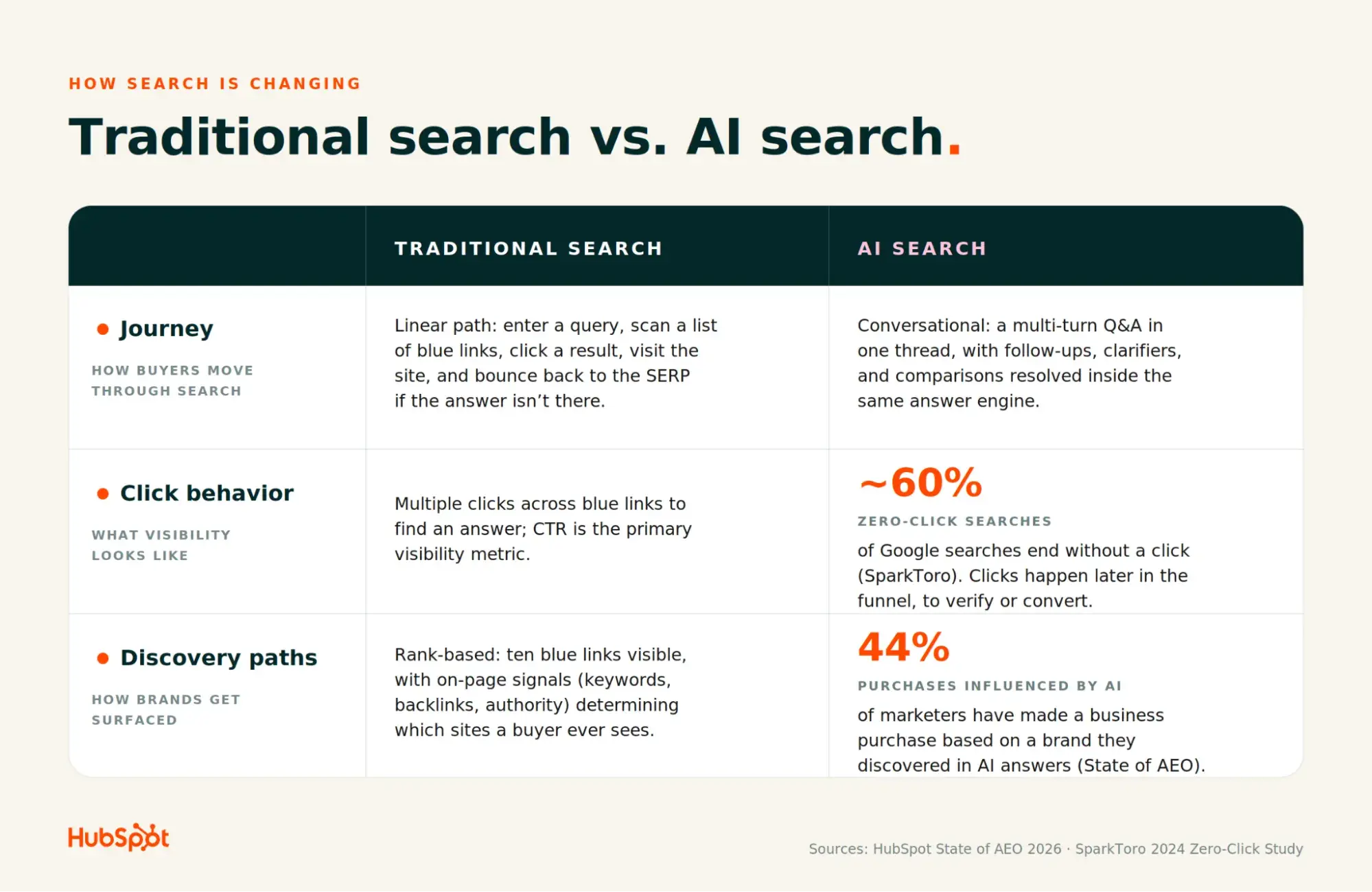
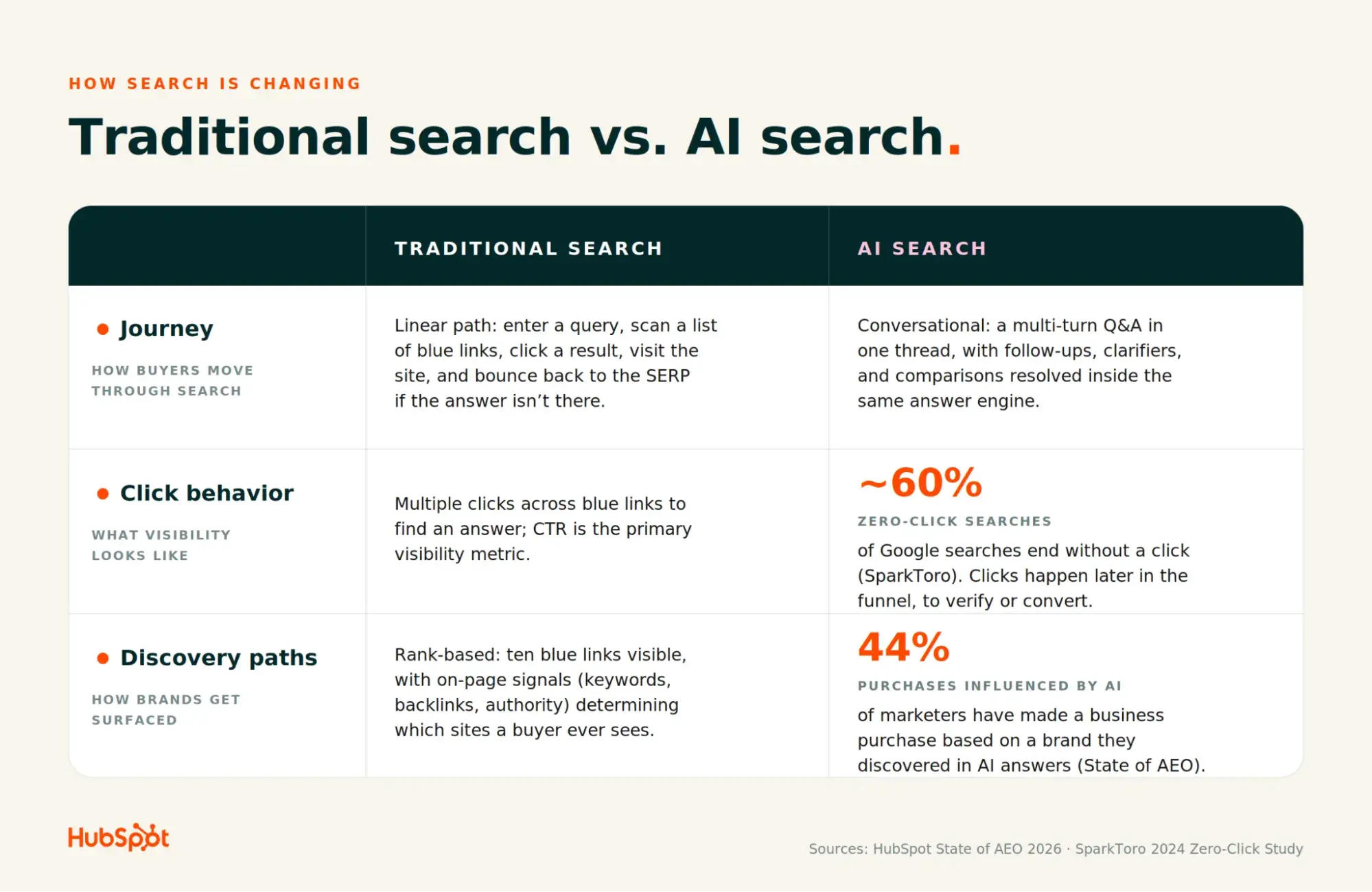
AI search behavior fundamentally redefines the user’s quest for information. Unlike traditional search, which historically involved typing keywords into an engine like Google and sifting through a list of “blue links,” AI search centers around conversational queries. Users are increasingly turning to generative AI platforms, such as ChatGPT, Google AI Overviews, Gemini, and Perplexity, to pose questions often phrased in complete sentences or even multi-turn conversations. These AI tools then provide instant, synthesized summaries that frequently fulfill the user’s information need without requiring a click to an external website.
This marks a significant departure from past search patterns. The traditional journey was linear: query, results page, click, consume. AI search, however, transforms this into an interactive, multi-turn Q&A session. The AI acts as an intermediary, processing complex queries and distilling information from numerous sources into a concise, often personalized, answer. This shift from simple keyword matching to semantic understanding and conversational interaction is not merely an incremental change but a foundational re-architecture of the search experience.
For marketers, understanding this distinction is paramount. While Search Engine Optimization (SEO) remains crucial for determining which pages rank in the underlying search index, it is Answer Engine Optimization (AEO) that now dictates which sources AI tools choose to cite when constructing their summaries. Both must be optimized in parallel, but increasingly, AEO holds the key to whether a buyer even encounters a brand’s content in the initial stages of their journey.
The Evolving Landscape of Brand Discovery
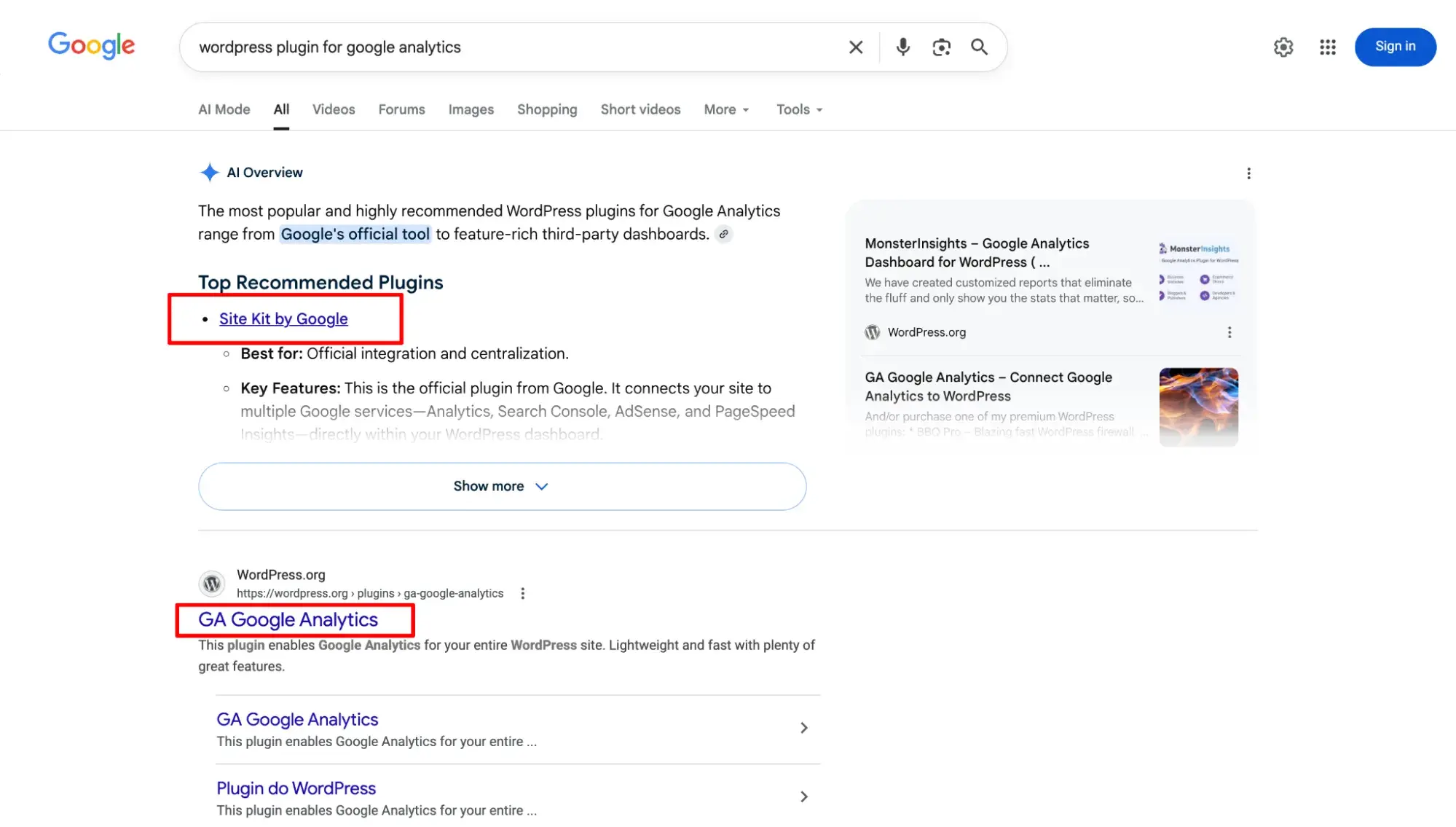
The rise of AI search has dramatically reshaped the dynamics of brand discovery. The familiar search engine results page (SERP) with its predictable layout of ten blue links, a few advertisements, and perhaps a featured snippet, is rapidly being replaced by AI-generated answers that dominate the visible screen real estate. This means that merely ranking number one for a category term, once a reliable indicator of brand visibility, no longer guarantees prominent placement.
Consider the common scenario: a user searching for a specific product or solution. For instance, a query like “WordPress plugin for Google Analytics” will often yield an AI Overview that occupies the majority of the screen above the fold. Even if a brand’s page holds the top organic “blue link” position, it may be outranked and overshadowed by a competitor cited directly within the AI Overview. This effectively pushes traditional organic results further down the page, diminishing their immediate visibility.
Data from SparkToro indicates that approximately 60% of Google searches now conclude without a click, a figure that analysts predict will continue to climb as AI-generated answers become more prevalent and sophisticated. This “zero-click” phenomenon means that brands must find new ways to surface their information directly within the AI summaries, rather than solely relying on clicks to their websites.
The impact on non-branded category term discovery is particularly acute. Ahrefs reports that Google serves AI Overviews 1.9 times more frequently for non-branded queries than for branded ones. A query such as “best software for video editing” no longer presents a simple list of links. Instead, it offers one or two AI-recommended brands, potentially with a comparative table, guiding the buyer’s decision before they ever visit a vendor’s site. This means that a competitor named by an answer engine in its recommendation can effectively win a deal before the sales team is even aware of the prospect’s existence.
In this new environment, entity clarity, topical authority, and reputation signals have become critical determinants for which brands answer engines surface. The old model, where links, keywords, and domain authority led to blue-link visibility and subsequent reputation growth, still holds some sway, but these signals are now evaluated by an answer engine before a prospect reaches a website. By the time a user clicks through, they have often already evaluated several options presented within an AI answer, making the initial AI citation a powerful pre-qualification mechanism.
Driving High-Intent Leads: The AEO Advantage
Despite the observed decrease in organic traffic, the good news for marketers is that the traffic referred by AI search exhibits significantly higher intent. HubSpot’s internal data from 2025 indicated a three-fold improvement in conversion rates from AI-sourced leads compared to other channels. Similarly, Search Engine Land reported a tripling of referral traffic from AI tools such as ChatGPT and Gemini.
This enhanced conversion rate stems from a crucial shift in the buyer’s journey. Summary-first experiences within answer engines address and resolve superficial queries directly. A user asking “what is AEO?” can quickly obtain a definition and perhaps a list of relevant vendors without needing to click on a single search result. However, a user who does click through after reading an AI answer to a more specific query, such as “how can a B2B marketing team of five implement AEO on their blog,” has typically moved past the initial informational layer. They have validated their problem, noted the cited sources, and are now seeking to verify information, compare solutions, or initiate a conversion.

This altered funnel shape requires a rethinking of success metrics. Traditional click-through rates become a smaller, later signal in a journey that now largely unfolds within the answer engine itself. New metrics become paramount: how frequently a brand surfaces in an AI summary, which competitors it appears alongside, and, crucially, which specific prompts channel the highest-intent traffic to its site. The focus shifts from raw volume to the quality and relevance of interactions facilitated by AI.
Strategic Adaptation: Crafting Content for Answer Engines
Content planning in the age of AI search must evolve from a keyword-centric approach to one driven by prompts. AI users rarely ask a single, isolated query; instead, their search often unfolds as a multi-turn conversation. To earn citations across this entire exchange, content must be comprehensive and anticipate the logical sequence of follow-up questions.
A key strategy is question mapping. This begins with a broad “seed query” relevant to the target audience (e.g., “what is AEO?”). From there, marketers must brainstorm the subsequent questions a buyer would logically ask, such as “how is AEO different from SEO?”, “do I need an AEO tool?”, “which AEO tools do marketers actually use?”, “how much does AEO software cost?”, or “what’s the ROI of AEO?”. This sequence of questions defines the collective scope that content needs to address.
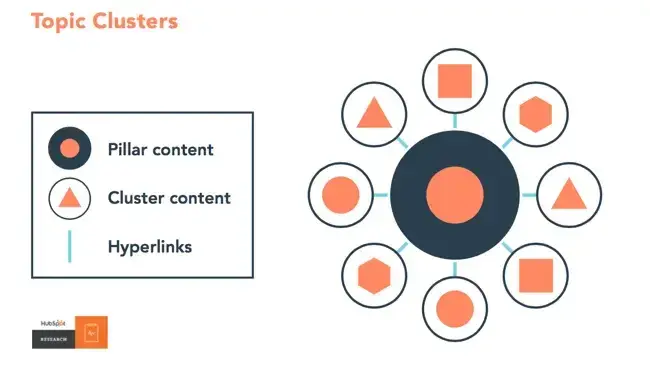
HubSpot’s established topic cluster model provides an effective framework for organizing this question set. A central “pillar page” addresses the broad seed question, while “cluster pages” delve into each follow-up question. This structure offers answer engines a clear primary entity to cite for the broad query and a comprehensive trail of supporting pages for long-tail, specific inquiries. Tools like HubSpot’s Content Hub can facilitate the organization and management of these topic clusters within a CMS.
Marketers can gain valuable insights by running their seed questions through various AI models like ChatGPT and Perplexity, tracking which sources are cited for each follow-up question. These citation patterns reveal the competitive landscape within the answer engine and indicate the type of content that earns mentions at each stage of the conversational journey.
Beyond new content creation, existing content needs to be restructured for extractable answers. A content audit can identify pages that already earn citations versus those needing optimization. Re-running target queries of top organic landing pages through ChatGPT, Gemini, and Perplexity can reveal content that is effectively cited versus content that needs refinement. Strategies include:
- Front-loading answers: Begin with a direct answer to the main question in the introduction.
- Using clear headings: Structure content with descriptive H2s, H3s, and H4s that reflect specific questions or subtopics.
- Employing lists and tables: These formats are highly digestible and easily extractable by AI models.
- Maintaining entity consistency: Ensure consistent use of brand names, product names, and key concepts.
- Providing concise summaries: Offer brief takeaways at the end of sections or articles.
Measuring Success in the AI Era: Tracking Visibility and Performance
The shift to AI search necessitates new measurement paradigms. Tracking AI search metrics allows businesses to transform declining traditional traffic numbers into demonstrable visibility wins for leadership. These metrics also pinpoint which prompts a brand is losing, which competitors are winning them, and where content optimization efforts should be prioritized.
AI search visibility can be broken down into three critical signals that traditional analytics tools like Google Analytics or Search Console are not designed to capture:
- Citation Rate: How often a brand is cited as a source by an answer engine.
- Brand Mentions: Instances where a brand is named in an AI answer, even without a direct link.
- Share of Voice: The frequency with which a brand surfaces relative to its competitors for key category questions.
While manual checks within AI answer engines can provide a baseline, specialized tools are emerging to automate this tracking. For instance, HubSpot AEO monitors brand visibility across answer engines over time, analyzes competitor appearances, and prioritizes recommendations to improve citation rates. Free tools like AEO Grader offer a quick snapshot of a brand’s standing across major AI platforms.
A baseline audit involves running the 10-20 highest-priority prompts through ChatGPT, Gemini, and Perplexity (ensuring logged-out or temporary chat sessions). Documenting cited sources, brand appearances, and competitor performance across critical topic clusters, branded queries, and category-level questions helps identify gaps and inform an optimization roadmap for enhanced AI visibility.
Navigating AI Model Evolution
Much like the continuous updates to Google’s search algorithms, AI models are frequently refined. Each update can alter how a model weighs various factors, leading to different answer patterns and source selections. For example, the rollout of OpenAI’s GPT-5 in August 2025 significantly improved the model’s ability to answer health-related questions, offering “more precise and reliable responses, adapting to the user’s context, knowledge level, and geography.”
To maintain optimal content performance, marketers must stay abreast of these changes. Monitoring release notes from major AI developers like OpenAI, Anthropic, Google, and Perplexity is essential. Additionally, a consistent review cadence is crucial:
- Monthly visibility re-checks: Ensure content remains cited.
- Quarterly content audits: Assess broader content effectiveness.
- Immediate re-testing: Conduct after any major AI model release.
Between these review cycles, four content-side elements are particularly vital for continuous maintenance:
- Accuracy and Recency: AI models prioritize up-to-date and factually correct information.
- Clarity and Conciseness: Content that is easy to parse and directly answers questions.
- Structured Data: Proper use of headings, lists, and schema markup.
- Topical Authority: Demonstrating deep expertise across a subject matter.
Beyond Marketing: Implications for Sales and Service
The impact of AI search extends beyond the marketing department, fundamentally altering sales conversations and the role of service content.
How AI Search Behavior Changes Sales Conversations: AI search compresses the traditional sales cycle. Prospects now arrive at initial sales calls having already consulted AI summaries comparing categories, competitors, and pricing. This means generic discovery questions, such as “what’s your current stack?” or “what are your pain points?”, may fall flat with an AI-informed prospect who has already navigated these details with a chatbot. Sales representatives need to adapt their outreach, leading with insights into the specific competitors and tradeoffs AI may have surfaced for that buyer’s category, thereby skipping redundant surface-level inquiries and engaging at a deeper level. Tools like AEO within Marketing Hub can provide sales teams with visibility into the prompts and citations shaping these early conversations.
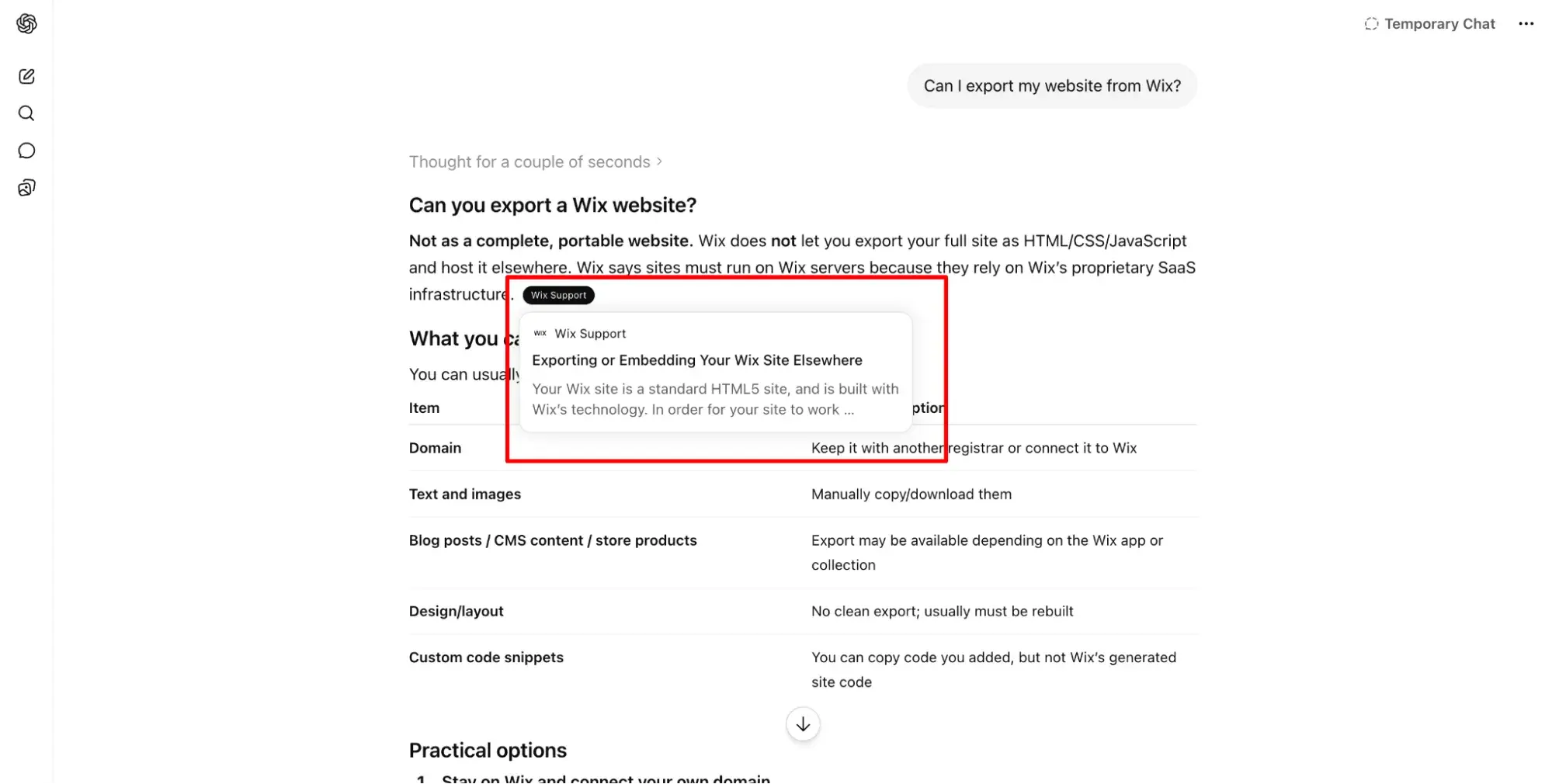
How AI Search Behavior Changes Service Content: Service content, such as knowledge base articles and help center documentation, represents valuable source material for answer engines. Well-structured support articles addressing specific “how-to” questions (e.g., “how do I export X from your tool?”) are precisely the kind of extractable, question-format content that AI models prefer to cite. By optimizing service documentation for clarity and direct answers, service teams are inadvertently contributing to a brand’s AI visibility. A real-world example demonstrates this: a ChatGPT query about exporting a website from Wix directly cited a Wix help center article, guiding a common buyer evaluation question.
How Sales and Service Teams Inform AEO Content: Establishing robust feedback loops between sales, service, and marketing teams is crucial for effective AEO. Sales and service professionals are on the front lines, hearing the actual questions and objections that buyers and customers voice, often before these queries appear in traditional keyword research tools. A shared document, a dedicated communication channel (like Slack), or regular quarterly reviews can effectively route this invaluable “buyer language” back to the content creation teams, enabling them to develop AI-optimized content that directly addresses real-world user needs.
An AEO Playbook You Can Run Today
Adapting to AI search behavior requires a structured approach, encompassing four key phases: mapping buyer questions, building extractable answers, applying technical signals, and continuously iterating based on tracked data.
Step 1: Uncover the questions your customers are asking AI.
This foundational step anchors the entire AEO playbook. Marketers must identify the specific prompts potential customers are using to query AI about their brand and industry. This can be achieved by:
- Prompting Answer Engines: Directly ask AI models (ChatGPT, Gemini, Perplexity) broad “seed queries” related to your category and note the follow-up questions they generate.
- Sales Team Insights: Leverage insights from your sales team, who are on the front lines hearing the actual questions and challenges buyers express during calls.
- Specialized AEO Tools: Utilize tools like HubSpot AEO (available to Marketing Hub Professional or Enterprise subscribers), which can suggest prompts based on business context within the CRM, offering visibility into specific queries like “salon booking software.”
Step 2: Build extractive answers and entities.
Once key questions are identified, the next step is to create new content or optimize existing content to address them directly. The content structure is paramount:
- Answer-First Approach: The main question should be answered immediately in the introduction of the page.
- Reinforce Brand Entity: Clearly identify the brand or entity behind the answer. AI answer engines favor content that resolves queries swiftly and identifies the source distinctly.
- Structural Optimization: A March 2026 preprint by Junwei Yu et al. demonstrated that structural changes—such as heading hierarchy, paragraph chunking, and visual emphasis—can significantly boost citation rates (by double digits) across multiple answer engines. This includes:
- Clear, Descriptive Headings: Use keyword-rich H1s and descriptive H2s (e.g., “Frequently Asked Questions About [Topic]”) with H3s and H4s for individual questions.
- Parseable Paragraphs: Break down complex information into shorter, digestible paragraphs.
- Lists and Tables: Utilize these formats for easy extraction of key information.
Step 3: Apply schema markup and internal links.
Schema markup and strategic internal linking provide critical structural cues to answer engines, aiding in content interpretation and source quality ranking.
- Schema for FAQs: HubSpot’s “State of AEO 2026” found a correlation between FAQ sections and higher citation rates in AI Overviews. This correlation strengthens when FAQ sections are paired with schema markup, particularly in Gemini, Google AI Mode, and Perplexity. The most effective combination involves a descriptive H2 (e.g., “Frequently Asked Questions About [Topic]”) with each question formatted as an H3 beneath it, rather than generic “FAQ” headings.
- Heading Structure and Keywords: Keyword-rich H1s correlate with more citations. Including the year in H1s and meta titles can also be beneficial. Pages with a greater number of headings, especially H3s and H4s, tend to track with higher citation rates, with an optimal range often cited as 7 to 15 H2s.
- The Role of Schema Markup: While some AEO strategists like Kaleigh Moore suggest focusing on off-site signals (e.g., LinkedIn, YouTube), others like Elie Berreby, Head of SEO and AI Search at Adorama, strongly recommend schema markup, emphasizing its role in building “knowledge graphs” that map entity relationships. Even if AI crawlers can’t directly render JavaScript-injected schema, Googlebot can process it, creating an indirect mechanism where richer search results then feed AI scrapers and subsequent AI-generated answers. The consensus suggests implementing schema as part of a broader strategy, not as a standalone citation lever, especially in combination with well-structured content like FAQs.
- Internal Links: Do not overlook internal links, as they reinforce topical authority and distribute ranking signals across related pages within a site.
Step 4: Publish, monitor, and iterate.
After publishing AI-optimized content, continuous monitoring and iteration are essential. A dedicated spreadsheet or dashboard should track citation shifts, lost prompts, and competitor gains on a weekly to monthly basis. Key data points to log include:
- Prompt: The specific query used.
- Answer Engine: Which AI platform was queried (ChatGPT, Gemini, Perplexity).
- Date: When the query was made.
- Your Brand’s Citation Status: Whether your brand was cited.
- Cited Competitors: Which competitors were cited.
- Citation Type: Was it a direct link, an unlinked mention, or a recommendation?
- Content URL: The specific content cited (if applicable).
- Notes: Any observations about the answer or competitors.
Tools like AEO Grader can provide a rapid baseline snapshot, while HubSpot AEO offers ongoing tracking, competitor monitoring, and prompt-level reporting, enabling efficient iteration without manual prompting.
Frequently Asked Questions About AI Search Behavior
How do I measure AI visibility without relying on clicks?
AI visibility measurement requires tracking metrics beyond traditional clicks. Key metrics include “brand mentions” (instances where your brand is named in an AI answer without a direct link) and “share of voice” (how often your brand surfaces compared to competitors for category-specific questions). While manual querying of ChatGPT, Gemini, and Perplexity on a fixed cadence can provide a baseline, specialized tools like HubSpot AEO automate prompt tracking and monitor shifts in these crucial signals over time, providing comprehensive visibility insights.
How often should we update AI-optimized content?
AI-optimized content requires consistent attention. Top-performing pages should be updated immediately if a significant drop in citations is observed via AEO software. Generally, content should undergo a monthly visibility re-check, a quarterly comprehensive content audit, and an immediate re-test following any major AI model release. Given the frequent updates from platforms like OpenAI, Anthropic, Google, and Perplexity, staying informed through their release notes is critical, as model changes can considerably impact key content performance.
How can we increase our chances of being cited by LLMs?
Increasing LLM citation likelihood hinges on four core content disciplines: answer-first writing, parseable structure, entity consistency, and topical authority. A study by Yu et al. demonstrated that structural rewrites alone, without altering content meaning, could boost citation rates across six engines by an average of 17.3%. Key changes to implement include:
- Direct Answers: Start with concise, direct answers to questions.
- Clear Structure: Utilize descriptive headings (H1, H2, H3) and easily digestible formats (lists, tables).
- Entity Consistency: Maintain consistent terminology for brands, products, and concepts.
- Topical Depth: Provide comprehensive, authoritative content that thoroughly addresses a subject.
Do we need to change link-building for answer engines?
Traditional link-building practices, which contribute to SEO, still matter for AEO because answer engines rely on underlying search indexes. However, AEO introduces a new dimension: the influence of unlinked brand mentions. This means diversifying efforts to include formats and platforms that answer engines frequently quote, such as YouTube videos, Reddit threads, comparison roundups, and third-party reviews, becomes more important than solely chasing raw link counts. The goal is to build a robust, authoritative online presence that AI models can readily identify and cite.
What’s the best way to align teams around these changes?
Effective alignment across sales, service, and marketing teams regarding AI search behavior is achieved through a shared dashboard and a robust feedback loop. Sales representatives are invaluable for identifying AI-surfaced objections that shape early buyer conversations, while service teams can highlight frequently asked questions that emerge in chat. Both sets of signals are crucial inputs for the marketing content roadmap. HubSpot AEO facilitates this alignment by surfacing citation and competitor data in a centralized workspace, making it easier to integrate AI search insights with real-world buyer and customer interactions.