The digital currents of the email marketing world have significantly shifted in 2026. The initial tumultuous waves of generative artificial intelligence (AI) adoption and the scramble to comply with stringent new privacy regulations have largely subsided. Today, the industry finds itself in a sophisticated era of refinement, where the discerning subscriber, more astute and skeptical than ever, can readily identify overtly generic AI-generated content. This paradigm demands a delicate yet critical balance: harnessing the cutting-edge capabilities of automation while preserving an authentic, human touch in every interaction.
This evolution is not merely a tactical adjustment but a fundamental redefinition of engagement. As the digital ecosystem matures, brands are compelled to move beyond rudimentary automation, embracing advanced lifecycle strategies and contending with the pervasive influence of “intelligent gatekeepers” – AI systems that now mediate message delivery and presentation. Ensuring an email program remains a brand’s most potent growth engine necessitates mastering these intricate dynamics.
The Evolution of Email Marketing: A Brief Timeline to 2026
The journey to the current email marketing landscape has been swift and transformative. The early 2020s saw a rapid acceleration in digital communication, fueled by global shifts and technological advancements.
- 2020-2022: The Privacy Imperative: The introduction of regulations like GDPR in Europe and CCPA in California, followed by a proliferation of similar data privacy laws globally, fundamentally reshaped how marketers collect, store, and utilize consumer data. This period saw a heightened focus on explicit consent, data transparency, and user control, pushing email marketers to prioritize trust and permission-based strategies.
- 2023-2024: The Dawn of Generative AI: The widespread accessibility of generative AI models marked a significant inflection point. Initially, marketers enthusiastically experimented with AI for generating email copy, subject lines, and even basic campaign structures. This led to a surge in efficiency but also an observable dilution of unique brand voice and, in some cases, a perception of inauthenticity from subscribers. Early studies from marketing analytics firms indicated a temporary uptick in email volume, but engagement metrics for overtly AI-generated content often lagged behind human-crafted messages.
- 2025: The Rise of Intelligent Gatekeepers: Major email service providers (ESPs) and operating systems began integrating advanced AI into their inbox management functionalities. This included tools like Apple Intelligence and Gmail’s Gemini, which evolved to summarize email content for users before they even opened a message. This development profoundly impacted traditional metrics like open rates, rendering them less reliable indicators of engagement and shifting focus to the quality of content surfacing in these AI-generated summaries.
- 2026: The Era of Refinement and Orchestration: The industry entered a phase of consolidation and strategic integration. Marketers, having navigated the initial shock and adaptation, now concentrate on refining their AI usage, emphasizing a “human-in-the-loop” approach, and designing content specifically for both human readability and AI interpretability. The role of the email marketer evolved from a content creator to a strategic orchestrator of automated systems and personalized experiences.
Tactical Imperatives for 2026: Mastering the New Email Ecosystem
In this refined landscape, several key tactical shifts are non-negotiable for success.
1. The New Frontier of Hyper-Personalization

Connecting with subscribers in 2026 demands messages that are not merely relevant but intrinsically timely and deeply personalized. This principle extends beyond email campaigns to every touchpoint within a marketing strategy. Effective personalization, now more crucial than ever, rests on robust data segmentation, predictive analytics, and dynamic content delivery. Industry reports suggest that campaigns leveraging hyper-personalization can see engagement rates up to 30% higher than generic segmented campaigns.
The pillars of this enhanced personalization include:
- Granular Segmentation: Moving beyond basic demographics to psychographics, behavioral data, purchase history, and real-time interactions.
- Predictive Content: Utilizing AI to anticipate subscriber needs and preferences, delivering content before it’s explicitly sought.
- Dynamic Content Blocks: Emails that adapt their visuals, calls-to-action, and even narrative based on individual user profiles.
- Contextual Relevance: Delivering messages precisely when and where they are most impactful, considering factors like time of day, device, and recent online activity.
2. Navigating the AI-Gatekeeper: Designing for Machine and Human
One of the most profound shifts in 2026 is the dual audience for every email: the human subscriber and the AI gatekeeper. Tools like Apple Intelligence and Gmail’s Gemini are no longer passive filters but active interpreters, summarizing content for users before they open the message. This innovation, while enhancing user experience by pre-digesting information, has fundamentally altered how marketers must craft their messages. Open rates, once a primary metric, have become increasingly unreliable, as a user might gain all necessary information from an AI summary without ever “opening” the email.
The critical question for email marketers is no longer solely, “Did my email land and look great?” but “Did the AI surface the right topics in the summary?” This necessitates an approach akin to Search Engine Optimization (SEO). Email content must be front-loaded with keywords, and the most important value proposition needs to be unequivocally clear and easily “scraped” by machine learning algorithms to ensure accurate and compelling inbox previews. For image-heavy emails, comprehensive descriptions in the alt attributes of image tags are indispensable for AI comprehension. Moreover, advanced preview tools that simulate how AI gatekeepers summarize messages are becoming standard in marketing tech stacks, allowing marketers to tailor their content proactively. In this evolving environment, victory belongs not necessarily to the most creative writer, but to the strategist who designs content with the machines—and their ultimate human recipients—firmly in mind.
3. The Power of Precision: Minimalist Design and Structured Content
The often-cited “8-second attention span” myth, though debunked regarding goldfish memory, still holds a kernel of truth for human digital behavior: users gravitate towards the quickest possible win. This behavioral insight, coupled with the demands of AI gatekeepers, necessitates a fundamental shift towards minimalist and structured email design.
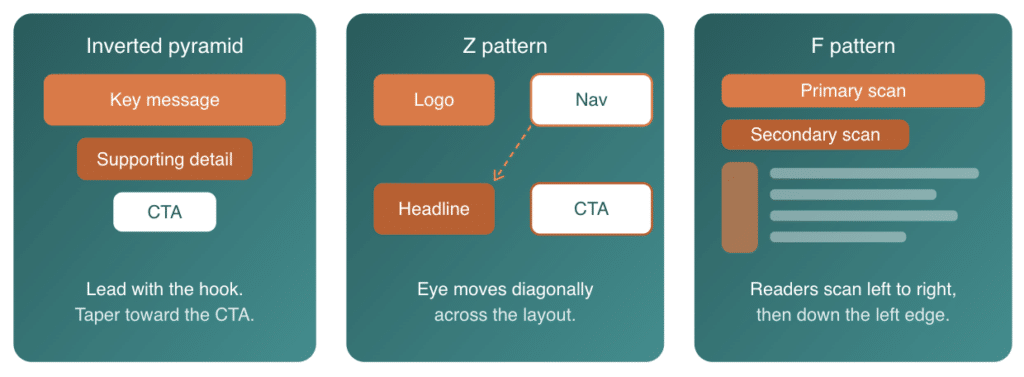
Gone are the days of giant, text-heavy emails. Modern aesthetics and technical requirements trend towards leaner builds that load faster and are inherently easier for AI tools to interpret and summarize accurately. Marketers are increasingly leveraging established content hierarchy structures like the Inverted Pyramid (most important information first), and the Z or F-patterns (guiding the eye through key points) to facilitate rapid reading and comprehension. Crucially, proper use of heading tags (H1 for main section titles, H2/H3 for sub-sections, rather than merely for larger text styling) is no longer just a best practice for human readability but a vital signal to AI about the relative importance of information. This structured approach ensures that both human readers and AI gatekeepers can quickly grasp the core message and value proposition, enhancing overall engagement and deliverability.
4. Unlocking Richer Experiences with Annotation Schema
Years ago, Gmail introduced support for structured data in emails—small code snippets, typically using JSON-LD or Microdata, that provide mailbox providers with richer, machine-readable information about a message’s content. This innovative feature allows Gmail to render special UI elements directly within the inbox, such as interactive image carousels, dynamic product listings, or prominent banners displaying discount codes and their expiration dates. These enhanced features are particularly prevalent for messages successfully landing in the promotions tab, significantly improving user experience and conversion potential.
While there’s no official confirmation that structured data directly fuels Gmail’s AI summarization process, its inclusion within the message body means it is parsed by AI. At a minimum, structured data provides the AI engine with meaningful, organized signals about the content’s purpose and key elements. This structured metadata acts as a clear guide, helping AI interpret the message’s intent and extract salient points for summaries. Given that a significant number of senders have yet to fully leverage this capability, adopting annotation schema now presents a straightforward and effective way to gain a competitive advantage. It signals a forward-thinking approach to email design, optimizing for both human engagement and machine interpretability in the increasingly AI-driven inbox.
5. The Human Element: Orchestrating AI for Quality Assurance
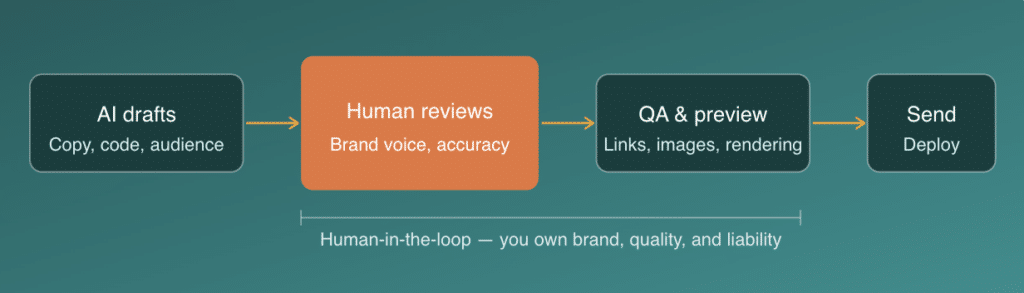
The role of the email marketer has undergone a profound transformation by 2026. No longer primarily a “builder” in the traditional sense, the modern email professional is an orchestrator. AI has absorbed the heavy lifting of repetitive tasks: drafting email copy, generating subject lines, segmenting audiences, coding complex tables, and even interpreting campaign results. The core value of the human marketer now lies in their ability to strategically manage and refine this AI output.
“In 2026, the email marketer’s skillset has evolved,” states Drew Price, Co-Founder at JRNY PPL. “It’s less about individual content creation and more about overseeing a symphony of automated processes. Our value is in guiding AI, ensuring brand voice integrity, and ultimately, delivering authentic experiences.”
With AI handling production, the primary job becomes quality assurance. Marketers must ensure that automation does not “hallucinate” – generating inaccurate or irrelevant content – or stray from established brand guidelines and messaging. A “human-in-the-loop” approach has proven to be incredibly effective, with studies indicating that AI-generated content reviewed and refined by a human achieves up to 40% higher quality and engagement compared to purely automated outputs. This involves diligent review of AI output within an email rendering preview environment, flagging content for stakeholder review when necessary, and meticulously checking all links, images, and dynamic elements for accuracy and functionality. The mantra for 2026 email marketing is clear: delegate labor, never liability. The human orchestrator remains the ultimate guarantor of brand integrity and campaign effectiveness.
6. Beyond the Copy: Leveraging AI for Holistic Customer Experience
The novelty of AI-generated copy has dissipated. In 2026, the strategic deployment of AI extends far beyond merely drafting text; its true power lies in enhancing the overall customer experience, particularly as subscribers grow more skeptical of generic, obvious AI content. The goal is to make AI invisible, working behind the scenes to create truly human-feeling interactions.
Examples of AI enhancing customer experience include:
- Predictive Personalization: AI analyzes past behavior to predict future needs, delivering proactive messages (e.g., “It looks like you might need more of X product soon!”).
- Dynamic Content Optimization: AI-powered systems can A/B test hundreds of content variations simultaneously, automatically optimizing images, headlines, and calls-to-action for each subscriber segment in real-time.
- Intelligent Segmentation: Beyond manual segmentation, AI can identify nuanced micro-segments within subscriber lists, enabling hyper-targeted campaigns that resonate more deeply.
- Automated Lifecycle Journeys: AI designs and optimizes complex customer journeys, triggering emails based on intricate behavioral cues, ensuring timely and relevant communication at every stage.
- Sentiment Analysis for Engagement: AI analyzes responses and engagement patterns to gauge subscriber sentiment, allowing for adaptive campaign adjustments to prevent churn or capitalize on positive feedback.
Crucially, every AI output must undergo human editing to ensure it aligns perfectly with the brand’s unique voice and feels authentic, rather than robotic. The goal is seamless, personalized experiences that feel intuitive, not algorithmic.
7. Strategic AI Integration: Expanding Capabilities Across the Workflow
While written content remains a popular output for generative AI, its utility in email marketing stretches far wider. The true advantage of AI in 2026 is its ability to streamline and optimize various aspects of the email workflow, unlocking efficiencies and insights previously unattainable.
Marketers are now leveraging AI for:
- Advanced A/B/n Testing: AI can rapidly generate and test numerous variations of subject lines, content blocks, and design elements, identifying optimal performers at scale.
- Journey Mapping and Optimization: AI analyzes complex customer journeys, identifies bottlenecks, and suggests improvements to email sequences for better conversion paths.
- Deliverability Monitoring and Prediction: AI algorithms can predict potential deliverability issues by analyzing sender reputation, content characteristics, and recipient engagement patterns, allowing for proactive adjustments.
- Image and Visual Asset Generation: AI-powered design tools create bespoke images, icons, and layout variations, significantly reducing design time and cost.
- Content Curation and Summarization: AI sifts through vast amounts of information to curate relevant content for newsletters, summarizing lengthy articles into digestible snippets for busy subscribers.
- Audience Segmentation and Predictive Modeling: AI goes beyond simple rules, identifying complex patterns in customer data to create highly effective, predictive audience segments.
8. The Imperative of Specialization and Advanced Automation
As email marketing continues to mature into a distinct and highly specialized medium, maintaining its status as one of the marketing channels with the highest return on investment (ROI) necessitates dedicated expertise and advanced tooling. Investing in a specialized email designer, equipped with the right tools, is no longer a luxury but a necessity.

“We’ve been playing checkers for too long and not enough chess,” observes Drew Price. “Looking at things more holistically and diversifying our investments with automation will go a long way. There’s just a bit of a mindset shift that we need to do.”
Beyond a dedicated email designer, marketing teams must critically evaluate and upgrade their automation tools. To accelerate design and development, marketers should prioritize:
- Robust Email Design Platforms: Tools offering drag-and-drop interfaces, AI-assisted layout generation, and pre-built, responsive templates.
- Reusable HTML Modules: A library of tested, on-brand HTML modules drastically cuts development time and ensures consistency.
- AI Design Tools: For generating diverse layout and style variants, allowing rapid prototyping and iteration.
- Comprehensive Marketing Automation Platforms (MAPs): Systems capable of orchestrating complex lifecycle campaigns, where a single automated email sequence can outperform numerous one-off sends in efficiency and impact.
9. Data Mastery: Fueling Personalized Engagement
Data management remains a persistent obstacle, yet its importance will only intensify as demands for hyper-personalization grow. High-quality, organized data is the bedrock of effective 2026 email marketing.
“Data collection and management is not a ‘set it and forget it’ proposition,” emphasizes Cynthia Price, SVP of Marketing at Validity. “You’d be surprised how much information subscribers will offer once you prove you’re asking questions to make their lives easier.”
Protecting sender reputation and ensuring deliverability begins at the point of entry. Tools like Validity’s BriteVerify are essential for validating email addresses, preventing soft bounces and maintaining list hygiene. Marketers must then strategically narrow their focus to key data points that drive action:
- Customer vs. Prospects: Differentiating communication strategies based on existing relationship status.
- Personalized Campaign Ideas:
- Customers purchasing multiple categories: Tailored gift guides or in-store visit invitations.
- Customers with one purchase, not a second: Targeted product recommendations to encourage repeat buys.
- Superfans (3+ purchases): Requests for reviews, social media shoutouts, or loyalty program invitations.
- Prospects browsing in the last 24 hours: “Back in stock” alerts or “get it before it’s gone” urgency emails.
- Prospects unengaged for 30+ days: Thoughtfully crafted re-engagement campaigns.
- Near-purchase prospects: Abandoned cart or abandoned browsing reminders with incentives.
The necessary data for these campaigns includes purchase history, browsing behavior, demographic information, geographic location, and expressed preferences. Integrating your email platform with CRM, Customer Data Platforms (CDPs), analytics tools, and broader marketing automation systems unlocks a wealth of insights, enabling superior personalization and clearer results attribution. Even without a complex tech stack, simple signup forms, preference centers, and in-email polls can surface invaluable zero-party data.
10. Ensuring Inclusivity: The Mandate for Accessibility

Email accessibility is no longer merely a best practice; it is a legal requirement under frameworks like the European Accessibility Act and similar emerging global legislation. Beyond compliance, it is fundamentally the right thing to do, ensuring that all subscribers, regardless of ability, can access and engage with your messages. Research from the World Health Organization (WHO) indicates that over 1 billion people worldwide experience some form of disability, highlighting the vast segment of the population impacted by inaccessible digital content.
Key best practices for email accessibility in 2026 include:
- Semantic HTML: Using proper HTML tags (e.g.,
<p>,<h1>,<a>) for structure and meaning, not just visual styling. - Descriptive Alt Text: Providing concise and informative
altattributes for all images, allowing screen readers to convey visual information. - Logical Reading Order: Ensuring content flows in a sequential and intuitive manner for screen reader users.
- Sufficient Color Contrast: Adhering to WCAG (Web Content Accessibility Guidelines) standards for text and background color contrast to aid users with visual impairments.
- Clear and Concise Language: Avoiding jargon, using short sentences, and maintaining a straightforward tone.
- Text Alternatives to Images of Text: Embedding text directly rather than as images, which are inaccessible to screen readers.
- Meaningful Link Text: Using descriptive link text (e.g., “Learn more about our services”) instead of generic phrases like “Click here.”
- Keyboard Navigation: Ensuring all interactive elements can be navigated and activated using only a keyboard.
Crucially, robust testing before sending is paramount. Relying solely on an Email Service Provider’s (ESP) built-in checks is often insufficient. Dedicated email testing tools, such as Litmus, offer comprehensive accessibility checks, including visual impairment filters, automated checks for alt text, text justification, table roles, and crucially, an NVDA screen reader preview. This rigorous pre-send review maximizes the impact of every email, ensuring reach and engagement for all subscribers.
The Future Outlook: Balancing Innovation and Authenticity
The roadmap for email marketing in 2026 presents an intriguing dichotomy: an intense drive for efficiency through advanced automation and AI, juxtaposed with an unwavering commitment to humanity and authenticity. While marketers will continue to explore innovative ways to leverage tools for speed and scale, the overarching priority must be the humanization of messages through deeply personalized content, empathetic communication, and an unyielding dedication to accessibility. The brands that successfully navigate this blend—harnessing technology to enhance human connection rather than replace it—will be the ones that thrive and forge lasting relationships with their increasingly savvy and discerning audiences. The future of email is not just smart, but also profoundly human.