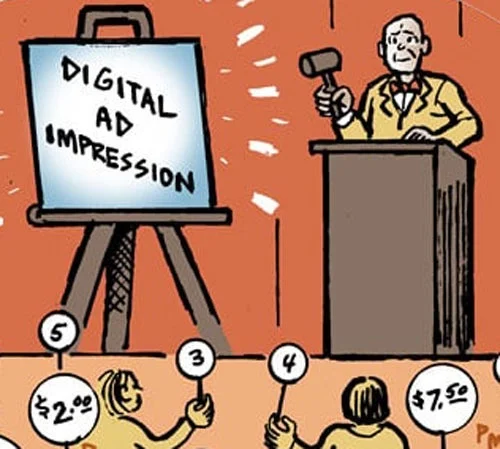
The complex and often opaque world of programmatic advertising is facing a significant shift towards greater clarity. The Media Rating Council (MRC), a prominent non-profit organization focused on media measurement and research, has unveiled a comprehensive set of new standards designed to illuminate the inner workings of digital ad auctions. Alongside these standards, the MRC has introduced a voluntary certification program for platforms that demonstrate adherence to these principles, aiming to foster trust and accountability across the digital advertising ecosystem.
For years, the programmatic advertising landscape has been characterized by a lack of transparency. Advertisers and publishers alike have often found themselves navigating a labyrinth of proprietary auction rules implemented by various platforms. This opacity has led to a general understanding that programmatic has become “almost synonymous with opacity,” as noted in industry discussions. The absence of standardized disclosure practices has made it challenging for stakeholders to fully comprehend how bids are processed, which factors influence winning bids, and how revenue is ultimately distributed. This lack of insight has fueled skepticism and hindered optimal decision-making for all parties involved.
The MRC’s initiative seeks to address this long-standing challenge by establishing a consistent framework for explaining auction mechanics. Ron Pinelli, the MRC’s SVP of digital research and standards, emphasized that the goal is not to mandate a single algorithmic approach or auction playbook for all platforms. Instead, the standards are designed to provide a universal language and structure for describing how these critical auctions function. “The purpose isn’t to force every platform to use the same auction playbook or a single algorithm,” Pinelli stated in remarks to AdExchanger. “Instead, the standards create a consistent framework for explaining how auctions work, and push platforms to disclose their ‘key decision variables’ for determining results, as well as any changes to their auction rules.”
A Framework for Fair Play and Accountability
The newly released standards, titled “MRC Digital Advertising Auction Transparency Standards,” are built on the principle that fair play in any auction environment necessitates a clear understanding of the rules. To qualify for the MRC’s transparency certification, platforms will be required to disclose a detailed list of auction parameters. This includes revealing the type of auction employed – whether it is a first-price, second-price, or modified second-price auction. Crucially, platforms must also specify whether factors beyond the bid price, such as demand source priority or seller-defined rules, play a role in determining the winning bid.
For publishers and Supply-Side Platforms (SSPs), the standards mandate transparency regarding the use of reserve prices or pricing floors. Furthermore, these pricing floors must be applied uniformly to all buyers, preventing the discriminatory practice of setting different floors for different participants. This ensures a more equitable playing field and reduces the potential for preferential treatment.
The genesis of this initiative can be traced back to a collaborative effort between the MRC and Omnicom Media Group, a major advertising holding company. The two entities began assembling a steering team in early 2024 to guide the development of these standards, garnering support from a broad spectrum of industry players. The initiative attracted endorsements from nearly 70 companies and organizations, including major technology platforms like Meta, TikTok, and X. Leading publishers, prominent advertising agencies, and influential ad tech vendors such as The Trade Desk and Hearst also lent their support. Key industry trade organizations, including the 4A’s, ANA, WFA, and the IAB Tech Lab, were instrumental in the collaborative process.
Ben Hovaness, chief media officer of Omnicom-owned OMD Worldwide, emerged as a driving force behind this project. His deep-seated interest in programmatic ad auction theory, coupled with his surprise at the industry’s lack of standardized disclosure practices, propelled the initiative forward. Hovaness has been actively involved in educating his internal teams about ad auctions since 2014 and has a history of collecting official auction rule disclosures from major platforms like Google, Meta, and Amazon for Omnicom’s Council on Accountability and Standards in Advertising. In 2023, he brought his vision to the MRC, aiming to establish the industry’s first robust standard for auction rules and the disclosure of any changes to them.
“It always seemed unreasonable to ask advertisers or agencies to place a bid in an auction where the rules are unknown,” Hovaness explained. He articulated that such a lack of transparency not only erodes trust between advertisers and sellers but also degrades the advertiser-agency relationship. Hovaness drew a parallel to traditional auction environments, stating that the current opacity in programmatic is “unthinkable.” He elaborated, “If you go to Sotheby’s or Christie’s, you get a term sheet at the door that says exactly how the auction works, how much the auction house is taking – all the associated fees and rules. That is how you run a good auction with high integrity.”
The broader implication of increased transparency, according to Hovaness, is the ability for both buyers and sellers to “check each other’s homework.” This mutual accountability is expected to improve relationships between publishers and advertisers, as well as between brands and their agency partners. Pinelli further highlighted that clearer insights into auction logic will empower both sides to refine their pricing and bidding strategies, leading to more efficient and effective campaign execution.
Mandatory Specifications and Industry Adoption
While the MRC standards allow platforms the flexibility to incorporate proprietary rules into their auction logic, these rules must be disclosed. However, a set of fundamental requirements is non-negotiable for certification. Hovaness described these as the “bare minimum for eliminating inconsistent – and, in some cases – deliberately deceptive – practices from ad auctions.”
According to Pinelli, these foundational requirements are also intended to encourage the adoption of updated specifications promoted by the IAB Tech Lab, particularly within the OpenRTB (Open Real-Time Bidding) protocol. Some of these specifications have faced slow industry adoption, while others have ignited significant debate.
A key example is the requirement for platforms to exclusively use the new video.plcmt field for labeling and decision-making concerning online video ads. The IAB Tech Lab introduced video.plcmt to the OpenRTB specification in 2023 to establish a clearer distinction between “instream” and “outstream” video ad placements. Despite this, many Demand-Side Platforms (DSPs) and SSPs have continued to utilize the older, now-deprecated video.placement specification or, in some instances, employed both. The MRC’s new standards aim to standardize industry practice on the more current and precise video.plcmt field.
Addressing Controversial Standards: TIDs and GPIDs
In a move that addresses a significant point of contention within the industry, the MRC standards now mandate the universal adoption of Transaction IDs (TIDs), aligning with the IAB Tech Lab’s OpenRTB specification. TIDs were at the center of a public dispute last year involving Prebid.org and The Trade Desk. Prebid initially disabled TIDs by default in an August update, sparking concern among publishers. While Prebid later allowed publishers to revert to universal TIDs, they remained disabled by default.
The absence of Prebid.org from the list of contributors to the MRC’s new transparency standards is notable, given this history. Prebid declined to comment on its nonparticipation. However, Pinelli assured that the MRC is not solely prioritizing buy-side concerns. The new transparency standards also require DSPs to submit multiple bids per auction. This provision aims to provide publishers with enhanced visibility into bidding competition without resorting to duplicating bid requests or obscuring TIDs, which can facilitate bid duplication.
Furthermore, the multi-bidding provision serves as a compromise for the requirement that publishers and SSPs include a Global Placement ID (GPID) – a unique identifier for each ad placement – in every bid request. Pinelli explained that this requirement is crucial for standardizing data and improving auction efficiency.
Spurring Industry-Wide Adoption
Despite the MRC’s efforts to secure broad industry involvement, some significant players remain absent from the list of direct participants. Google and Amazon, two dominant ad-buying platforms that also manage publisher inventory and have historically faced scrutiny over their auction transparency, did not participate directly in the standards development. Neither company provided a comment in time for publication.
Ron Pinelli acknowledged this reality, stating, “The MRC can’t compel any organization to [participate].” He further clarified that while some organizations did not participate directly, they did engage by providing comments during the public comment period. Participation in the MRC’s transparency certification program is voluntary. Platforms that opt in will undergo annual reevaluations to ensure ongoing compliance. It is important to note that this transparency accreditation operates entirely independently of other MRC accreditations.
Looking ahead, the MRC’s transparency steering team is actively developing solutions tailored for mid- and long-tail publishers who may lack the resources to navigate the full accreditation process. The group is also focused on establishing new standards for incrementality measurement, another critical area for advertisers seeking to understand the true impact of their campaigns.
The challenge of spurring widespread industry adoption of new standards is a well-recognized hurdle. Ben Hovaness expressed optimism, encouraging advertisers, particularly larger brands, to leverage their relationships with major sell-side platforms. “If there’s enough advertiser interest,” Hovaness stated, “then this is going to move ahead.” The collective voice and demand from advertisers are seen as a critical catalyst for driving the industry towards greater transparency and accountability in programmatic ad auctions. This initiative represents a significant step forward in demystifying the digital advertising ecosystem, fostering a more trustworthy and efficient marketplace for all participants.