

The landscape of digital communication has undergone a significant transformation, with email authentication emerging as a non-negotiable cornerstone for effective and secure messaging. What was once considered a best practice for discerning senders has now become a mandatory requirement, driven by stringent new policies from major mailbox providers (MBPs) like Gmail, Yahoo, and Microsoft. This shift underscores a collective industry effort to combat persistent threats such as phishing, spoofing, and spam, ultimately aiming to safeguard user inboxes and preserve the integrity of email as a vital communication channel. Understanding and implementing robust email authentication protocols is no longer merely a technical exercise but a strategic imperative for any entity sending email today.
The Escalating Importance of Email Authentication
For years, email deliverability professionals have gra emphasized the critical role of email authentication. The term, often “thrown around” in discussions about inbox placement, refers to a suite of digital security measures designed to verify the legitimacy of an email’s sender and ensure its content remains untampered during transit. As email expert Dela Quist recently articulated on the “Email After Hours” podcast, these measures fundamentally confirm three things: that the message originates from the claimed sender, that it has not been altered since it left the sender’s server, and that the recipient’s server knows how to handle messages that fail these checks.
The necessity of such protocols stems from the very open nature of the original Simple Mail Transfer Protocol (SMTP), which lacked inherent security features. This vulnerability was exploited extensively by malicious actors, leading to an explosion of spam, phishing attacks, and brand impersonation. Reports from organizations like the Anti-Phishing Working Group (APWG) consistently show millions of phishing attacks annually, with email remaining the primary vector. The financial cost of email-based cybercrime is staggering, with businesses losing billions of dollars each year to business email compromise (BEC) and other sophisticated scams. In this context, email authentication standards evolved from collaborative efforts by groups including the IETF’s Anti-Spam Research Group, Yahoo, and Cisco, culminating in the five core technologies that underpin secure email delivery today: Sender Policy Framework (SPF), DomainKeys Identified Mail (DKIM), Domain-based Message Authentication, Reporting & Conformance (DMARC), Authenticated Received Chain (ARC), and Brand Indicators for Message Identification (BIMI).
A Historical Perspective: The Battle Against Email Fraud
The journey towards comprehensive email authentication has been incremental, driven by the ever-evolving tactics of spammers and phishers. In the early days of the internet, sending email was relatively unregulated, leading to widespread abuse. The initial response came in the form of blacklists and content filtering, which, while helpful, were often reactive and prone to false positives.
- Early 2000s: The concept of Sender Policy Framework (SPF) emerged. Developed primarily by Meng Weng Wong, SPF aimed to allow domain owners to publish a list of authorized sending IP addresses in their Domain Name System (DNS) records. This provided a foundational layer of sender verification, making it harder for unauthorized servers to send email claiming to be from a legitimate domain.
- Mid-2000s: Simultaneously, DomainKeys (DK), developed by Yahoo, and Identified Internet Mail (IIM), developed by Cisco, arose to address the problem of message integrity. These separate standards both focused on cryptographic signing of emails to ensure content hadn’t been tampered with. They eventually merged to form DomainKeys Identified Mail (DKIM) in 2007, standardized by the IETF. DKIM offered a robust way to verify that the message content originated from the domain it claimed and had not been altered in transit.
- Early 2010s: Despite SPF and DKIM, a crucial piece was missing: a unified policy for how receiving servers should handle messages that failed these checks, and a mechanism for domain owners to receive feedback on their email authentication performance. This led to the creation of DMARC (Domain-based Message Authentication, Reporting & Conformance) in 2012, a collaborative effort involving major players like PayPal, Google, Microsoft, and Yahoo. DMARC provided a policy layer and a reporting mechanism, allowing senders to dictate how unauthenticated emails should be treated and gain visibility into potential spoofing attempts. Its introduction marked a significant turning point, moving email security from optional recommendations to enforceable policies.
- Mid-2010s: The Authenticated Received Chain (ARC) was developed to address a specific challenge: legitimate emails that passed through intermediaries like mailing lists or forwarding services often had their authentication broken due to modifications made during transit. ARC provides a standardized way for intermediate servers to attest to the original authentication status, preserving deliverability for legitimate forwarded mail.
- Late 2010s/Early 2020s: As email security matured, the focus expanded to include brand identity and user trust at a glance. Brand Indicators for Message Identification (BIMI) emerged, allowing brands with strong authentication (especially DMARC at enforcement) to display their registered logos next to their emails in supported inboxes, providing an immediate visual cue of authenticity.
The New Imperative: Mailbox Provider Mandates
The historical evolution of email authentication culminated in early 2024 with unprecedented, unified mandates from the world’s largest mailbox providers: Gmail, Yahoo, and Microsoft. These giants, collectively handling a significant majority of global email traffic (with Gmail alone accounting for over 1.8 billion active users and a substantial market share, followed closely by Yahoo Mail and Outlook.com), declared that proper email authentication is no longer optional.
The mandates, primarily targeting bulk senders (typically defined as those sending 5,000 or more messages per day to Gmail or Yahoo addresses), set clear expectations for all senders, irrespective of volume:
- Authentication: All senders must authenticate their emails with SPF, DKIM, and DMARC. For bulk senders, a DMARC policy of at least
p=none(monitoring mode) is the minimum requirement. - Easy Unsubscribe: Senders must provide a one-click unsubscribe option in the email header, and process unsubscribe requests within two days. This addresses a major user frustration and reduces the likelihood of recipients marking legitimate emails as spam.
- Low Spam Rate: Senders must maintain a spam complaint rate below 0.3%, with a recommended rate below 0.1%. High spam rates signal to MBPs that recipients do not want the mail, regardless of authentication.
These requirements began to roll out in phases. Gmail, for instance, started progressively rejecting non-compliant traffic in April 2024, initially with temporary rejections. By late 2025, non-compliant senders will face permanent rejections, effectively preventing their emails from reaching Gmail users. Yahoo and Microsoft have adopted similarly firm stances, signaling a zero-tolerance policy for unauthenticated or poorly managed email streams. The message is unequivocal: businesses that rely on email for communication must comply or risk being shut out of their subscribers’ inboxes entirely.
Understanding the Core Pillars of Email Authentication

To fully appreciate the impact of these mandates, a closer look at each core authentication method is essential, framed in practical, accessible terms.
Sender Policy Framework (SPF): The Authorized Sender List
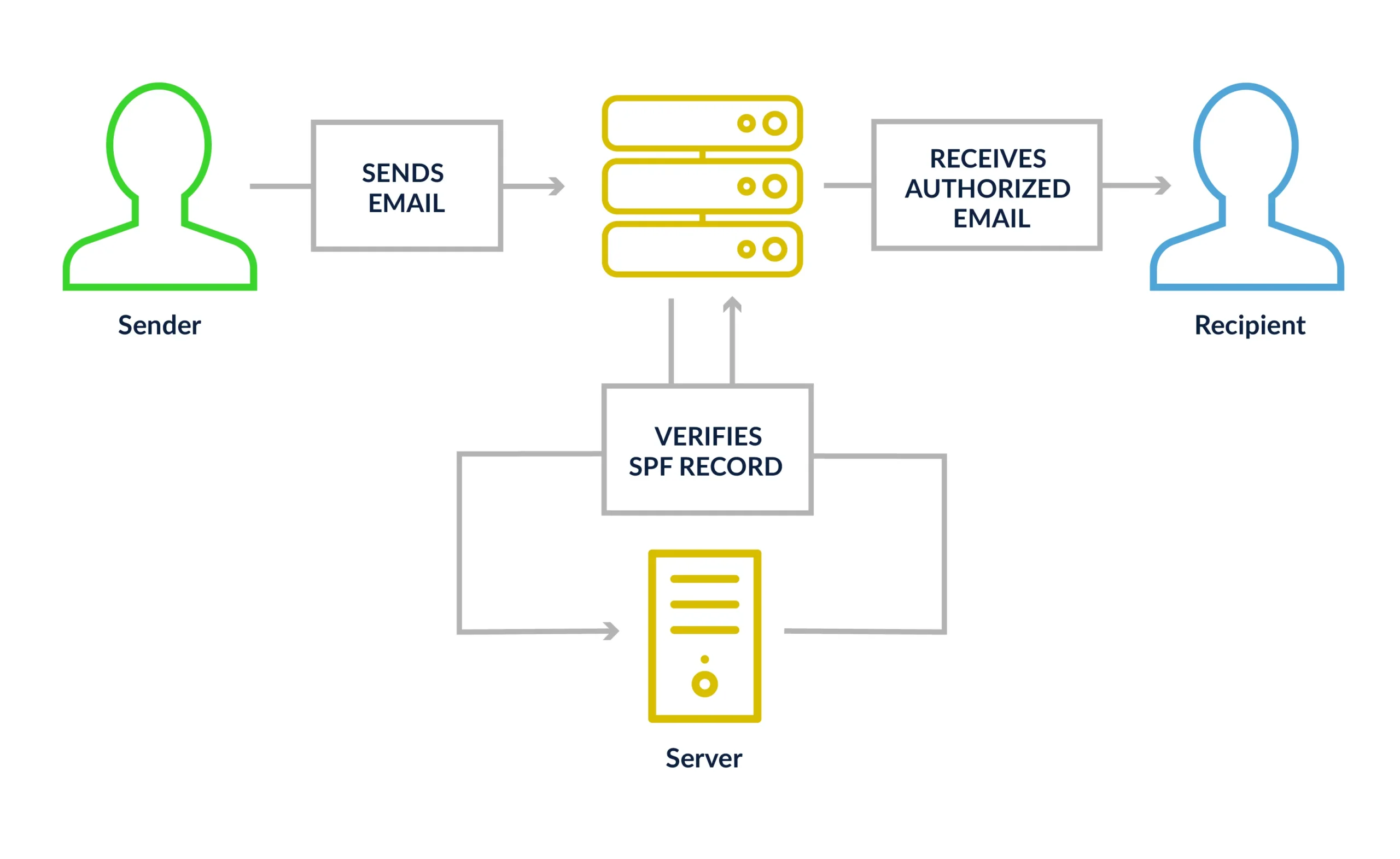
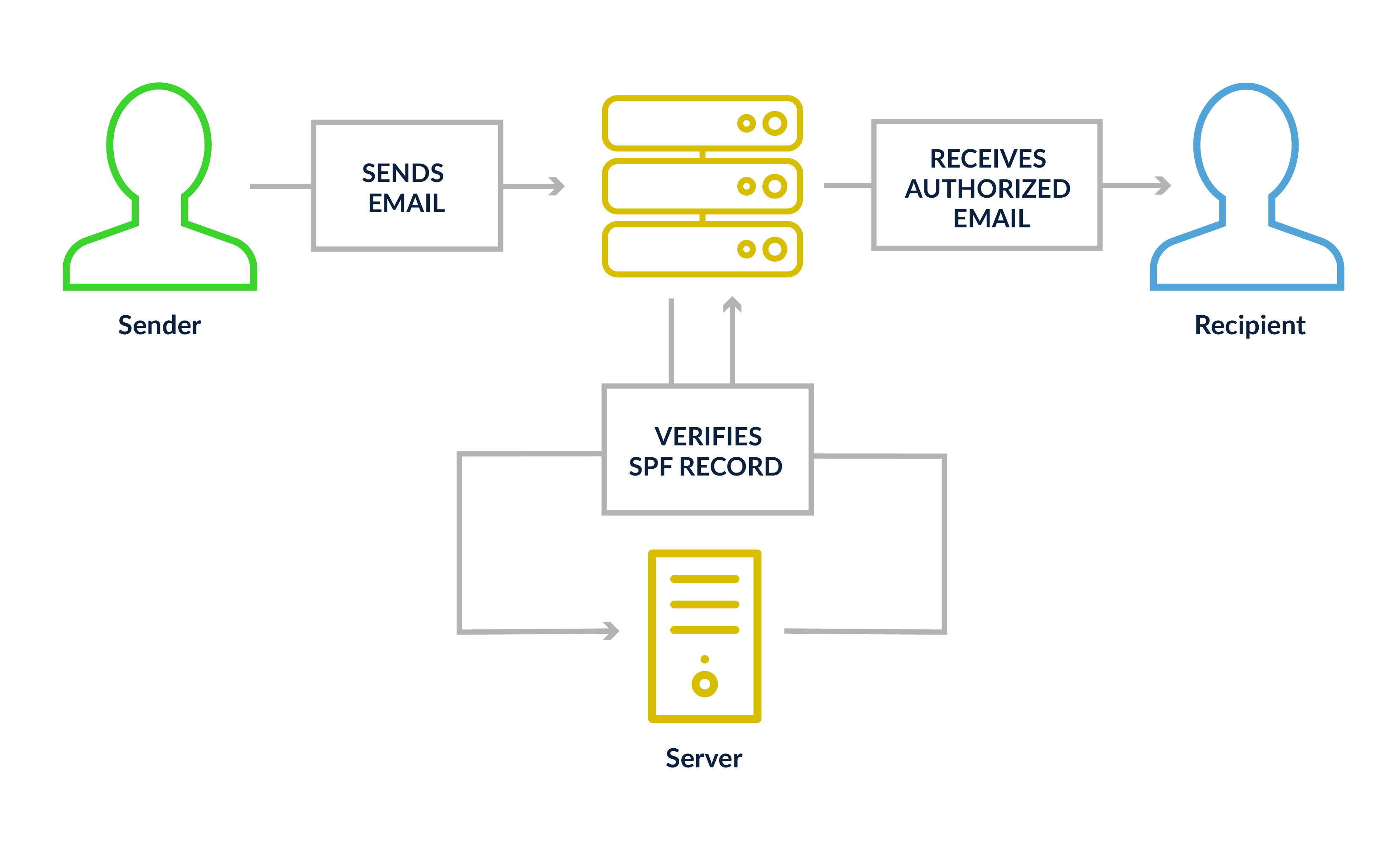
Imagine SPF as the bouncer at an exclusive club, checking a guest list. Your domain, say example.com, publishes a specific record in its DNS that lists all the IP addresses and domains explicitly authorized to send email on its behalf. When a receiving mail server gets an email claiming to be from example.com, it checks this SPF record. If the sending IP address isn’t on the list, the receiving server knows something is amiss and can flag the email as suspicious or outright reject it.
An SPF record can include individual IP addresses, IP ranges, or references to third-party email service providers (ESPs) like Mailchimp or HubSpot, using an include mechanism. It also allows for enforcement levels:
+all: Pass (rarely used, essentially allows anyone to send).~all(Soft Fail): The message might be legitimate but came from an unauthorized server; accept but mark as suspicious. This is a common starting point.-all(Fail): The message definitely came from an unauthorized server; reject or quarantine. This is the strongest enforcement.
A common pitfall with SPF is the “permerror” caused by exceeding the 10-DNS-lookup limit. Each include statement or a, mx, ptr mechanism in an SPF record counts as a DNS lookup. If a sender uses too many third-party services, they can hit this limit, causing SPF to fail completely, even for legitimate emails. Proper management, often involving flattening SPF records or consolidating sending services, is crucial.
DomainKeys Identified Mail (DKIM): The Tamper-Evident Seal
DKIM functions like a tamper-evident seal on a physical package. When your mail server dispatches an email, it digitally “stamps” it with a cryptographic signature. This signature is generated using a private key, which is kept secret by your domain. The corresponding public key is published in your domain’s DNS records. When a receiving server gets your email, it uses the public key to verify the signature. If any part of the email’s headers or body (as specified by the DKIM policy) has been altered during transit, the signature verification will fail, indicating tampering.
Key considerations for DKIM include:
- Key Length: Modern security standards require a minimum key length of 2048 bits. Older 1024-bit keys are considered less secure and may not be trusted by MBPs. Most reputable ESPs manage this automatically, but it’s a critical detail for self-managed sending infrastructure.
- Header and Body Hashing: DKIM specifies which parts of the email (specific headers, a portion of the body) are included in the signature. Changes to these signed parts will break the signature.
Domain-based Message Authentication, Reporting & Conformance (DMARC): The Policy Enforcer
If SPF is the guest list and DKIM is the tamper seal, DMARC is the comprehensive security guard, directing what happens when either of those checks raises a flag. Crucially, DMARC introduces the concept of “alignment.” For DMARC to pass, the domain in the From: header (the one recipients see) must “align” with the domain used in the SPF check or the DKIM signature. Without this alignment, DMARC will fail, even if SPF or DKIM passed individually. This prevents sophisticated spoofing where a sender might pass SPF for a legitimate relay server but still spoof the visible From address.
DMARC policies are defined in your DNS record and tell receiving servers how to handle emails that fail authentication:
p=none: Monitor only. Take no action, but send reports. This is the minimum required by MBPs for bulk senders and is an excellent starting point for gathering data.p=quarantine: Send failing messages to the recipient’s spam folder.p=reject: Block failing messages entirely, preventing them from reaching the inbox or spam folder. This is the strongest policy and the ultimate goal for brands committed to security.
A significant benefit of DMARC is its reporting feature. MBPs send daily aggregate reports (RUA records) to designated email addresses, detailing which messages passed or failed authentication, which IPs were involved, and whether alignment was achieved. These reports are invaluable for identifying legitimate sending sources that might be misconfigured, detecting unauthorized senders spoofing your domain, and fine-tuning your email infrastructure.
Authenticated Received Chain (ARC): Preserving Trust in Forwarded Mail
ARC addresses a specific problem inherent in the email ecosystem: mail forwarding. When an email passes through an intermediary system, such as a mailing list server, an email archiving service, or a security gateway, it often undergoes modifications. These modifications (e.g., adding a footer, changing headers) can inadvertently break the original DKIM signature, causing DMARC to fail, even if the original message was perfectly legitimate.
ARC acts as a “paper trail” or chain of custody. Each intermediate server that processes an email and modifies it will add an ARC seal, logging the authentication results it observed before making changes and cryptographically signing that information. When the email finally reaches its destination, the receiving server can examine the ARC chain. If the chain is intact and shows the email started its journey properly authenticated, the receiving server can choose to override a subsequent DMARC failure, thereby ensuring legitimate forwarded emails are delivered. Unlike SPF, DKIM, and DMARC, ARC is not something individual senders configure directly; it’s implemented by mail servers in the middle of the email path.
Brand Indicators for Message Identification (BIMI): Visual Trust and Brand Presence
BIMI is a relatively newer standard focused on enhancing brand recognition and trust directly in the recipient’s inbox. It allows a brand’s verified logo to be displayed alongside the sender’s name in supported email clients (like Gmail and Apple Mail) even before the email is opened. This visual cue provides instant recognition and a strong signal of authenticity to recipients, helping to differentiate legitimate brand communications from phishing attempts.
Implementing BIMI has strict prerequisites:
- Strong DMARC Policy: Your domain must have SPF, DKIM, and a DMARC policy set to either
p=quarantineorp=reject. Ap=nonepolicy is insufficient for BIMI. - Verified Mark Certificate (VMC) or Common Mark Certificate (CMC):
- VMC: The original certification option, requiring the brand’s logo to be a registered trademark. VMCs are issued by authorized Certificate Authorities (CAs) like DigiCert. A VMC unlocks full BIMI support, including the coveted blue checkmark next to the sender’s name in Gmail, further signifying verified authenticity.
- CMC: A newer, more accessible option introduced in 2024, which does not require a registered trademark. Instead, it demands proof that the logo has been publicly displayed and in consistent use for at least 12 months. Google began accepting CMCs in 2024, broadening BIMI’s reach. CMC holders will get logo display in Gmail but not the blue checkmark, which remains exclusive to VMC holders.
BIMI represents the pinnacle of email authentication, leveraging the underlying security standards to build visible brand trust and enhance the recipient experience.
Strategic Implications for Businesses
The implications of these new mailbox provider mandates are profound and far-reaching for businesses of all sizes. Email remains a dominant channel for marketing, customer service, transactional notifications, and internal communications. The ability to reliably reach the inbox directly correlates with business success.
- Improved Deliverability and ROI: Properly implemented authentication significantly improves deliverability rates. MBPs prioritize authenticated mail, seeing it as more trustworthy. For marketing, this means higher open rates, click-through rates, and ultimately, better campaign ROI. For transactional emails (e.g., password resets, order confirmations), it ensures critical information reaches customers promptly.
- Enhanced Brand Reputation and Trust: Consistent authentication builds and protects brand reputation. When customers receive emails that are visibly authenticated (especially with BIMI logos and blue checkmarks), their trust in the sender increases. Conversely, a lack of authentication or frequent placement in spam folders erodes trust and can lead to brand damage. A study by the Global Cyber Alliance highlighted that DMARC adoption dramatically reduces the success rate of phishing attacks impersonating a brand.
- Reduced Fraud and Cyber Security Risk: The primary driver for MBPs’ mandates is to combat email-based fraud. By enforcing SPF, DKIM, and DMARC, they make it exponentially harder for phishers and spoofers to impersonate legitimate businesses. DMARC reporting, in particular, provides early warning systems for brands to detect and respond to malicious attempts to use their domain.
- Operational Efficiency: While initial setup requires technical effort and coordination, robust authentication reduces the time and resources spent troubleshooting deliverability issues, dealing with spam complaints, and managing brand impersonation incidents.
- Competitive Advantage: As compliance becomes universal, businesses that lag in authentication will find their email communication severely hampered, losing ground to competitors who have embraced these standards.
Navigating the Path Forward: Compliance and Beyond
For organizations, achieving and maintaining email authentication compliance is a multi-step process:
- Audit Existing Sending Infrastructure: Identify all systems and third-party services that send email on behalf of your domain (e.g., marketing automation platforms, CRM systems, transactional email services, internal mail servers).
- Implement SPF and DKIM: Ensure all identified sending sources are correctly authorized in your SPF record and that DKIM signatures are properly applied to all outgoing mail. This often involves working closely with ESPs or internal IT teams.
- Deploy DMARC with a
p=nonePolicy: Start with a monitoring-only policy (p=none) to gather data through aggregate reports. Analyze these reports diligently to identify legitimate email streams that might be failing authentication and fix any misconfigurations. This phase is crucial and can take weeks or months depending on the complexity of your sending environment. - Advance DMARC Policy: Once confidence is gained that all legitimate emails are passing authentication, progressively move the DMARC policy to
p=quarantineand thenp=reject. This actively protects your domain from spoofing. - Consider BIMI: For brands seeking enhanced visual trust, implement BIMI once DMARC is at enforcement (
p=quarantineorp=reject). This involves creating a properly formatted SVG logo and obtaining a VMC or CMC. - Monitor Continuously: Email authentication is not a one-time setup. Regular monitoring of DMARC reports, spam complaint rates, and deliverability metrics is essential to react to changes in sending infrastructure or evolving threat landscapes. Tools like those offered by Validity or Litmus provide infrastructure checks and reporting dashboards to simplify this ongoing management.
The initial investment of time and resources into configuring and monitoring these authentication measures might seem daunting, especially for smaller businesses or those with complex legacy systems. However, the cost of inaction – lost customers, damaged reputation, and outright email rejection – far outweighs the challenges of compliance.
Conclusion: The Future of Secure Email Communication
The mandates from Gmail, Yahoo, and Microsoft mark a definitive turning point for email communication. They elevate email authentication from a technical recommendation to a fundamental prerequisite for participation in the digital ecosystem. This collective push towards a more secure and trustworthy email environment benefits everyone: recipients are better protected from fraud, businesses can communicate more effectively and securely with their audiences, and mailbox providers can more efficiently manage and filter incoming mail.
Email authentication, particularly the foundational trio of SPF, DKIM, and DMARC, is no longer merely about improving deliverability; it’s about safeguarding brand integrity, fostering customer trust, and ensuring the continued viability of email as the internet’s most pervasive communication tool. As the digital landscape continues to evolve, proactive adherence to these standards, coupled with continuous monitoring and adaptation, will be paramount for any organization striving for successful and secure email engagement. The path forward is clear: authentication is the indispensable foundation, not the finish line, for trusted email communication.








