The digital advertising arena is in constant flux, and Google Ads, a dominant player in search engine marketing, is no exception. A significant wave of change, marked by the integration of artificial intelligence and adjustments to core targeting functionalities, has left many advertisers grappling with a mix of hype, confusion, and conflicting advice. Terms like “keywordless targeting,” “close variants,” the deprecation of Dynamic Search Ads, and the ascendancy of AI Max from Search to Shopping campaigns have created a complex environment. This has led to polarized sentiments, with some proclaiming “broad match is terrible!” while others insist “you have to use AI Max now!” or conversely, “AI Max is dumb!” This article aims to demystify these developments, dissecting the similarities and differences between broad match and AI Max, and providing a framework for advertisers to make informed decisions for their Google Search campaigns.
The Genesis of Confusion: A Shifting Paradigm in Search
The recent shifts in Google Ads targeting reflect a broader industry trend towards leveraging artificial intelligence to automate and optimize advertising efforts. Historically, advertisers relied heavily on meticulously curated keyword lists, employing various match types (broad, phrase, exact) to control which searches triggered their ads. However, as search behavior becomes more nuanced and user intent more complex, Google has increasingly pushed its AI capabilities to bridge the gap between advertiser offerings and user queries.
The move away from strict keyword control towards more intent-based and automated solutions stems from Google’s vast data reserves and its sophisticated machine learning algorithms. The company’s stated goal is to help advertisers discover new opportunities, improve campaign efficiency, and ultimately drive better results. Yet, for many advertisers accustomed to granular control, this transition can feel disorienting, especially when faced with conflicting recommendations from industry experts and the platform itself. The deprecation of certain functionalities, like Dynamic Search Ads, and the introduction of new, AI-driven features like AI Max, have amplified this sense of uncertainty.
Understanding the Similarities: Where AI Max and Broad Match Converge

At their core, both broad match and AI Max represent automated approaches to search targeting, designed to expand an advertiser’s reach beyond the confines of precise keyword matching. A key shared characteristic is their reliance on Smart Bidding strategies. This means that both functionalities leverage Google’s AI to automatically adjust bids in real-time, aiming to maximize conversions or achieve other defined campaign goals.
Furthermore, both broad match and AI Max are engineered to uncover relevant search queries that an advertiser might not have anticipated or explicitly included in their keyword list. They achieve this by analyzing a wide array of signals. These signals can include the content of the advertiser’s landing pages, the creative elements of their ads (headlines and descriptions), other keywords present within the ad group, and historical campaign performance data. By considering these diverse inputs, the AI can determine which ad auctions to participate in and how much to bid, all in conjunction with the chosen bid strategy.
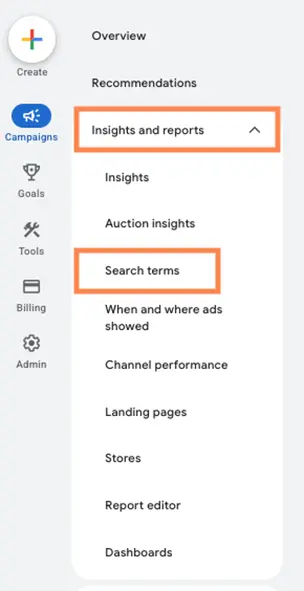
The learning curve associated with both broad match and AI Max is also a significant point of similarity. Because they are powered by AI, these tools require data to learn and refine their targeting. In the initial stages of implementation, advertisers may observe a proliferation of search terms that appear generic, irrelevant, or even nonsensical in the search terms report. This is a natural part of the learning process. The more conversion data a Search campaign can accumulate, the more effectively the AI can discern which queries and user demographics are likely to yield valuable outcomes and which are not.
The learning period’s duration is not fixed and is highly dependent on the volume of data the campaign receives. For instance, a campaign generating 50 conversions daily will likely achieve a significant level of learning within a day or two, with continued refinement thereafter as auction dynamics evolve. Conversely, a campaign with only five monthly conversions may not gather sufficient data before the advertiser becomes discouraged and suspends the campaign.
Despite their broad reach, both broad match and AI Max are designed to respect negative keywords. Advertisers can utilize negative keywords to prevent their ads from showing for irrelevant searches. However, the effectiveness of keyword optimization, particularly with these broader targeting methods, can be challenging. A substantial percentage of search terms – often between 50% and 80% – may fall under an “Other search terms” category, making it difficult to meticulously manage. Therefore, advertisers must exercise caution when applying negative keywords, as they can inadvertently exclude valuable traffic.
Key Distinctions: Unpacking the Unique Capabilities of AI Max
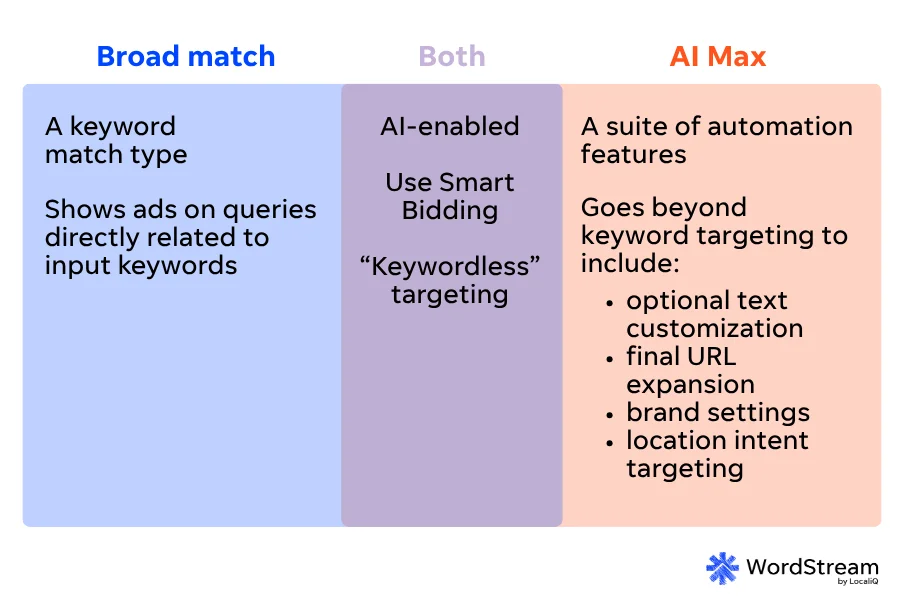
While the “keywordless” aspect of broad match and AI Max might seem similar, the comprehensive nature of AI Max sets it apart. Broad match is fundamentally a keyword match type that instructs Google to find queries related to the provided keyword. In contrast, AI Max for Search Campaigns is a more encompassing suite of automation features. It not only incorporates keywordless targeting but also offers advanced functionalities such as optional text customization, final URL expansion, brand settings, and location intent targeting.
Dynamic Text Customization: Beyond Responsive Search Ads
One of the most significant differentiators of AI Max is its capacity for text customization. When this feature is enabled alongside keywordless targeting, Google’s AI can dynamically generate headlines and descriptions for ads. While it can still utilize the existing 15 headlines and four descriptions from Responsive Search Ads (RSAs), AI Max has demonstrated the ability to create a much wider array of ad copy variations. These generated texts can range from closely mirroring existing ad copy to venturing into entirely novel and potentially unexpected territory.
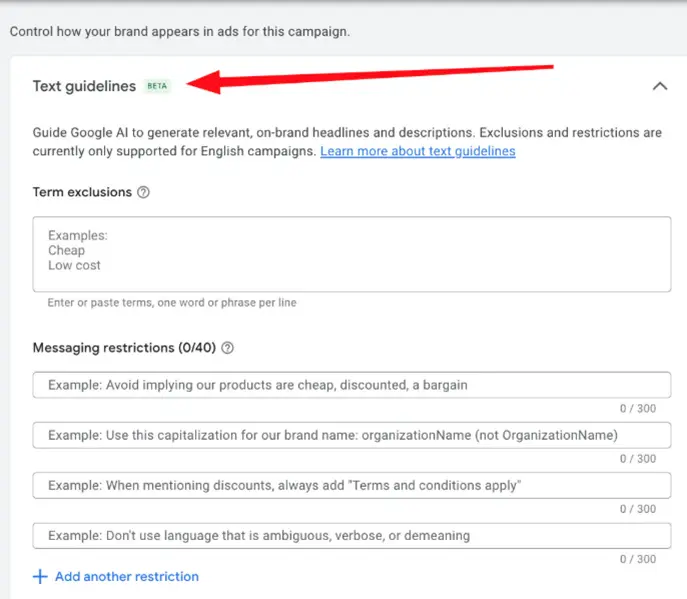
The recent introduction of features like “AI Brief” and the anticipated “text disclaimers” option are aimed at enhancing the effectiveness and transparency of this text customization. These advancements suggest Google’s commitment to refining AI-generated ad copy, making it more relevant and aligned with advertiser objectives. The ability to dynamically craft ad copy tailored to specific user queries can lead to improved ad relevance and higher click-through rates.
Final URL Expansion: Intelligent Landing Page Selection
AI Max, akin to Performance Max (PMax), offers the option for final URL expansion. This feature allows Google to direct users to any relevant page on an advertiser’s website, rather than being restricted to the single designated final URL. For AI Max for Search and AI Max for Shopping, enabling final URL expansion necessitates having text customization turned on.
A key advantage of AI Max over PMax in this regard is the provision of detailed landing page reporting. This reporting allows advertisers to ascertain precisely which landing pages their paid traffic was directed to and how those pages performed. This granular insight is crucial for understanding the effectiveness of the AI’s landing page selection and for making informed optimization decisions.
Brand Settings: Enhanced Control Over Brand Visibility
Brand inclusions and exclusions, a feature previously compatible with broad match, have now been “upgraded” to AI Max. This means that advertisers must utilize AI Max’s keywordless targeting to leverage these brand settings. Essentially, this allows advertisers to specify whether their ads should appear for searches that include or exclude their brand name, or those of their competitors.
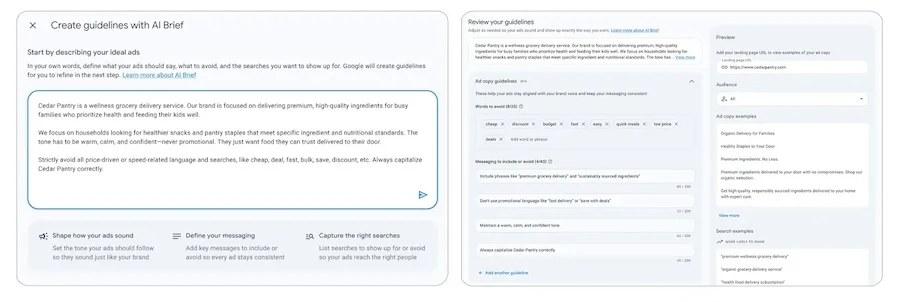
This feature is particularly beneficial for established brands or those operating in competitive markets. The ability to fine-tune brand visibility ensures that advertising spend is directed towards relevant audiences while mitigating potential brand dilution or unwanted competition. As with most AI-powered features, brand settings tend to perform optimally with more established brands and larger advertising budgets, allowing the AI sufficient data to refine its targeting.
Location Intent Targeting: Precision in Geographic Reach
AI Max has introduced a novel capability for location intent targeting at the ad group level. This allows for a more sophisticated approach to reaching specific audiences. For instance, an advertiser could set their overall campaign location targeting to the United States but specify an ad group’s intent targeting to Toronto. With keywords like “hotel” or “5-star hotels,” the AI would then match these ads with users expressing interest in Toronto hotels, even if their general location settings are broader.
This feature is designed to understand nuanced geographic intent. If a user searches for “hotels in Kensington Market” or “Skydome hotel,” the AI-powered location intent will recognize that both Kensington Market and Skydome are specific locations within Toronto, thereby serving the ad to the most relevant user. This level of granular control can significantly improve the efficiency of location-based advertising.
Enhanced Search Term Reporting: Deeper Insights into Ad Performance
A critical advantage of AI Max over broad match is the enhanced search term reporting it provides. With broad match, advertisers cannot ascertain which specific Responsive Search Ad headline was displayed alongside a particular search query. AI Max, however, offers a more detailed search terms report that will display the exact search term, the specific headline(s) that served with it, and the landing page the user was directed to.
This detailed reporting is invaluable for understanding ad performance at a granular level. It allows advertisers to identify which ad copy resonates best with specific search queries, understand the user journey, and make more informed adjustments to their ad creative and landing page strategies. Vigilant monitoring of this detailed report during the initial weeks of using AI Max is crucial to detect and address any unintended AI behavior.
AI Max vs. Broad Match: Making the Strategic Choice
Given the array of AI Max-exclusive features, including brand settings, text customization, and AI Brief, the recommendation has shifted towards favoring AI Max over broad match keywords. Broader query targeting is more likely to yield conversions when complemented by customized ad copy and, if necessary, a tailored landing page. AI Max is demonstrably better equipped to achieve this synergy than traditional broad match, particularly in the evolving landscape of AI-first ad formats like those appearing in AI Overviews and AI Mode.
| Capability | Broad Match | AI Max |
|---|---|---|
| Runs in Search campaigns | Yes | Yes |
| Uses Smart Bidding | Yes | Yes |
| Expands reach beyond exact keyword wording | Yes | Yes |
| Matches based on search intent | Yes | Yes |
| Works with negative keywords | Yes | Yes |
| Aims to drive more conversions | Yes | Yes |
| Requires keywords as primary targeting method | Yes | Optional – can also use keywordless signals |
| Discovers searches beyond provided keywords | Limited to keyword intent expansion | More aggressively uses AI to discover new queries |
| “Keywordless” targeting | Targets keywords beyond input, but base keywords needed | Yes |
| Uses landing page content as a targeting signal | Yes | Yes |
| Uses website content to find new opportunities | Yes | Yes |
| Automatically customizes ad copy | No | Yes |
| Automatically selects the most relevant landing page | No | Yes |
| Final URL Expansion | No | Yes |
| Text customization/generative AI assets | No | Yes |
| Additional AI-driven query matching controls | No | Yes |
| Locations of Interest controls | No | Yes |
| Higher level of automation | Moderate | High |
| Greater advertiser control | Yes | Lower due to automation |
| Best for advertisers wanting tighter control | Yes | No |
| Best for advertisers seeking maximum reach and discovery | Somewhat | Yes |
For advertisers who have been successfully utilizing broad match keywords and are observing positive campaign performance, the next logical step is to test AI Max. There may be untapped opportunities that broad match, without the advanced AI capabilities, cannot capture. AI Max’s text customization and final URL expansion can address these limitations.
Advertisers currently employing phrase match keywords, with an impression share of 50% or more and satisfactory performance, looking to scale their campaigns, can confidently transition directly to AI Max. This bypasses the intermediate step of broad match, leveraging the more advanced automation from the outset.
For those using exact match keywords in a similar successful scenario, a more cautious approach is recommended. Introducing a single broad match keyword into existing ad groups and evaluating its performance over one to two conversion cycles is a prudent strategy before considering a move to AI Max or reverting to exact match.
When testing AI Max, it is advisable to enable it within an existing, well-performing campaign rather than initiating a new one. AI requires substantial data to learn, and an established campaign provides a richer dataset for the AI to optimize from.
It is crucial to understand that AI Max, like any other automation tool, is an amplifier, not a problem solver. A poorly performing keyword-targeted Search campaign will likely not improve with AI Max; instead, it may perform even worse. Addressing the root causes of performance issues before implementing AI Max is paramount. A campaign with a strong foundation is best positioned to benefit from AI-driven enhancements.
Ultimately, neither AI Max nor broad match can deliver desired results without the right bid strategy and accurate conversion tracking. The ability to supply Google with essential data, such as offline conversion tracking for lead generation, is fundamental to achieving successful outcomes.
The Evolving AI Max for Shopping
The recent expansion of AI Max to Shopping campaigns signals a significant evolution in how advertisers can reach consumers across Google’s shopping ecosystem. AI Max for Shopping aims to integrate advanced AI capabilities with the core functionalities of Standard Shopping campaigns. While details are still emerging, it is understood that this new offering will include features such as text customization, final URL expansion, and format selection, all designed to optimize performance and discover new customer segments. This move further underscores Google’s strategic direction toward AI-driven automation across its advertising products.
Conclusion: Embracing the Future of Search Advertising
The confusion surrounding Google Ads search targeting, particularly concerning broad match and AI Max, is understandable given the rapid pace of innovation. However, by dissecting their similarities and recognizing their distinct capabilities, advertisers can make more strategic decisions. Broad match serves as a foundational step in expanding reach, while AI Max represents a more advanced, comprehensive suite of AI-powered features designed for maximum automation and discovery.
The ongoing shift towards AI-driven advertising is undeniable. For advertisers seeking to remain competitive and maximize their return on investment, understanding and strategically implementing tools like AI Max will be critical. While the allure of granular control remains for some, the future of search advertising appears to be increasingly shaped by intelligent automation, offering unprecedented opportunities for reach and performance optimization when leveraged effectively.