The persistent challenge of generating fresh, engaging content is a universal hurdle for bloggers and content marketers alike. In an increasingly saturated digital landscape, where an estimated 7.5 million blog posts are published daily, the pressure to maintain a consistent publishing schedule while avoiding writer’s block is immense. This struggle can lead to stagnant content pipelines, decreased audience engagement, and a decline in organic search visibility. However, a diverse array of strategies, encompassing audience insights, advanced SEO tools, artificial intelligence, external trend spotting, and personal reflection, offers robust solutions to keep content flowing and creativity alight.
The Pervasive Challenge of Content Generation
Writer’s block, a phenomenon affecting an estimated 60-70% of writers at some point in their careers, can be particularly detrimental in the fast-paced world of digital publishing. The demand for new articles, guides, and opinion pieces is relentless, driven by the need to inform, entertain, and maintain a competitive edge in search engine rankings. Without a steady stream of compelling topics, content calendars can falter, impacting SEO performance and the overall growth of a digital presence. Addressing this issue requires a strategic and multi-pronged approach, integrating both time-tested methods and cutting-edge technological aids.
Harnessing Audience Insights: The Foundation of Relevant Content
One of the most effective and often overlooked sources of inspiration lies directly within a blog’s existing audience. Direct feedback provides invaluable insights into readers’ immediate needs, pain points, and curiosities.

- Engagement Through Comments and Contact Forms: Blogs equipped with comment sections or contact forms naturally receive feedback, ranging from positive affirmations to constructive criticism. Crucially, these channels frequently yield specific questions from readers. While some queries may be easily addressed with a brief reply, others are off-topic or necessitate a more detailed explanation, signaling potential gaps in existing content. These questions serve as prime candidates for dedicated blog posts, ensuring the content directly addresses user intent. Maintaining a running list of such relevant questions ensures a readily available pool of ideas when inspiration wanes.
- Proactive Audience Engagement via Questionnaires: Beyond passive feedback, actively soliciting input through questionnaires or polls can systematically gather audience insights. This method allows content creators to pose specific questions about topics of interest, preferred formats, or challenges readers face, yielding a wealth of data for future content planning. The direct nature of this feedback not only provides ideas but also strengthens community bonds, making readers feel heard and valued.
Data-Driven Content Generation: Leveraging SEO Tools
In the modern digital ecosystem, data is paramount. Search engine optimization (SEO) tools provide a granular view of what audiences are actively searching for, making them indispensable for idea generation.
- Google Search Console (GSC): Unearthing User Intent: Google Search Console remains a cornerstone tool for understanding audience search behavior. Its Performance Report details the exact search queries that lead users to a site, along with key metrics such as clicks, impressions, and average rankings. By analyzing this data, content creators can identify topics their audience cares about but which may not be fully addressed by existing content. For instance, if a blog on parenting ranks for “how to keep toddlers busy without screens” but lacks a comprehensive article on the subject, it highlights a clear content opportunity. The integration of GSC data directly into platforms like WordPress via tools such as Yoast SEO with Google Site Kit streamlines this process, allowing creators to access these critical insights without switching between multiple interfaces. This efficiency is crucial for rapid ideation and content deployment. While advanced tools like Ahrefs and Semrush offer deeper competitive analysis, GSC provides direct, reliable data from Google itself, making it an essential, free resource for understanding audience demand.
- Deep Dive into Keyword Research: A well-maintained keyword research document is a treasure trove of potential blog ideas. However, merely identifying keywords is insufficient; the key lies in understanding the search intent behind them. Is the user seeking informational content, a transactional guide, or a navigational resource? Tools like Google’s autocomplete, “People Also Ask” sections, and integrations such as Yoast SEO’s Semrush functionality help decipher this intent. For example, a broad keyword like “best running shoes for flat feet” can be deconstructed into multiple, specific post ideas by asking:
- What are the specific features to look for?
- Which brands are highly rated?
- Are there options for different budgets?
- How do you determine if you have flat feet?
Each of these questions can form the basis of a targeted blog post, such as “Top 5 Running Shoes for Flat Feet in 2024,” “Budget-Friendly Running Shoes for Flat Arch Support,” or “Understanding Flat Feet: A Guide to Choosing the Right Footwear.” By answering these precise questions, content becomes more valuable and ranks better. Furthermore, integrating tools like Wincher with Yoast SEO allows for continuous tracking of keyword performance, enabling refinement and optimization over time.
Leveraging Artificial Intelligence for Enhanced Ideation
The advent of artificial intelligence, particularly large language models (LLMs) and chatbots, has introduced powerful new avenues for content ideation, significantly reducing the time spent overcoming writer’s block.
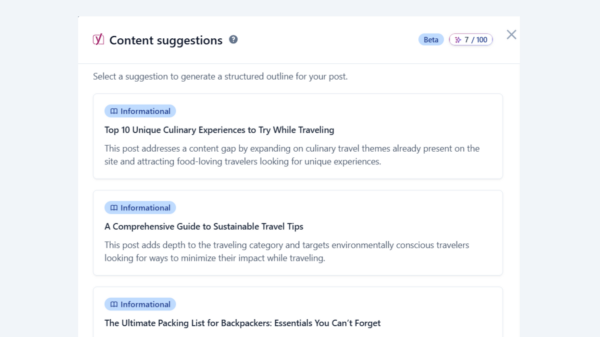
- Yoast AI Content Planner: Tailored Content Gap Analysis: Tools like the Yoast AI Content Planner represent a significant leap in AI-assisted content creation. This feature scans a user’s existing content, intelligently identifies gaps in coverage, and suggests five highly relevant blog ideas. Unlike generic AI prompts, these suggestions are tailored to the blog’s niche and audience, ensuring greater relevance. For instance, a food blog that has extensively covered meal prep but lacks content on “quick vegetarian lunches” might receive this as a suggestion. Once an idea is selected, the planner generates a structured draft, complete with a suggested title, headings, and even a meta description, providing a clear outline to accelerate the writing process. This functionality, included in Yoast SEO Premium products, is designed for consistent publishers seeking to fill real content gaps efficiently.
- General AI Tools and Chatbots (ChatGPT, Claude, Gemini): Strategic Prompting: While general AI chatbots can be powerful, their utility in content ideation hinges on the specificity of prompts. Instead of vague requests like “Give me blog ideas about parenting,” more effective prompts focus on specific angles:
- “Generate five unique blog post ideas for a parenting blog targeting first-time parents struggling with sleep deprivation, focusing on practical, actionable tips.”
- “I run a sustainable living blog. What are three innovative ways to discuss textile waste beyond basic recycling, targeting an audience interested in DIY solutions?”
For broad topics, AI can be directed to narrow the focus: - “Refine the topic ‘healthy eating’ into five specific blog post ideas that address common misconceptions about plant-based diets for athletes.”
AI can also be used for competitor analysis by feeding it a competitor’s blog URL and asking, “Analyze this blog’s content and suggest five topics they haven’t covered but would be relevant to their audience, focusing on a unique angle.” A critical consideration when using AI is to avoid producing “commodity content.” AI often suggests generic ideas that have been extensively covered. To stand out, it is imperative to infuse AI-generated ideas with unique human perspective, personal experience, or proprietary data. For example, instead of “10 tips for better sleep,” a unique take might be “My 30-Day Experiment: How Sleep Tracking Transformed My Energy Levels.” This approach ensures AI serves as an augmentation to human creativity, not a replacement.
External Sources of Inspiration and Trend Spotting
Beyond internal data and AI, the broader internet offers a vast reservoir of inspiration, from visual platforms to niche holiday calendars.
- Pinterest: Visual Trend Spotting: Pinterest remains a powerful platform for visual inspiration, especially for blogs in niches like food, DIY, fashion, travel, and home decor. It allows users to spot emerging trends and identify content gaps by searching for keywords such as “[blog post ideas],” “[blog ideas],” or “[what to blog about],” further refined by niche (e.g., “[blog post ideas for parents]”). Analyzing top-pinned posts reveals popular topics and aesthetic preferences. However, caution is advised as Pinterest can be a “clickbait heaven,” making it easy to prioritize quantity over quality. Maintaining focus on genuinely valuable content is essential.
- Content Idea Generators: Sparking Lateral Thinking: Tools like Portent’s Content Idea Generator may not provide ready-to-publish article titles, but they excel at sparking lateral thinking. By entering a broad term, such as “[house plant],” the generator might return quirky titles like “The 15 biggest house plant blunders” or for “[wine],” “17 unexpected uses for wine.” While often humorous, these suggestions can be expanded into viable blog posts: “Common Houseplant Mistakes and How to Avoid Them” or “Creative Ways to Repurpose Leftover Wine.” Their primary value lies in breaking mental blocks and encouraging unconventional thought.
- Days Of The Year: Tapping into Cultural Moments: Websites like Days Of The Year compile a comprehensive list of global holidays, both official and whimsical. This resource offers inspiration across virtually any niche. A travel blogger might leverage “Towel Day” (May 25th) to write “The Ultimate Guide to Travel Towels: What to Pack and Why.” A lifestyle blogger could transform “Unicorn Day” (April 9th) into a post on “Embracing Your Inner Magic: Self-Care Tips for a Whimsical Life.” Connecting these often-obscure holidays to a blog’s core themes can yield unique, timely, and engaging content.
- Other Blogs and Fellow Bloggers: Industry Awareness and Ethical Inspiration: The internet is a vast library of content. Observing other blogs within one’s niche or broader content landscape, and engaging with fellow bloggers in online communities (e.g., Facebook groups), can be a powerful catalyst for ideas. This process fosters industry awareness, highlights different perspectives, and reveals potential content gaps or successful approaches. It is crucial, however, to differentiate between inspiration and imitation. Ethical content creation demands that ideas are adapted and enhanced with a unique voice and perspective, always giving credit where due and avoiding direct plagiarism.
Personal Connection and Holistic Well-being for Sustained Creativity
Sometimes, the most profound inspiration comes from within, or from the immediate environment, complemented by strategies for mental well-being.
- Current Events: Connecting News to Niche: Timely content derived from current events can significantly boost relevance and engagement. The key is to organically link breaking news to a blog’s specific niche, adding value rather than simply re-reporting. For a personal finance blog, a change in tax laws could inspire “Three Ways New Tax Rules Affect Your Savings (and How to Adapt).” Setting up Google Alerts for relevant keywords ensures creators stay abreast of developments. While leveraging trends, it is imperative to avoid sensitive topics unless they can be handled with thoughtful analysis and a focus on reader benefit, rather than exploitation.
- Your Daily Life and Professional Experience: Authenticity and Relatability: Personal experiences, professional challenges, and daily observations can be rich sources of blog ideas. Sharing how one navigates common problems, or how clients/colleagues address specific issues, resonates deeply with an audience likely facing similar situations. A therapist with a mental health blog might share anonymized, generalized scenarios from their practice to illustrate coping mechanisms, always prioritizing client privacy through altered names and details. This approach builds authenticity and trust, transforming abstract advice into relatable narratives.
- Clearing Your Head: The Psychology of Creativity: Prolonged periods of intense focus can lead to mental fatigue and creative blocks. Stepping away from the screen for a short walk, engaging in a mundane task like washing dishes, or simply changing environments can help reset the mind. This “incubation period” allows the brain to process information unconsciously, often leading to breakthroughs. More structured breaks, such as a ten-minute brainstorming sprint where one rapidly generates twenty ideas (five weird, five practical, ten in between), can force divergent thinking and uncover unexpected angles. This method prevents burnout and ensures a fresh perspective upon returning to work.
- Maintaining an Idea List: Proactive Inspiration: The simplest yet most effective strategy is to consistently maintain a running list of blog ideas. Inspiration can strike at any moment—during a commute, while reading, or in conversation. Capturing these fleeting thoughts immediately, whether on a mobile device or in a physical notebook, ensures a reserve of topics for days when creativity is low. This proactive approach transforms unpredictable inspiration into a reliable resource for content planning.
Conclusion: A Multi-faceted Approach to Sustained Content Creation
Overcoming writer’s block and maintaining a consistent content publishing schedule in the competitive digital landscape demands a multi-faceted approach. Relying on a single method is often insufficient. Instead, a strategic blend of leveraging audience feedback, employing sophisticated SEO and AI tools, observing external trends, and drawing from personal experiences, all supported by practices that foster mental well-being, provides the most robust solution.
The integration of technology, such as the Yoast AI Content Planner and Google Search Console, empowers content creators to efficiently identify gaps and generate tailored ideas. Simultaneously, the enduring value of human insight, authentic storytelling, and a commitment to understanding audience needs ensures that content remains original, valuable, and impactful. By embracing this holistic strategy, bloggers and marketers can not only navigate the challenges of content generation but also elevate their digital presence, fostering deeper engagement and sustained growth. The next time a blank screen looms, remember that a wealth of inspiration awaits, ready to be uncovered through a combination of structured inquiry and creative exploration.