

The digital marketing landscape has undergone a significant transformation with the announcement from Instapage regarding its transition into a fully integrated, end-to-end AI-powered marketing platform. Since its inception in 2012, Instapage has maintained a prominent position in the landing page technology sector, evolving from a specialized builder into a comprehensive Conversion Rate Optimization (CRO) and marketing suite. The latest series of updates represents a strategic pivot, embedding artificial intelligence across the entire lifecycle of campaign creation, testing, and optimization. This move aims to address the persistent challenges of tool fragmentation and the operational inefficiencies that plague modern marketing teams.
By integrating AI page generation, AI email automation, and advanced experimentation tools into a single ecosystem, the company seeks to redefine how businesses scale their digital presence. The expansion comes at a critical juncture for the industry, where the demand for personalized, high-performance content has outpaced the capacity of lean marketing departments. The new suite of tools is designed to eliminate the “blank page” syndrome while providing a level of creative control that traditional automated generators have historically lacked.
The Evolution of Landing Page Technology: A Decade of Innovation
To understand the significance of the latest AI releases, it is essential to examine the trajectory of Instapage over the last 14 years. Founded in 2012, the platform initially gained traction by simplifying the process of building high-converting landing pages without requiring extensive coding knowledge. As the market matured, the company expanded its capabilities to include heatmaps, A/B testing, and dynamic text replacement, eventually becoming a top-rated builder in the CRO space.
The progression from a simple utility to a multi-faceted marketing suite followed a clear chronological path:
- 2012–2015: Focus on democratizing landing page design through drag-and-drop interfaces.
- 2016–2019: Expansion into enterprise-grade features, including AdMap, collaboration tools, and advanced security protocols.
- 2020–2023: Early adoption of AI copy tools and personalization engines to enhance user engagement.
- 2024–2026: The full integration of generative AI for end-to-end campaign management, including page layout, email follow-ups, and automated scaling through “AI Collections.”
This evolution reflects a broader trend in the MarTech (Marketing Technology) industry toward consolidation. According to industry data, the average enterprise now utilizes over 90 different marketing tools, leading to “data silos” and significant time lost in manual handoffs between platforms. Instapage’s new direction is a direct response to this “tool fatigue,” offering a unified environment where pages, leads, and emails coexist.
AI Page Generation and the Preservation of Creative Control
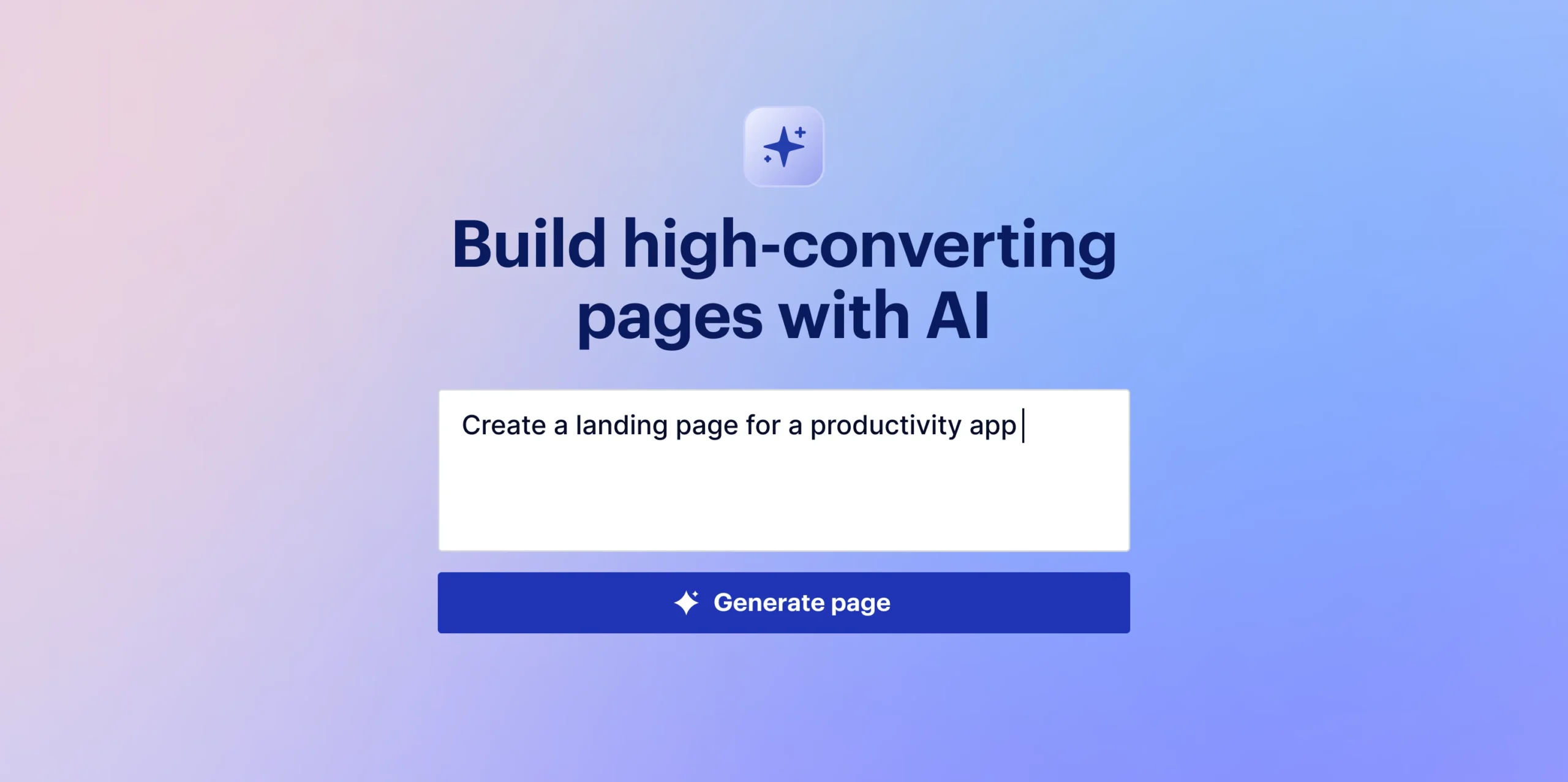
One of the primary hurdles in the adoption of AI-generated content has been the lack of granular control. Many standalone AI page generators produce static templates that are difficult to modify without regenerating the entire asset, a process that is both time-consuming and computationally expensive. Instapage’s new AI page generation tool addresses this by combining generative capabilities with a “pixel-perfect” drag-and-drop builder.
The workflow begins with a descriptive prompt where the user outlines the goals, target audience, and core messaging of the desired page. Within seconds, the AI constructs a complete, conversion-ready layout, including optimized copy and structural elements. Unlike previous iterations of such technology, the resulting page remains fully editable. Users can move sections, adjust margins, and swap images without the need for further prompting or token expenditure.
This hybrid approach—combining the speed of AI with the precision of manual design—is intended to reduce the time-to-market for new campaigns. For marketing agencies managing dozens of clients, this could mean the difference between launching a campaign in hours rather than weeks.
Bridging the Gap Between Lead Capture and Engagement
The second pillar of the updated platform is AI-powered email generation. In the traditional marketing workflow, a lead captured on a landing page is typically exported to a third-party Email Service Provider (ESP). This process often involves manual data cleaning, list segmentation, and the creation of separate automation workflows, creating numerous points of potential failure.
Instapage’s integrated email solution allows users to generate tailored follow-up sequences directly within the platform. By selecting a goal, audience segment, and tone, the AI produces messaging that is contextually relevant to the landing page the lead just visited. This continuity in messaging is a critical factor in maintaining high conversion rates throughout the sales funnel.

Supporting data suggests that immediate follow-up is vital for lead conversion. Research indicates that businesses that contact prospects within an hour of receiving a query are seven times more likely to have a meaningful conversation with a key decision-maker. By automating this process with AI that understands the specific context of the lead’s entry point, Instapage aims to help businesses capture this “golden hour” of engagement without increasing human workload.
Scaling Marketing Efforts in a Lean Economic Environment
The release of these features coincides with a shift in the global economic climate. As of 2026, marketing departments are increasingly operating with leaner teams and tighter budgets. The “growth at all costs” mentality of the previous decade has been replaced by a focus on efficiency and measurable Return on Ad Spend (ROAS).
“In the current market, expectations for performance are higher than ever, yet the resources available to teams have often stayed flat or decreased,” noted an industry analyst regarding the shift toward AI automation. “Platforms that can automate the repetitive, high-volume tasks of testing and scaling allow human marketers to focus on high-level strategy and creative direction.”
The “AI Collections” feature is specifically designed for this purpose. It allows users to manage and scale high-performing page elements across multiple campaigns automatically. By identifying which layouts and messages are resonating with specific demographics, the AI can suggest or implement optimizations at scale, a task that would be nearly impossible for a human team to perform manually across hundreds of concurrent pages.
Industry Implications and Market Reaction
The move by Instapage is expected to trigger a response from other major players in the CRO and CMS (Content Management System) markets. Competitors such as Unbounce, Leadpages, and even broader platforms like HubSpot are likely to accelerate their own AI roadmaps to keep pace with the end-to-end integration model.
Early reactions from marketing professionals suggest a cautious but optimistic outlook. The primary concern remains the quality and “human-ness” of AI-generated content. To mitigate this, Instapage has emphasized that its AI is a “starting point” rather than a total replacement for human oversight. The inclusion of the 14-day free trial and the gradual rollout of beta features indicate a controlled approach to deployment, allowing the company to gather user feedback and refine the AI models.
From a technical perspective, the integration of these tools into a single platform reduces the “latency” of marketing operations. When a page is updated, the corresponding email triggers and analytics tracking are updated in tandem. This synchronization reduces the risk of broken links, outdated messaging, and inaccurate data reporting—common issues when using a “stitched-together” marketing stack.
Future Outlook: The Role of AI in Post-2026 Marketing
As Instapage continues to roll out its AI features, the broader implication is clear: the era of the “single-purpose tool” is ending. The future of marketing technology lies in integrated platforms that can handle the entire customer journey from the first click to the final conversion.
The successful implementation of AI page and email generation could set a new standard for what is expected of a marketing platform. If Instapage can prove that its AI-powered suite significantly reduces the cost per lead while maintaining high design standards, it may force a consolidation of the MarTech industry, where smaller, standalone tools are either acquired or rendered obsolete.
For now, the company is focused on the gradual rollout of its beta features. Users interested in accessing the AI page generation and email tools are encouraged to contact the Instapage support team as the features are distributed across the user base. As the digital advertising market continues to become more competitive and expensive, the ability to rapidly iterate and optimize through AI may become the primary differentiator for successful brands.
In conclusion, Instapage’s evolution into an AI-powered marketing platform represents more than just a software update; it is a strategic response to the changing needs of the modern digital economy. By prioritizing speed, integration, and creative control, the company is positioning itself as an essential partner for businesses looking to navigate the complexities of 21st-century marketing.







