

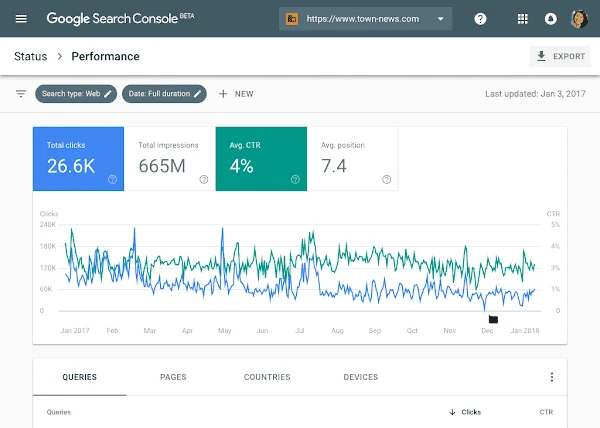
The digital landscape of 2026 has undergone a fundamental transformation, moving far beyond the era where website analysis was confined to the simple tracking of traffic, keyword rankings, and page load speeds. In the current market, consumer discovery is no longer a linear path through a search engine results page; it is a fragmented journey involving large language models (LLMs), generative AI summaries, and conversational agents. Consequently, modern website analysis has evolved into a multi-dimensional discipline that evaluates discoverability, machine readability, credibility, and conversion friction across an increasingly complex ecosystem.
The Paradigm Shift in Digital Discovery
The necessity for a more robust approach to website analysis is driven by the rapid adoption of Artificial Intelligence (AI) in the search process. Buyers today may encounter a brand through a ChatGPT query, compare vendors via Perplexity, or view a brand summary within a Google AI Overview (formerly SGE) before ever setting foot on the actual website. This shift represents a transition from “Search Engine Optimization” to “Discovery Optimization,” where the goal is to ensure a brand is present wherever a user asks a question.
Industry data underscores the urgency of this transition. Gartner previously predicted that traditional search engine volume would drop by 25% by 2026 as users shifted toward AI chatbots and virtual agents. Supporting this, the Pew Research Center found that the presence of AI summaries significantly impacts click-through rates (CTR). According to their findings, users clicked on traditional Google links in only 8% of visits when an AI summary was present, compared to a 15% click-through rate when no such summary appeared. For businesses, this means that appearing in the “traditional” top three results is no longer a guarantee of traffic; appearing within the AI’s synthesized answer has become the new priority.
A Chronology of Website Analysis Evolution
To understand the current state of website analysis, one must look at the technological trajectory over the last decade:
- The Metric Era (2010–2018): Analysis focused heavily on quantitative data—page views, bounce rates, and keyword density. Success was defined by high traffic volumes.
- The Experience Era (2018–2022): With Google’s Core Web Vitals and the rise of mobile-first indexing, analysis shifted toward user experience (UX) and site speed. Success was defined by how easily a human could navigate the site.
- The Authority Era (2022–2024): The introduction of E-E-A-T (Experience, Expertise, Authoritativeness, and Trustworthiness) made content quality and “trust signals” the primary focus of analysis.
- The AI-First Era (2025–Present): Analysis now prioritizes “machine readability” alongside human experience. Websites are now analyzed for their ability to serve as high-quality training or retrieval data for AI agents while maintaining a high-conversion environment for human visitors.
The Five Pillars of Modern Website Analysis
A comprehensive website analysis in 2026 requires a deep dive into five distinct but interconnected areas: Search and AI Visibility, Technical Health, User Behavior, Content Quality, and Conversion Performance.
1. Search and AI Visibility
Visibility analysis now requires a dual-track approach. Traditional SEO still matters, but it must be supplemented by an audit of AI search presence.
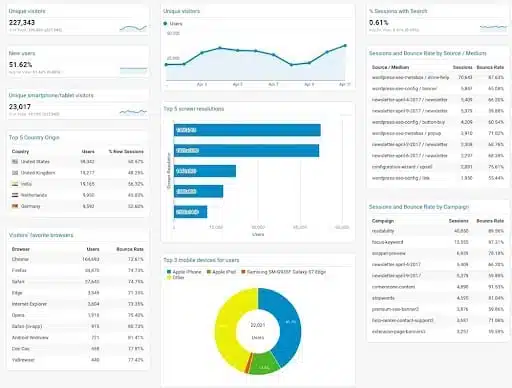
- Traditional Metrics: Using tools like Google Search Console, analysts must monitor the “Performance” report to compare three-month rolling averages of clicks and impressions. Key indicators include pages with high impressions but low CTR, which suggests a failure in the snippet or the presence of an AI summary that is satisfying the user’s query without a click.
- AI Presence: Analysts must manually and programmatically search for buyer-intent questions on tools like ChatGPT, Gemini, and Copilot. If a brand is not being cited as a top recommendation in these conversational interfaces, the website analysis must identify why—often due to a lack of structured data or clear, authoritative answers to specific industry questions.
2. Technical Health and Performance
The technical infrastructure remains the foundation of a site’s success. Analysis in this area focuses on ensuring that both search engine crawlers and AI “spiders” can easily access and interpret the site’s data.
- Indexing Audits: Checking the Google Search Console Indexing report for “Crawled – currently not indexed” or “Discovered – currently not indexed” statuses is vital. These often point to thin content or technical bottlenecks.
- Speed and Core Web Vitals: Site speed is no longer just a ranking factor; it is a conversion factor. Analysis includes measuring Largest Contentful Paint (LCP) and Cumulative Layout Shift (CLS) to ensure the site is stable and fast across all device types.
3. User Behavior and Qualitative Insights
Understanding what users do once they arrive is the core of Conversion Rate Optimization (CRO). Analysis in 2026 balances quantitative data (numbers) with qualitative insights (reasons).
- Quantitative Data: Tools like Google Analytics or Similarweb provide numerical values such as session duration and bounce rates.
- Qualitative Data: This involves using tools like FigPii to view heatmaps and session recordings. Analysts look for “rage clicks” or “dead clicks” where users expect a response but receive none. Scroll maps are particularly useful for determining if key messaging is being missed because it is placed too far down the page.
4. Content Quality and Trust Signals
In an era of AI-generated spam, human-centric trust signals have become more valuable. Content analysis now examines whether a site provides unique value that an AI cannot easily replicate.
- Heuristic Evaluation: This involves an expert review of the site’s interface based on established usability principles, such as Jakob Nielsen’s 10 Usability Heuristics. This includes ensuring “Visibility of system status” (users knowing where they are) and “Consistency and standards” (users not having to wonder if different words mean the same thing).
- Messaging Alignment: Analysts must ensure that the copy on the landing page matches the “touchpoint” that brought the user there. If an ad promised a specific solution, but the website uses generic corporate language, the resulting “message mismatch” will drive bounce rates up.
5. Conversion and Funnel Performance
The final stage of analysis is the evaluation of the conversion funnel. This is a functionality assessment that asks three critical questions:
- Are the conversion functions (buttons, forms, checkouts) easily discoverable?
- Can the visitor use these functions without frustration?
- Are all technical links and third-party integrations working?
The Role of Competitive Intelligence
A comprehensive analysis is incomplete without a benchmark against the competition. In 2026, competitive analysis has moved beyond simply looking at a rival’s pricing.

- Organic Traffic and Keyword Gaps: Tools like Ahrefs and Semrush allow analysts to see which keywords competitors are ranking for that the brand is missing.
- Demographic Insights: Understanding the audience segments that competitors are successfully targeting can reveal underserved markets.
- Paid Campaign Analysis: Using tools like iSpionage, businesses can study the ad creatives and landing pages of their competitors to understand their messaging strategy and funnel structure.
Expert Perspectives and Industry Implications
Digital marketing analysts suggest that the “Zero-Click” trend is the most significant challenge facing brands today. “We are seeing a bifurcation of website traffic,” notes one senior SEO strategist. “Informational queries are increasingly being answered by AI on the search page, while transactional queries are becoming more competitive. Website analysis must now prove that a site is worth the click by offering interactive tools, proprietary data, or a level of expert insight that an LLM cannot synthesize.”
The implications for businesses are clear: the website is no longer just a digital brochure; it is a data source for AI and a conversion engine for humans. Failure to analyze the site through both lenses results in a “visibility gap” where the brand exists but is never found by the modern buyer.
Implementing a Robust Analysis Framework
To maintain a competitive edge, organizations are encouraged to adopt a systematic roadmap for website analysis:
- Define Objectives: Analysis should never be performed for its own sake. It must be tied to a specific goal, such as reducing cart abandonment or increasing AI citations.
- Select a Tech Stack: A mix of SEO tools (Search Console), CRO tools (FigPii, Hotjar), and Usability tools (Qualaroo) is necessary for a 360-degree view.
- Continuous Iteration: Website analysis is not a one-time event but a recurring habit. As AI algorithms update and user preferences shift, the analysis must be refreshed to reflect the current digital climate.
In conclusion, the power of comprehensive website analysis in 2026 lies in its ability to bridge the gap between machine-driven discovery and human-centric experience. By evaluating a site’s performance across visibility, technical health, behavior, quality, and conversion, businesses can ensure they remain relevant in an increasingly automated world.







