
 rifanmuazin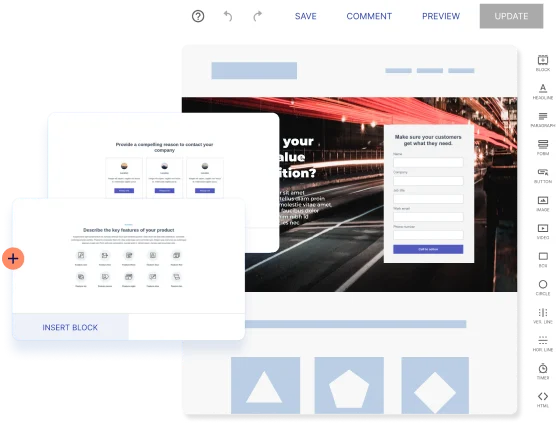
The modern recruitment landscape has undergone a radical transformation as organizations shift their focus from high-volume traffic generation to high-conversion candidate experiences. In an era where digital advertising costs for job postings frequently reach or exceed $5 per click, the efficiency of the post-click experience has become a critical metric for Human Resources departments and marketing teams alike. Industry data suggests that the traditional method of directing paid traffic to generic, multi-role career sites often results in significant budget wastage due to high bounce rates and “candidate friction.” To combat this, a growing number of industry leaders, including Uber, Lyft, and DoorDash, are utilizing dedicated recruitment landing pages designed to convert casual visitors into active applicants through streamlined, single-objective web design.
The Economic Imperative of Recruitment Optimization
The fundamental challenge in contemporary recruitment marketing is not necessarily the quality of the advertisement creative, but the structural failure of the destination page. When a candidate clicks on a specific job advertisement, such as a “Remote Software Engineer” position, and is redirected to a broad corporate career portal featuring dozens of unrelated listings and complex navigation menus, the result is often cognitive overload. This disconnect leads to immediate abandonment, effectively nullifying the investment made in the initial ad click.
Recruitment landing pages function as standalone environments built with a singular conversion goal. By removing standard navigation menus and extraneous links, these pages guide the candidate through a focused narrative that highlights the specific role, its benefits, and a simplified application process. This methodology mirrors high-performance e-commerce strategies, treating the job opportunity as a “product” and the candidate as a “customer” who requires a frictionless path to purchase—or, in this case, to apply.
Core Principles of High-Converting Recruitment Pages
The transition from a general career site to a specialized landing page involves several data-driven best practices designed to reduce the cost per applicant (CPA) and increase the total volume of completed applications.
Messaging Alignment and Headline Consistency
The concept of “message match” is paramount. If an advertisement promises a specific salary range and flexible working conditions, the landing page headline must immediately validate that promise. Journalistic analysis of successful campaigns indicates that when the transition from ad to page is seamless, trust is established instantly. Any discrepancy in role titles or compensation details triggers skepticism, leading to a bounce.
Above-the-Fold Prioritization
In the digital attention economy, candidates typically decide within three to five seconds whether to remain on a page. Effective recruitment landing pages place the most critical information—the job title, primary benefits (such as healthcare, flexibility, or signing bonuses), and a prominent “Apply Now” call-to-action (CTA)—at the top of the screen. This ensures that the value proposition is communicated without requiring the user to scroll.
Minimizing Application Friction
One of the most significant barriers to talent acquisition is the length and complexity of application forms. Industry benchmarks show that every additional field in a recruitment form can decrease the conversion rate by 5% to 10%. To mitigate this, high-performing pages limit forms to three to five essential fields: name, email, phone number, and a resume upload option. Advanced strategies often employ two-step forms, where the candidate’s contact information is captured first, ensuring the recruiter has a lead even if the candidate does not complete the secondary, more detailed phase of the application.
Case Studies in Gig Economy Recruitment
The gig economy provides the most prominent examples of recruitment landing page efficacy, as companies like Uber, Lyft, and DoorDash must recruit thousands of independent contractors at scale.
1. Uber: The Efficiency of Speed
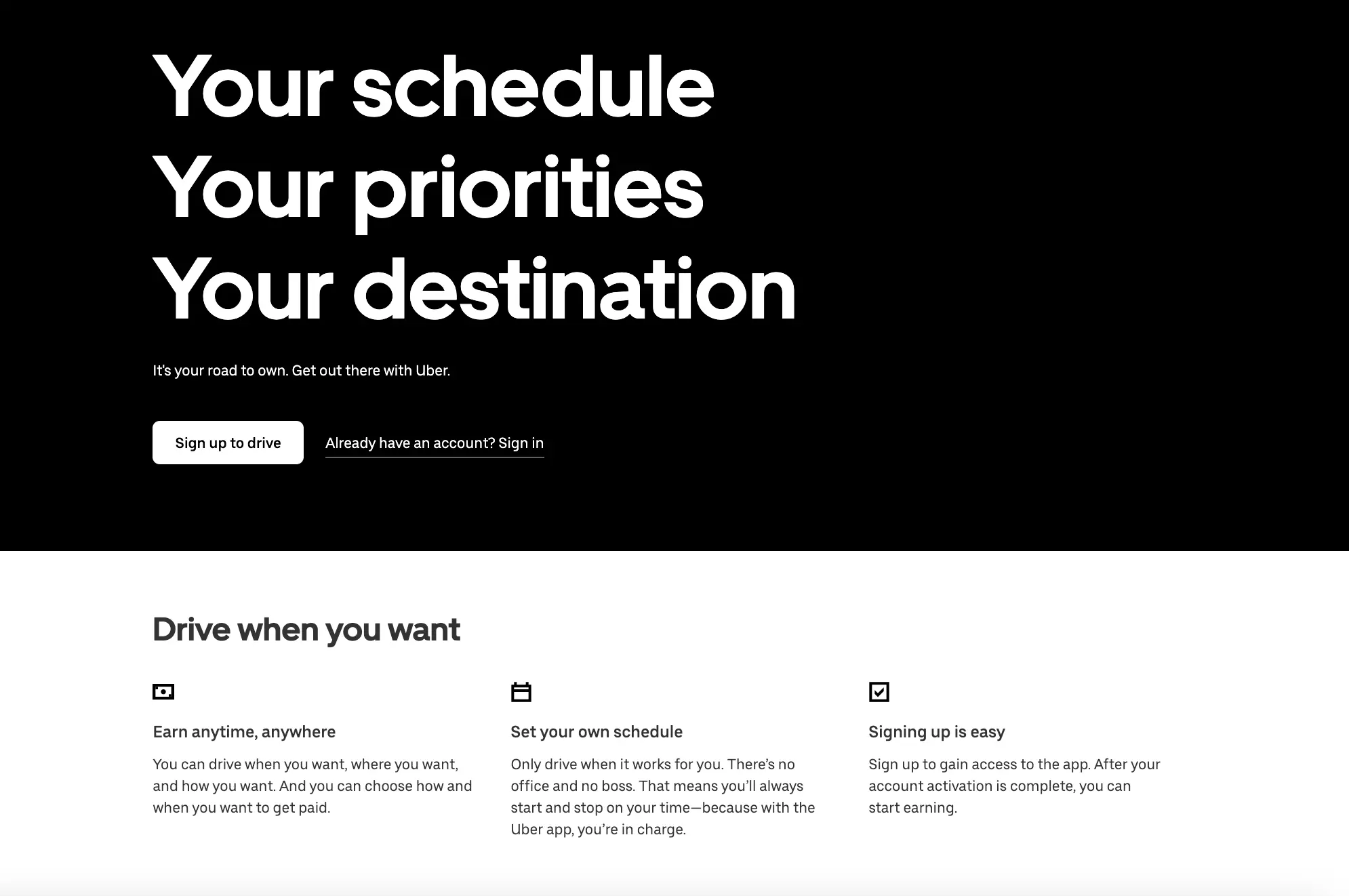
Uber’s driver recruitment pages are noted for their extreme clarity and speed. The primary focus is on the ease of starting, often featuring a simple “Sign Up to Drive” headline. By highlighting the flexibility of the schedule and the potential for immediate earnings, Uber addresses the primary motivations of its target demographic. Analysts suggest testing variations in background imagery—such as shifting between car interiors and cityscapes—to determine which visual cues resonate more with local markets.
2. Lyft: Emphasizing Financial Incentives
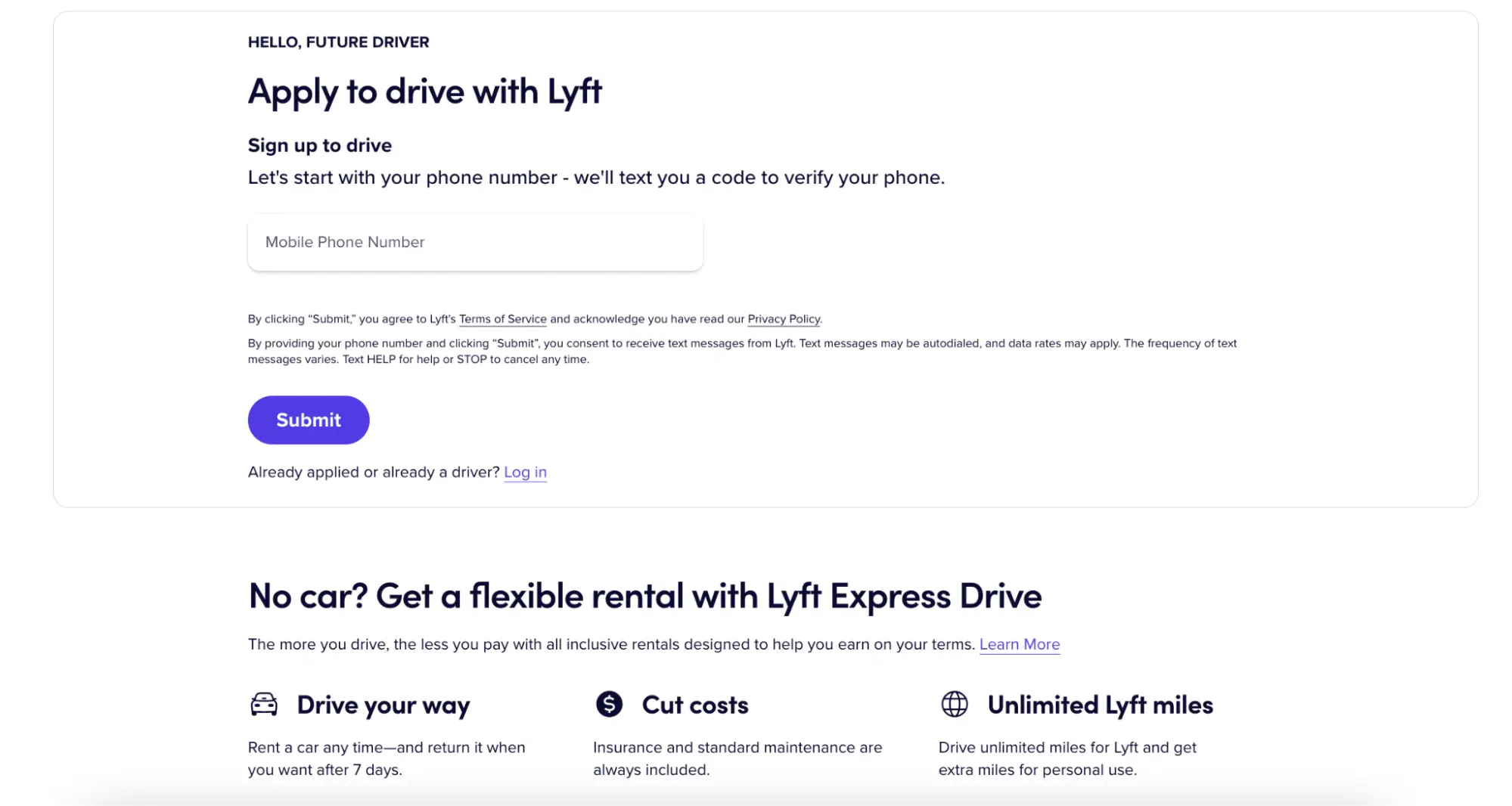
Lyft’s recruitment strategy often centers on earnings guarantees. Their landing pages frequently include a “calculator” or a clear statement regarding how much a driver can expect to earn in their first 100 trips. This transparency serves as a powerful trust signal, reducing the ambiguity that often surrounds gig-based work.
3. DoorDash: Geographic Personalization
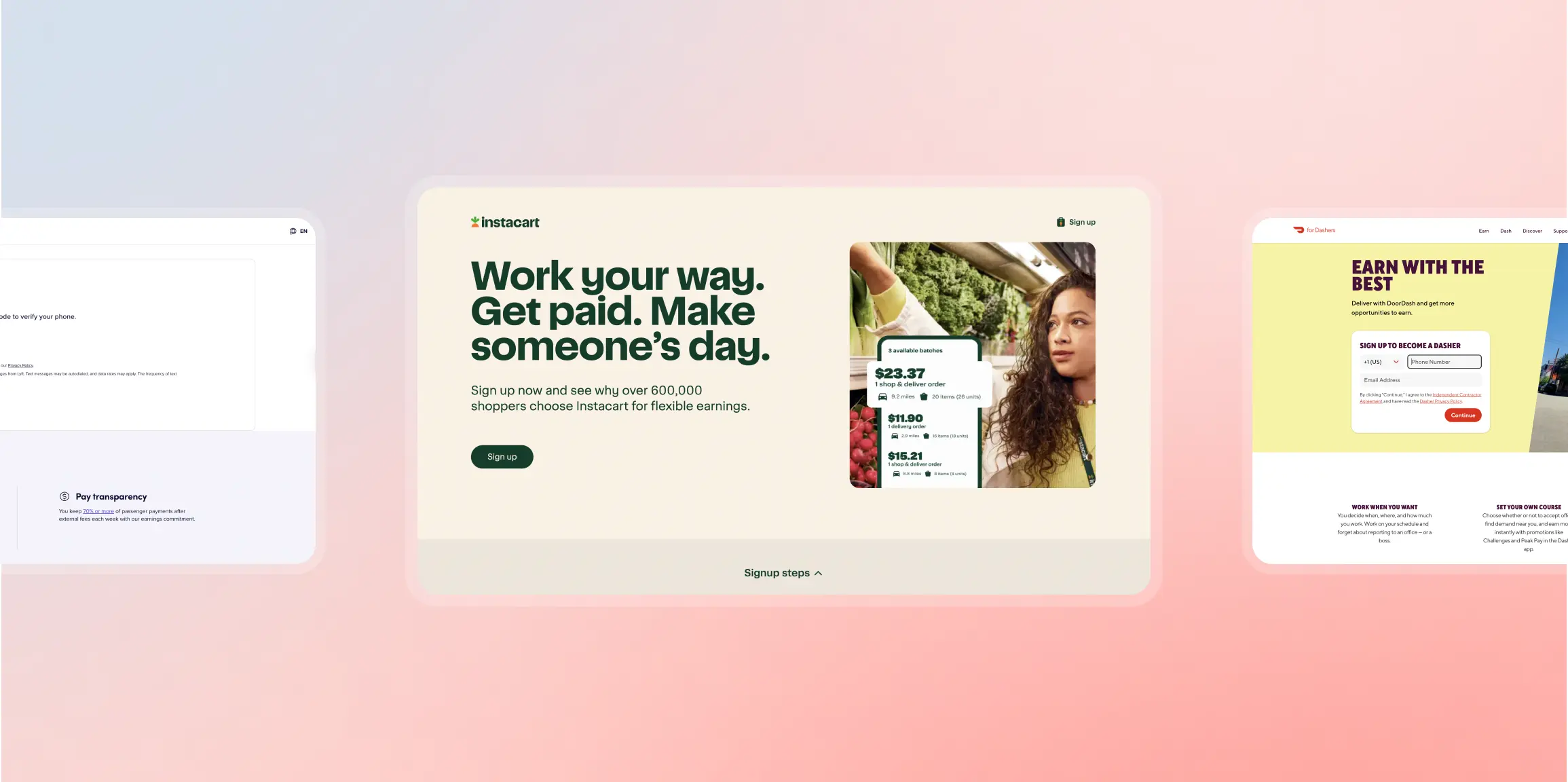
DoorDash utilizes localized landing pages that reflect the specific needs of “Dashers” in different cities. By tailoring the content to show local demand or specific regional bonuses, the company increases the relevance of the page for the visitor. A key recommendation for such pages is to test “social proof” elements, such as testimonials from actual drivers within the same geographic area.
4. Writers Work and Instacart: Niche and Service-Based Models
For platforms like Writers Work, the focus shifts to professional development and tool access, while Instacart emphasizes the “community” aspect of shopping. Both companies utilize “exit link removal,” ensuring that there are no “About Us” or “Blog” links that might distract a candidate from the sign-up flow.
The Role of A/B Testing in Recruitment Strategy
The implementation of a recruitment landing page is not a static event but a continuous process of optimization through A/B testing. By running controlled experiments where two or more versions of a page are shown to different segments of traffic, organizations can make data-driven decisions that significantly impact their hiring bottom line.
A 1% improvement in the conversion rate of a landing page can lead to a 10% reduction in the cost per applicant when scaled over thousands of monthly visitors. The priority for testing usually follows a hierarchy:
- Headlines: Testing different value propositions (e.g., “High Salary” vs. “Work-Life Balance”).
- CTAs: Experimenting with button colors, placement, and copy (e.g., “Join Now” vs. “Start Your Application”).
- Visual Media: Comparing the impact of static images versus short video testimonials from current employees.
- Form Length: Determining the “breaking point” where candidates drop off due to too many questions.
Technical Optimization: Mobile Speed and Trust Signals
With over 60% of job seekers now using mobile devices to search for and apply to roles, mobile optimization has shifted from a luxury to a requirement. Pages that take longer than three seconds to load on a mobile connection see a precipitous drop in engagement. Technical strategies include image compression, the reduction of unnecessary JavaScript, and the use of Content Delivery Networks (CDNs) to ensure global performance.

Furthermore, the inclusion of trust signals—such as industry awards, “Best Places to Work” rankings, or Glassdoor ratings—serves to legitimize the opportunity. In an environment where “ghost jobs” and recruitment scams are a growing concern for candidates, these credibility markers are essential for conversion.
Broader Implications for the HR Technology Sector
The shift toward specialized recruitment landing pages represents a broader trend in the HR technology sector: the “marketing-ization” of recruitment. Human Resources professionals are increasingly adopting tools and mindsets traditionally reserved for digital marketers. This includes the use of AI-powered testing tools, such as those provided by platforms like Instapage, which can automatically allocate traffic to the best-performing page variations based on real-time data.
As the competition for top-tier talent intensifies, the ability to efficiently capture and convert candidate interest will remain a primary competitive advantage. Organizations that continue to rely on antiquated, cumbersome career portals risk losing high-quality candidates to more agile competitors who have mastered the art of the frictionless application.
In conclusion, the recruitment landing page is more than a design choice; it is a strategic response to the rising costs of digital advertising and the evolving expectations of the modern workforce. By focusing on message match, reducing friction, and committing to a culture of continuous testing, companies can transform their recruitment funnels from a source of budget leakage into a streamlined engine for talent acquisition. The success of gig economy giants provides a blueprint that is now being adopted across all sectors, from healthcare to high-tech, signaling a permanent shift in how the world hires.








