rifanmuazin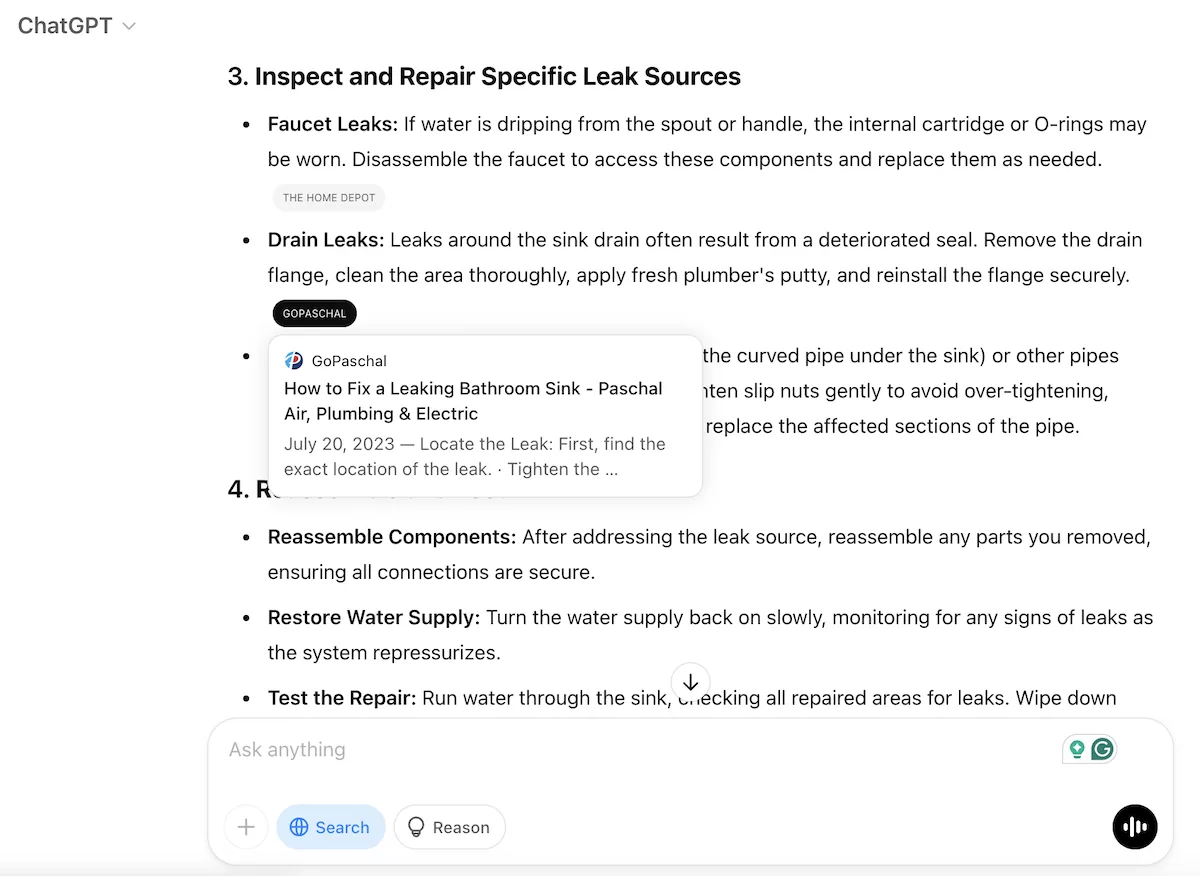
For years, the bedrock of Search Engine Optimization (SEO) for small businesses revolved around the art of keyword research—a process often likened to educated guesswork about the precise words and short phrases customers typed into search engines. However, a seismic shift is underway, fundamentally altering this landscape. The advent and widespread adoption of advanced Artificial Intelligence (AI) models have ushered in an era where understanding how people converse with AI has become paramount, eclipsing the traditional focus on static keywords. This transformation is not merely a nuance; it represents a paradigm shift in how businesses must approach online visibility.
The way consumers interact with search engines has dramatically evolved. Gone are the days of primarily relying on terse, keyword-driven queries. Instead, users are increasingly formulating their search intent through natural, conversational questions. Consider the stark contrast: a plumber in the past might have been sought with a simple query like “plumber near me.” Today, a customer facing a more complex issue might articulate their need as, “Who can fix a leaking water heater this week without charging an emergency fee?” Similarly, an individual seeking guidance on digital marketing might transition from a generic “email marketing tips” to a more specific inquiry such as, “How can I get more people to open my weekend specials without spamming them?”
These prompts are characterized by their conversational tone, specificity, and direct linkage to tangible problems or aspirations. AI models, including prominent platforms like ChatGPT, Perplexity, and Gemini, are adept at interpreting these context-rich messages. They go beyond simple keyword matching to discern the user’s underlying intent, their current situation, and their ultimate goals. This advanced interpretation capability is redefining the search discovery model, leading to immediate, often “zero-click” answers that bypass traditional website visits.
The impact of this shift on organic traffic is significant. A comprehensive study conducted by Bain and Dynata highlighted this trend, revealing that a staggering 80% of consumers now utilize zero-click search results for at least 40% of their inquiries. This reliance on AI-generated summaries and direct answers has led to a noticeable decline in organic traffic, with some industries experiencing reductions of up to 25%. This data underscores a critical reality for businesses: static keyword research, as it was once understood, is rapidly becoming an artifact of a bygone digital era. To maintain and enhance online visibility, marketers must now shift their focus to meticulously studying “prompts”—the natural language expressions customers employ when engaging with AI—and strategically crafting content that integrates seamlessly into these evolving conversations, rather than passively awaiting clicks that may never materialize.
The Erosion of Traditional Keyword Research
While traditional keyword research methods still hold value for certain marketing endeavors, their efficacy in keeping pace with AI-driven search has diminished due to several fundamental reasons. AI’s ability to understand nuance, context, and intent means that simply identifying popular search terms is no longer sufficient.

Nikiya Griffith, Director of Growth at BX Studio, aptly summarizes this divergence: “Keyword tools tell you what people searched. Prompts tell you what they meant. That difference decides who gets seen in AI search results.” This distinction is crucial. Traditional tools provide data on search volume and frequency, but they often fail to capture the emotional drivers, the implicit needs, or the specific circumstances that prompt a user to seek information. AI, conversely, is designed to infer these deeper layers of meaning.
The interactive nature of AI search also contributes to the breakdown of traditional models. Instead of presenting a list of links, AI often synthesizes information from multiple sources to provide a direct, comprehensive answer. This means that a user’s initial query might be just the starting point of a more intricate dialogue with the AI, where follow-up questions refine the search and steer the AI towards a more precise solution. For small businesses, this necessitates a move from optimizing for single, high-volume keywords to understanding and participating in these extended conversational threads.
The Dawn of Prompt-Based Keyword Research
Prompt-based keyword research represents a fundamental reorientation of SEO strategy. Unlike traditional keywords, which are often isolated terms or short phrases, prompts are rich with context. They inherently reveal:
- User Intent: What the user is trying to achieve or solve.
- Specific Circumstances: The unique conditions or context surrounding their need.
- Preferred Language: The precise vocabulary and phrasing the user employs to articulate their problem.
- Underlying Motivations: The deeper reasons or goals driving their search.
Consider the shift from targeting a generic phrase like “local marketing ideas.” Through prompt-based research, a business might uncover more specific and insightful prompts such as:
- “How can I get my bakery noticed by families in my neighborhood without spending a fortune on ads?”
- “What are the most effective ways to attract foot traffic to my boutique during the summer slump?”
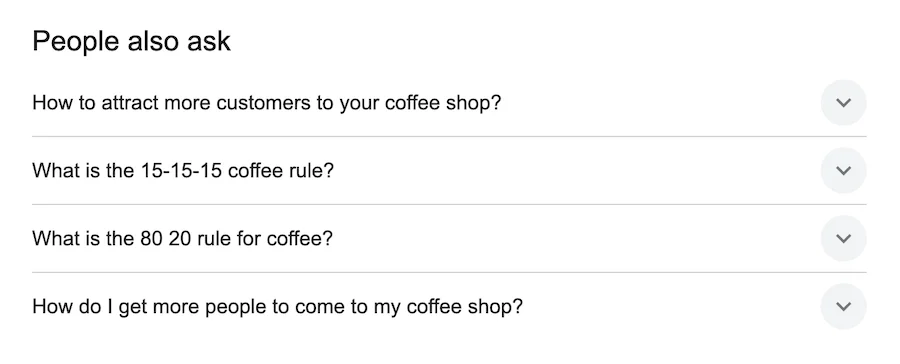
- “Can you suggest low-cost social media strategies for a new coffee shop in a competitive downtown area?”
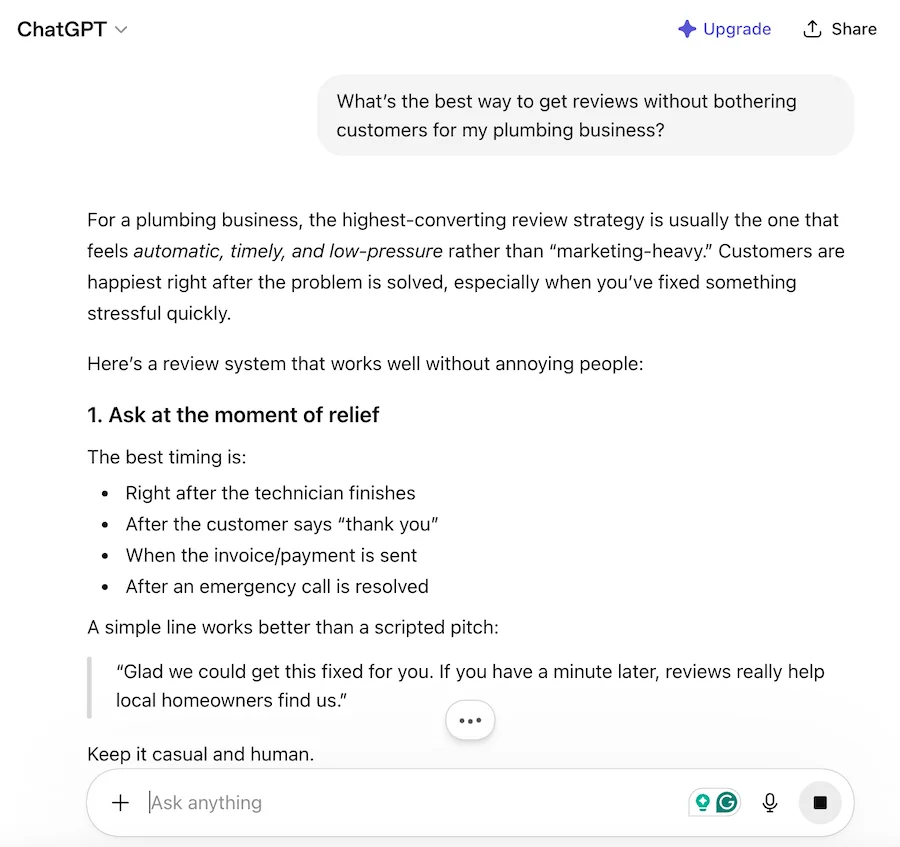
These examples expose the audience’s genuine problems, their aspirations, and the exact language they use when seeking solutions. A plumber, for instance, might discover prompts like, “What’s the best way to get reviews without bothering customers?” This query not only indicates a need for reputation management but also highlights a concern for customer experience and a desire for efficient methods. Similarly, a fitness studio owner might uncover, “How do I keep class bookings full during summer slow months?” This reveals a specific seasonal challenge and a direct business objective.
This deeper understanding of audience challenges, expectations, and preferred language provides a significant content advantage that traditional search volume metrics simply cannot offer. By aligning content with these authentic expressions of need, businesses can create resources that are not only discoverable by AI but also deeply resonant with potential customers.
Strategies for Mastering Prompt-Based Research
To effectively navigate this evolving landscape and ensure visibility in AI-driven search results, marketers need to adopt new methodologies for identifying and leveraging prompts. Here are five proven strategies:
1. Observe Real Prompts in AI Interfaces
This approach involves actively listening to the “thought process” of your target audience as they interact with AI tools. Instead of relying solely on traditional keyword research platforms, it’s essential to collect authentic language directly from AI chat sessions.
Begin by inputting your core “seed topics” into AI platforms like ChatGPT, Perplexity, or Gemini. Pay close attention to the AI’s responses and, crucially, the follow-up questions users might ask. Observing patterns in how users frame their problems—such as common phrasing like “best way to,” “how can I,” or “should I”—provides invaluable insights into their natural problem-solving language.
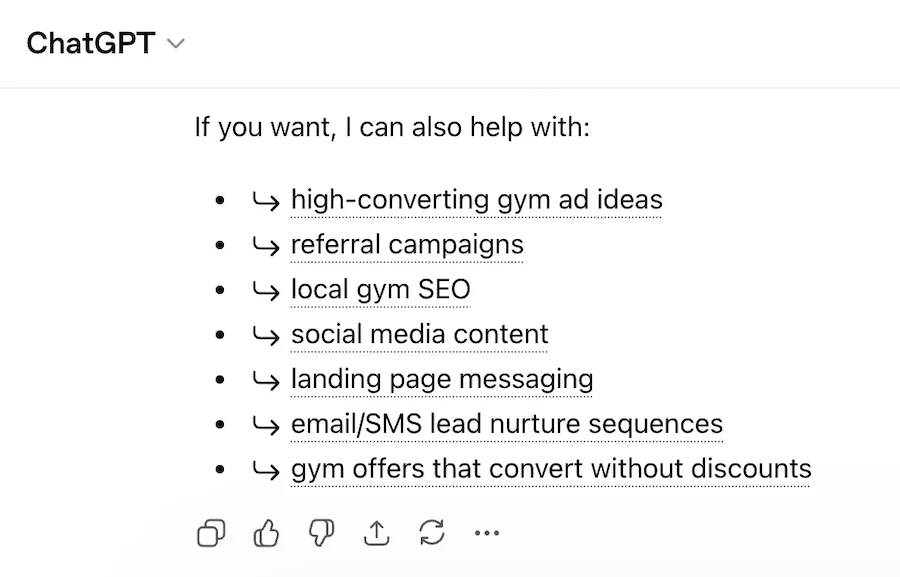
For example, a local gym owner might type, “How can I get more members without running discounts?” This prompt reveals not only an interest in marketing strategies but also a clear concern about profit margins and a reluctance to devalue their services through constant promotions. A valuable content topic emerging from this might be “Gym Offers That Convert Without Discounts.”
By collecting a dataset of at least 20 to 30 authentic prompts related to your niche, you build a foundational understanding of your audience’s mindset that surpasses the capabilities of any keyword tool. This direct observation is the most potent method for uncovering the language of your audience.
2. Visualize Conversation Flows
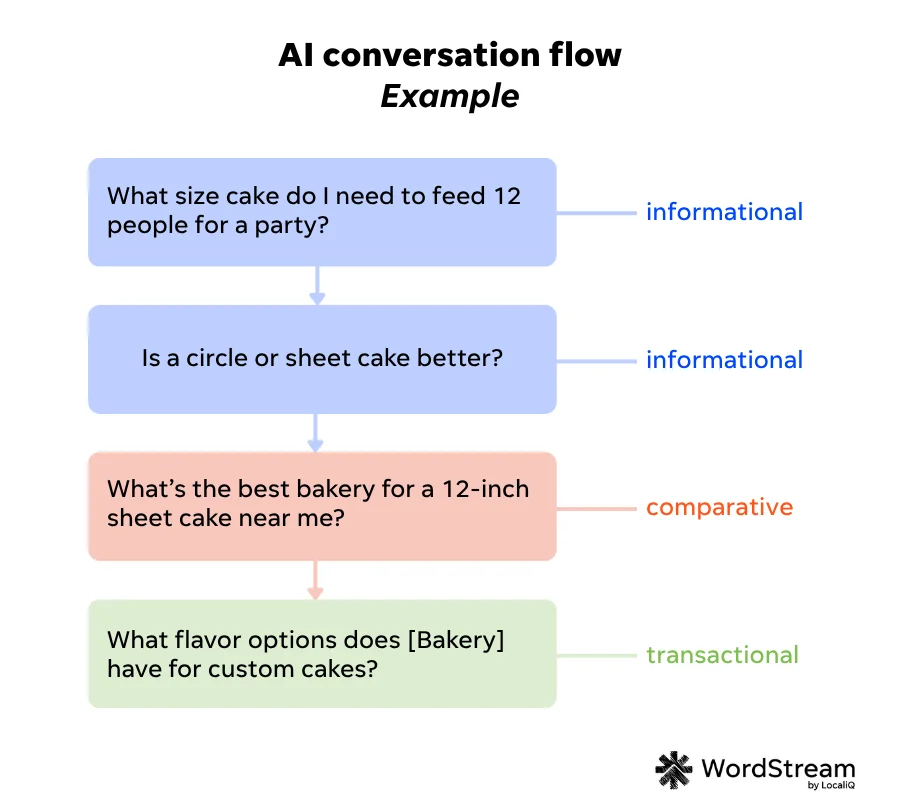
Prompts rarely exist in isolation. Users often engage in a series of questions and refinements, mirroring a natural conversation with an expert. Mapping this conversational flow is critical for understanding the user’s journey from initial curiosity to eventual decision-making.
Utilize simple mind-mapping tools or even pen and paper to diagram how initial queries evolve. Start with a broad question, such as “How can I promote my bakery locally?” Then, branch out to explore potential follow-up questions:
- Initial Query: “How can I promote my bakery locally?”
- Follow-up (Informational): “What are the best social media platforms for bakeries?”
- Follow-up (Comparative): “Should I focus on Instagram Reels or Facebook Ads for local reach?”
- Follow-up (Transactional): “Where can I find affordable local printing services for flyers?”
By labeling each question with its intent—informational, comparative, or transactional—you can identify the precise points where users shift from broad research to more specific evaluation and, ultimately, action. When your content strategically mirrors this complete journey, from initial awareness to conversion readiness, AI tools are more likely to recognize it as a comprehensive and valuable answer path.
3. Extract Entities and Themes
Generative AI systems process information not by discrete keywords but by understanding the relationships between “entities”—people, brands, products, concepts, and locations that frequently appear together in context. Identifying the entities your audience connects with allows you to structure your content in a way that AI can readily comprehend and value.
Review your collected prompts and highlight recurring tools, platforms, or concepts. Group these mentions into “clusters” based on shared goals or industry segments. For instance, prompts related to a local coffee shop might reveal clusters such as:
- Customer Acquisition: “best way to attract new customers,” “how to get more walk-ins,” “local marketing ideas for coffee shops.”
- Customer Retention: “loyalty programs for cafes,” “how to encourage repeat business,” “building a coffee shop community.”
- Operational Efficiency: “managing inventory for small cafes,” “hiring baristas,” “optimizing coffee shop layout.”
Each cluster illuminates what that audience segment values, the tools they trust, and the outcomes they are striving for. This insight enables you to create content that directly links these entities. A topic like “How Local Shops Can Use Canva Templates to Create Instagram Reels That Drive Foot Traffic” goes beyond targeting a keyword; it mirrors how users think and talk, fostering a natural alignment that AI systems readily recognize. Consistently connecting relevant entities in your content helps your brand become intrinsically associated with those concepts, positioning you as an authoritative voice within that conversational context.
4. Cross-Validate with Search Data
While prompt analysis reveals how people converse with AI, it’s crucial to confirm that there’s actual search demand for these conversational queries. This is where traditional SEO validation remains indispensable.
Take your top prompts or their natural variations and input them into tools like Google Search Console, Ahrefs, or Semrush. Analyze key metrics such as:
- Impressions: How often your content appears in search results for these queries.
- Click-Through Rate (CTR): The percentage of users who click on your result after seeing it.
- Average Position: Where your content ranks for these specific prompts.
- Related Queries: Discovering similar conversational phrases that users are searching for.
This validation process helps filter out prompts that might seem compelling in an AI context but lack demonstrable search volume or visibility potential. For example, if a prompt like “How do I get more walk-ins to my coffee shop on weekdays?” shows minimal impressions, you might simplify it to something like “How to get more customers to a local cafe,” while retaining the natural conversational tone. This process bridges the gap between AI-driven language discovery and established SEO discoverability principles. Prompt analysis provides the language, and search validation grounds your strategy in measurable search demand, creating content that is both human-centric and performant.
Transforming Prompts into Content Successes
Once prompts have been meticulously collected and analyzed, the next step is to translate these insights into tangible content assets that attract both human readers and AI algorithms.
1. Form “Prompt Clusters”
Group related prompts by shared goals, pain points, or user journeys. This creates a structured approach to content development that mirrors how users explore topics.
Consider the goal: “Attract More Local Customers.” This could lead to prompt clusters such as:
- Awareness: “How can a small business get more local visibility?”
- Consideration: “What are the best local marketing strategies for [specific industry]?”
- Decision: “How to choose a local service provider for [specific need]?”
Each of these prompts can then form the basis of a distinct section within a larger piece of content or even individual articles. By organizing content in this manner, you construct what search systems recognize as an “answer hub”—a comprehensive resource that addresses every facet of a user’s problem, thereby increasing its perceived authority and usefulness.
2. Write Conversationally
The most effective AI-optimized content feels as though it was crafted for humans, not solely for algorithms. Begin each section by establishing context, for instance, by addressing the reader directly: “If you manage a small business newsletter…” Then, provide a clear and concise answer to the core question before elaborating with relevant examples, supporting visuals, or concise data points.

Crucially, conclude sections with a “Next question” prompt, such as “What’s the best day to send your weekly newsletter?” This not only signals related intent to AI models but also guides readers to further explore the topic, encouraging deeper engagement. This conversational pattern enhances clarity for human readers and helps AI models understand the logical progression and interconnectedness of your ideas.
3. Structure for AI Extraction
Even the most valuable content can be overlooked if it is not formatted for easy parsing by AI systems. Both AI engines and human readers benefit from clarity and structure. Employ the following formatting techniques:
- Headings and Subheadings: Use H2s and H3s to break down content into digestible sections.
- Bulleted and Numbered Lists: Present information concisely and in an easy-to-scan format.
- Short Paragraphs: Avoid large blocks of text that can be overwhelming.
- Bolded Key Terms: Highlight important concepts and entities.
This structured approach ensures that your pages possess dual value: they are easily scannable and navigable for human readers, and readily extractable by AI systems seeking to synthesize information.
Tools and Tactics for Prompt-Based Keyword Discovery
Several tools and tactics can aid in the discovery and analysis of prompt-based keywords:
| Purpose | Recommended Tools | What to Track |
|---|---|---|
| Observe live prompt trends | Perplexity AI | Common phrasing, topic clusters |
| Test AI query reformulation | ChatGPT with browsing | Variations in question structure |
| Analyze long-form phrasing | AnswerThePublic, Keyword Insights | Natural language question frequency |
| Validate impressions | Google Search Console | Long-tail and conversational query visibility |
| Visualize relationships | Looker Studio, MindNode | Prompt clusters vs. legacy keyword groups |
By integrating prompt insights for discovery with SEO tools for validation, businesses can develop a robust strategy that is both forward-looking and grounded in measurable search performance.
Measuring Success in a Prompt-Driven Content Landscape
The advent of prompt-driven optimization necessitates a redefinition of success metrics. The focus must shift from purely click-based analysis to a more holistic evaluation of engagement and visibility within the AI ecosystem. Key performance indicators should include:
- AI-Generated Snippets: The appearance of your content in AI overviews or featured snippets.
- Referral Traffic from AI: Tracking traffic that originates from AI platforms.
- Engagement Metrics: Time on page, bounce rate, and scroll depth for content that answers complex prompts.
- Brand Mentions: Increased recognition and association of your brand with specific conversational topics.
These signals collectively indicate whether your content is actively participating in the ongoing digital dialogue, rather than merely being listed in a traditional search results page.
The Road Ahead: Conversation as the New SEO Foundation
The lines between search and conversational AI are rapidly blurring, creating a unified user experience where individuals expect immediate, personalized responses. Projections from industry analysts suggest that by 2026, a significant majority of companies will leverage generative AI for marketing and research. Those that thrive will view every user prompt not just as a query, but as a valuable clue to customer intent and a roadmap for content creation.
Prompt-based research is no longer an experimental tactic; it is emerging as the fundamental pillar of modern SEO. Its efficacy is rooted in a deep understanding of how people ask questions, how AI interprets those questions, and how a business’s content can become an integral part of that evolving dialogue.
Oskar Duberg, a Freelance Content Specialist, encapsulates this shift: “SEO is shifting from search to conversation. It is not about being the loudest or ranking the highest anymore, but about being the most relevant voice in the dialogue. When your content reflects how people actually speak, think, and build on ideas, AI systems start recognizing your brand as a trusted contributor. Visibility will depend on authority within context, not just keywords.”
Marketers who embrace this conversational model will transcend the limitations of optimizing solely for clicks. They will learn to actively participate in the exchanges that now define digital discovery, positioning their brands as essential contributors to the knowledge ecosystem, not merely purveyors of information. This strategic evolution is not just about adapting to new technology; it’s about fundamentally rethinking how businesses connect with their audiences in an increasingly intelligent and conversational digital world.