rifanmuazin
Google has fundamentally altered the landscape of integrated development environments (IDEs) and artificial intelligence with the unveiling of Antigravity 2.0 at the annual I/O 2026 conference. Released on May 19, 2026, the new platform marks a definitive pivot from AI-assisted coding—characterized by simple autocompletions and chat-based suggestions—to a sophisticated multi-agent orchestration model. This strategic move positions Google at the forefront of the “Agentic Coding” race, directly challenging established players such as GitHub Copilot and Cursor by offering a comprehensive ecosystem designed for autonomous software engineering.
The introduction of Antigravity 2.0 represents a departure from the incremental updates typically seen in the development sector. Rather than merely refreshing an existing interface, Google has architected a standalone environment where developers transition from being primary coders to orchestrators of multiple autonomous agents. This shift is powered by the new Gemini 3.5 Flash model, which serves as the underlying engine for the entire ecosystem.
The Evolution of the Antigravity Ecosystem
To understand the significance of this release, it is necessary to examine the timeline of Google’s development tools. Antigravity 1.0 was first introduced in November 2025 alongside Gemini 3. It functioned primarily as a free, capable IDE that provided a smart coding assistant within a familiar interface, essentially acting as a Google-branded alternative to VS Code with integrated AI. However, Antigravity 1.0 was limited in scope, focusing on one-to-one interactions between the user and the AI.
Antigravity 2.0 is a complete rebuild. It is a standalone desktop application with no shared codebase with its predecessor. While the 1.0 version remains available for legacy users, 2.0 has been designated as Google’s flagship development product. The new version is built specifically to support agent orchestration—a workflow where users direct a fleet of specialized AI agents to handle different facets of a project simultaneously, rather than prompting a single model for line-by-line code generation.
Core Components of the Antigravity 2.0 Platform
Google’s strategy with Antigravity 2.0 involves a multi-pronged approach, providing tools for local development, command-line efficiency, and cloud-scale deployment.
1. The Standalone Desktop Application
The centerpiece of the release is the desktop app, which serves as a “mission control” for agent activity. This hub allows developers to coordinate several agents running in parallel. For instance, one agent might focus on backend logic while another manages frontend styling and a third handles unit testing.
A significant innovation within the app is the introduction of scheduled tasks. In previous iterations of AI coding tools, agents required manual prompts for every action. Antigravity 2.0 allows users to configure continuous background processes. An agent can be tasked with monitoring a repository for bugs or performance regressions and automatically drafting fixes without human intervention. Additionally, the application integrates native voice commands, aligning the developer experience with Google’s broader AI integration across Workspace tools like Gmail and Docs.
2. The Antigravity Command Line Interface (CLI)
For developers who operate primarily within the terminal, Google has introduced a new CLI written in the Go programming language. This tool is designed for high performance and serves as the official successor to the Gemini CLI. Google has announced a hard cutoff date of June 18, 2026, for the retirement of the Gemini CLI across all tiers, including AI Pro and AI Ultra.
The new CLI retains popular features like Agent Skills and Subagents but rebrands them as Antigravity Plugins. Crucially, the CLI and the desktop application utilize the same underlying agent harness. This ensures that any improvements made to the core agent logic are immediately available across both interfaces, preventing the feature disparity that often plagues multi-platform development tools.
3. The Antigravity Software Development Kit (SDK)
The release includes a full SDK that provides programmatic access to Google’s internal agent harness. Designed for the Gemini model family, the SDK allows engineering teams to embed Antigravity-style agent behaviors into their own proprietary products. This is a critical offering for enterprise teams that require the power of Google’s agents but need to run them on their own infrastructure to satisfy security or compliance requirements.
Infrastructure and Performance: Gemini 3.5 Flash
The operational efficiency of Antigravity 2.0 is predicated on the performance of Gemini 3.5 Flash. In internal benchmarks released by Google, 3.5 Flash outperformed Gemini 3.1 Pro across a majority of coding-specific metrics while operating at approximately four times the speed of competing frontier models.
Speed is not merely a luxury in the context of multi-agent orchestration; it is a functional requirement. When ten or more agents operate in parallel, model latency compounds. A delay of 200 milliseconds per call can escalate into several seconds of total system lag when agents must communicate with one another to finalize a task. Gemini 3.5 Flash was co-developed using the Antigravity platform itself, meaning Google’s engineers used the same agentic workflows now available to the public to build the model that powers those very workflows.
Managed Agents and Enterprise Integration
For backend developers and large-scale organizations, Google has introduced Managed Agents within the Gemini API. This feature allows for the instantiation of agents that can reason, utilize external tools, and execute code within isolated Linux environments via a single API call.
This functionality is further integrated into the Gemini Enterprise Agent Platform. For organizations already utilizing Google Cloud, Antigravity 2.0 connects directly to existing projects. This integration provides a comprehensive audit trail and strict access controls, ensuring that autonomous agents operate within the bounds of corporate security policies.
Practical Application: The Review-Driven Development Model
Google has introduced a new methodology with this release termed “Review-Driven Development” (RDD). During the onboarding process, users are encouraged to select this mode, which strikes a balance between autonomy and oversight. In RDD, agents are empowered to navigate a project and generate code independently, but they must present “Artifacts”—such as implementation plans and code diffs—for human approval before committing significant changes.
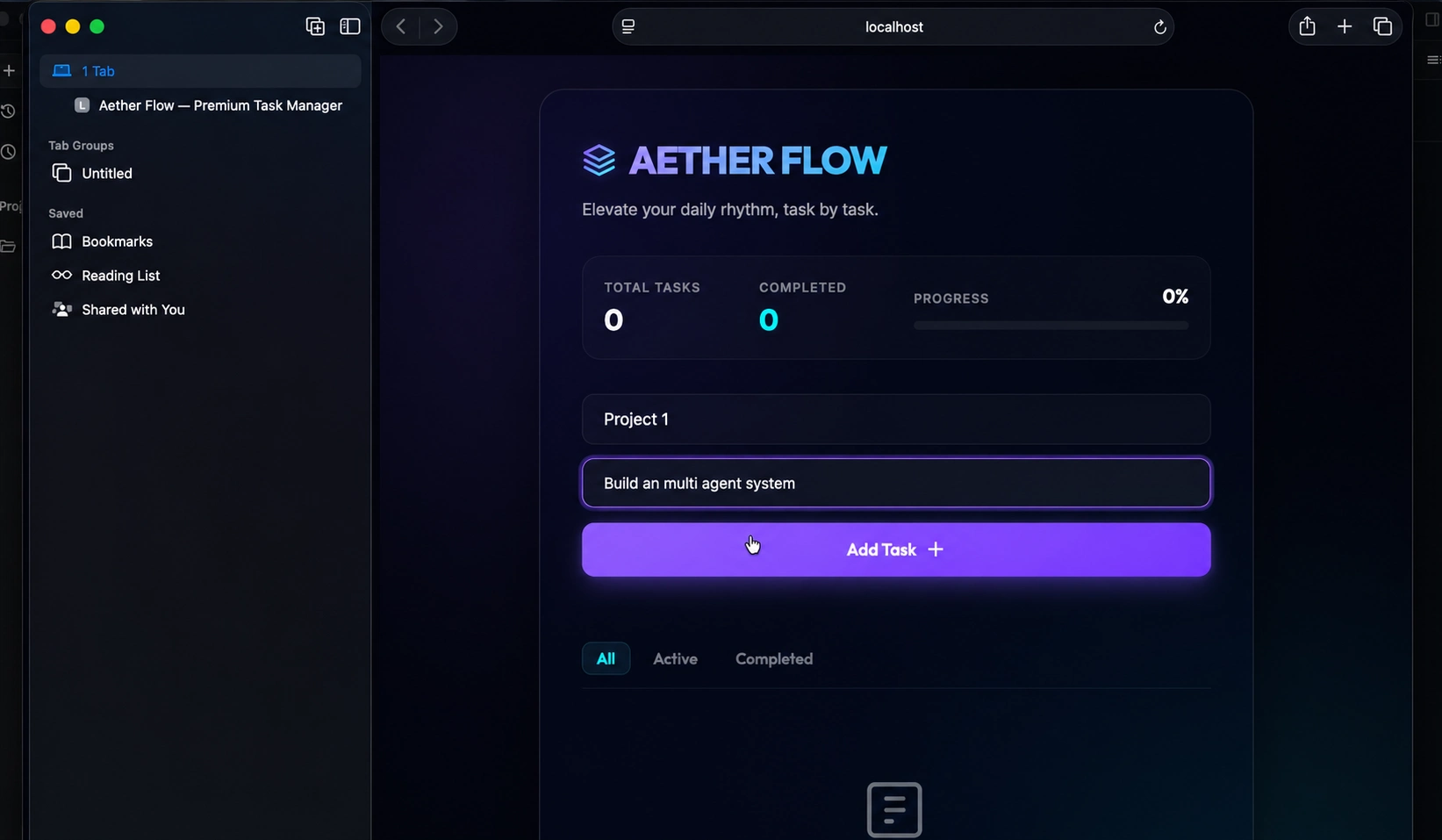
This workflow was demonstrated during the I/O keynote by Varun Mohan. In a high-profile display of the platform’s power, Mohan utilized parallel agents to build a functional operating system core from scratch. The entire process cost less than $1,000 in compute credits. To prove the stability of the generated code, the team ran a live clone of the video game Doom on the newly created OS core in real-time.
Comparison of Antigravity Versions
| Feature | Antigravity 1.0 | Antigravity 2.0 |
|---|---|---|
| Product Type | Single IDE (VS Code Fork) | Standalone App + CLI + SDK |
| Execution | Single Agent | Multiple Parallel Agents |
| CLI | Separate (Gemini CLI) | Integrated (Go-based) |
| Default Model | Gemini 3 Pro | Gemini 3.5 Flash |
| Automation | Manual Prompting | Scheduled Background Tasks |
| Infrastructure | Local Only | Managed Cloud Agents (Linux) |
| Voice Support | None | Native Integration |
Pricing and Accessibility
Google has introduced a tiered pricing structure to accommodate various levels of usage. While a free tier remains available—offering access to Gemini 3.1 Pro, Claude Sonnet 4.5, and GPT-OSS—the full power of the Antigravity 2.0 ecosystem is unlocked through premium subscriptions:
- AI Pro: $20/month
- AI Ultra: $100/month
- AI Ultra Premium: $200/month
The higher tiers are tailored for professional developers and enterprises requiring high-token throughput and the ability to run dozens of agents simultaneously without rate limiting.
Industry Implications and Analysis
The launch of Antigravity 2.0 signals a transition in the role of the software engineer. As AI agents become capable of handling routine implementation, debugging, and testing, the human developer’s value increasingly lies in system architecture and high-level logic.
Industry analysts suggest that Google’s decision to move away from a VS Code fork toward a standalone application is a move to “own the stack.” By controlling the environment, the CLI, and the model, Google can optimize the feedback loop between the agent and the code editor in ways that a plugin-based architecture cannot match. However, the hard cutoff for the Gemini CLI and the shift to a standalone app may meet resistance from developers who are deeply entrenched in their existing customized IDE setups.
Furthermore, the “Managed Agents” feature represents a significant step toward autonomous DevOps. The ability to spin up isolated Linux environments for code execution means that agents can not only write code but also verify it in a production-like environment before it ever reaches a human reviewer.
Conclusion
Antigravity 2.0 is more than a tool; it is an infrastructure for the next era of software production. By integrating high-speed models like Gemini 3.5 Flash with a multi-agent orchestration framework, Google has provided a glimpse into a future where software is “directed” rather than “written.” While the long-term impact on developer employment and code quality remains a subject of debate, the technical achievement of Antigravity 2.0 establishes a new benchmark for the industry. As the June 18th deprecation date for older tools approaches, the global developer community will likely begin a rapid transition to this new agentic paradigm.