rifanmuazin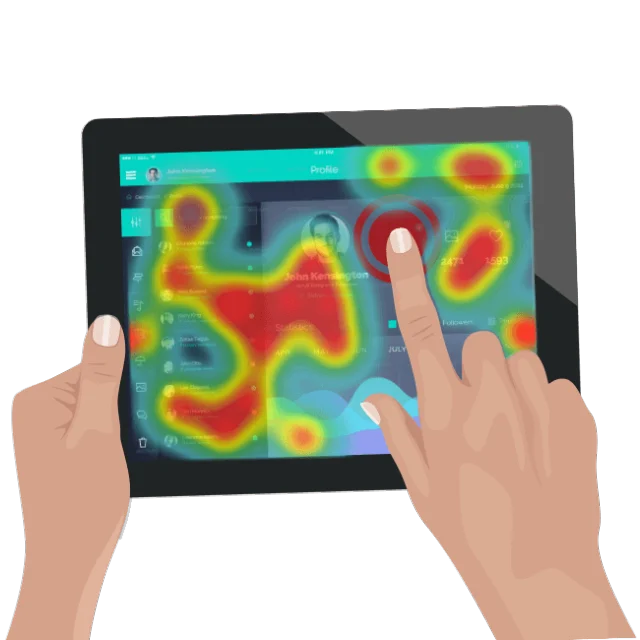
The global mobile application market, valued at hundreds of billions of dollars, has entered a phase of unprecedented competition where user retention has become the primary metric of success. While nearly every mobile app professional today utilizes some form of mobile app analytics to monitor performance, industry experts are increasingly identifying a fundamental flaw in traditional data workflows. The reliance on purely quantitative data—numbers, percentages, and charts—often leaves a significant gap in understanding user behavior. To bridge this gap, a strategic shift toward qualitative analytics is becoming the new standard for developers seeking to transform their products into market leaders.
The Limitations of Quantitative-Only Analytics
For years, the industry standard for app optimization has been quantitative analytics. These tools provide a macro-level view of an application’s health, offering vital statistics such as Daily Active Users (DAU), churn rates, session length, and conversion funnels. Quantitative data is indispensable for identifying that a problem exists. For instance, it can signal that a significant percentage of users are abandoning a registration form or that a specific update has led to a spike in app exits.
However, the inherent limitation of quantitative data is its inability to explain the “why” behind user actions. A developer may see that 40% of users drop off at the payment screen, but the data alone cannot determine if the button was unresponsive, the layout was confusing, or if a specific field was malfunctioning on certain device models. This informational vacuum often leads development teams to engage in “blind optimization,” where changes are made based on educated guesses rather than observed evidence. The result is a cycle of trial and error that consumes time, capital, and developer resources without guaranteeing a resolution to the underlying friction.
The Rise of Qualitative Analytics: Heatmaps and Session Recordings
To address these shortcomings, the integration of qualitative analytics into the standard workflow has emerged as a critical solution. Qualitative analytics focuses on the individual user experience, providing the context necessary to interpret quantitative trends. This methodology is primarily supported by two advanced technological features: touch heatmaps and user session recordings.
Touch Heatmaps and the Science of Interaction
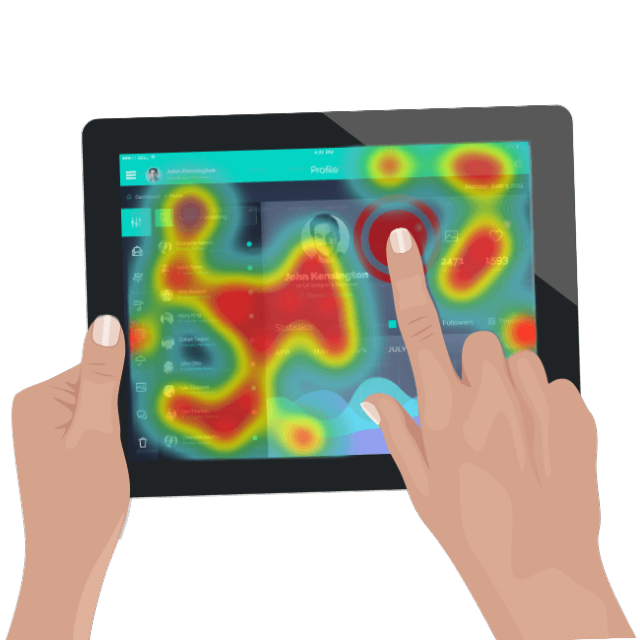
Touch heatmaps represent a visual aggregation of every gesture performed by users across the various screens of an application. By collecting data on taps, double-taps, swipes, and pinches, these tools create a color-coded overlay that reveals where the highest levels of interaction occur. This allows product managers to verify if users are engaging with the features intended to be the focal point of the UI (User Interface).
Beyond identifying popular features, touch heatmaps are instrumental in detecting “unresponsive gestures.” These occur when a user interacts with an element—such as an icon or a text string—that they believe should be interactive, but the app provides no response. High frequencies of unresponsive gestures are often a leading indicator of user frustration and UI design flaws. Addressing these issues can drastically improve the intuitiveness of an app, ensuring that the interface aligns with the natural expectations of the user base.
User Session Recordings: The Visual Truth
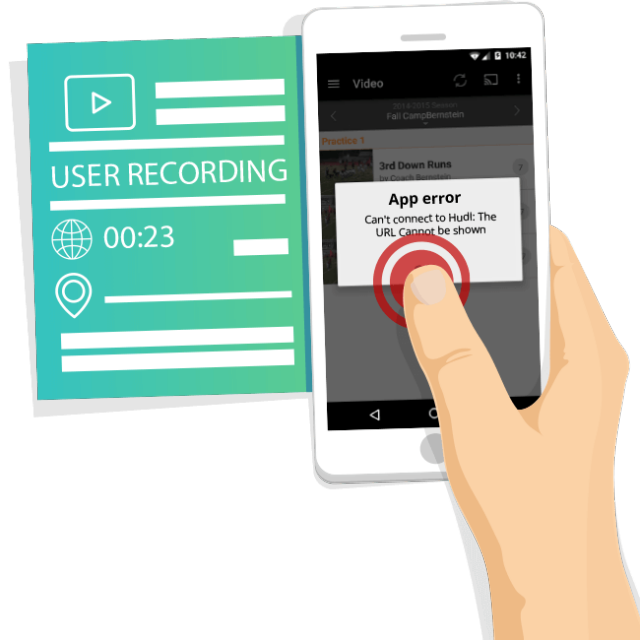
User session recordings provide a literal “over-the-shoulder” view of the user’s journey. Every interaction, sequence of events, and navigation path is recorded, offering an unbiased account of how the app performs in real-world conditions. Unlike traditional laboratory-based user testing, which can be influenced by the “Hawthorne Effect” (where users behave differently because they know they are being watched), session recordings capture authentic behavior across various demographics and devices.
This tool is particularly effective for diagnosing complex technical issues. If an app crashes, a session recording allows developers to see exactly what the user did in the seconds leading up to the failure. It eliminates the need for users to provide detailed bug reports—which are often vague or inaccurate—and allows the technical team to reproduce the error immediately. Furthermore, session recordings illuminate the “friction points” in a user’s journey, such as a confusing navigation menu or a slow-loading asset that prompts an immediate exit.
A Chronology of Analytics Evolution
The transition toward qualitative data is part of a broader historical evolution in digital tracking. In the early 2000s, web analytics were limited to basic server logs and “hit counters.” As the mobile revolution took hold in 2008 with the launch of the App Store, analytics evolved into event-based tracking, where specific actions like button clicks were logged.
By the mid-2010s, the market became saturated, and the cost of acquiring a new user (CAC) began to skyrocket. Developers realized that acquiring users was no longer enough; they had to retain them. This realization spurred the development of more sophisticated behavioral tools. In the current era, the focus has shifted from “Big Data” to “Smart Data,” where the goal is to synthesize massive amounts of quantitative information with deep qualitative insights to create a holistic view of the Customer Experience (CX).
Data-Fueled Optimization: The Hybrid Workflow
The most effective mobile app teams do not choose between quantitative and qualitative data; they use them in a symbiotic “Alert, Investigate, Resolve” workflow. This hybrid approach maximizes efficiency by using quantitative data as an alarm system and qualitative data as a diagnostic tool.
The Investigative Process
Consider a scenario where a mobile e-commerce application observes a 15% drop in checkout completions following a version update. The quantitative dashboard flags the drop-off at the “Shipping Information” stage.
In a traditional workflow, the team might assume the form is too long and spend weeks redesigning it. In a qualitative-integrated workflow, the team would instead review session recordings of users who abandoned the cart. They might discover that on specific Android devices, the “Next” button is being obscured by the system’s virtual keyboard. This insight allows the team to issue a precise CSS fix within hours, rather than embarking on a costly and unnecessary redesign of the entire checkout flow.
Proactive Troubleshooting and Technical Health
Qualitative analytics also enables “Proactive Troubleshooting,” a departure from the reactive nature of traditional maintenance. By periodically reviewing heatmaps and recordings, teams can spot emerging issues before they reach a statistical significance that triggers a quantitative alert.
For example, a developer might notice through session recordings that users are frequently double-tapping a “Submit” button because it lacks a loading indicator. While the quantitative data might still show successful submissions, the qualitative data reveals a brewing user experience issue that could lead to double-billing errors or user frustration. Fixing this proactively ensures the app remains a “powerhouse” of reliability, maintaining high ratings in the app stores and preventing the negative reviews that often follow technical oversights.
Industry Impact and the Competitive Landscape
The shift toward qualitative insights is having a profound impact on how mobile-first companies structure their teams. There is an increasing demand for “Growth Product Managers” and “UX Researchers” who are proficient in interpreting behavioral data. Industry reports suggest that companies utilizing comprehensive behavioral analytics see a significantly higher Customer Lifetime Value (CLV) and lower churn rates compared to those relying solely on legacy analytics.
Furthermore, as privacy regulations like GDPR and CCPA become more stringent, qualitative analytics providers have adapted by offering robust data masking features. This ensures that sensitive user information—such as passwords or credit card numbers—is never recorded or stored, allowing developers to gain insights without compromising user privacy.
Conclusion: The Future of App Analytics
The integration of qualitative analytics represents the maturation of the mobile app industry. It marks a move away from superficial metrics toward a deeper understanding of human-computer interaction. By combining the “what” of quantitative data with the “why” of qualitative insights, app professionals can make strategic decisions with a level of confidence that was previously unattainable.
In an era where a single bad experience can lead a user to delete an app and move to a competitor, the ability to see the world through the user’s eyes is no longer a luxury—it is a competitive necessity. As artificial intelligence and machine learning continue to integrate with these tools, the next frontier will likely involve automated behavioral analysis, where software can automatically flag “frustrated” user sessions for review. For now, the “fresh twist” of qualitative analytics remains the most potent tool in the arsenal of any developer aiming to deliver a truly optimized, world-class mobile product.