rifanmuazin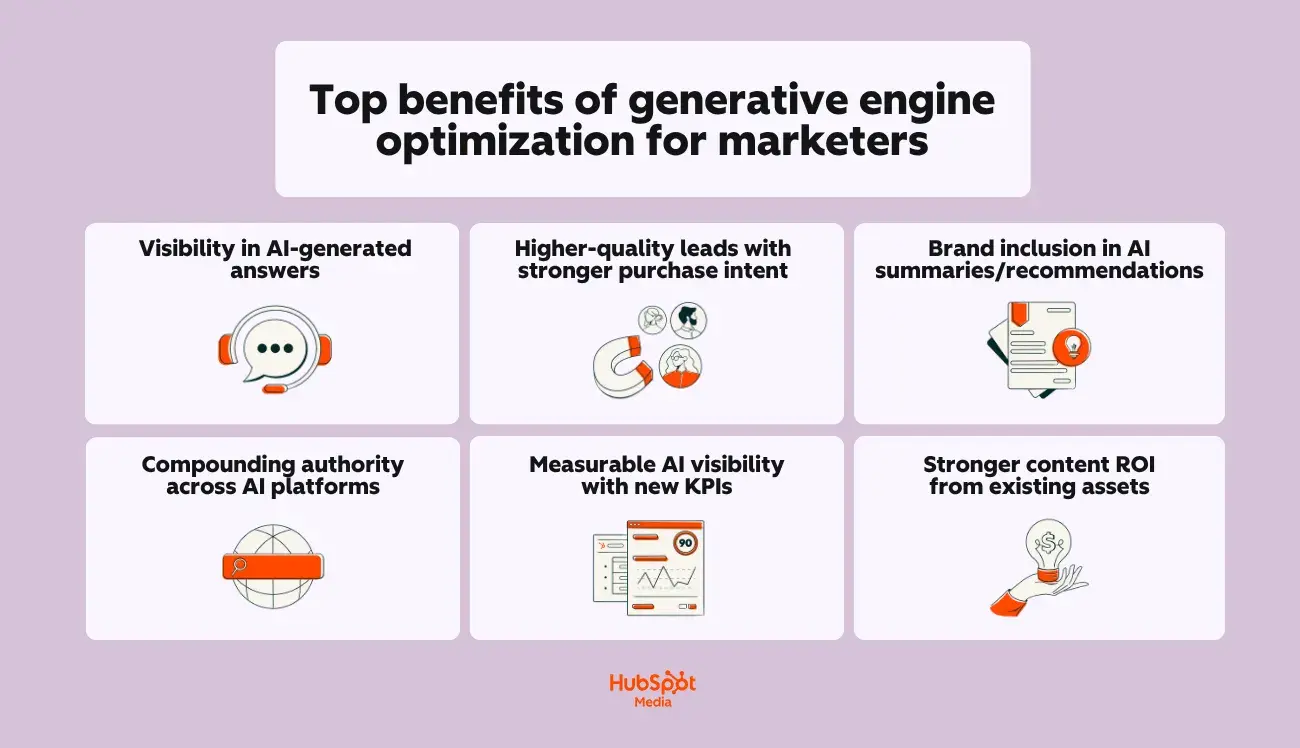
The landscape of brand discovery is undergoing a seismic shift, propelled by the rapid ascent of generative artificial intelligence. Buyers are increasingly turning to AI-powered platforms like ChatGPT, Google AI Overviews, Perplexity, and Gemini not merely for links, but for direct, synthesized answers, fundamentally altering the pathways to brand visibility and customer engagement. This paradigm shift necessitates a proactive strategy known as Generative Engine Optimization (GEO), a distinct yet complementary discipline to traditional Search Engine Optimization (SEO), focused on ensuring brands are accurately understood, cited, and recommended within these burgeoning answer engines.
The Evolution of Search: From Links to Answers
For decades, digital marketing revolved around SEO, a practice honed to secure top rankings in traditional search engine results pages (SERPs), often characterized by a list of “ten blue links.” Brands invested heavily in keywords, backlinks, and technical optimizations to capture clicks and drive traffic. However, the advent of large language models (LLMs) and their integration into search experiences has introduced a new layer of information retrieval. Users are now asking complex questions directly to AI, expecting comprehensive, conversational responses that often negate the need to click through to external websites.
This transition from a click-based discovery model to an answer-based one has profound implications for marketers. While traditional SEO remains vital for foundational web presence and authority, it no longer guarantees visibility in the “zero-click” answer box that often precedes or replaces organic listings. Data from HubSpot’s 2026 State of Marketing Report underscores this reality, revealing that nearly half of marketers (49%) observe a decrease in web traffic from traditional search due to AI answers. This decline, however, is offset by a crucial insight: 58% of marketers report that AI referral traffic exhibits significantly higher intent than its traditional search counterpart. This suggests that while volume may shift, the quality of engagement from AI-driven discovery is superior, presenting a lucrative opportunity for brands prepared to adapt.
Understanding Generative Engine Optimization (GEO)
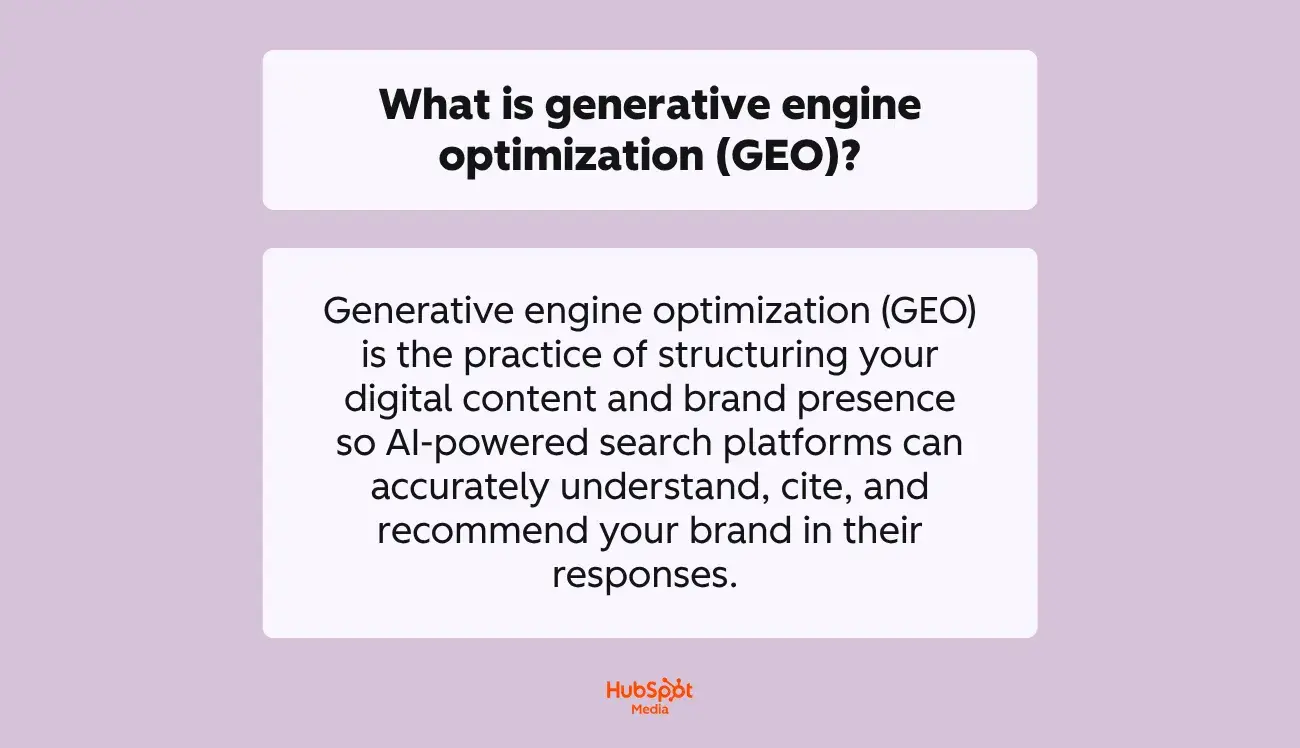
Generative Engine Optimization is the systematic practice of structuring a brand’s digital content and overall online presence to be optimally understood, cited, and recommended by AI platforms. Unlike SEO, which historically prioritized factors like keyword density, link profiles, and page authority for ranking algorithms, GEO emphasizes structured data, entity understanding, and machine-friendly content. It’s about providing AI models with explicit, unambiguous information that they can readily process, synthesize, and present as authoritative answers.
GEO doesn’t replace SEO; rather, it amplifies it. A strong SEO foundation, built on high-quality content and technical soundness, provides the raw material for AI models. GEO then acts as the sophisticated packaging, ensuring that this material is digestible and accurately represented by generative engines. This synergy allows marketers to leverage existing content investments while future-proofing their organic visibility in an increasingly AI-dominated digital landscape.
The Strategic Imperative: Why GEO Matters Now
The shift towards answer engines is not a speculative future trend but a present-day reality, demanding immediate strategic attention. The competitive advantage for early adopters is substantial, creating a structural lead that latecomers will find challenging to overcome.
Key Benefits of a Robust GEO Strategy:
-
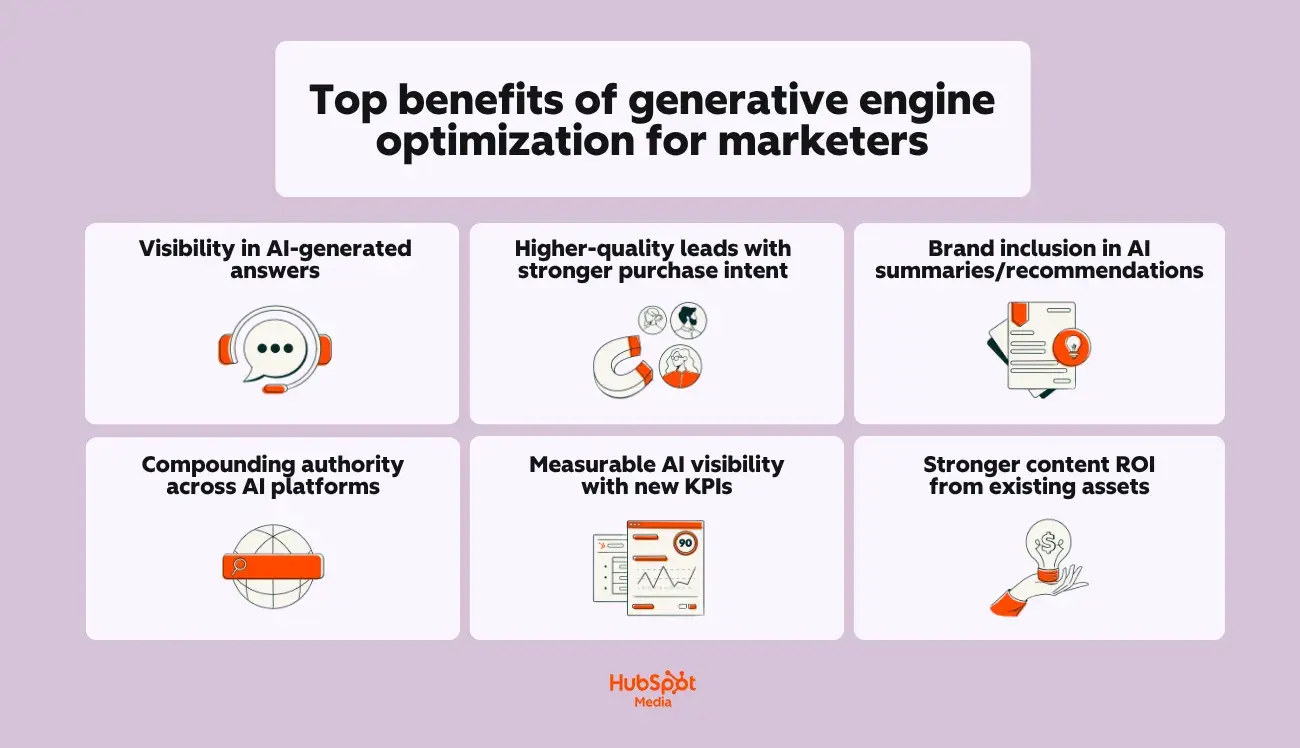
Visibility in AI-Generated Answers: The most direct and impactful benefit is appearing within the AI’s synthesized response. When a user asks, “What’s the best CRM for remote teams?” and a brand’s product is cited, it bypasses the traditional search results page entirely, reaching the prospect at a moment of high intent without the competitive noise of multiple links. This “zero-click” presence establishes immediate authority.
-
Higher-Quality Leads with Stronger Purchase Intent: AI-referred traffic often translates to better business outcomes. Users arriving from answer engines have typically absorbed relevant context, potentially compared alternatives, and formed an initial opinion based on the AI’s curated information. This pre-qualification means these visitors are further along their buyer journey, leading to higher conversion rates. Semrush data corroborates this, indicating that marketers investing in GEO are capturing higher-intent traffic that converts at 4.4 times the rate of traditional organic search.
-
Enhanced Brand Inclusion in AI Summaries: Generative engines do not merely list websites; they synthesize information from diverse sources to present a cohesive answer. When a brand is included in this synthesis, especially alongside or ahead of competitors, it acts as a powerful signal of authority and trustworthiness. This inclusion is earned by proactively supplying AI-friendly content, including FAQs, specific statistics, comparison tables, and clearly defined product/service attributes.
-
Compounding Entity Authority Across AI Platforms: A significant, yet often underestimated, benefit of GEO is the compounding nature of citation authority. Similar to how domain authority accrues in traditional SEO, citations earned in one AI platform (e.g., ChatGPT) can strengthen a brand’s presence in others (e.g., Perplexity, Gemini, Google AI Overviews). This occurs because AI models draw from overlapping training data and real-time retrieval sources. Brands that build entity authority through consistent structured data, consistent brand messaging across platforms, and third-party validation create a “citation flywheel” that reinforces their digital presence holistically.
-
Measurable AI Visibility with New KPIs: While traditional SEO metrics (rankings, impressions, CTR) fall short in capturing AI visibility, dedicated measurement frameworks are emerging. Key Performance Indicators (KPIs) for GEO include “Share of Voice in AI Answers,” “Citation Frequency,” “Brand Sentiment in AI Summaries,” and “AI Referral Conversion Rate.” Tools like HubSpot’s AEO Grader provide a baseline by evaluating brand presence across five dimensions: sentiment, presence quality, brand recognition, share of voice, and market position, enabling marketers to benchmark performance and track improvement over time.

-
Stronger Content ROI from Existing Assets: GEO does not demand a complete overhaul of content strategy. In fact, the content that performs best in AI citations often consists of pages already ranking well in traditional search. Optimizing these high-performing assets by restructuring them with direct answers, FAQ schema, and clear factual claims can unlock significant AI visibility from existing investments, proving that GEO is not a speculative bet but a measurable revenue advantage achievable right now.
Navigating the Challenges of Generative Engine Optimization
Despite its clear advantages, GEO presents a unique set of challenges that differ fundamentally from traditional SEO. These obstacles are often less about content quality and more about technical implementation, data consistency, and risk management in an evolving AI ecosystem.
-
Data Fragmentation Across Platforms: AI models pull information from a multitude of sources, including websites, social media profiles, business listings, and knowledge graphs. If a brand’s information is inconsistent or fragmented across these various touchpoints (e.g., LinkedIn, Google Business Profile, website schema), AI engines may receive conflicting inputs. This reduces “entity confidence”—the model’s certainty about a brand’s identity and offerings—leading to reduced citation likelihood or inaccurate representation. The fix involves establishing a single source of truth for brand data and ensuring consistency across all digital properties, often through a centralized data management system.
-
Entity Clarity and Disambiguation: AI engines resolve “entities” rather than simply matching keywords. Brands with generic names (e.g., “Summit,” “Atlas”) or those sharing names with other companies face a higher risk of ambiguity. If an AI model cannot clearly distinguish a brand’s entity, it may confuse it with others, misattribute information, or omit it entirely. This issue, rarely encountered in traditional SEO where domain authority helps disambiguate, is critical in generative search. Solutions involve explicit schema markup, unique brand identifiers, and consistent entity declarations across the web.
-
AI Hallucination and Brand Misrepresentation: Large language models predict statistically likely word sequences, not retrieve facts. When encountering gaps in training data or ambiguous signals, they can “hallucinate”—generating confident-sounding but entirely fabricated information. For brands, this poses a significant risk of AI misrepresenting products, services, or even company values. Mitigating this requires providing AI with abundant, authoritative, and unambiguous structured data, along with proactive monitoring of AI responses for accuracy.
-
Schema Markup Complexity and Implementation Barriers: Structured data, particularly schema markup, serves as the translation layer between human-readable content and AI systems. However, many marketing teams find schema implementation technically challenging, often leading to incorrect deployment, stale data, or missing entity connections. The solution lies in simplifying schema implementation through user-friendly tools, prioritizing core schema types (Organization, Product, FAQ), and validating markup with tools like Google’s Rich Results Test.
-
Measurement Gaps and KPI Uncertainty: As noted, traditional SEO metrics are insufficient for GEO. The absence of established, industry-wide KPIs and measurement tools can make it difficult for marketing teams to justify investment and demonstrate ROI. The fix involves adopting new, AI-centric KPIs, utilizing specialized GEO monitoring tools, and establishing custom reporting dashboards within analytics platforms like Google Analytics 4 (GA4) to track AI referral traffic and conversions.
-
Privacy, Compliance, and Data Governance: GEO introduces new considerations regarding privacy and compliance. AI models train on vast datasets, meaning brand information, customer testimonials, and employee details published on a site could be ingested and re-contextualized by AI in unforeseen ways. For regulated industries, this raises questions about data accuracy obligations, liability for AI-generated claims, and adherence to evolving AI transparency regulations. Proactive data governance, clear disclaimers, and careful consideration of publicly available information are crucial.
A Practical Framework for GEO Implementation
Getting started with GEO does not require a massive budget or a complete technological overhaul. The most effective strategies build upon existing SEO foundations and integrate GEO practices into current content workflows.
Step 1: Establish Your AI Visibility Baseline
Begin by understanding your current standing. Utilize tools like HubSpot’s AEO Grader to score your brand’s presence across key AI dimensions (sentiment, presence quality, brand recognition, share of voice, market position). Supplement this with manual testing: query ChatGPT, Perplexity, and Gemini with 10-15 prompts your target audience would ask. Document whether your brand appears, how it’s characterized, and which competitors are cited. This initial audit will pinpoint urgent content gaps and opportunities.
Step 2: Restructure High-Value Content for AI Extraction
AI engines process content differently than humans, scanning for direct, extractable answers, often within the first 40-60 words of a section. Prioritize your five highest-traffic blog posts or landing pages for optimization. Restructure them with question-based headings, direct-answer introductions, clear factual claims, and cited statistics. This makes content easily digestible for AI models.
Step 3: Implement Core Schema Markup on Priority Pages
Structured data is paramount. Focus on the three schema types that yield the most GEO value:
- Organization Schema: Defines your company’s official name, logo, contact info, and official social profiles.
- Product Schema: Provides detailed attributes for products (price, availability, reviews), crucial for product recommendations.
- FAQ Schema: Directly answers common questions, often surfacing in AI summaries.
Use JSON-LD in the document head for implementation and validate every page using Google’s Rich Results Test before publishing.
Step 4: Set Up AI Referral Traffic Tracking in Google Analytics 4 (GA4)
To measure GEO’s impact, create custom channel groups in GA4. Identify AI referral sources (e.g., Perplexity.ai, chat.openai.com) and group them. This allows isolation of AI-referred sessions, separate measurement of conversion rates, and robust reporting that connects GEO efforts to pipeline outcomes. Track both AI visibility metrics (Share of Voice, Citation Frequency) and traditional organic traffic metrics, as both remain critical.
Step 5: Build Entity Authority Beyond Your Domain
AI platforms often prioritize third-party sources for validation. Therefore, solely optimizing your website is insufficient. Focus on building external authority signals:
- Third-Party Review Sites: Encourage reviews on platforms like G2, Capterra, Trustpilot.
- Wikipedia Pages: For notable brands, a well-maintained Wikipedia entry is a powerful entity signal.
- Industry Directories and Associations: Ensure consistent listings and memberships.
- News Mentions and Press Releases: Earned media enhances credibility and broadens AI’s understanding of your brand.
Step 6: Integrate GEO into Your Existing Content Workflow
GEO should not be a separate, parallel workstream. Embed it directly into your content production process:
- Keyword Research Expansion: Include “answer-oriented” queries (e.g., “how to,” “what is,” “best for”).
- Content Brief Templates: Add sections for direct answers, structured data requirements, and FAQ prompts.
- Editorial Guidelines: Incorporate best practices for AI-friendly content formatting.
- SEO Tools Integration: Utilize tools that offer schema generation or AI content analysis within your existing stack.
Step 7: Monitor, Iterate, and Scale
GEO is an ongoing process. AI models update frequently, competitors adapt, and answer engine trends evolve rapidly. Establish a monthly review cadence:
- Monitor your AI visibility metrics.
- Conduct fresh manual prompt testing.
- Analyze AI referral traffic performance.
- Identify new content gaps or optimization opportunities.
The Future of Content Marketing is Here
Generative Engine Optimization is not merely an optional add-on; it is the essential next frontier for content marketing. It enables brands to appear in the conversational answers that are increasingly shaping buyer decisions, offering higher-intent leads, stronger brand inclusion, and a compounding visibility advantage for early movers. While challenges exist—from data fragmentation and hallucination risks to new measurement paradigms—they are solvable with a systematic approach and the right tools.
The brands that prioritize GEO are not just adapting to change; they are actively shaping their future digital presence. By understanding the unique mechanics of AI-powered discovery, optimizing existing content, implementing structured data, and continuously monitoring performance, marketers can secure a definitive competitive edge. The time to transition from “thinking about GEO” to “measuring GEO impact” is now.