
 rifanmuazin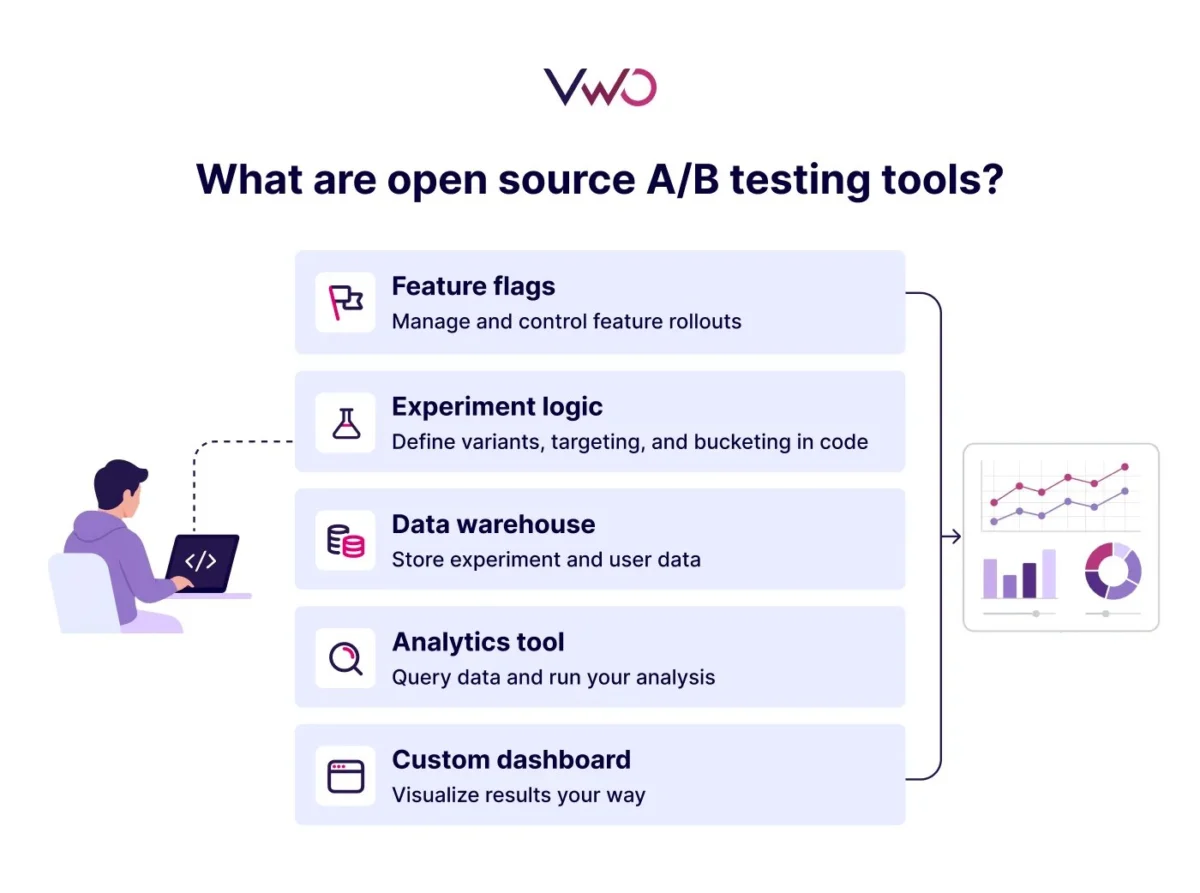
The global digital landscape in 2026 has reached a critical juncture where experimentation is no longer a luxury for elite tech firms but a fundamental requirement for any business seeking to maintain a competitive edge. As organizations strive to optimize user experiences and maximize conversion rates, the fundamental debate persists: should a company invest in an open-source framework or opt for a commercial, fully managed platform? This choice ultimately centers on the trade-off between total ownership and operational convenience. Open-source tools provide direct access to source code, placing the responsibility for infrastructure, security, and maintenance on the internal team. Conversely, commercial tools arrive as turnkey solutions, equipped with sophisticated statistical engines, visual editors, and dedicated support structures. This guide examines the nuances of both approaches to help organizational leaders make a data-driven decision based on engineering capacity, budget constraints, and the desired velocity of experimentation.
The Evolution of Digital Experimentation
The history of A/B testing has transitioned from simple, developer-led scripts to highly sophisticated ecosystems that integrate behavioral analytics, machine learning, and multi-armed bandit algorithms. In the early 2010s, most companies were forced to build their own internal tools due to a lack of robust market options. However, as the Conversion Rate Optimization (CRO) industry matured, two distinct paths emerged. The open-source movement, championed by developers seeking transparency and data sovereignty, led to the creation of flexible libraries. Meanwhile, the commercial sector focused on democratizing testing, allowing non-technical marketers and product managers to launch experiments without writing a single line of code.
Today, the stakes are higher than ever. With increasing privacy regulations like GDPR and CCPA, and the phase-out of third-party cookies, the method by which a company tracks and analyzes user behavior has significant legal and operational implications. The decision between open-source and commercial tools is now a strategic one that involves stakeholders from engineering, marketing, and legal departments.
Understanding Open-Source A/B Testing Frameworks
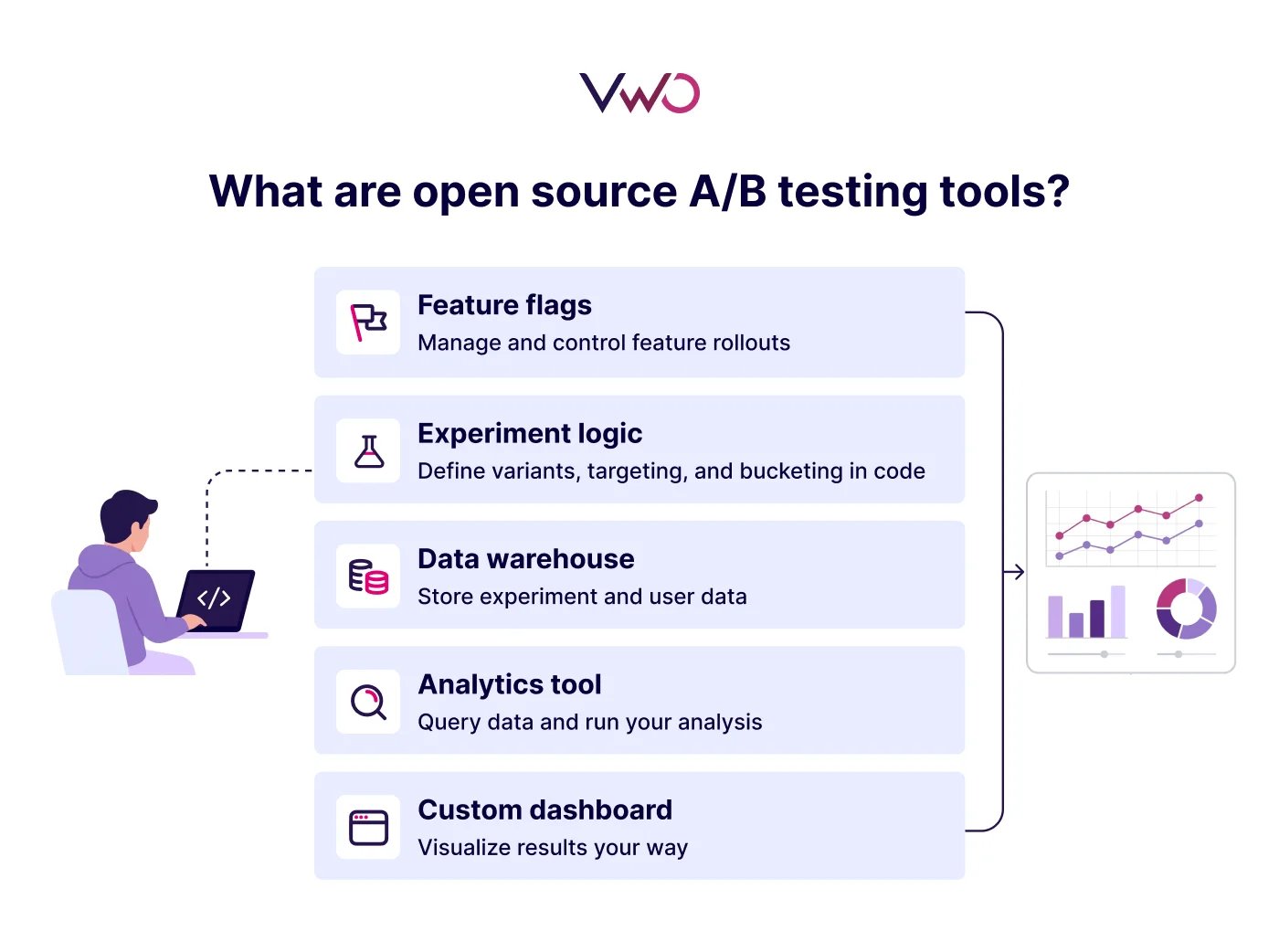
Open-source A/B testing tools are essentially public-facing codebases that organizations can download, modify, and host on their own servers. These tools, such as GrowthBook, Unleash, or Flagsmith, act as frameworks that integrate directly into a company’s existing tech stack.
Operational Mechanics
Open-source tools typically function via Software Development Kits (SDKs) or server-side scripts. Experiments are defined within the application code using feature flags or conditional logic. When a user visits a site or app, the system evaluates their attributes—such as geographic location, device type, or historical behavior—and assigns them to a specific “bucket” or variation. The raw data generated from these interactions is then piped into the company’s internal data warehouse (such as Snowflake, BigQuery, or Redshift) for analysis.
The Advantages of the Open-Source Model
- Data Sovereignty and Security: Because the infrastructure is self-hosted, sensitive user data never leaves the company’s firewall. This is a primary driver for industries like finance and healthcare.
- Infinite Customization: Engineering teams can modify the source code to fit highly specific use cases that a standard commercial tool might not support.
- No Licensing Fees: There are no recurring subscription costs for the software itself, which can appear attractive to budget-conscious startups with high-quality engineering talent.
- Integration Flexibility: Since the code is open, it can be integrated deeply into complex CI/CD pipelines and backend architectures.
Inherent Limitations
The primary drawback of open source is the “hidden cost” of ownership. While the software is free, the labor required to maintain it is not. Organizations must dedicate engineering hours to handle server maintenance, security patches, and the manual creation of reporting dashboards. Furthermore, open-source tools often lack a Visual Editor, meaning every minor change—such as shifting a button’s color—requires a developer’s intervention and a code deployment.
The Commercial Platform Paradigm
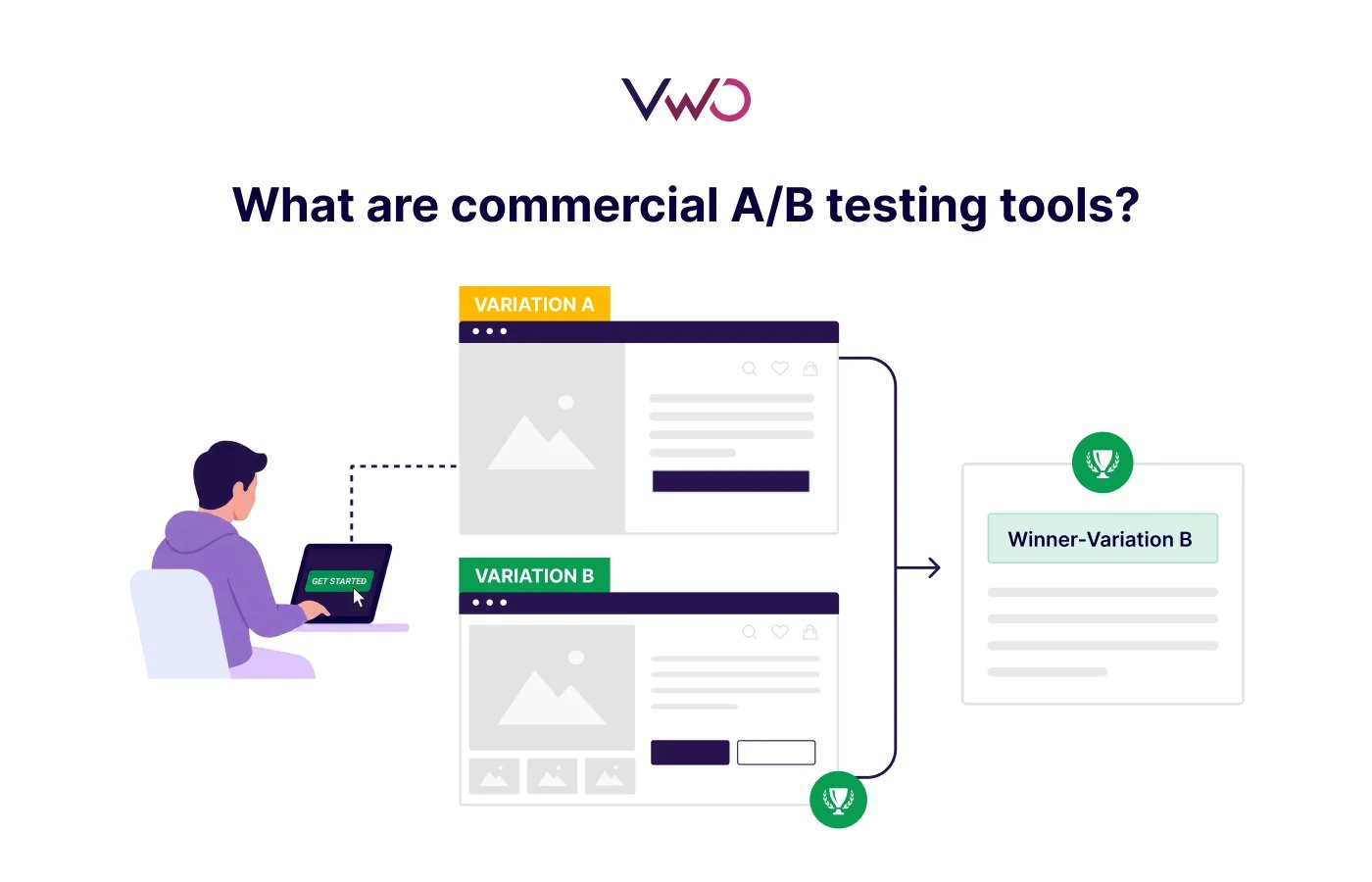
Commercial A/B testing tools, represented by industry leaders such as VWO, Optimizely, and AB Tasty, are fully managed Software-as-a-Service (SaaS) platforms. These solutions are designed to be “experimentation-in-a-box,” providing everything from traffic allocation to advanced statistical reporting in a single interface.
Operational Mechanics
Commercial tools generally use a lightweight JavaScript snippet or a robust API to manage experiments. They feature intuitive “What You See Is What You Get” (WYSIWYG) editors that allow non-developers to modify front-end elements instantly. These platforms also include built-in statistical engines—often using Bayesian or Frequentist methodologies—to automatically calculate the probability of a variation being a “winner.”
The Advantages of the Commercial Model
- Speed to Market: Teams can go from hypothesis to live experiment in hours rather than days, as there is no need for custom coding or deployment cycles.
- Democratization of Testing: By removing the technical barrier, product managers and marketers can take full ownership of the CRO process, freeing up developers for core product work.
- Integrated Insights: Many commercial platforms, such as VWO, bundle testing with behavioral tools like heatmaps, session recordings, and form analytics, providing a 360-degree view of the user journey.
- Dedicated Support and SLAs: Commercial vendors provide Service Level Agreements (SLAs) and account managers to ensure that the testing program remains operational and effective.
Inherent Limitations
The most notable limitation is the subscription cost, which can scale based on traffic volume. Additionally, there is the risk of “vendor lock-in,” where moving away from the platform requires re-implementing all active experiments and potentially losing historical data.
Critical Comparative Analysis: Seven Key Factors
To provide a structured framework for decision-making, we analyzed the two approaches across seven critical dimensions.
1. Total Cost of Ownership (TCO)
While open-source tools lack upfront licensing fees, the TCO often exceeds commercial subscriptions when factoring in the salaries of the DevOps and data engineers required to maintain the system. Commercial tools have predictable monthly or annual costs, which simplifies budgeting.
2. Engineering Dependency
Open source creates a high dependency on the engineering team. If the developers are focused on a major product launch, the experimentation program often grinds to a halt. Commercial tools are designed to reduce this friction, allowing growth teams to operate independently.
3. Time to Value
A commercial tool can be implemented and running its first test within the same business day. An open-source setup involves environment configuration, database connections, and custom SDK implementation, which can take weeks of lead time.
4. Maintenance and Security
With open source, the organization is responsible for patching vulnerabilities and scaling the infrastructure as traffic grows. In the commercial model, the vendor handles all security compliance (SOC2, HIPAA, etc.) and ensures the platform can handle traffic spikes.
5. Integration Ecosystem
Commercial platforms offer “plug-and-play” integrations with popular CRMs (Salesforce), Analytics (Google Analytics 4), and CDPs (Segment). Open-source tools require manual API work to achieve the same level of connectivity.
6. Reporting and Statistical Rigor
Open-source tools often require a data scientist to interpret results or build custom dashboards in Tableau or Looker. Commercial tools provide automated, real-time reporting with built-in significance testing, reducing the risk of “p-hacking” or incorrect data interpretation.
7. Support and Documentation
Open-source users must rely on community forums and documentation that may be outdated. Commercial users have access to professional services and technical support teams who can troubleshoot issues in real-time.
The Strategic Hybrid Approach
A growing trend among enterprise organizations is the adoption of a hybrid model. In this scenario, a company might use an open-source tool for backend “feature flagging”—controlling the rollout of new code to small groups of users—while utilizing a commercial platform like VWO for frontend UI/UX testing.
However, industry analysts warn that this can lead to “data silos” and experiment conflicts. If a user is part of a backend experiment and a frontend experiment simultaneously, the results may be contaminated. Successful hybrid models require a unified data layer and strict governance to ensure that experiments across different tools do not overlap in a way that invalidates the findings.
Expert Perspectives on the Industry Shift
Industry experts emphasize that the choice of tool often reflects the maturity of the company’s experimentation culture. Dom Light, a prominent voice in the experimentation space, recently noted, “It doesn’t get easier, it just gets faster.” This sentiment highlights that as organizations mature, the bottleneck is rarely the ideas themselves, but the speed at which those ideas can be tested and validated.
Data from recent market reports suggests that companies using commercial platforms tend to run 3.5 times more experiments per month than those relying solely on internal or open-source builds. This increased velocity directly correlates with higher revenue growth, as organizations can more quickly identify and double down on successful user experiences.
Conclusion: Making the Right Choice for 2026
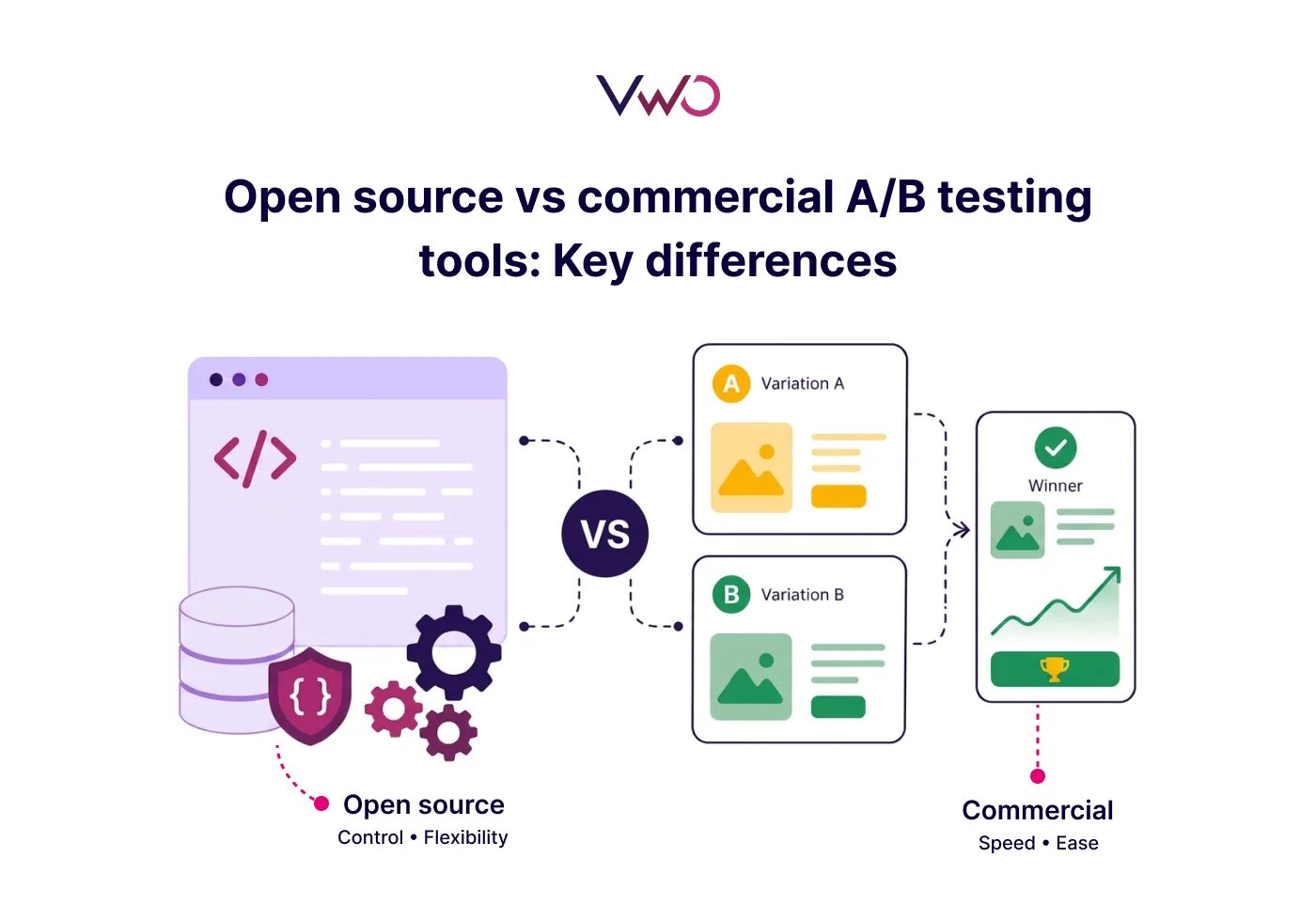
The decision between open-source and commercial A/B testing tools should be guided by a company’s specific goals and resources.
Choose an Open-Source Tool if:
- You have a large, dedicated engineering team with available bandwidth.
- You have extremely strict data privacy requirements that forbid third-party data processing.
- You require deep, custom integration into a proprietary backend architecture.
- You are primarily focused on developer-led feature flagging rather than marketing-led UI/UX testing.
Choose a Commercial Tool (like VWO) if:
- Your goal is to scale experimentation across marketing, product, and growth teams.
- You need to reduce the burden on your engineering department.
- You want an all-in-one solution that combines testing with behavioral insights.
- You prioritize speed, ease of use, and a fast return on investment.
As digital products become more complex, the ability to iterate rapidly and safely will remain the primary differentiator between market leaders and laggards. Whether through the control of open source or the efficiency of a commercial platform, the most important step is to foster a culture where every major product decision is backed by empirical evidence.








