
 rifanmuazin
In today’s competitive e-commerce landscape, customer support is no longer a secondary function but a critical driver of retention and growth. Businesses are increasingly recognizing the imperative of integrating customer relationship management (CRM), marketing, and support functions into a unified platform. This pursuit of seamless customer experience has brought two prominent players, HubSpot Service Hub and Zendesk, into sharp focus. While both offer robust solutions, their core strengths and ideal use cases diverge significantly, particularly for e-commerce operations.
HubSpot Service Hub emerges as the preferred choice for e-commerce teams seeking a holistic CRM, marketing, and support ecosystem. Conversely, Zendesk excels for high-volume contact centers prioritizing pure ticket management and robust voice support. This distinction is crucial for businesses aiming to optimize their customer service strategies and leverage technology for tangible results.
The indispensable nature of support software is undeniable. Even nascent e-commerce ventures understand the necessity of tracking customer tickets, order histories, and resolution statuses. However, as many businesses have discovered through trial and error, not all service tools are created equal in their ability to comprehend and streamline complex support workflows. HubSpot and Zendesk, with their established reputations, stand out as leaders in this domain for valid reasons.
HubSpot, once primarily recognized as an “inbound marketing company,” has evolved into a comprehensive platform offering far more. The synergy between HubSpot CRM and its Service Hub, augmented by an ever-expanding suite of AI tools, is demonstrably driving significant outcomes for businesses of all sizes. A compelling case in point is Liquidity Services, which reportedly slashed its support costs by an impressive 50% through consolidation on HubSpot’s interconnected platform.
Zendesk, on the other hand, presents a distinct operational philosophy. It is fundamentally a mature ticket management system engineered for high-volume service teams. For organizations operating contact centers or grappling with perpetually growing ticket queues, Zendesk can feel like the indispensable extra hands their teams desperately need.
Ultimately, the choice between these two powerful platforms hinges on a singular question: What specific problems does your business need to solve?
HubSpot Service Hub vs. Zendesk: An Overview of Strategic Approaches
HubSpot’s foundational strength lies in its pioneering of inbound marketing principles. This approach prioritizes empowering and delighting customers, a stark contrast to the traditional, often intrusive, messaging-heavy tactics. This customer-centric ethos has seamlessly translated into its customer service offerings.
At the core of HubSpot’s ecosystem is its CRM, now enhanced with Breeze AI capabilities. This CRM serves as the data backbone, fueling all of HubSpot’s interconnected hubs. For support teams, Service Hub is the flagship product, meticulously linking every touchpoint of the customer journey and facilitating effortless task automation.
The recent integration of AI tools by HubSpot, including its AI customer agent, intelligent reply suggestions, and sophisticated routing logic, represents a significant leap forward. These AI functionalities appear to be deeply integrated with the CRM data, enabling assistants and generated text to authentically reflect a company’s brand voice.
Zendesk, conversely, is typically regarded as the go-to platform for teams contending with sheer volume. Long-standing support managers often attest to its reliability. Its workspace is characterized by its clean, fast, and predictable interface, designed for professionals who spend their entire day managing queues.
The Zendesk Suite forms the operational nucleus, unifying email, chat, SMS, social media messages, and phone calls. Its voice support capabilities are particularly noteworthy. For teams heavily reliant on phone-based customer interactions, Zendesk continues to offer a superior user experience.
However, Zendesk Sell, its CRM offering, presents a different narrative. While functional, it lacks the seamless integration found in HubSpot. Acquired from Base CRM, it retains a distinct identity, often perceived as an add-on rather than an integral component. This can lead to agents frequently toggling between systems to access crucial customer history, a practice that can become cumbersome during busy periods.
A Deep Dive into Testing Methodologies
As a seasoned reviewer of technological platforms, pitting two industry giants like HubSpot and Zendesk against each other offers a unique perspective. However, this comparison proved particularly nuanced due to their fundamentally different underpinnings, despite both aiming to enhance customer support.
To ensure a focused and relevant evaluation, the testing methodology concentrated on several key areas critical to e-commerce support operations:
- Ease of Use and Onboarding: How intuitive is the platform for new agents? What is the learning curve?
- AI and Automation Capabilities: How effectively do AI features streamline workflows, enhance agent productivity, and improve customer interactions?
- Omnichannel Support and Ticket Management: How well does the platform handle diverse communication channels and organize incoming inquiries?
- CRM Integration and Data Accessibility: How seamlessly is customer data integrated, and how easily can agents access complete customer profiles?
- Reporting and Analytics: What insights can be derived from the platform’s reporting tools, and how are they relevant to e-commerce KPIs?
- Pricing and Scalability: How does the cost structure align with business needs, and how well does the platform scale with growth?
- Integrations and Ecosystem: How robust is the platform’s ability to connect with other essential e-commerce tools?
HubSpot vs. Zendesk: A Comparative Feature Analysis
Delving into the granular features reveals the core differentiators between these two platforms, particularly from the perspective of e-commerce support teams seeking dependable solutions for managing customer service.
Ease of Use, Onboarding & Support: Navigating the User Experience
Both HubSpot and Zendesk are frequently lauded for their user-friendliness, a key factor for businesses looking to implement new software quickly.
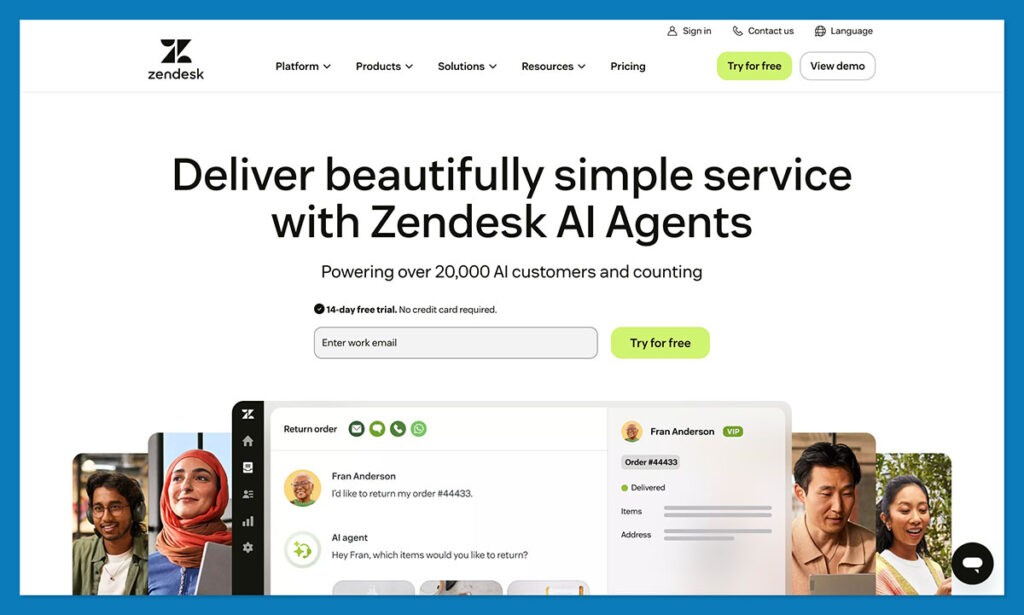
Zendesk offers an experience akin to walking into a meticulously organized workshop. Its interface is highly intuitive, with tools logically placed and its performance remaining swift even under heavy load. New agents can quickly acclimate to the environment, and its mobile application is remarkably functional, providing access to core features like response management, ticket reassignment, customer information retrieval, and even voice call handling on the go. A significant advantage is that Zendesk includes all primary support channels (email, chat, phone) across all paid plans, ensuring immediate human interaction capabilities.
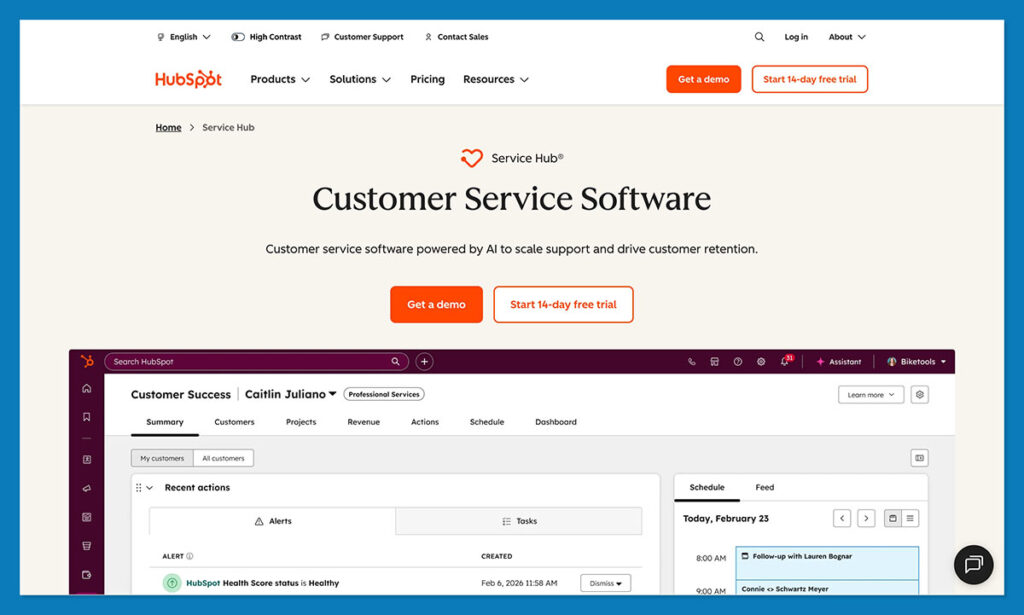
HubSpot, while presenting a more feature-rich and visually dynamic interface, also excels in facilitating efficient user onboarding. The learning curve is surprisingly gentle, often proving manageable even for individuals less inclined towards technology, thanks to its consistent underlying logic: a unified CRM, a single timeline, and a consolidated record for each customer. Where HubSpot’s support model differs is in its tiered access. Free users do not receive one-on-one support, and phone support is reserved for the Professional tier and above. However, HubSpot Academy offers an extensive library of resources, often enabling teams to resolve queries through self-service options faster than engaging with human support.
AI & Automation: HubSpot’s Breeze AI vs. Zendesk’s Service AI
The current landscape of customer service technology is incomplete without a discussion of artificial intelligence. Both HubSpot and Zendesk have significantly enhanced their AI capabilities. HubSpot’s AI offering, Breeze, operates as a comprehensive intelligent system embedded throughout the platform.
The Breeze Assistant is instrumental in information retrieval and generating response drafts. HubSpot Agents, such as the AI Customer Agent, are designed to automate end-to-end customer service tasks. HubSpot claims that its AI Customer Agent can autonomously resolve up to 65% of customer interactions for many businesses.
Breeze Intelligence stands out for its ability to unify and cleanse data, simplify form creation, and uncover insights that would typically require extensive manual analysis.
Zendesk’s AI is more heavily geared towards traditional support functions, offering features like suggested replies, automatic ticket triaging, call summarization, quality assurance scoring, and workforce management tools tailored for large teams. These capabilities are particularly impactful for organizations managing high ticket volumes, with its phone support features being a notable strength for teams spending significant time on calls.
The fundamental divergence lies in their focus: Zendesk concentrates intensely on the support queue, while HubSpot encompasses the entire customer journey, providing AI tools that bridge sales, marketing, and customer support.
Omnichannel Support & Ticket Management: Seamlessly Handling Customer Interactions
A unified inbox is a foundational element of efficient customer service. HubSpot consolidates email, chat, WhatsApp, Messenger, and form submissions into a single interface directly within the CRM. This allows agents to seamlessly transition between inquiries, such as a shipping status query to a product size exchange, without losing crucial context. The ticket pipelines are intuitively managed, enabling teams to effectively segment returns, complaints, VIP communications, and general inquiries.
Zendesk boasts a broader array of supported channels, including SMS, in-app messaging, and a more extensive selection of social media platforms. For e-commerce businesses operating across multiple fronts like chat, email, Instagram DMs, and phone, Zendesk’s workspace can appear more comprehensive. However, without direct CRM integration, Zendesk’s workspace may not always provide the full customer history, necessitating additional steps to stitch together a complete context.
CRM Strength and Product Extras: The Foundation of Customer Insight
The underlying CRM capabilities represent a significant point of differentiation between these two platforms.
HubSpot’s CRM is the central nervous system of its operations. Every interaction, from incoming tickets to sales notes and marketing engagement, is captured within a unified customer timeline. This provides agents with an immediate and comprehensive view of the customer’s history, including purchases, abandoned carts, email interactions, and previous service requests.
Zendesk Sell, while functional, is not as deeply integrated into the support experience. Its origins as Base CRM mean it often operates as a distinct entity. This can lead to agents frequently switching between the support workspace and the CRM to access necessary customer information, a process that can significantly impact efficiency during high-demand periods.
Beyond core functionalities, HubSpot offers supplementary features that enhance the perception of integrated customer service. These include:
- Customer Success Workspace: Tools for proactive customer management and health scoring.
- Playbooks: Guided workflows for agents to ensure consistent service delivery.
- NPS Tracking: Integrated Net Promoter Score surveys to gauge customer satisfaction.
Zendesk’s supplementary features are more operationally focused, designed for managers overseeing support teams. These include:
- Workforce Management (WFM): Tools for scheduling, forecasting, and optimizing agent staffing.
- Quality Assurance (QA): Features for monitoring and scoring agent interactions.
- Performance Dashboards: Detailed analytics for tracking key support metrics.
HubSpot’s reporting capabilities are particularly notable for their interconnectedness. Tickets are juxtaposed with deals, marketing campaigns, order histories, and subscription data, offering a holistic view of how service impacts revenue and retention. The customer success workspace, health scoring, NPS tracking, and playbooks provide smaller teams with sophisticated tools typically found in enterprise-level solutions, often without the need for additional software.
Zendesk’s reporting leans towards traditional support analytics, with Explore offering robust ticket metrics, queue trends, QA scores, and staffing insights—features highly valued by contact center managers. However, without additional integrations, Zendesk does not inherently connect these support metrics to the broader customer lifecycle.
Pricing & Scalability: Aligning Cost with Growth
The pricing and scalability of a platform are intrinsically linked, as businesses need solutions that remain cost-effective and supportive as they expand.
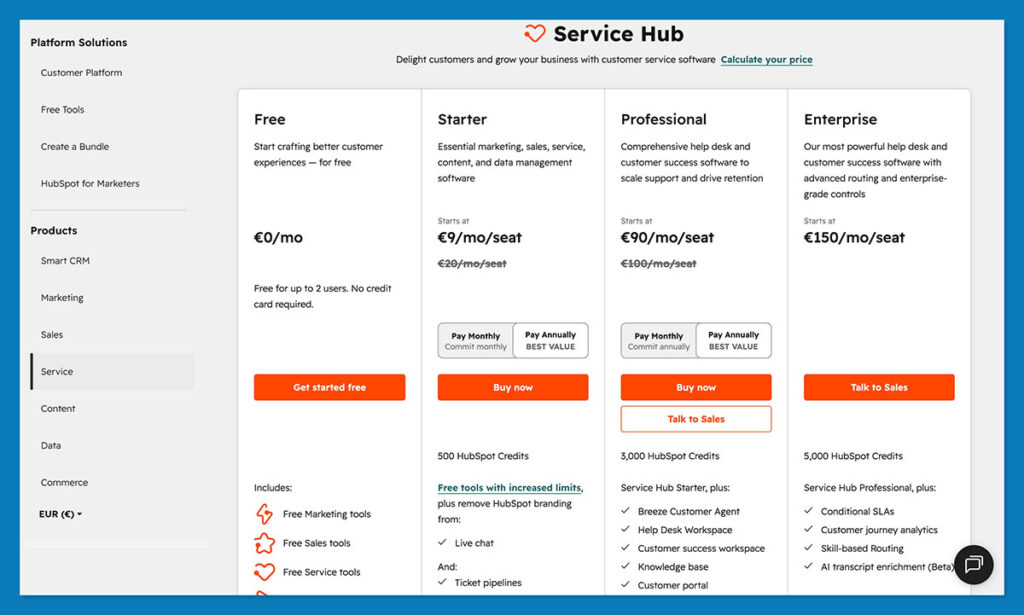
HubSpot offers a tiered pricing model. The free CRM provides a solid foundation, with basic ticketing capabilities for up to two users. Service Hub’s paid plans include Starter, Professional, and Enterprise tiers, with costs increasing based on features and user count. While there can be a noticeable jump between tiers, HubSpot’s integrated nature can lead to cost savings by consolidating multiple tools.
Zendesk does not offer a free tier, though a demo is available. Its paid plans begin at a slightly higher entry point, with more incremental price increases between tiers. However, it’s important to note that Zendesk Sell is a separate cost, and even with integration, the operational separation can lead to the combined cost approaching enterprise-level pricing for mid-sized businesses.

Scalability: Where Each Platform Excels
HubSpot demonstrates excellent scalability when operating within a unified customer record system. Adding users, workflows, and data is straightforward, as its CRM is designed for expansion. The primary cost consideration arises at higher tiers, especially when multiple HubSpot hubs are implemented.
Zendesk excels in handling high ticket volumes, often outperforming other platforms in this regard. However, as businesses grow and require more diverse functionalities beyond pure support, Zendesk’s “service-first” architecture can reveal its limitations. While scaling a support team is efficient, other business functions may continue to rely on disconnected tools.
Integrations & App Ecosystems: Connecting the E-commerce Chain
Effective e-commerce support necessitates seamless integration with a variety of tools, from checkout platforms to marketing automation software.
HubSpot’s ecosystem, including its App Marketplace and Data Hub sync engine, provides robust connectors for popular e-commerce platforms like Shopify, WooCommerce, and BigCommerce. The Data Hub enables true two-way data synchronization, ensuring that updates in one system are reflected across others. Crucially, because Service Hub resides within the HubSpot CRM, any integration benefits sales, marketing, and support simultaneously.
Zendesk’s marketplace is extensive, offering connections to a wide array of applications. However, the quality and depth of these integrations can vary. While many integrate well with the support workspace, fewer seamlessly connect with Zendesk Sell. This can result in a fragmented integration landscape, often requiring additional workarounds or third-party tools like Zapier, which can introduce latency and potential bugs during peak order volumes.
HubSpot vs. Zendesk: The Definitive Verdict
The choice between HubSpot Service Hub and Zendesk ultimately depends on a business’s specific operational priorities. Both platforms are highly capable, but HubSpot consistently demonstrates an edge in areas crucial for a connected customer-centric business. Its ability to keep all facets of a customer-focused operation interconnected is a significant differentiator.
Zendesk remains a powerhouse for traditional support operations. If a team’s primary function revolves around managing high ticket volumes and adhering to strict SLAs, Zendesk’s robust and reliable infrastructure is undeniably effective.
However, for e-commerce businesses that rely on more than just pure ticket volume—where customer retention, lifetime value, and a holistic understanding of the customer journey are paramount—HubSpot offers a more natural, manageable, and time-efficient solution.
For businesses leaning towards HubSpot, creating a free HubSpot CRM account and testing it with real customer scenarios is a practical step to ascertain its suitability. The immediate visibility into the platform’s integrated capabilities will provide invaluable insight into whether it aligns with their strategic objectives.
Frequently Asked Questions
How does HubSpot compare to Zendesk?
HubSpot integrates support with the entire customer lifecycle, offering a unified CRM experience. Zendesk primarily focuses on ticket flow and high-volume support management. For businesses prioritizing context and a comprehensive customer view, HubSpot generally holds an advantage. For organizations with an intense focus on queues, SLAs, and extensive voice support, Zendesk remains a strong contender.
When should an e-commerce business use HubSpot for support?
HubSpot is an ideal choice for e-commerce stores that depend on repeat customers and require clear visibility across departments. When support, marketing, and sales teams draw from the same CRM, understanding the catalysts behind customer inquiries becomes straightforward. This makes HubSpot particularly effective for businesses aiming to enhance customer retention and increase lifetime value (LTV).
Is HubSpot affordable for small businesses?
Yes, HubSpot is an accessible option for small businesses. Its free CRM includes essential contact management and basic ticketing features for up to two users. Service Hub Starter plans begin at a competitive price point per user per month. Costs escalate at the Professional and Enterprise tiers, reflecting the expanded feature sets and advanced capabilities.









