rifanmuazin
The landscape of online information retrieval and content discovery is undergoing a profound transformation, driven by the emergence of agentic Artificial Intelligence. Moving beyond conventional prompt-and-response mechanisms, these advanced AI systems are capable of initiating actions, identifying deficiencies, suggesting enhancements, and adapting to dynamic trends with minimal human intervention. This fundamental shift is poised to redefine the core tenets of Search Engine Optimization (SEO), challenging traditional notions of continuous discoverability and demanding a strategic re-evaluation from digital marketers and content creators alike.
The Evolving Fabric of the Web: From Direct Interaction to AI Mediation
For decades, the internet has operated as an intricate graph of interconnected entities – websites, representing individuals, organizations, ideas, and concepts – bound together by content, context, and trust. This foundational structure, often termed the “open web,” facilitated direct human interaction: users initiated searches, clicked on results, consumed information, and independently synthesized conclusions. However, a significant paradigm shift is now underway, not in the underlying structure of the web itself, but in the manner by which it is accessed and consumed.
AI systems are increasingly interposing themselves between users and the vast expanse of the web. They interpret queries, summarize findings, and, critically, often decide which information to prioritize and present. This intermediary role marks the genesis of AI agents – sophisticated systems engineered not merely to generate textual responses, but to autonomously navigate, retrieve, and potentially act upon web-based information. Early prototypes, such as experiments in natural language interfaces like NLWeb, foreshadow a future where web interaction becomes more conversational and action-oriented, yet ideally retains its inherent openness and interconnectedness. This evolution is sometimes referred to as the advent of an “agentic web.” It is crucial, however, to perceive this not as a wholesale replacement of the existing internet, but rather as an intelligent, dynamic layer forming atop it. The open web, with its human-generated content and foundational link structures, persists. What is evolving is the mechanism of content discovery, interpretation, and utilization. This critical shift in interaction patterns is precisely where the implications for SEO become most compelling and complex. Industry collaborations, such as Yoast’s work with Microsoft on NLWeb, underscore the concerted effort to ensure AI systems can effectively understand and interact with the semantic richness of the open web, thereby preserving its value in an agent-driven ecosystem.
Redefining Search Engine Optimization in an Agent-Driven Landscape
If AI agents are indeed reshaping the fundamental ways in which individuals engage with the internet, the logical consequence is a re-evaluation of SEO’s purpose and practice. Historically, SEO has centered on enhancing content discoverability for human users, primarily through optimizing for search engine rankings, improving visibility, and driving direct clicks. With AI agents mediating this journey – not just retrieving but interpreting and acting on information – SEO’s mandate must broaden significantly, building upon existing principles rather than abandoning them.
The most profound shift lies in the metric of discoverability itself: it may no longer be solely contingent on a page’s rank in search results, but increasingly on its selection, trustworthiness, and utility to AI systems. This introduces a subtle yet critical distinction. AI agents do not “browse” the web in the human sense; they parse, synthesize, and extract data. They prioritize factual accuracy, verifiable claims, and structured information that clearly defines entities and their relationships. Therefore, the optimization imperative expands beyond driving clicks to ensuring content is primed for inclusion in AI-generated responses and workflows.
What Stays, What Evolves, What Gets Added: A New Framework for SEO
Traditional SEO fundamentals remain indispensable, forming the bedrock upon which new strategies will be built. Content quality, topical relevance, technical health, and site authority continue to be paramount. AI systems, after all, still rely on the web as their primary source of truth, making high-quality, authoritative content a non-negotiable prerequisite. Similarly, strong internal linking structures, clean site architecture, and robust security measures (HTTPS) ensure content is accessible and trustworthy for both human and machine agents.
However, several aspects of SEO are poised for significant evolution. Keyword research, traditionally focused on matching human search queries, will need to expand to encompass understanding the semantic relationships and entity associations that AI agents prioritize. User experience (UX) will evolve from optimizing for direct human navigation to ensuring content is logically structured and easily consumable by AI. Backlink analysis, while still crucial for authority, may shift emphasis from raw link count to the semantic context and trustworthiness of linking domains as perceived by AI.
Crucially, new disciplines will be added to the SEO toolkit. Entity SEO will become paramount, focusing on clearly defining and interlinking entities (people, places, concepts) within content to enhance machine understanding. Semantic content optimization will move beyond keywords to ensure comprehensive coverage of topics and their related concepts, providing AI with a rich, interconnected knowledge base. Structured data and schema markup will transition from a best practice to an absolute necessity, providing explicit machine-readable signals about content, its purpose, and its relationships to other entities. Furthermore, optimizing for inclusion in AI knowledge graphs and foundational models will emerge as a key strategy, aiming to ensure content is not just found but integrated into the very datasets that power AI agent responses.
As Alex Moss aptly describes in “The Same But Different: Evolving Your Strategy For AI-Driven Discovery,” the web is bifurcating into a “human” web and an “agentic” web. SEO professionals must now consider both layers. Content must still be engaging and discoverable for human users, but it must simultaneously be intelligible, trustworthy, and actionable for AI systems. This duality means content needs to be factually robust, semantically clear, explicitly structured, contextually rich, and verifiable by multiple sources. In this sense, SEO does not vanish; it stretches, expanding its scope from helping users find information to helping sophisticated AI systems choose it.
Agentic AI’s Transformative Role in SEO Workflows
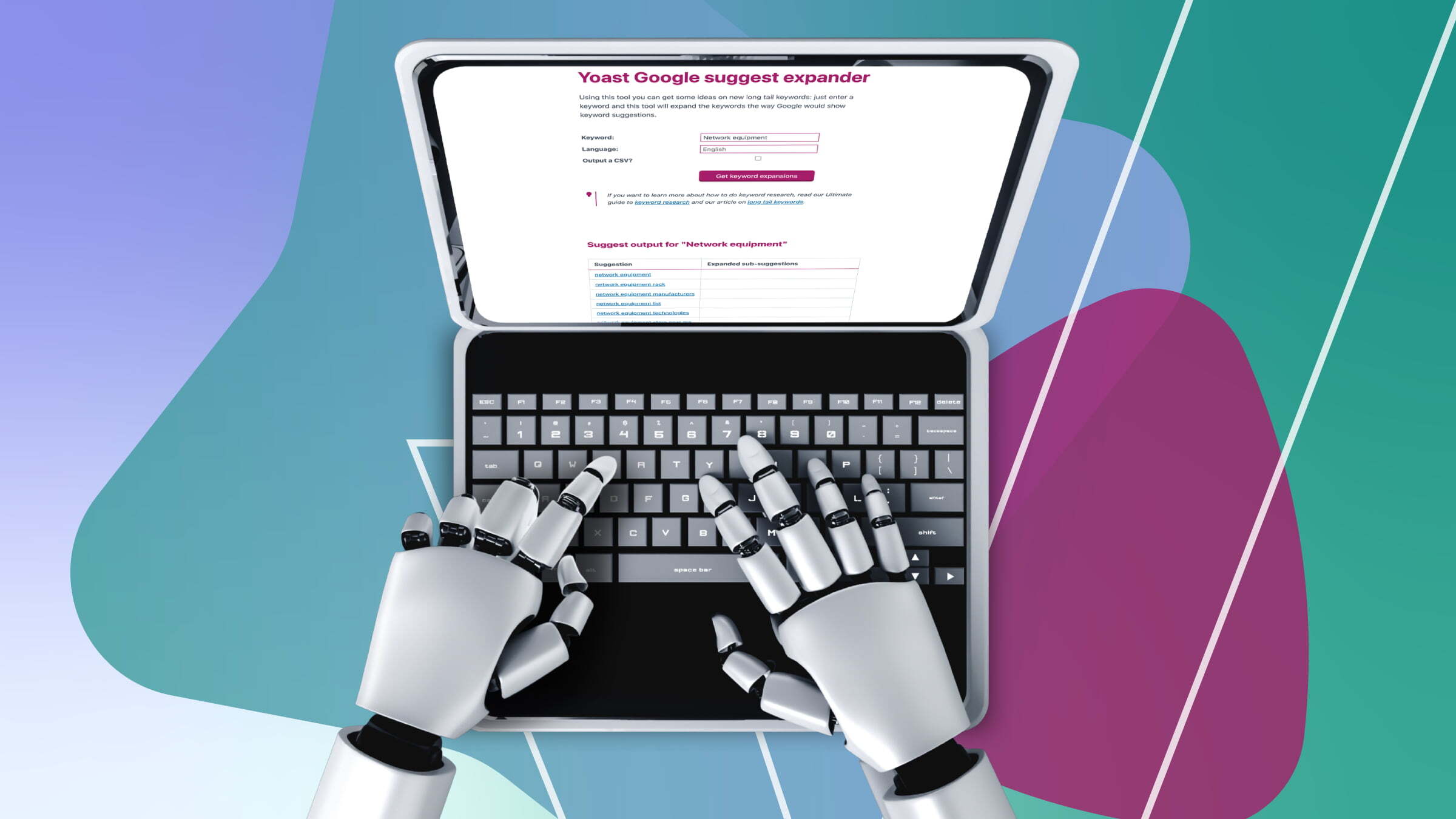
The integration of agentic AI promises to fundamentally reshape the daily operations and strategic execution within SEO teams. The shift is from periodic, reactive tasks to continuous, proactive, and adaptive optimization. Rather than replacing SEO professionals, agentic AI positions itself as a collaborative system, augmenting human capabilities and streamlining workflows.
Consider the following transformative shifts:
- Audits to Always-on Optimization: Traditionally, SEO audits are conducted at fixed intervals, identifying issues like broken links or missing metadata. With agentic AI, systems can continuously monitor site performance, flag issues in real-time, and even suggest or implement fixes dynamically. This transforms optimization into an ongoing process, detached from manual scheduling.
- Reacting to Anticipating: SEO actions are often triggered by visible performance changes, such as a drop in rankings. Agentic AI, leveraging advanced analytics, can identify nascent patterns in search behavior, emerging topics, or shifts in user intent before they significantly impact performance, enabling proactive strategy adjustments.
- Manual Execution to Guided Systems: Tasks like keyword research, content clustering, and internal linking, which are often labor-intensive, can be significantly assisted by AI. Agents can identify opportunities, group topics, suggest content optimizations, and even apply specific changes, allowing human SEOs to focus on strategic guidance and output review.
- Static to Adaptive Content: Content traditionally receives occasional updates. Agentic systems can recommend dynamic content refinements based on real-time performance, refine sections for clarity, or restructure content to better align with evolving user intent and AI consumption patterns.
- Generic UX to Contextual Journeys: While basic personalization exists, most users experience a largely uniform website. Agentic AI can facilitate more contextual experiences, adapting content, navigation, and recommendations based on individual user behavior, intent, or journey stage, leading to more relevant and engaging interactions.
- Technical Maintenance to Intelligent Infrastructure: Technical SEO involves periodic checks for crawl errors, indexing issues, and schema gaps. Agentic systems can continuously monitor technical health, automatically prioritize issues, suggest fixes, and, in some cases, implement them, dynamically optimizing structured data, internal linking, and site architecture.
A practical illustration of this shift is in structuring content for both machines and humans. The focus on structured data and schema, exemplified by features like schema aggregation in Yoast SEO, is not new, but its criticality intensifies. By connecting disparate pieces of structured data into a unified graph, these tools help search engines and AI agents understand how entities, content types, and relationships coalesce across a site. This seemingly technical detail reflects a broader imperative: if AI agents are parsing, combining, and interpreting content from myriad sources, then explicit clarity and robust data-level connections become paramount for content to be understood, selected, and reused.
Implications for SEO Professionals: A Shift in Focus
The advent of agentic AI does not signal the obsolescence of SEO teams; rather, it suggests a significant redistribution of labor and expertise. Agentic AI is poised to absorb the more routine, data-intensive, and repetitive tasks: continuous monitoring, initial data analysis, automated reporting, and the implementation of clearly defined, low-risk changes. This frees human SEOs to elevate their focus to higher-order, strategic, and creative endeavors.
The human element of SEO will increasingly concentrate on brand building, crafting compelling narratives, developing nuanced content strategies that resonate with human audiences, fostering authentic community engagement, and ensuring ethical considerations are at the forefront of AI integration. The role transitions from execution to oversight, from data analysis to strategic interpretation, from task completion to guiding the intelligent systems. SEO professionals will become architects of discoverability in a hybrid web, balancing the needs of human users with the operational requirements of sophisticated AI agents. They will be tasked with defining the “why” and “what,” while AI handles much of the “how.”
Navigating the Challenges and Risks of Agentic AI
While the promises of agentic AI for SEO are substantial, its integration is not without considerable challenges and risks. These are not inherent flaws in the technology but rather new complexities that demand careful consideration and strategic navigation.
- High Technical and Integration Complexity: Agentic systems are rarely standalone. They require deep integration with existing CMS platforms, analytics suites, CRM systems, and various data sources. This complexity can manifest in data silos, interoperability issues between disparate systems, and significant resource demands for initial setup and ongoing maintenance. Many teams will find this far from a plug-and-play solution, necessitating substantial investment in technical expertise and cross-functional coordination.
- Data Quality and Dependency: The efficacy of agentic AI is inextricably linked to the quality of the data it processes. If input data is incomplete, inaccurate, inconsistent, or biased, the outputs – recommendations, actions, or content modifications – will inevitably reflect these deficiencies. At scale, even minor inconsistencies can cascade into significant strategic missteps. Therefore, maintaining pristine, reliable data sources becomes an even more critical, continuous effort.
- Risk Amplification and the Need for Governance: The speed and automation inherent in agentic AI, while a strength, can also amplify unintended consequences. Without robust guardrails and clear governance frameworks, an AI agent could inadvertently implement changes that negatively impact site performance, brand reputation, or compliance. For instance, automated content generation or modification without human oversight could introduce factual errors or tone inconsistencies. The implementation of approval checkpoints and human-in-the-loop processes will be essential to ensure alignment with strategic objectives and ethical guidelines.
- Hallucinations and Accuracy Considerations: A well-documented challenge with generative AI is its propensity to “hallucinate,” producing plausible-sounding but factually incorrect information. In an SEO context, this could lead to AI-generated content suggestions that are inaccurate, keyword clusters that are irrelevant, or internal linking recommendations that are illogical. Detecting these subtle inaccuracies can be challenging, underscoring the ongoing need for human validation and rigorous source-checking within the workflow.
- Limited Understanding of Nuance: SEO often transcends pure data, encompassing elements of brand voice, cultural context, and subtle user intent. Agentic systems may struggle to fully grasp these nuances, potentially leading to technically sound but contextually misaligned outputs. The creative, empathetic, and strategic aspects of content creation and brand messaging will likely remain firmly within the human domain.
- Balancing Automation with Human Judgment: A fundamental question for organizations adopting agentic AI will be the optimal degree of automation. While full automation might seem appealing for efficiency, it risks relinquishing critical oversight. Conversely, excessive human intervention might negate the benefits of AI. The strategic sweet spot will involve using agentic AI to extend human capabilities, offloading repetitive tasks, while retaining human guidance for critical decisions, strategic direction, and ethical considerations.
- High Initial Investment and Learning Curve: The adoption of agentic systems will likely entail significant upfront costs, including software licenses, infrastructure upgrades, and specialized training for teams. The learning curve can be steep, requiring experimentation, iteration, and a willingness to adapt to evolving best practices in a rapidly changing technological landscape. For many organizations, adoption will be a gradual, phased process rather than an immediate overhaul.
- Zero-Click Experiences and Shifting Traffic Patterns: As AI systems become more adept at directly answering user queries, the prevalence of “zero-click” searches – where users find their answers within the search results interface without visiting a website – is projected to increase. This shifts the measurement of SEO success: direct website traffic may become less dominant, while metrics like visibility within AI-generated summaries, brand mentions, and influence within knowledge graphs gain prominence. SEO will need to adapt its reporting and success criteria to reflect this evolving user journey.
The Future of Digital Discoverability: Collaboration, Not Replacement
The integration of agentic AI into SEO is not a fixed destination but an ongoing journey. It demands continuous adaptation, a profound commitment to structuring content for machine readability, and an unwavering focus on human oversight. The overarching goal is not full automation but a more sophisticated, collaborative ecosystem. Even as AI agents assume greater execution responsibilities, the fundamental accountability for strategic direction, factual accuracy, and fostering trust will remain firmly with human professionals. This represents a more intriguing evolution: not whether AI agents will “take over” SEO, but how they will redefine what constitutes effective SEO.
If discoverability transcends mere ranking to encompass selection, interpretation, and reuse by intelligent systems, then the scope of SEO irrevocably broadens. It transforms from optimizing for a singular interface to preparing content for existence across multiple, interconnected layers of the web. The question shifts from “How do we rank?” to a more expansive inquiry: “How do we ensure our content is accurately understood, trusted, and selected by AI agents, how do we get integrated into AI knowledge models, and how do we ensure our message is authentically conveyed across all layers of the evolving digital landscape?”
The answers to these questions are still unfolding. This dynamic environment necessitates continuous learning, experimentation, and a proactive approach to adapting strategies. SEO, far from disappearing or being replaced, is undergoing a profound stretch, evolving alongside a web that is becoming increasingly dynamic, layered, and less predictable. The future of discoverability hinges on a symbiotic relationship between human ingenuity and artificial intelligence.