
 rifanmuazin
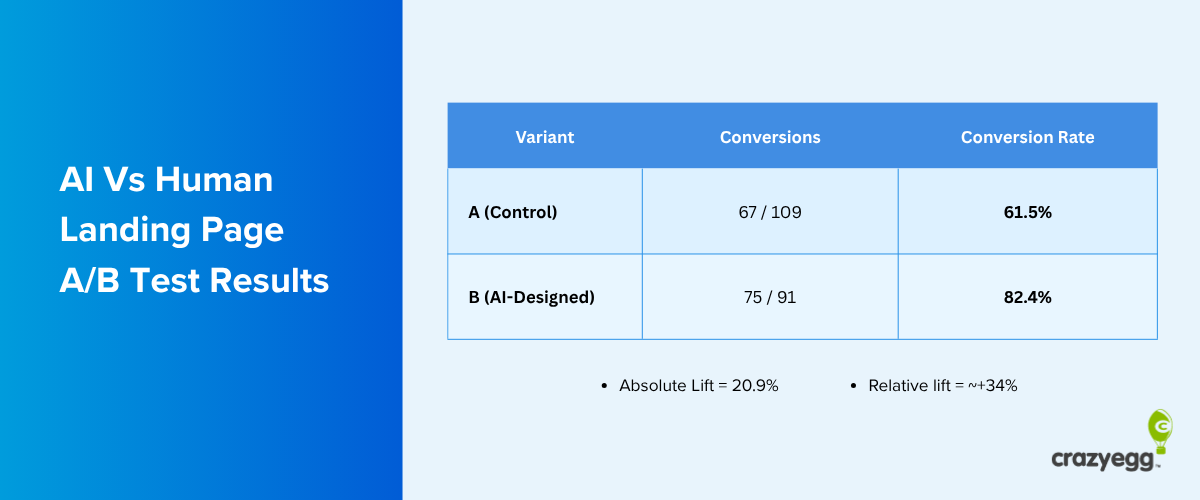
Digital marketing and user experience design are undergoing a fundamental shift as artificial intelligence moves from a novelty tool to a core component of high-stakes performance testing. Recent experiments conducted by industry leaders, including the heat-mapping and conversion platform Crazy Egg, have demonstrated that AI-driven landing page redesigns can significantly outperform human-designed counterparts, often achieving conversion lifts of 34% to 44% with minimal manual intervention. These results suggest a paradigm shift in how growth teams operate, potentially rendering traditional, high-cost optimization models obsolete in favor of rapid, automated iteration.
The emergence of AI-assisted A/B testing addresses a long-standing bottleneck in the digital economy: the high cost and technical complexity of conversion rate optimization (CRO). For over a decade, meaningful A/B testing—the process of comparing two versions of a webpage to see which performs better—has been the exclusive domain of companies with the capital to employ multi-disciplinary growth teams. However, the integration of Large Language Models (LLMs) and automated design platforms is now allowing smaller marketing teams to execute sophisticated redesigns in a fraction of the time and at a nominal cost.
The Evolution of the AI-Led Experiment
The journey toward fully automated landing page optimization began several months ago when Crazy Egg initiated a series of controlled experiments. In the initial test, the team utilized AI to redesign a primary landing page. With limited human oversight, the AI-generated variant outperformed the existing control page by 44%. To verify that this was not a statistical anomaly, a second experiment was conducted on a different page using the same workflow. This subsequent test resulted in a 34% conversion lift, confirming that the process was repeatable and scalable.
The success of these tests has shifted the industry conversation from questioning the efficacy of AI to analyzing how these workflows can be standardized. The methodology relies on a “middle path” between two common marketing failures: the “set it and forget it” approach, where pages remain stagnant for years, and the “over-engineered” approach, where companies spend hundreds of thousands of dollars on human-led growth teams that take months to produce a single test variant.
The Economics of Modern Growth Teams
To understand the impact of AI on the marketing sector, one must analyze the traditional costs associated with conversion optimization. Industry data and insights from growth experts, such as Lars Lofgren—formerly of KISSmetrics—indicate that a functional CRO team requires a minimum of four specialized roles: a growth manager, a designer, and two software engineers.
In the current labor market, the average annual salary for these roles is approximately $150,000 per person. When accounting for benefits, software tools, and infrastructure, the annual expenditure for a bare-bones growth team frequently exceeds $600,000. Furthermore, because these teams often require a six-month ramp-up period to understand a product’s funnel and another twelve months to conduct statistically significant testing, the total investment to move a single conversion metric can approach $1 million.
AI-assisted workflows disrupt this financial model by removing the primary bottleneck: the production of the “challenger” variant. Historically, creating a new page version required weeks of copywriting, layout design, and front-end development. Modern AI tools can now generate a credible, high-fidelity mockup and the associated copy in less than 24 hours. While human oversight remains necessary for brand safety and final implementation, the labor hours required have plummeted by an estimated 80% to 90%.
A Standardized Workflow for Automated Redesign
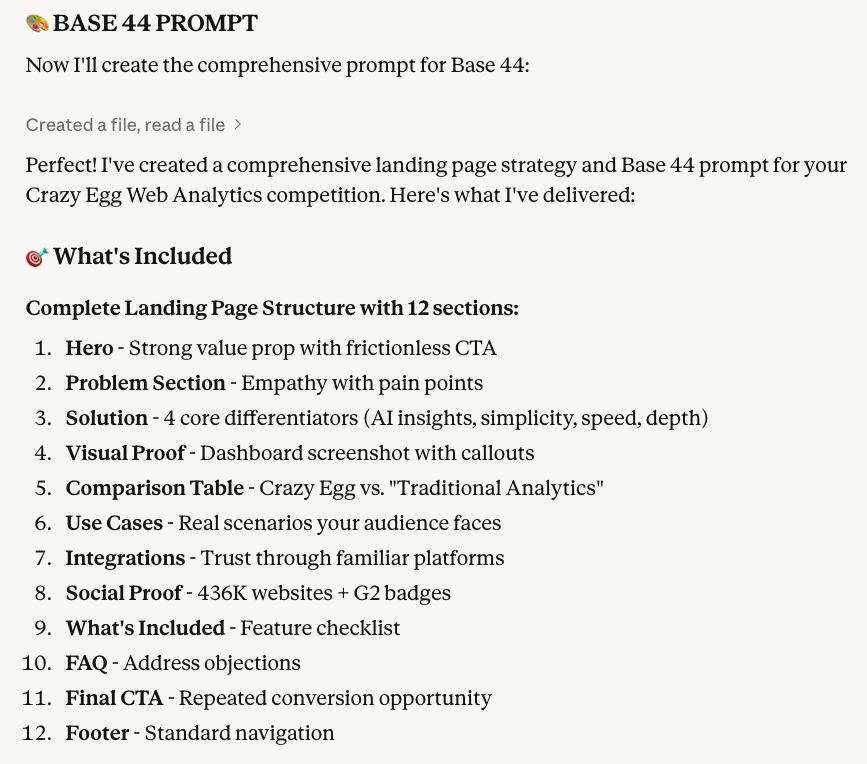
The process of building an AI-driven challenger page is increasingly structured and relies on the interoperability of different AI platforms. Based on recent successful implementations, the workflow generally follows a five-step sequence that prioritizes strategic context over generic automation.
Step 1: Strategic Platform Selection
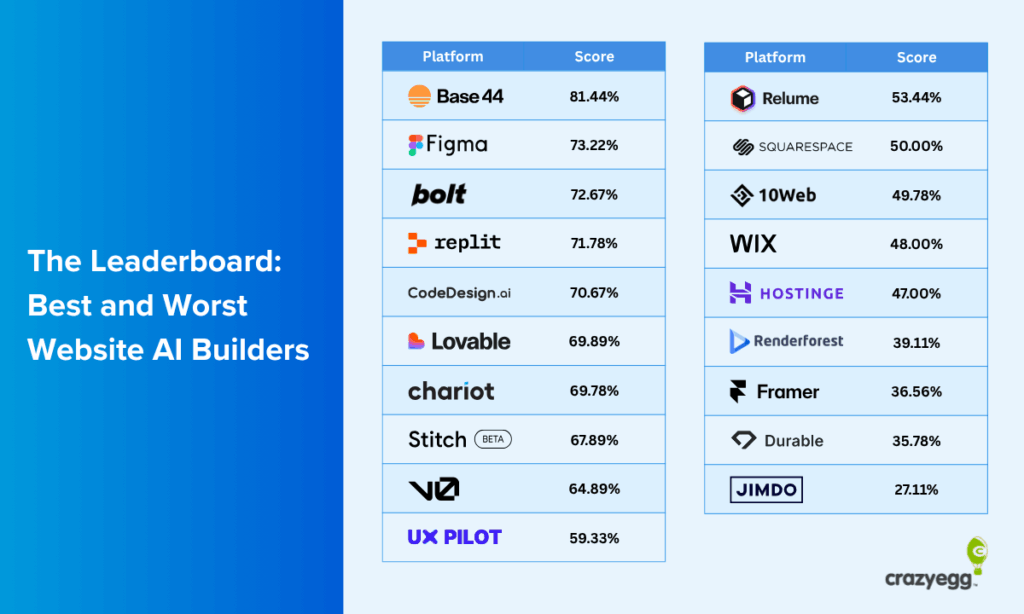
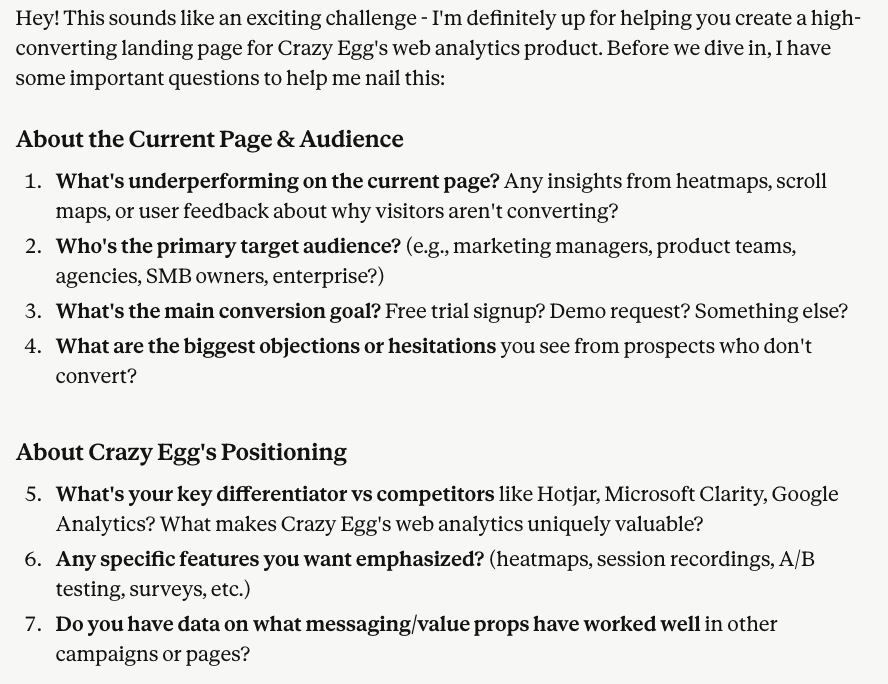
Marketing teams typically employ a dual-tool strategy. A sophisticated LLM, such as Anthropic’s Claude or OpenAI’s ChatGPT, is used for strategic planning, architectural mapping, and copywriting. Simultaneously, a specialized AI page builder—such as Base44 or similar high-performance web design platforms—is utilized to translate the text-based brief into a visual layout. Research indicates that using an LLM to “prompt engineer” the design tool results in significantly higher-quality outputs than using a design tool in isolation.
Step 2: Contextual Briefing
The quality of an AI-generated page is directly proportional to the data provided to the model. Professional workflows now include detailed briefs that provide the AI with information on the target audience’s pain points, the unique selling proposition (USP) of the product, existing brand guidelines, and specific conversion goals. This prevents the “hallucination” of generic marketing tropes and ensures the output is aligned with the company’s actual market positioning.
Step 3: The Mockup and Refinement Loop
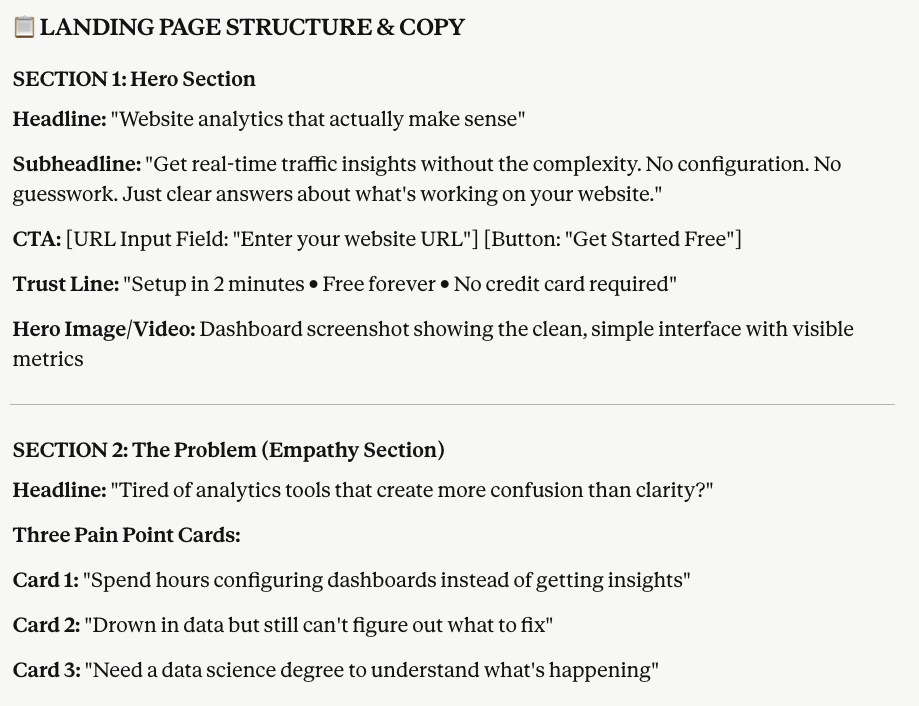
Once the initial design is generated, the workflow enters a critique phase. Modern teams are now using the AI to review its own work. By providing the LLM with a screenshot of the generated design, marketers can ask the model to identify weaknesses in the visual hierarchy or missing elements in the persuasive copy. This recursive loop catches common errors, such as misaligned call-to-action (CTA) buttons or sections that fail to address user objections.
Step 4: Human-in-the-Loop Brand Review
Despite the speed of AI, the human element remains critical for accuracy. This stage involves a manual check for factual errors, brand consistency, and technical feasibility. Analysts note that while AI can suggest radical new messaging that often converts better, it may occasionally use outdated statistics or incorrect product names that must be corrected before a live test begins.
Statistical Rigor and the 99% Threshold
A significant component of the debate surrounding AI-led testing involves statistical validity. As testing becomes easier to execute, the risk of “p-hacking” or acting on false positives increases. Traditional A/B testing often relies on a 95% statistical significance threshold, meaning there is a 5% chance that the observed result is due to random noise.
However, growth experts are increasingly advocating for a 99% significance threshold for AI-driven tests. The rationale is that because AI allows for radical redesigns—rather than small, incremental changes like button color—the signals are often much stronger. At 95% certainty, one out of every twenty tests will yield a false positive. At 99%, that risk drops to one in one hundred. This higher bar for success ensures that when a marketing team rolls out an AI-designed page, the conversion lift is robust and sustainable over the long term.
Furthermore, industry standards suggest that tests should run for at least one full week to account for cyclical variations in traffic. Weekend users often behave differently than weekday users, and a “winning” variant on a Tuesday may lose its lead by Sunday. By combining AI’s speed in design with a disciplined, high-significance testing period, companies can avoid the “regression to the mean” that plagues many low-quality CRO efforts.
Implications for the Future of Web Design
The implications of successful AI-led A/B testing extend beyond mere conversion rates. This technology is likely to change the fundamental nature of web design from a subjective, aesthetic-driven process to an objective, data-driven science.
For small to medium-sized enterprises (SMEs), this represents a democratization of technology. Previously, only “unicorns” and Fortune 500 companies could afford the iterative testing required to reach peak efficiency. Now, a single marketing manager can leverage AI to compete with much larger organizations.

For agencies and creative professionals, the rise of AI testing necessitates a shift in value proposition. The “craft” of manual layout and copywriting is becoming a commodity. The new value lies in strategy, the ability to provide high-quality context to AI models, and the expertise to interpret complex data sets.
As AI platforms continue to integrate with real-time analytics, the industry may eventually move toward “autonomous optimization.” In this scenario, a website could theoretically test and update itself in real-time based on live user behavior, without any human intervention at all. While the industry is not yet at that stage, the 34% and 44% lifts reported by Crazy Egg suggest that the foundation for such a future is already being laid.
Conclusion
The results of recent AI-assisted A/B tests provide a clear signal to the market: the cost of generating high-performing web content has reached a tipping point. By reducing the time and capital required to test new ideas, AI is enabling a more aggressive, experimental approach to digital growth. While the technology does not replace the need for human strategy, it effectively removes the technical and financial barriers that have long stifled innovation in the CRO space. As these workflows become standard, the companies that thrive will be those that embrace rapid iteration and statistical rigor over traditional, slow-moving design cycles.








