
 rifanmuazin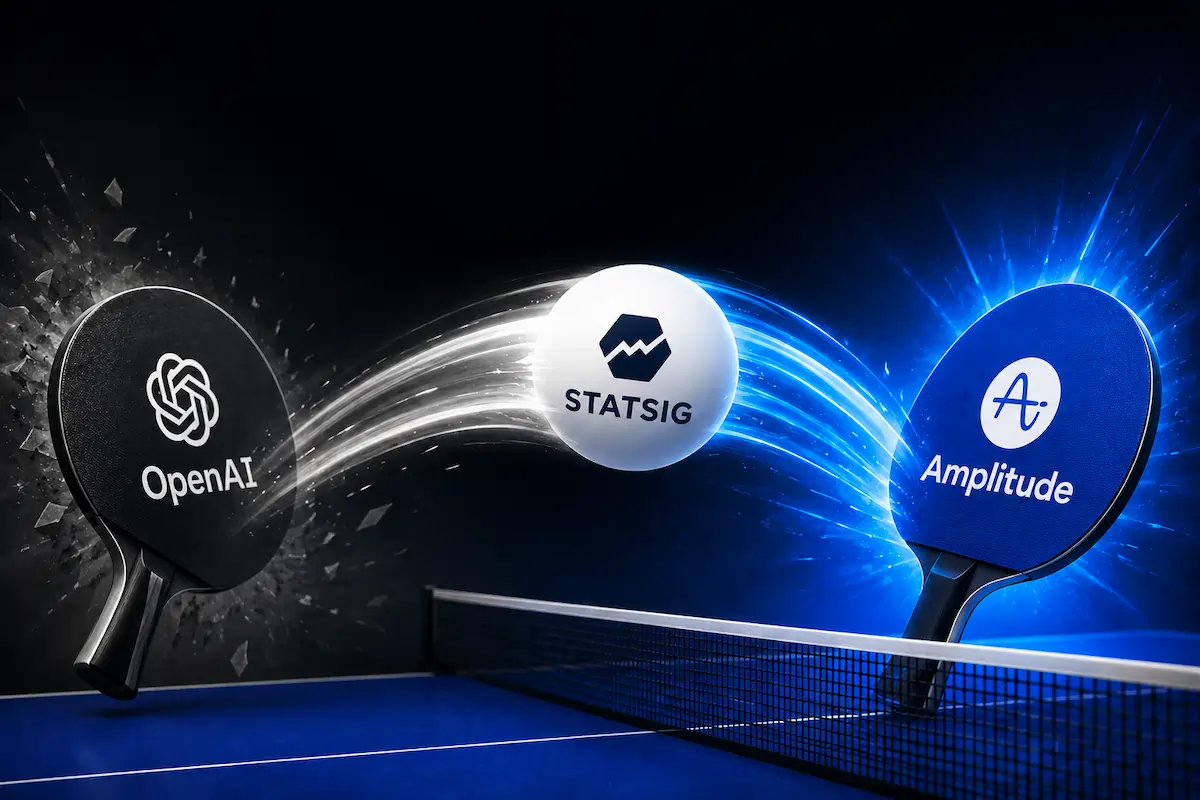
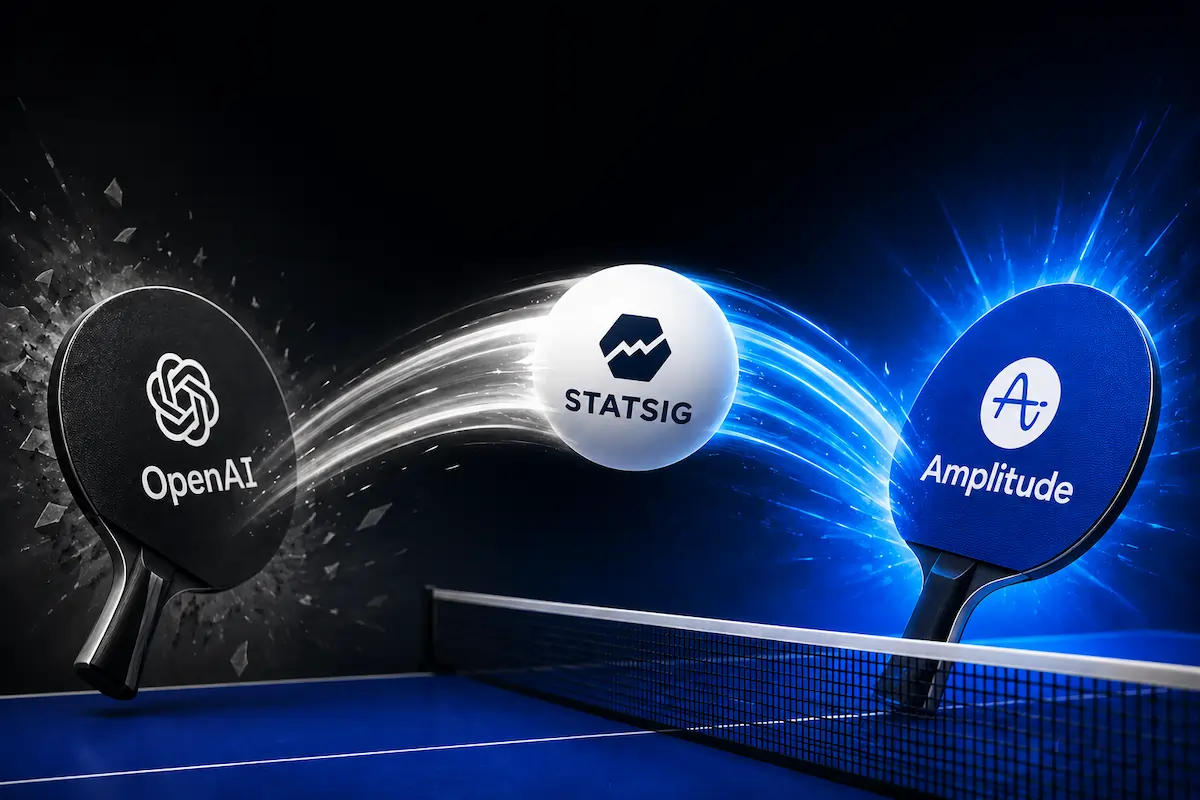
In a move that signals a profound restructuring of the digital experimentation landscape, Amplitude CEO Spencer Skates announced on May 5, 2026, a definitive strategic partnership to take over the brand, customer base, and operational platform of Statsig. This development follows the high-profile acquisition of Statsig by OpenAI in September 2025, a deal that originally promised operational independence but has now evolved into a complex three-way realignment of assets. Under the terms of the new agreement, Amplitude will assume responsibility for Statsig’s existing cloud and warehouse deployments, effectively absorbing one of the industry’s most disruptive experimentation platforms into its broader product analytics suite.
The announcement marks a pivotal moment for the software-as-a-service (SaaS) sector, particularly for enterprises that rely on A/B testing and feature flagging to drive product growth. By handing over the customer-facing business to Amplitude, OpenAI appears to be narrowing its focus, retaining Statsig’s core engineering talent and intellectual property for internal development while offloading the resource-intensive requirements of maintaining a third-party SaaS platform. This transition addresses months of industry speculation regarding how a research-heavy entity like OpenAI would manage a high-velocity enterprise software business.
The Road to Consolidation: A Chronology of the Deal
The path to this partnership began on September 2, 2025, when OpenAI shocked the technology sector by acquiring Statsig in an all-stock transaction valued at approximately $1.1 billion. At the time, it was one of OpenAI’s largest acquisitions, aimed at bolstering the company’s internal product engineering capabilities. Statsig founder and CEO Vijaye Raji was subsequently named Chief Technology Officer of Applications at OpenAI, reporting to former Instacart CEO Fidji Simo.
For eight months, OpenAI maintained a public stance that Statsig would continue to operate independently from its Seattle office, serving its diverse customer base which included major tech firms and high-growth startups. However, industry analysts noted that the synergy between a generative AI powerhouse and a specialized experimentation tool was likely internal. Sequoia Capital, an early backer of Statsig, observed that while AI can generate infinite variations of code and content, the critical bottleneck remains the ability to determine which variation actually performs in production. Statsig was viewed as the “runtime control plane” OpenAI needed to close the feedback loop for ChatGPT and Codex.
The May 2026 announcement confirms that OpenAI’s interest was primarily in the “muscle” of experimentation rather than the business of selling seats. By transitioning the SaaS operations to Amplitude, OpenAI ensures that Statsig’s customers have a stable home with a provider whose core business is product intelligence, while OpenAI retains the underlying expertise to optimize its own rapidly evolving AI models.
Strategic Implications for the Experimentation Market
The experimentation category, once dominated by standalone A/B testing tools, is currently undergoing a massive wave of consolidation. Data from industry analysts suggests that the total addressable market (TAM) for web-only experimentation tools has plateaued at roughly $1 billion, with year-over-year growth slowing to approximately 10%. This stagnation has triggered three distinct paths for vendors in the space: upmarket consolidation, embedding into larger software categories, or “acqui-hires” where the team is absorbed for internal utility.
The Amplitude-Statsig deal represents a unique hybrid of these paths. It is an absorption play where the customer base is migrated to a larger category—in this case, product analytics—while the original team remains embedded within an AI application giant. This follows a string of similar moves over the past 18 months, including Datadog’s acquisition of Eppo, Harness’s acquisition of Split, and the merger of VWO with AB Tasty under private equity backing.

Industry practitioners view this as the end of the “experimentation as a silo” era. Ben Labay, a prominent voice in the experimentation community, noted that experimentation is no longer a category to be bought, but a capability to be absorbed into the broader tech stack. In an era where AI can ship features at a rate that human engineers cannot match, the value has shifted from the act of shipping to the act of learning.
Technical Challenges and Roadmap Integration
For current Statsig customers, the transition to Amplitude raises significant technical questions that have yet to be fully addressed in public filings. Statsig built its reputation on a “warehouse-native” architecture, allowing companies to run experiments directly on top of their data warehouses like Snowflake, BigQuery, or Redshift. Conversely, Amplitude’s heritage is rooted in event-stream product analytics, which often requires data to be ingested into its proprietary systems.
Amplitude has committed to maintaining the existing Statsig platform across both cloud and warehouse deployments, but the long-term convergence of these two distinct architectural philosophies remains a point of scrutiny. Engineering teams will likely spend the next 12 to 18 months reconciling these infrastructures. Customers approaching their next renewal cycle are advised to evaluate how pricing models will transition, as Amplitude’s seat-based or volume-based pricing may differ significantly from Statsig’s original contract terms.
Furthermore, the collaboration between the “OpenAI-employed” Statsig team and Amplitude’s engineering department suggests a tiered support model during the handover. While Amplitude takes ownership of the brand and the roadmap, the intellectual heavy lifting that defined Statsig’s early success remains, in part, within OpenAI’s walls.

The AI Catalyst: Speed Over Statistical Perfection
The involvement of OpenAI in the experimentation space has highlighted a fundamental shift in how businesses approach data. For two decades, the “gold standard” of experimentation was 95% statistical confidence—a rigor necessitated by the high cost of engineering time and the risk of shipping faulty code. However, the rise of AI-driven development is lowering the cost of generating variants to near zero.
Industry experts, including Simon Jackson, argue that in an AI-native era, the bottleneck is no longer the ability to create, but the ability to validate. If a team can launch ten experiments in the time it previously took to launch one, the need for absolute statistical certainty may give way to a preference for “directional” data. This “80% confidence” model allows for faster iterations and safer, smaller rollouts.
This shift expands the market to include small and medium-sized enterprises (SMEs) that previously lacked the traffic volume to achieve traditional statistical significance. By leveraging AI to simplify hypothesis generation and QA, these smaller players can now participate in a high-velocity testing culture that was once the exclusive domain of tech giants like Netflix or Booking.com.
Official Responses and Market Reaction
The reaction from the broader tech community has been one of cautious optimism. Spencer Skates of Amplitude emphasized that this partnership is about providing a “comprehensive product intelligence platform” that combines the “why” of analytics with the “how” of experimentation. By bringing Statsig’s capabilities under the Amplitude umbrella, the company aims to offer a unified workflow for product managers and developers.

Meanwhile, competitors in the independent experimentation space, such as Convert, have reaffirmed their commitment to staying neutral. Dennis van der Heijden, co-founder of Convert, remarked that while the consolidation of Statsig into Amplitude is a logical step for those seeking a massive “all-in-one” suite, there remains a significant demand for independent, mid-market tools that prioritize speed and accessibility without the overhead of a conglomerate.
The market’s response has been reflected in the valuation of related firms, with a growing recognition that “experimentation” as a standalone line item is disappearing, replaced by “Product Growth” or “DevOps” budget categories.
Conclusion: A New Era for Product Growth
The handover of Statsig to Amplitude serves as a definitive case study in the maturation of the SaaS ecosystem. It demonstrates that even the most successful startups can find themselves in a position where their internal utility (to a buyer like OpenAI) outweighs their standalone commercial viability in a crowded market.
As the integration progresses, the industry will be watching closely to see if Amplitude can successfully merge the warehouse-native flexibility of Statsig with its own robust analytics engine. For the broader market, the message is clear: the future of experimentation is deeply intertwined with AI, and the winners will be those who can turn data into actionable insights at the highest possible velocity. The era of the standalone experimentation tool may be drawing to a close, but the era of the “learning-first” organization is only just beginning.








