rifanmuazin
In today’s hyper-competitive digital landscape, businesses are constantly seeking innovative avenues to connect with their target audiences and drive measurable results. While established platforms like Facebook and Google Ads remain cornerstones of many paid media strategies, a growing number of marketers are exploring less conventional approaches to diversify their campaigns and unlock new growth opportunities. This shift is driven by a desire to overcome ad fatigue, tap into more engaged consumer segments, and achieve a higher return on investment through specialized channels.
The challenge for many businesses lies in moving beyond the familiar and embracing strategies that, while potentially less mainstream, offer significant advantages. This article delves into three such non-traditional paid media strategies: influencer marketing, leveraging Yelp for local business promotion, and the unique transactional advertising model offered by Rokt. Each presents a distinct set of benefits and challenges, catering to different business objectives and market niches.
The Power of Influence: A Deep Dive into Influencer Marketing
Influencer marketing has rapidly evolved from a niche tactic to a significant component of many digital marketing budgets. At its core, it involves partnering with individuals who have a dedicated and engaged following on social media or other digital platforms. These influencers, through their perceived authenticity and expertise, can effectively introduce products and services to a receptive audience, often leading to higher quality leads and conversions.
The efficacy of influencer marketing stems from the inherent trust consumers place in recommendations from individuals they follow. This trust translates into a higher propensity to consider, and subsequently purchase, products endorsed by these influencers. This is particularly potent for new product launches or for physical goods where visual appeal and demonstration are key. Furthermore, influencer marketing excels in niche markets, where individuals are highly invested in specific topics or product categories. An influencer deeply embedded in a particular hobby, such as artisanal coffee brewing or vintage gaming, can connect brands with a highly targeted and passionate consumer base that might be difficult to reach through broader advertising channels.
From a cost-effectiveness perspective, influencer marketing can offer an exceptional return on investment. A single, well-executed campaign with a relevant influencer can generate exponential returns, far exceeding the initial investment. This is due to the organic reach and engagement that influencers cultivate, often leading to sustained brand awareness and consideration long after the initial promotion concludes.

Beyond direct sales, influencer marketing significantly bolsters brand awareness. The reach of popular influencers can be substantial, exposing a brand to a wide audience. Crucially, this exposure is often more targeted than traditional advertising. Influencers cultivate communities around shared interests, values, and aspirations. When a brand aligns with an influencer whose audience mirrors its ideal customer profile, the engagement and relevance of the marketing message are significantly amplified. This leads to more accurate “audience targeting” because the influencer’s followers have already self-selected based on their alignment with the influencer’s content and persona.
Recent data underscores the growing importance of influencer marketing in the broader marketing landscape. The Influencer Marketing Hub’s Influencer Marketing Benchmark Report 2021, which surveyed over 5,000 marketing agencies, brands, and other industry professionals, revealed a significant commitment to this channel. A notable 11% of respondents indicated their intention to allocate at least 40% of their marketing budget to influencer marketing initiatives. This statistic highlights a strategic re-evaluation of marketing spend, with a growing recognition of influencer marketing’s potential to drive tangible business outcomes.
The report also shed light on platform preferences within influencer marketing. Instagram continues to be the dominant platform, with 68% of respondents utilizing it for their influencer campaigns. However, TikTok is rapidly emerging as a powerful contender, demonstrating a significant increase in adoption and engagement. This suggests a dynamic market where platform strategies need to adapt to evolving consumer behavior and emerging social media trends.

Pros of Influencer Marketing:
- Enhanced Trust and Authenticity: Recommendations from trusted influencers often carry more weight than traditional advertisements.
- Highly Targeted Audiences: Influencers cultivate communities around specific interests, allowing for precise audience segmentation.
- Significant Brand Awareness: Large follower bases can provide substantial reach and exposure for brands.
- Cost-Effectiveness: Potential for high ROI through a single campaign generating exponential returns.
- Content Generation: Influencers can create high-quality, engaging content that brands can repurpose.
- SEO Benefits: Backlinks and social signals generated through influencer collaborations can positively impact search engine rankings.
Cons of Influencer Marketing:
- Finding the Right Fit: Identifying influencers whose brand aligns with your own and who genuinely engage their audience can be challenging.
- Measuring ROI: Quantifying the direct impact of influencer campaigns on sales can be complex, requiring sophisticated tracking mechanisms.
- Disclosure and Transparency: Ensuring compliance with advertising standards regarding disclosure of sponsored content is crucial.
- Potential for Brand Risk: An influencer’s controversial actions or statements can negatively impact the associated brand’s reputation.
- Evolving Platforms and Trends: The influencer marketing landscape is dynamic, requiring continuous adaptation to new platforms and best practices.
- Contractual and Negotiation Complexities: Managing agreements, deliverables, and payment terms with multiple influencers can be time-consuming.
Local Impact Amplified: Harnessing the Power of Yelp
While often associated with consumer reviews, Yelp has emerged as a valuable platform for local businesses seeking to enhance their visibility and attract nearby customers through targeted advertising. For businesses with a physical presence, such as restaurants, retail stores, or service providers, Yelp ads offer a direct line to consumers actively searching for local options.

Yelp advertising allows businesses to reach potential customers within their immediate geographic area. The platform’s advertising options are designed to be accessible, with businesses able to initiate campaigns with modest daily budgets, starting at just a few dollars. This low barrier to entry makes it an attractive option for small businesses or those with limited marketing resources. Beyond lead generation, Yelp provides a critical channel for gathering valuable consumer feedback. Reviews and ratings offer insights into customer satisfaction, service quality, and areas for improvement, informing future business decisions and strategic adjustments.
The platform’s advertising capabilities extend to sophisticated targeting mechanisms. Businesses can utilize keyword targeting to appear in search results when users look for specific services or products offered by the business. For instance, a local bakery could target keywords like “custom cakes,” “birthday cakes near me,” or “pastries.” Furthermore, robust geotargeting ensures that ads are displayed to users within a defined geographical radius, maximizing relevance and minimizing wasted ad spend. This localized approach is crucial for businesses whose customer base is inherently tied to their physical location.
Pros of Yelp Advertising:

- Hyper-Local Targeting: Effectively reaches consumers actively searching for businesses in their vicinity.
- Cost-Effective for Local Businesses: Low daily budget options make it accessible for small and medium-sized enterprises.
- Direct Access to High-Intent Consumers: Captures users who are already in a discovery or decision-making phase for local services.
- Valuable Customer Feedback: Reviews and ratings provide crucial insights for business improvement and reputation management.
- Enhanced Business Profile Visibility: Advertised listings often appear more prominently in search results.
- Direct Communication Channel: Facilitates customer inquiries and engagement through the platform.
Cons of Yelp Advertising:
- Reliance on Reviews: Negative reviews can significantly impact a business’s reputation and advertising effectiveness.
- Limited Reach Beyond Local: Primarily beneficial for businesses with a physical presence or service area.
- Platform Specificity: Advertising efforts are confined to the Yelp ecosystem.
- Competition for Visibility: Popular categories can be highly competitive, potentially increasing advertising costs.
- Management Overhead: Requires ongoing monitoring and optimization of ad campaigns and review responses.
Capturing the Moment: Rokt’s Transactional Advertising Model
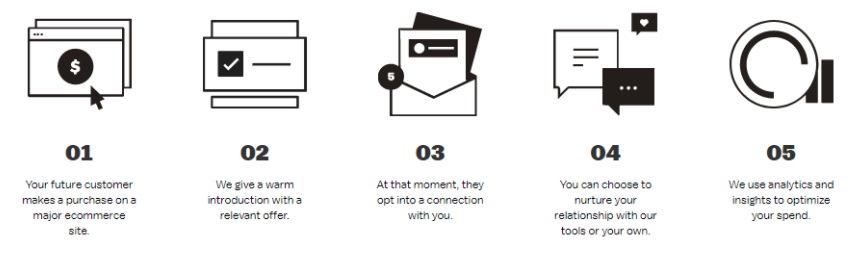
Rokt offers a unique and innovative approach to paid media by integrating advertisements directly into the transactional process of e-commerce purchases. This strategy capitalizes on a critical moment when consumers are actively engaged and in a buying mindset. Rokt facilitates partnerships where brands can present offers to customers immediately after they complete a purchase on another brand’s website.
Consider the scenario: a customer has just bought concert tickets for an upcoming vacation. On the confirmation page, they are presented with a targeted offer, perhaps for a discount on a rental car service for their trip. This is Rokt’s core functionality. The platform enables brands to either host other brands’ offers on their own confirmation pages (Rokt Ecommerce) or to have their offers displayed on another brand’s confirmation page (Rokt Ads).

This model leverages the inherent trust and intent of a customer who has just made a purchase. The offer is contextual, relevant, and appears at a time when the customer is receptive to complementary products or services. This can lead to significantly higher conversion rates compared to traditional display advertising, as the offer is presented at the point of maximum purchase intent.
Rokt further expands its offering with Rokt Calendar, which allows brands to target customers through calendar notifications. This provides another avenue for reaching consumers at relevant times, perhaps reminding them of upcoming events or offering timely promotions related to past purchases.
Pros of Rokt:

- High Conversion Rates: Targets customers at the peak of their purchase intent, leading to increased conversions.
- Contextual Relevance: Offers are presented in relation to the customer’s immediate transaction, enhancing their appeal.
- Access to Engaged Audiences: Reaches consumers who have already demonstrated a willingness to spend.
- Seamless Integration: Ads are embedded within the post-purchase confirmation process, minimizing disruption.
- Partnership Opportunities: Facilitates mutually beneficial collaborations between e-commerce businesses.
- Data-Driven Optimization: Leverages data to refine targeting and offer presentation for maximum impact.
Cons of Rokt:
- Limited to Transactional Sites: Effectiveness is dependent on partnering with e-commerce platforms that have high transaction volumes.
- Potential for Customer Annoyance: If offers are not highly relevant or are presented too aggressively, they can detract from the customer experience.
- Dependency on Partner Networks: Success relies on the availability and reach of Rokt’s partner network.
- Complexity of Implementation: Integrating Rokt’s technology may require technical resources.
- Brand Perception: The nature of the offers presented can influence customer perception of the hosting brand.
Strategic Implications and the Future of Paid Media
The exploration of these non-traditional paid media strategies signifies a broader trend in digital marketing: a move towards more specialized, data-driven, and contextually relevant advertising. As consumers become increasingly adept at filtering out generic ads, businesses must find innovative ways to capture attention and build meaningful connections.
Influencer marketing, with its emphasis on authenticity and targeted reach, continues to mature as brands refine their influencer selection and measurement strategies. The rise of micro-influencers and the increasing sophistication of AI-powered analytics are further enhancing its effectiveness.
Yelp’s role as a local advertising powerhouse is undeniable for brick-and-mortar businesses. Its ability to connect with consumers actively seeking local services underscores the enduring importance of location-based marketing in an increasingly digital world. As more consumers rely on digital platforms for local discovery, Yelp’s advertising solutions are poised for continued growth.
Rokt’s innovative approach to transactional advertising highlights the potential of leveraging customer data and behavior at critical decision points. By appearing at the moment of highest purchase intent, Rokt offers a compelling alternative to interruptive advertising models. This model points towards a future where advertising is more integrated into the user journey, becoming less of an interruption and more of a value-added service.
Ultimately, the most successful paid media strategies will likely involve a diversified approach, blending established platforms with these more specialized channels. By understanding the unique strengths and weaknesses of each, businesses can craft comprehensive campaigns that resonate with their target audiences, drive engagement, and achieve their overarching marketing objectives. The landscape of paid media is constantly evolving, and staying ahead requires a willingness to experiment, adapt, and embrace the opportunities that lie beyond the conventional. For businesses seeking to refine their digital marketing efforts and explore these expanded possibilities, consulting with experienced digital marketing professionals can provide invaluable guidance in crafting a tailored and effective strategy.