rifanmuazin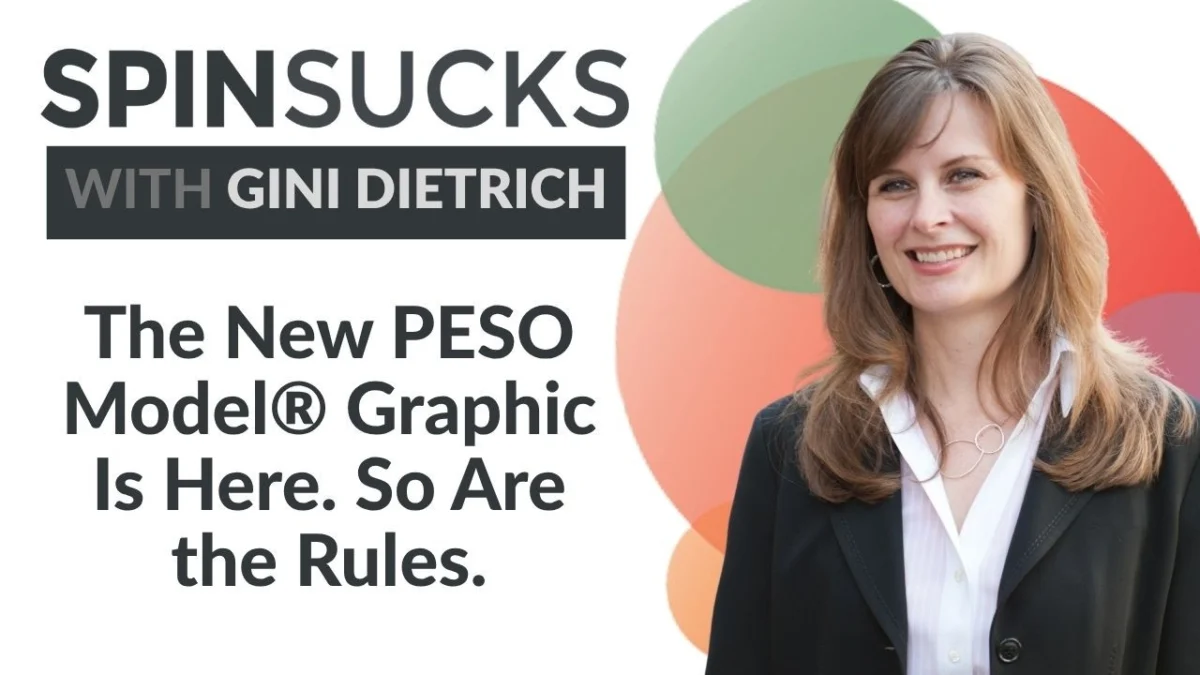
The professional communications industry is marking a significant milestone with the official release of the 2026 PESO Model® graphic, a comprehensive update to the widely adopted framework that has defined integrated marketing for over a decade. This latest iteration marks a fundamental shift from tactical execution and strategic oversight toward a strictly outcome-based methodology. By reorganizing the model around the specific business results produced by various media types—Authority, Credibility, Discovery, and Growth—Spin Sucks aims to align public relations and marketing efforts with the increasingly complex demands of executive boards and AI-driven information environments.
The Twelve-Year Evolution of a Communications Standard
Since its inception roughly 12 years ago, the PESO Model—an acronym for Paid, Earned, Shared, and Owned media—has served as the foundational architecture for integrated communications. However, its journey has mirrored the rapid transformation of the digital landscape. In its earliest version, the model functioned primarily as a directory of tactics and platforms. It listed specific outlets like Google+ and Vine, reflecting an era where the industry was still grappling with the “where” of digital presence.
By the mid-2010s, the model transitioned into its second phase, focusing on tactics rather than specific platforms. This version emphasized what communicators were doing—blogging, social media engagement, or media relations—regardless of the specific app or site used. While successful in gaining widespread adoption, this tactical focus occasionally led to the model being perceived as a checklist rather than a strategic driver.
Two years ago, a strategic refresh introduced the concept of interlocking circles, naming the integrations between media types. This was designed to teach a generation of marketers that the four pillars were not silos but mutually reinforcing components. The 2026 refresh, however, acknowledges that strategy alone is no longer the ultimate goal for modern organizations. In an era where boards of directors demand quantifiable contributions to pipeline, retention, and valuation, the model has been redesigned to prioritize outcomes.
Defining the Four Pillars of the 2026 Outcome-Based Framework
The new PESO Model graphic retains the four core media categories but assigns each a specific, measurable objective. This reorganization is intended to help communications teams justify their budgets by linking creative work directly to business health.
Owned Media: The Driver of Authority
In the 2026 framework, Owned media is the primary engine for Authority. This includes content that an organization fully controls, such as proprietary research, white papers, newsletters, and hosted blogs. The objective is to establish the organization as the definitive source of truth in its category. As AI “answer engines” increasingly synthesize information from across the web, having a robust repository of original, authoritative content is essential for ensuring an organization’s narrative is the one surfaced to customers.
Earned Media: The Architect of Credibility
Earned media remains the cornerstone of Credibility. This pillar encompasses traditional media relations, third-party validation, and influencer outreach. In a fragmented media landscape where trust is a scarce commodity, the endorsement of a reputable third party—whether a journalist, an industry analyst, or a peer—provides a level of validation that cannot be purchased. The 2026 model emphasizes that Earned media’s primary role is to build the trust necessary to move prospects through the funnel.
Shared Media: The Catalyst for Discovery
Shared media, which covers social media platforms and community engagement, is now specifically focused on Discovery. This pillar is about ensuring that an organization’s content and message are findable and shareable. It leverages the power of networks to amplify reach and ensure that a brand shows up where its audience is already congregating. In the context of modern SEO and AI, social signals and community discussions are critical factors in how brands are discovered by new audiences.
Paid Media: The Engine for Growth
Paid media is defined as the primary vehicle for Growth. This includes paid social, sponsored content, search engine marketing, and lead generation advertising. While the other pillars build the foundation, Paid media provides the scale and speed necessary to drive immediate business results. By focusing on growth, the model encourages communicators to use paid tactics not just for “awareness,” but for specific, measurable increases in pipeline and revenue.
The Power of Integration: Compound Outcomes
The true sophistication of the 2026 PESO Model lies in the overlaps between the four circles. Spin Sucks identifies six specific “compound outcomes” that occur when media types are integrated effectively. These overlaps represent the “operating system” of a modern communications department.
- Trust (Owned + Earned): When authoritative content created by a brand is validated by third-party media, it creates a deep level of trust that is difficult for competitors to replicate.
- Advocacy (Earned + Shared): When third-party validation is shared and discussed within communities, it transforms passive observers into active brand advocates.
- Distribution (Shared + Paid): Using paid budget to amplify high-performing shared content ensures that the most engaging messages reach the widest possible relevant audience.
- Pipeline (Paid + Owned): Driving paid traffic to authoritative owned content is the most direct path to lead generation and sales pipeline development.
- Community (Owned + Shared): The intersection of a brand’s own content and social engagement creates a loyal community that provides long-term value and feedback loops.
- Share of Voice (Paid + Earned): Combining the reach of paid advertising with the prestige of earned media allows a brand to dominate the conversation within its industry.
The center of the graphic, where all four circles overlap, represents the fully integrated operating system. According to the new documentation, this integration is what allows marketing efforts to compound, creating a “flywheel effect” where the total impact is greater than the sum of the individual parts.
New Standards for Intellectual Property and Licensing
A significant portion of the 2026 announcement addresses the legal and ethical use of the PESO Model®. Over the last decade, the framework has been widely adopted, but often without proper attribution or through unauthorized commercialization. Spin Sucks has introduced a clearer distinction between free use and commercial licensing to protect the integrity of the model.
Guidelines for Free Use
The PESO Model remains free for the vast majority of professionals and students, provided proper attribution is given to Spin Sucks. Free use cases include:
- Internal team training and reporting to executives (e.g., CMOs).
- Academic work, classroom slides, and student projects.
- Journalism, blog posts, and podcast episodes that reference the model.
- Conference talks where the speaker is not being paid specifically to teach the model.
To maintain these rights, users must now download the graphic directly from the Spin Sucks website, agreeing to terms that include using the registered trademark symbol (®) on first mention and providing a backlink to the official PESO Model page.
Commercial Licensing Requirements
Spin Sucks has formalized a requirement for a commercial license for any use that generates direct revenue from the model itself. This includes:
- Paid online courses or certifications.
- Books and published educational materials.
- Commercial training programs and paid workshops.
- Software products that incorporate the PESO framework into their functionality.
- Paid speaking engagements where the primary subject is teaching the PESO Model.
The move toward licensing is described as a “cleanup” effort to prevent the dilution of the framework. By ensuring that those who sell the model are doing so correctly and with permission, Spin Sucks aims to maintain a high standard of professional advice across the industry.
Industry Implications and the AI Challenge
The transition to an outcome-based model is largely a response to the rise of Artificial Intelligence in communications. As AI-driven search engines (such as Perplexity, ChatGPT, and Google’s Gemini) become the primary way consumers find information, the traditional metrics of “clicks” and “impressions” are becoming less relevant.
Industry analysts suggest that in an AI-dominated world, “Authority” and “Credibility” are the only defenses against narrative dilution. If an organization does not own its data and have that data verified by credible third parties, AI models may hallucinate or prioritize competitor narratives. The 2026 PESO Model provides a roadmap for communicators to build the “digital moat” necessary to survive this shift.
Furthermore, the emphasis on “Growth” and “Pipeline” reflects a broader trend in the C-suite. CMOs and CCOs are increasingly being held to the same standard as Sales and Operations leaders. By providing a framework that links PR tactics directly to business outcomes, the new PESO Model offers a language that resonates with CEOs and CFOs, potentially securing more stable budgets for communications departments.
The Path Forward: Certification and Training
To support the implementation of this new operating system, Spin Sucks has opened enrollment for the 2026 PESO Model Certification®. This program, credentialed through a partnership with the S.I. Newhouse School of Public Communications at Syracuse University, is designed for professionals who want to master the integrated approach.
The certification is currently the only path that grants full commercial use rights as part of the curriculum. It includes access to a licensed “PESO OS AI,” a tool designed to help practitioners run the model as an automated operating system within their organizations.
As the industry moves into the second half of the decade, the 2026 PESO Model refresh serves as both a reminder of how far digital communications has come and a warning of the challenges ahead. By focusing on outcomes, integration, and protected intellectual property, the framework seeks to elevate public relations from a tactical support function to a central pillar of corporate strategy.
This announcement is the first in a six-part series titled The PESO Operating System, which will continue to explore the impact of AI on content and the evolving nature of digital authority throughout the coming months. Professionals are encouraged to adopt the new graphic immediately to ensure their strategies remain aligned with current industry standards.