The corporate landscape is currently navigating a period of significant upheaval, characterized by high-profile leadership changes, the intersection of food safety and political optics, and the ongoing struggle for sustainability in the digital media sector. From the executive offices of Cracker Barrel Old Country Store to the production lines of Taylor Farms and the newsrooms of BuzzFeed, major organizations are facing critical tests of their strategic direction and public reputation. These developments highlight the complex challenges modern companies face as they attempt to balance tradition with modernization, manage the fallout of political polarization, and adapt to rapidly evolving technological and economic realities.
Cracker Barrel Leadership Transition: The Departure of Julie Masino
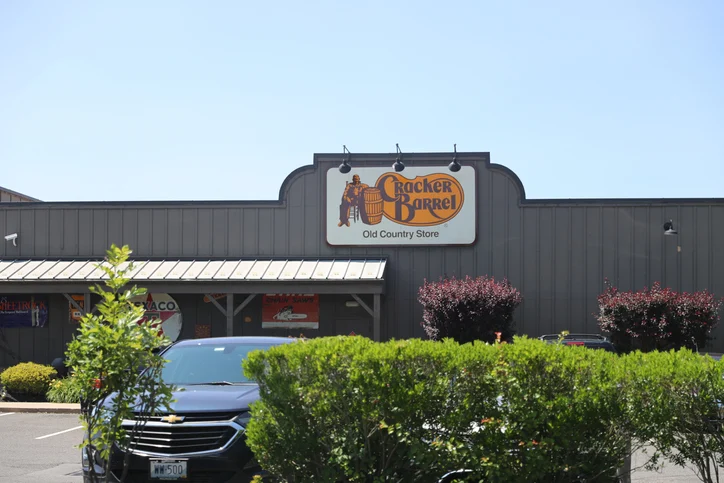
In a move that has caught industry analysts by surprise, Cracker Barrel Old Country Store, Inc. announced that Julie Masino will step down as President and Chief Executive Officer. While the company characterized the departure as part of a "robust and thoughtful search process" for a successor, the timing is notable given the company’s recent efforts to recover from a controversial brand overhaul. Masino, who officially ends her full-time tenure on August 10, will remain in an advisory capacity until October to facilitate a transition to her successor, David Deno.
David Deno enters the role with a deep pedigree in the casual dining and quick-service restaurant sectors. He most recently served as CEO of Bloomin’ Brands, the parent company of Outback Steakhouse, Bonefish Grill, and Carrabba’s Italian Grill. His prior experience includes executive roles at Yum! Brands, specifically within the KFC and Pizza Hut divisions. Deno’s appointment is widely viewed as a move toward stabilizing the brand with a leader who possesses extensive experience in managing large-scale, traditional American restaurant portfolios.
The Context of the "Rebrand Battle"
Masino’s tenure was marked by a bold attempt to modernize the Cracker Barrel brand, which has long relied on a nostalgic, "old country store" aesthetic. This transformation included a controversial redesign of the company’s iconic logo and a reimagining of store interiors. The changes were met with significant backlash from the company’s core customer base, who viewed the modernization as an abandonment of the brand’s heritage.
In early 2024, the backlash reached a fever pitch, with social media campaigns calling for a return to the original branding. Cracker Barrel eventually walked back several of the most criticized changes, a move that appeared to stabilize the company’s relationship with its patrons. Despite the public relations friction, Masino’s "strategic transformation" plan began to show financial results. Year-to-date, Cracker Barrel’s stock price has effectively doubled, rising from lows in the mid-$30s to approximately $54.78 following the announcement of the CEO transition.
Activist Investor Pressure and Strategic Shifts
While the public-facing narrative centers on the brand’s identity, internal pressures likely played a role in the leadership shift. Reports indicate that activist investors, including Biglari Holdings Inc., which has a long history of challenging Cracker Barrel’s management, have been increasing their scrutiny of the company’s performance.
The absence of a personal statement from Masino in the official press release has led some analysts to speculate that the parting may not have been entirely voluntary. However, Independent Chairman of the Board Carl Berquist offered public gratitude for her leadership, emphasizing her role in executing strategic priorities and supporting the company’s transition. The move to appoint Deno suggests a desire to return to "operational excellence" and traditional brand values, moving away from the experimental modernization efforts that characterized Masino’s short but eventful tenure.
Taylor Farms and the Intersection of Food Safety and Politics
In the agricultural sector, Taylor Farms, one of North America’s largest suppliers of fresh-cut produce, finds itself embroiled in a complex controversy involving food safety alerts and political conspiracy theories. The situation began with an FDA investigation into a Cyclospora outbreak, a parasitic infection often linked to fresh produce. However, the narrative shifted from public health to political intrigue following allegations that the FDA’s findings were influenced by corporate political contributions.
The Rise of the "False Positive" Conspiracy
The controversy centers on a theory circulating on social media claiming that the FDA announced a "false positive" regarding Cyclospora contamination in Taylor Farms’ products as a form of retaliation or political maneuvering. This theory gained traction alongside reports that a $1 million donation was made to a Super PAC associated with former President Donald Trump.
According to data reported by the New York Times, approximately 62% of online conversations regarding Taylor Farms over the past week have focused on this controversy. Analysis of the digital chatter suggests that the rumor was significantly amplified by bot accounts, which accounted for roughly one-third of the initial social media posts. Both the FDA and the White House have issued firm denials, stating that food safety protocols are strictly science-based and entirely independent of political contributions or affiliations.
PR Vulnerability and Political Donations
Taylor Farms has remained largely silent regarding the specific allegations of political influence, a strategy that some crisis management experts argue may be insufficient in the current "post-truth" digital environment. The situation serves as a stark reminder of how standard corporate practices, such as political lobbying and PAC donations, can become major PR liabilities when they intersect with public health crises.
For Taylor Farms, the timing is particularly difficult. As a major supplier to retail giants and fast-food chains like McDonald’s, any shadow cast on their testing integrity can have far-reaching economic consequences. The incident highlights the "unpredictable nature of political optics," where a legal and common corporate action can be weaponized by online actors to undermine consumer trust in essential safety systems.
Meta’s Smart Glasses and the Erosion of Privacy
In the technology sector, Meta Platforms Inc. is facing renewed scrutiny over the privacy implications of its Ray-Ban Meta smart glasses. While wearable technology is not new, the integration of high-definition cameras and artificial intelligence into everyday eyewear has reignited debates over consent and surveillance in public spaces.
The "Single Light" Privacy Flaw
The primary privacy feature of the Meta smart glasses is a small LED light that illuminates when the device is recording. However, privacy advocates and technology experts argue that this safeguard is woefully inadequate. Uttara Ananthakrishnan, a professor at the University of Washington, noted that relying on a single light puts an unfair burden on the public to recognize and understand a proprietary technology’s signaling system.
Recent criticisms have been exacerbated by Meta’s internal missteps, including the accidental shipping of units with facial recognition software (which was disabled but present in the code) and marketing campaigns featuring polarizing figures like Kylie Jenner. These factors have contributed to a perception that Meta is prioritizing market penetration over the establishment of robust privacy norms.
The Future of Wearable Surveillance
The broader concern for Meta is the potential for public hostility toward wearable tech users. History offers a precedent in "Google Glass," which failed in part due to the social stigma attached to its users, colloquially termed "Glassholes." If Meta cannot convince the public that its devices are not tools for invasive surveillance, it risks a similar fate or, worse, regulatory crackdowns that could limit the functionality of future augmented reality (AR) hardware.
The Decline of the Social Media Media Model: BuzzFeed’s Latest Layoffs
The digital media landscape continues to contract as BuzzFeed Inc. announced the layoff of approximately 180 employees, representing one-third of its remaining workforce. The cuts affect several of the company’s most recognizable brands, including HuffPost, the food-centric Tasty, and its film and television division.
A New Era Under Byron Allen
The layoffs represent the first major restructuring since media mogul Byron Allen acquired BuzzFeed’s primary assets in May 2024 for an estimated $108.6M. In an internal memo, the company stated that the "elimination of certain roles is still required" despite ongoing efforts to manage costs. This move signals the definitive end of the "viral era" that BuzzFeed once dominated.
During the mid-2010s, BuzzFeed was a cultural juggernaut, leveraging Facebook’s algorithms to reach hundreds of millions of users. However, as social media platforms shifted their algorithms away from news content and toward short-form video and private messaging, BuzzFeed’s business model—predicated on massive social reach and advertising—collapsed.
The Pivot to Subscriptions
The struggle of BuzzFeed and HuffPost highlights a broader trend in the publishing industry: the failure of the ad-supported, high-volume digital news model. Industry analysts now suggest that the only sustainable path forward for digital journalism is the subscription model, as seen with the success of The New York Times and The Wall Street Journal.
For public relations and communications professionals, this shift presents a significant challenge. As more premium content moves behind paywalls, the ability to earn "earned media" that reaches a broad, unpaid audience is diminishing. The BuzzFeed layoffs are not merely a corporate downsizing; they are a symptom of a fundamental shift in how information is distributed and monetized in the 21st century.
Conclusion and Analysis
The simultaneous developments at Cracker Barrel, Taylor Farms, Meta, and BuzzFeed illustrate a common thread: the difficulty of maintaining institutional trust in a fragmented and polarized society. Cracker Barrel is attempting to reclaim its identity by returning to traditional leadership; Taylor Farms is battling a "conspiracy-industrial complex" that ignores scientific data in favor of political narratives; Meta is pushing the boundaries of social acceptability with hardware that challenges privacy norms; and BuzzFeed is a casualty of the very digital ecosystem it helped create.
As these organizations navigate their respective crises, the outcomes will provide a roadmap for other corporate leaders. The recurring lesson is that in the modern era, financial performance alone is no longer a shield against the pressures of cultural shifts, technological disruption, and the volatility of public opinion.