OpenCode represents a significant shift in the landscape of artificial intelligence development tools, moving away from the monolithic model-agent pairings that defined the early 2020s toward a modular, model-agnostic architecture. While the software is frequently marketed through the lens of its open-source MIT license, industry analysts suggest that its primary value proposition lies in its structural flexibility and the strategic trade-offs it offers compared to proprietary alternatives such as Claude Code. As the software development industry moves into mid-2026, the emergence of OpenCode highlights a growing demand for tools that decouple the execution environment—the "agent"—from the underlying large language model (LLM). This distinction allows developers to retain a consistent workflow even as model providers alter pricing structures, access rules, or performance benchmarks.
The Architectural Distinction: Decoupling Agent from Intelligence
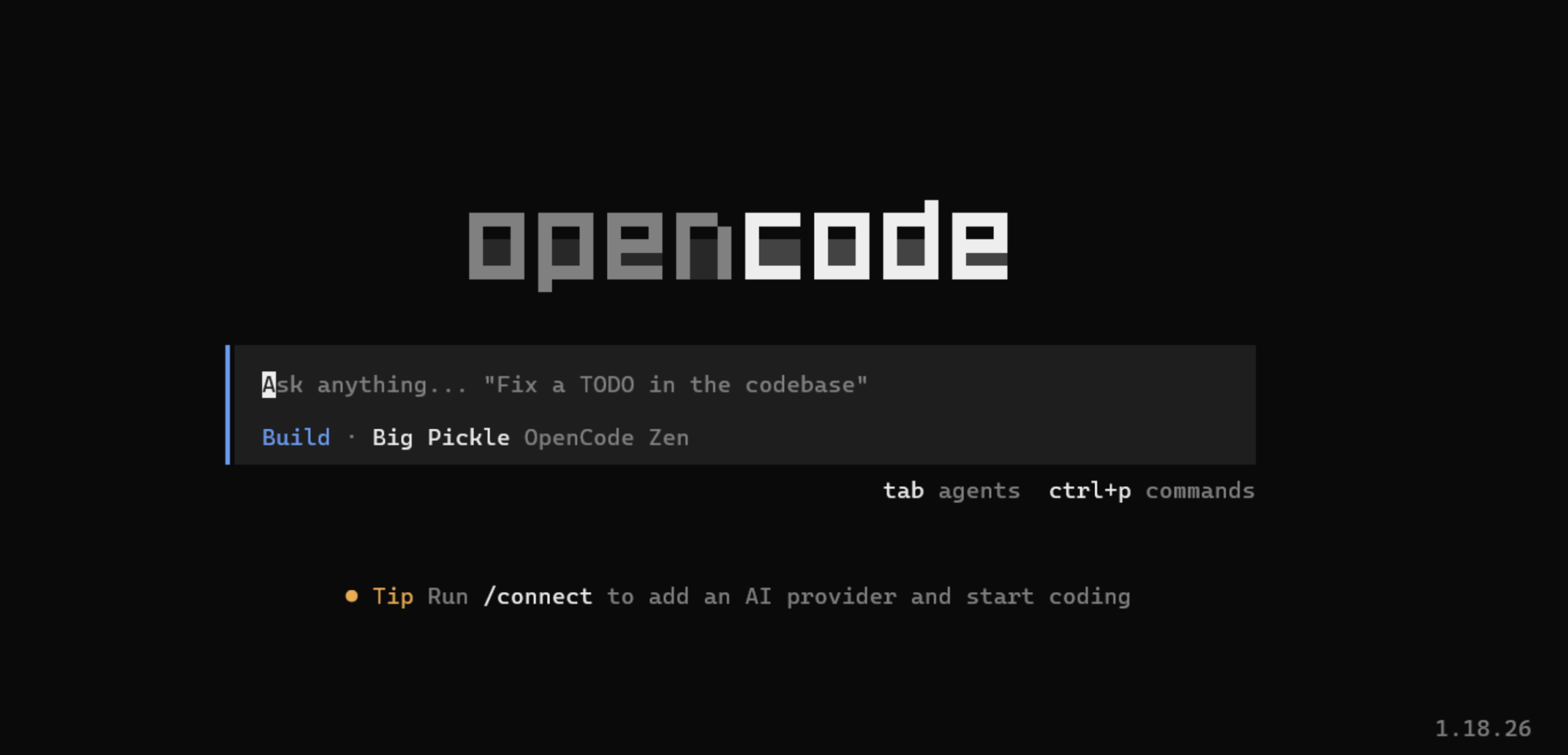
At its core, OpenCode is an MIT-licensed coding agent designed to interface between a user-selected AI model and a local development environment, including repositories, terminals, and file systems. It is critical to understand that OpenCode is not a model itself; rather, it is the infrastructure that provides the model with "hands" and "eyes." While the model (such as GPT-4o, Claude 3.5 Sonnet, or Llama 3) processes prompts and generates logic, OpenCode manages the file tools, shell access, session history, and permission protocols necessary to execute that logic.
This separation of concerns is the central pillar of OpenCode’s architecture. By treating the model as a swappable component, OpenCode insulates the developer from the volatility of the AI provider market. If a specific provider increases its per-token pricing or modifies its terms of service, a developer can transition to a different model—whether hosted or local—without rebuilding their automation scripts or learning a new interface. This "table stakes" approach to model choice ensures that the agent remains a constant in the development lifecycle, providing a stable platform for long-term project maintenance.
The Evolution of OpenCode: A Timeline of Rapid Iteration
The trajectory of OpenCode has been marked by an aggressive release schedule, with over 800 versions deployed within its first year of existence. This pace reflects the high level of community engagement and the rapidly shifting requirements of AI-assisted engineering.
Chronology of Development:
- Late 2024: Initial release as a lightweight CLI tool focused on basic file manipulation.
- Early 2025: Introduction of the server-client architecture, moving away from a monolithic CLI to a networked process capable of supporting multiple front-ends.
- January 2026: A pivotal moment for the project occurred when major AI providers began restricting consumer-grade subscriptions from being used in third-party tools. This drove a surge in OpenCode adoption as developers sought ways to use API keys and local models.
- Mid-2026: OpenCode reached approximately 190,000 GitHub stars and expanded its contributor base to over 950 individuals. The project launched a beta version of its desktop application to supplement the existing terminal and web interfaces.
The sheer volume of updates indicates a project in a state of constant flux. While this activity ensures that bugs are addressed quickly and new models are supported within days of release, it also necessitates a cautious approach for enterprise users who require long-term stability.
Structural Innovations: The Server-Client Model
Unlike many coding agents that run as a single, isolated process, OpenCode operates as a persistent local server. This server communicates via HTTP with various clients, including the terminal interface, desktop applications, IDE extensions, and the official SDK. This architecture facilitates three specific use cases that are generally unavailable in more restrictive environments:
- Headless Execution: By running
opencode serve, developers can deploy the agent on remote servers or within Continuous Integration (CI) pipelines without a terminal UI. - Session Persistence: The
opencode attachcommand allows users to move between machines—starting a debugging session on a desktop and resuming it on a laptop—without losing context or history. - API-Driven Automation: The inclusion of an OpenAPI 3.1 specification allows developers to drive the agent through code. This eliminates the need for "CLI puppeteering" (simulating keystrokes) and allows for the integration of the agent into larger, automated workflows.
Economic Realities: Analyzing the True Cost of Free Software
A common misconception surrounding OpenCode is that "open source" equates to "zero cost." While the MIT-licensed software is free to download and modify, the operational costs are dictated by the model provider. Industry data suggests that the "bring your own key" (BYOK) model is the most popular among professional developers, as it provides granular control over spending. However, this requires the user to manage their own API limits and security credentials.
To simplify this, OpenCode introduced tiered access paths:
- OpenCode Zen: A managed gateway that offers a curated list of models on a pay-as-you-go basis.
- OpenCode Go: A subscription-based model (currently reported at $10 monthly) providing access to specific open-weight models.
- Local Hosting (Ollama): This path removes per-token costs but shifts the burden to hardware. Running a model with sufficient reasoning capabilities for complex coding tasks requires significant VRAM and context window headroom.
Data from mid-2026 indicates that while local models are improving, they still suffer from a higher rate of "invalid tool calls" compared to flagship hosted models. This results in a "quality vs. privacy" trade-off: developers must choose between the superior reasoning of a hosted API or the data sovereignty of a local setup.
Operational Modes and Security Frameworks
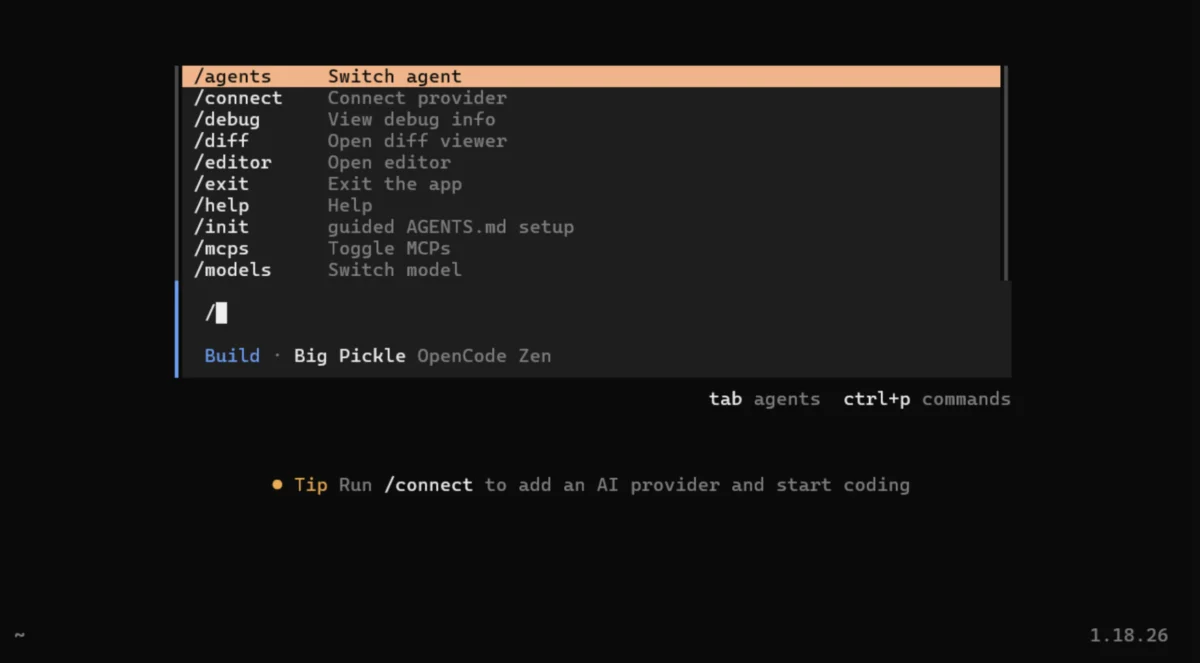
OpenCode utilizes a dual-mode system to manage the level of autonomy granted to the agent. The Build Mode is the default state, where the agent is permitted to read, write, and execute commands autonomously. Conversely, Plan Mode acts as a supervisory layer, requiring the agent to seek explicit approval before modifying files or executing shell commands.
The permission system underlying these modes is highly granular. Users can define rules based on command patterns—for instance, allowing the agent to run npm test automatically while requiring a prompt for any rm or curl commands. However, the official documentation provides a stark warning: these permissions are workflow safeguards, not security sandboxes. They are designed to prevent accidental errors by the AI, not to defend against malicious code execution. For networked use, it is recommended to bind the server to localhost and utilize strong password authentication (OPENCODE_SERVER_PASSWORD) to mitigate the risk of unauthorized remote access.
Project Contextualization through AGENTS.md and MCP Integration
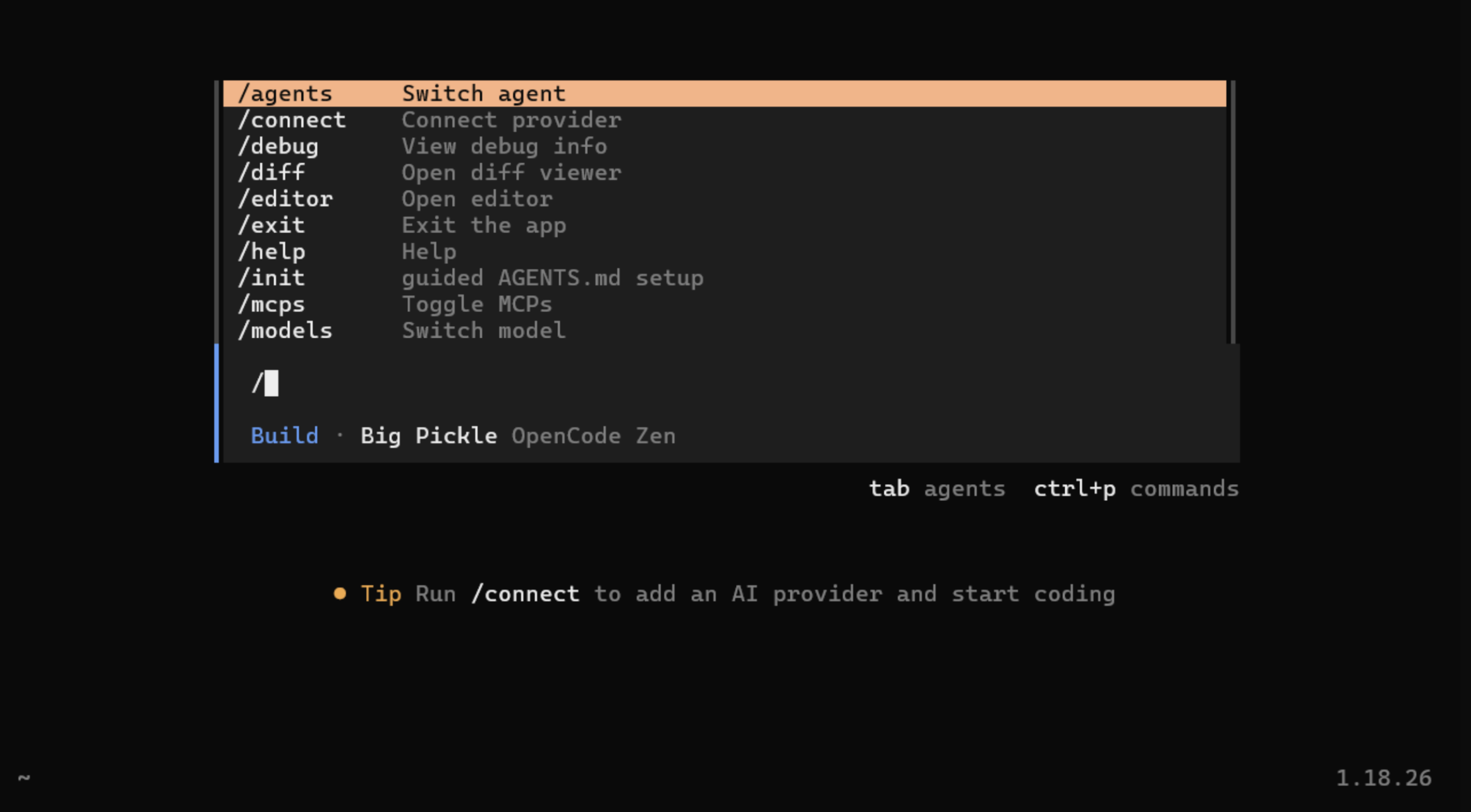
A recurring challenge in AI-assisted development is providing the model with enough context to understand project-specific conventions. OpenCode addresses this through the /init command, which generates an AGENTS.md file. This file serves as the "source of truth" for the agent, detailing folder structures, testing protocols, and naming conventions.
This approach mirrors the CLAUDE.md standard but extends it to a broader range of models. The effectiveness of this system relies on the developer’s discipline; a bloated AGENTS.md can consume excessive tokens and lead to the model ignoring critical instructions. The recommended practice is a "minimalist" approach, where only rules that prevent frequent AI mistakes are included.
Furthermore, OpenCode supports the Model Context Protocol (MCP). By defining MCP servers in the opencode.json configuration, developers can extend the agent’s capabilities to include external documentation lookups, database queries, or specialized search tools. This extensibility ensures that OpenCode can grow alongside a team’s specific infrastructure needs.
Comparative Market Position: OpenCode versus Proprietary Ecosystems
The primary competitor for OpenCode is Claude Code, Anthropic’s specialized CLI tool. The choice between the two often comes down to a trade-off between "speed to result" and "platform control."
Who OpenCode serves:
- Developers in regulated industries who require the privacy of local model execution.
- Power users who wish to script their own agentic workflows via a documented API.
- Teams looking to hedge against "provider lock-in" by maintaining a model-agnostic toolchain.
- Users who prefer the transparency of token-based billing over fixed monthly subscriptions.
Who OpenCode may not fit:
- Users seeking a "zero-config" experience.
- Developers who primarily use a single model (like Claude) and prefer the simplicity of a single monthly bill.
- Environments where the speed of autonomous execution is the sole metric of success, as the additional configuration layers in OpenCode can introduce minor latency.
The market reaction to OpenCode has been largely positive, particularly following Anthropic’s decision in early 2026 to block third-party tools from accessing consumer Claude subscriptions. This move reinforced the perception that proprietary ecosystems can be volatile, further validating the "decoupled" philosophy of the OpenCode project.
Strategic Implications for the Development Lifecycle
The rise of OpenCode signals a maturation of the AI agent market. It suggests that the "honeymoon phase" of simply chatting with a model is ending, replaced by a need for robust, integrated tools that behave like professional-grade software. The inclusion of Git-based /undo and /redo commands highlights a focus on reliability; developers need the ability to roll back AI-generated refactors as easily as they would their own code.
As we look toward the latter half of 2026, the success of OpenCode will likely depend on its ability to maintain its high release velocity without sacrificing the stability required for enterprise adoption. While the lack of a public roadmap introduces an element of uncertainty, the project’s massive star count and contributor base suggest it has achieved the "escape velocity" necessary to remain a fixture in the open-source community.
For organizations evaluating their AI strategy, the takeaway is clear: the agent and the model are distinct assets. By investing in a tool like OpenCode, a team is not just choosing a coding assistant; they are choosing a framework for autonomy that can evolve as rapidly as the underlying AI landscape itself. The ability to swap models, run headless sessions, and maintain local data sovereignty makes OpenCode a formidable, if high-maintenance, alternative to the proprietary status quo.