rifanmuazin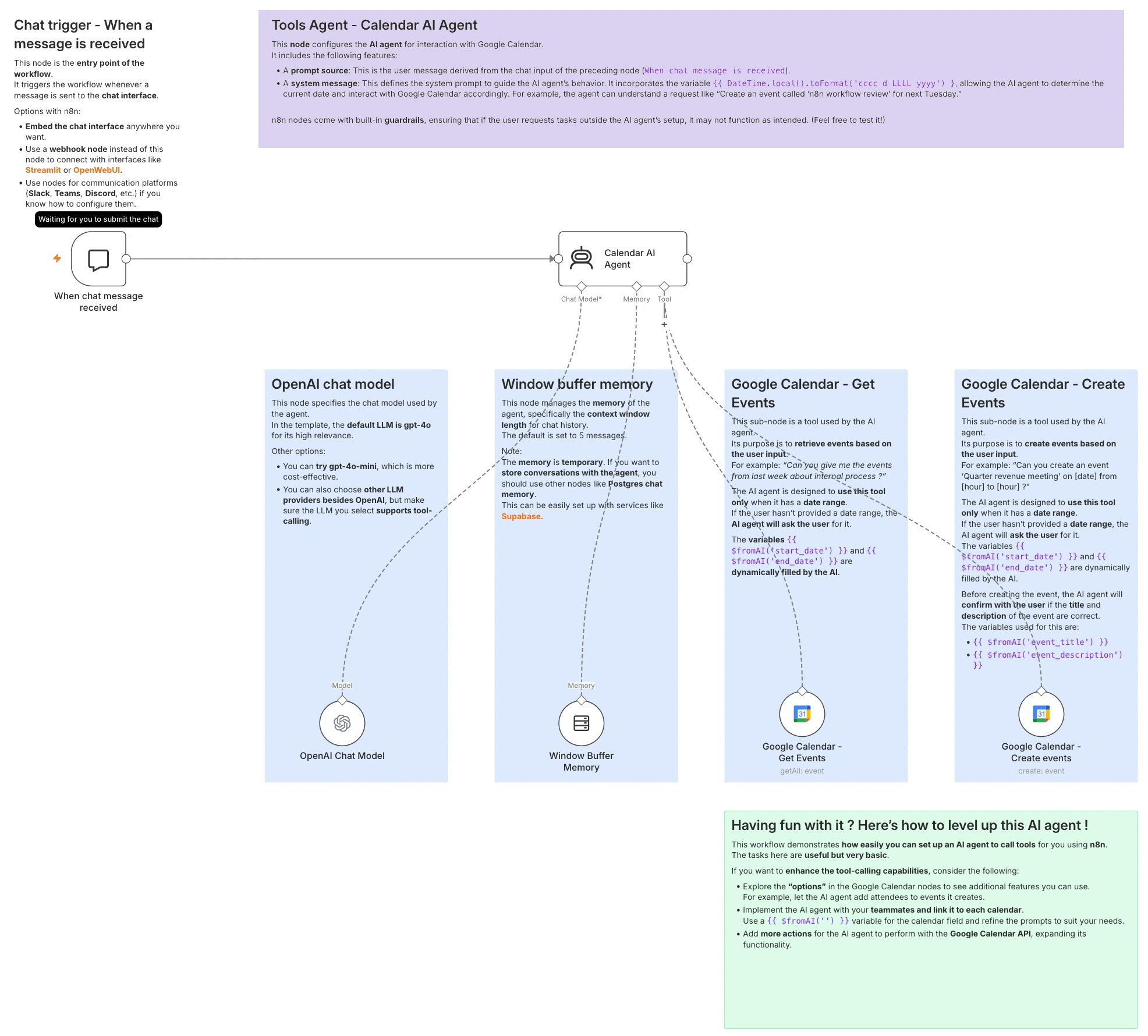
The global shift toward hyperautomation is no longer a speculative future but a present-day operational standard for businesses and individual professionals alike. As generative artificial intelligence transitions from a novelty used for simple chat queries to a robust engine for workflow orchestration, low-code platforms such as n8n have emerged as the connective tissue between disparate software ecosystems. By leveraging “agentic workflows”—sequences where AI can plan, execute, and refine tasks—users are bypassing the steep learning curves of traditional software engineering to reclaim hours of lost productivity. This paradigm shift is driven by the democratization of technology, where the ability to build complex, automated systems is being transferred from specialized developers to the general workforce.
The Rise of the Low-Code Automation Ecosystem
The surge in AI automation is supported by significant market data. According to a 2023 report by Gartner, the global market for low-code development technologies was projected to reach $26.9 billion, a 19.6% increase from the previous year. Furthermore, research from McKinsey suggests that current generative AI technologies have the potential to automate work activities that absorb 60 to 70 percent of employees’ time today. Within this context, n8n has gained traction as a preferred tool for power users due to its fair-code model, which allows for self-hosting and deep integration with Large Language Models (LLMs) like OpenAI’s GPT-4, Google’s Gemini, and Anthropic’s Claude.
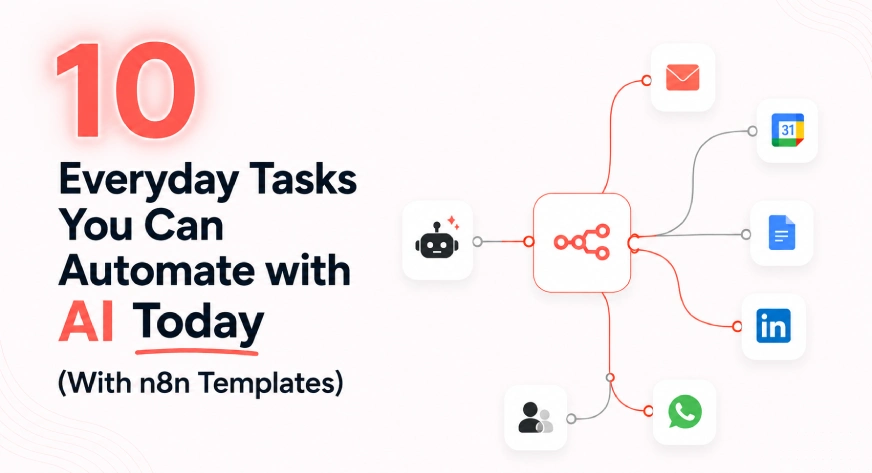
Unlike traditional automation platforms that often operate as “black boxes,” n8n provides a visual, node-based interface that allows users to see the logic of their data as it moves through various APIs. The following ten categories represent the most impactful areas where AI-driven automation is currently being deployed to eliminate repetitive cognitive labor.
1. Strategic Job Application Orchestration
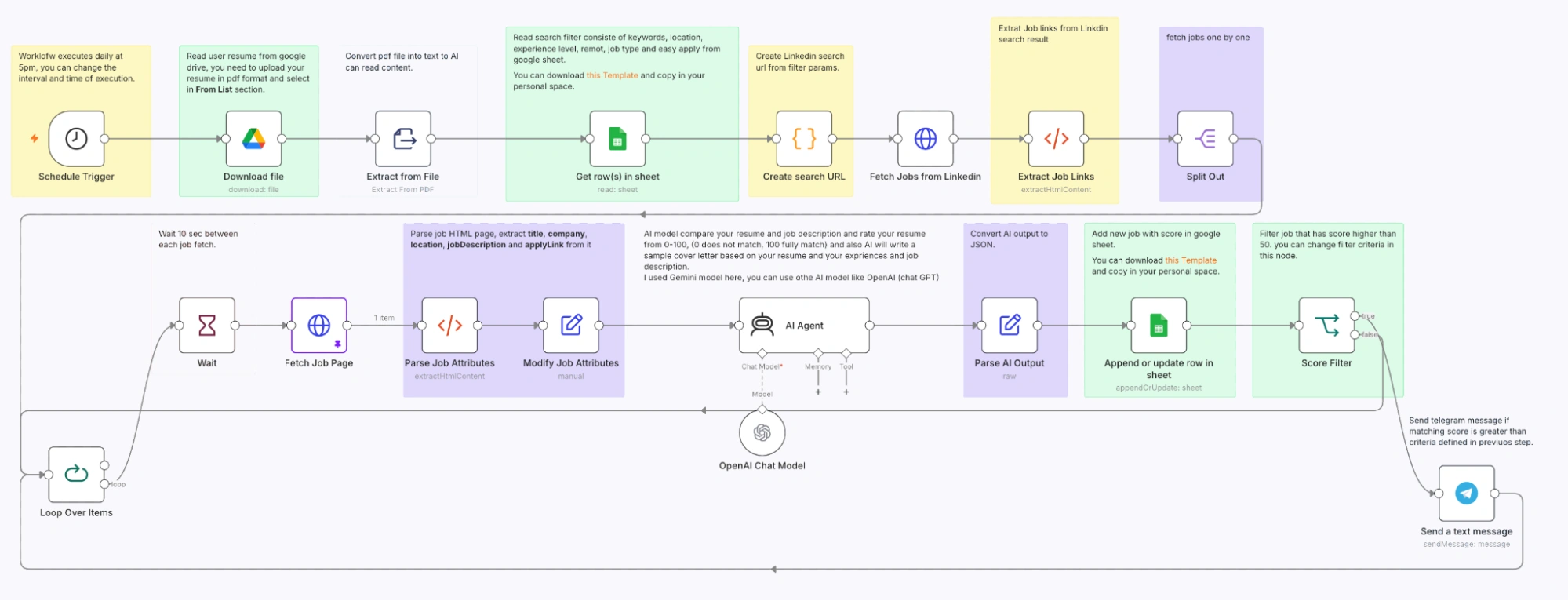
The modern job market is characterized by high volume and high speed, often requiring candidates to tailor resumes and cover letters for every individual application to pass through Applicant Tracking Systems (ATS). Manual execution of this task is notoriously inefficient. AI-driven job assistants now automate the entire pipeline: searching LinkedIn or Indeed for specific keywords, scraping job descriptions, and comparing them against a user’s stored resume.
In a professional n8n workflow, the AI evaluates the “gap” between the candidate’s experience and the job requirements. It then generates a bespoke cover letter and updates a centralized tracking database in Notion or Airtable. This automation reduces the time spent on a single application from one hour to less than five minutes, allowing candidates to focus exclusively on interview preparation.
2. Intelligent Email Triage and Management
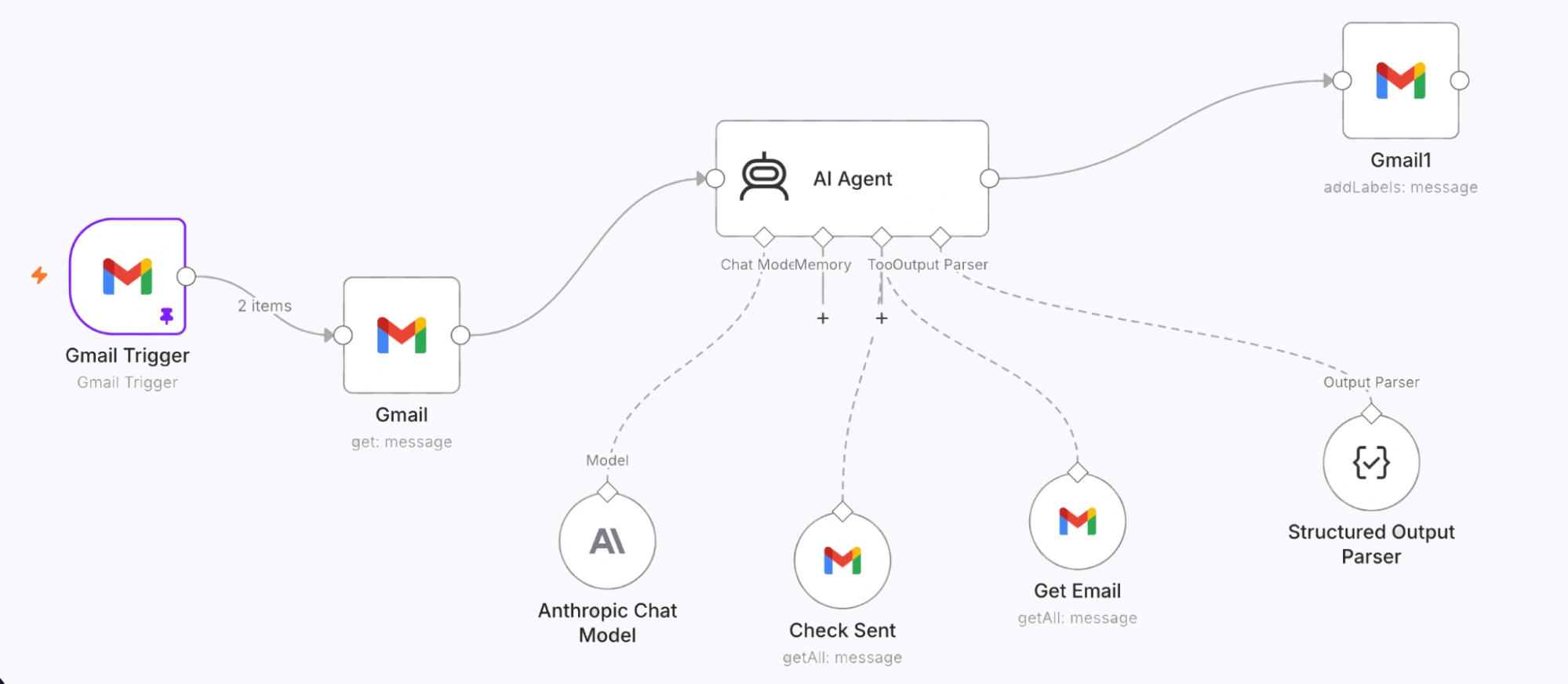
Corporate professionals receive an average of 121 emails per day, leading to what psychologists call “email fatigue.” Traditional filters are often too rigid to handle the nuances of human communication. AI email managers, however, utilize Natural Language Processing (NLP) to understand the intent and urgency of an incoming message.
By integrating n8n with Gmail or Outlook and an LLM, users can build systems that automatically categorize emails into “Urgent,” “Informational,” or “Newsletter” labels. Advanced iterations of these workflows can even draft suggested replies based on the user’s historical writing style, holding them in a “Drafts” folder for final approval. This ensures that critical client communications are never buried under administrative clutter.
3. Automated Meeting Transcription and Actionable Synthesis
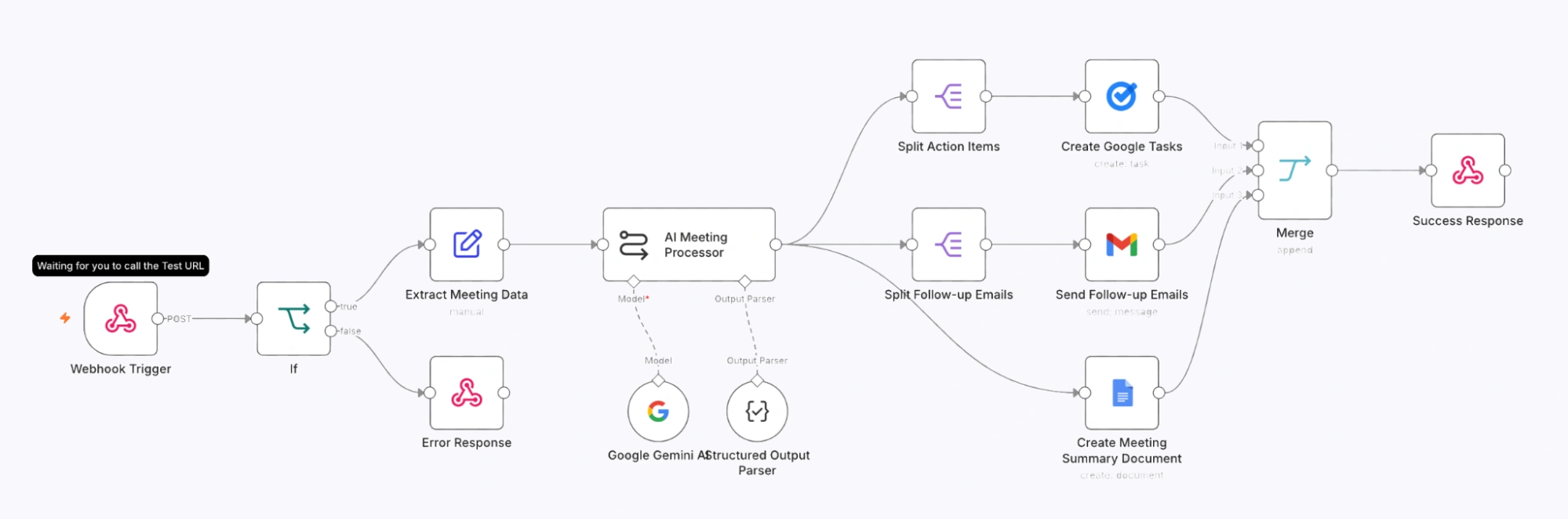
The transition to remote and hybrid work has led to an explosion in virtual meetings. However, the value of these meetings is often lost due to poor note-taking. Workflow automation now allows for a seamless transition from spoken word to structured data. By connecting a recording tool to n8n, the audio can be transcribed via OpenAI’s Whisper and then processed by an LLM to extract key decisions and “To-Do” lists.
The broader implication of this technology is the creation of a searchable “corporate memory.” When these action items are automatically synced to project management tools like Jira or Trello, it eliminates the “forgetfulness gap” that often occurs between a meeting’s conclusion and the start of the next work cycle.
4. Natural Language Calendar Coordination
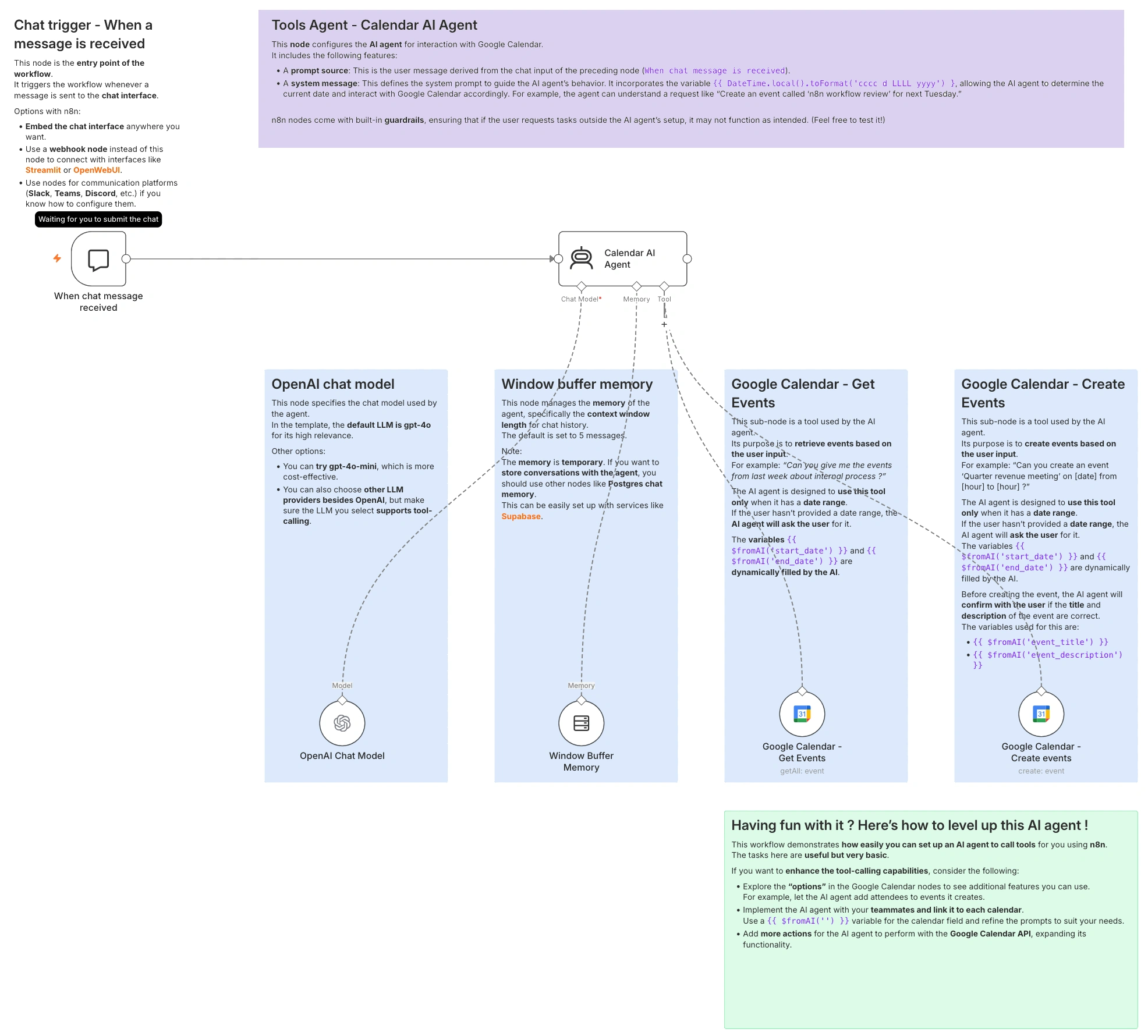
Scheduling remains one of the most persistent “micro-tasks” that interrupts deep work. AI Calendar Assistants act as autonomous agents that can interpret natural language requests. For instance, a user can send a message to a Slack bot saying, “Schedule a 30-minute sync with the design team next Tuesday morning,” and the AI agent will check Google Calendar for availability, find a slot that doesn’t conflict with existing appointments, and send out the invites. This removes the need for manual calendar checking and the back-and-forth typical of coordination.
5. Personalized Executive Daily Briefings
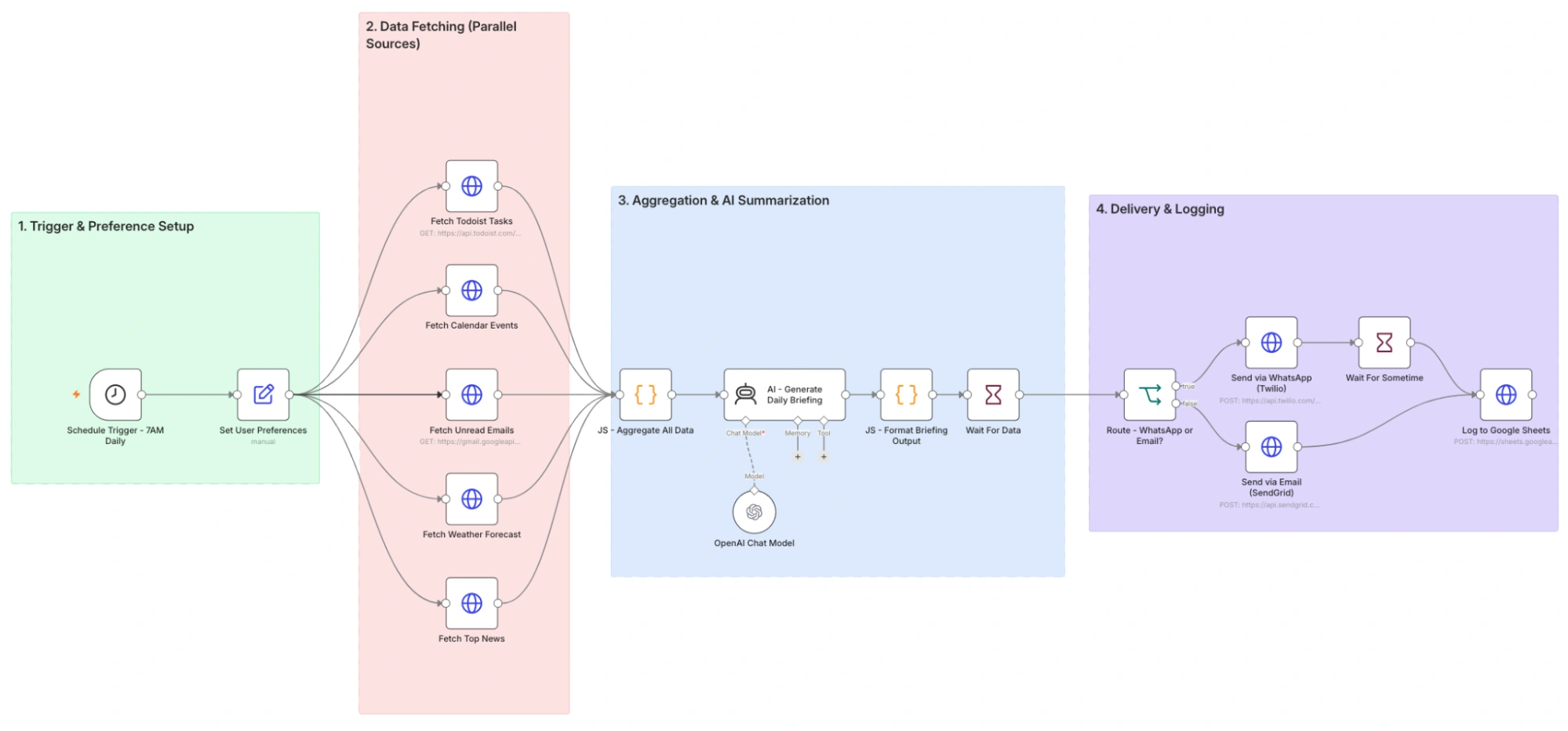
The “information overload” era requires a specialized filter to ensure that decision-makers are only seeing the most relevant data. A daily AI briefing workflow acts as a personal digital newspaper. Every morning at a scheduled time, n8n can aggregate data from a user’s calendar, weather services, financial markets, and specific RSS feeds.
The AI then summarizes this data into a concise “Executive Summary” delivered via WhatsApp, Telegram, or email. Supporting data from productivity studies indicates that starting the day with a structured overview rather than reacting to notifications can improve cognitive focus by up to 40%.
6. Automated Content Curation and Newsletters
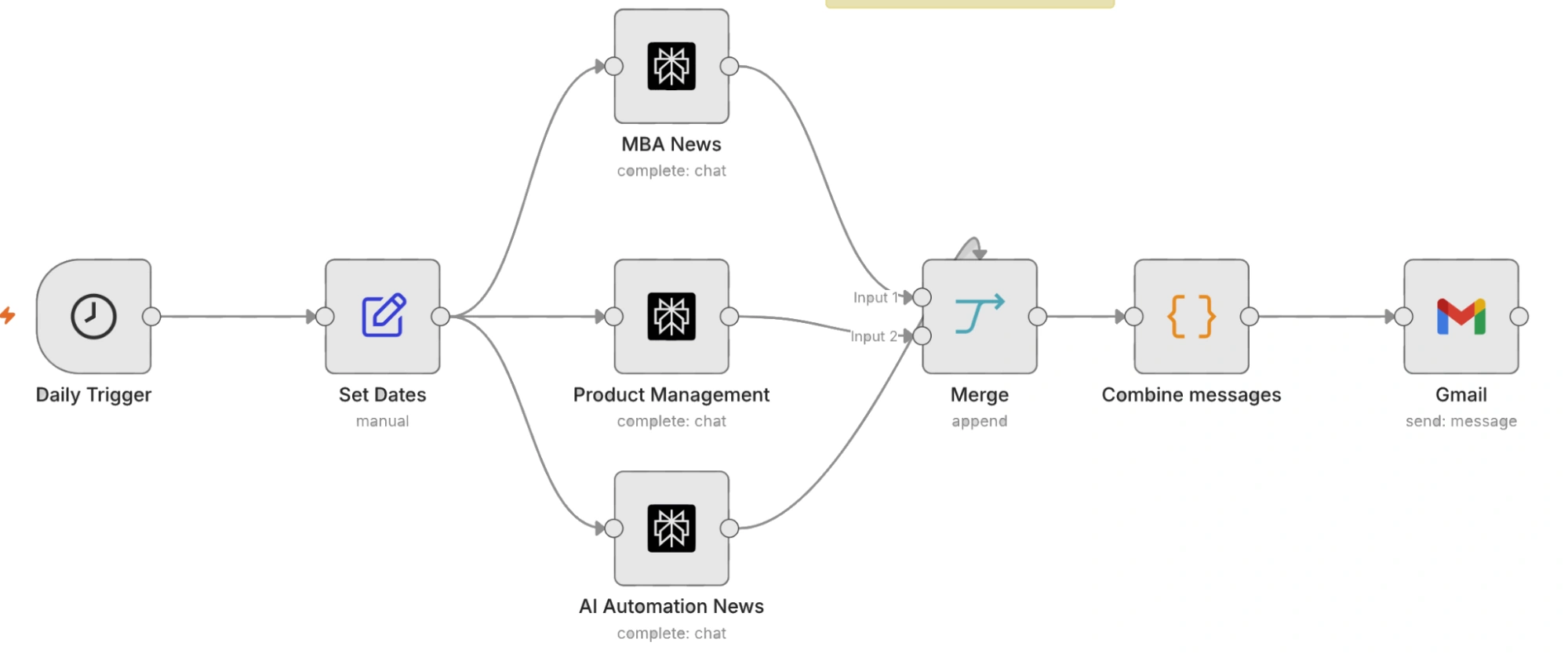
For marketing teams and independent creators, staying relevant requires consistent output. Automated curated newsletters use AI to scan the web for trending topics in a specific niche. Tools like Perplexity AI are often used within these workflows to ensure that the information is current and fact-checked.
The workflow identifies high-quality articles, summarizes them, adds a professional commentary, and formats the result into an email template. This allows organizations to maintain thought leadership with minimal manual research, shifting the human role from “gatherer” to “editor.”
7. Multi-Platform Social Media Automation
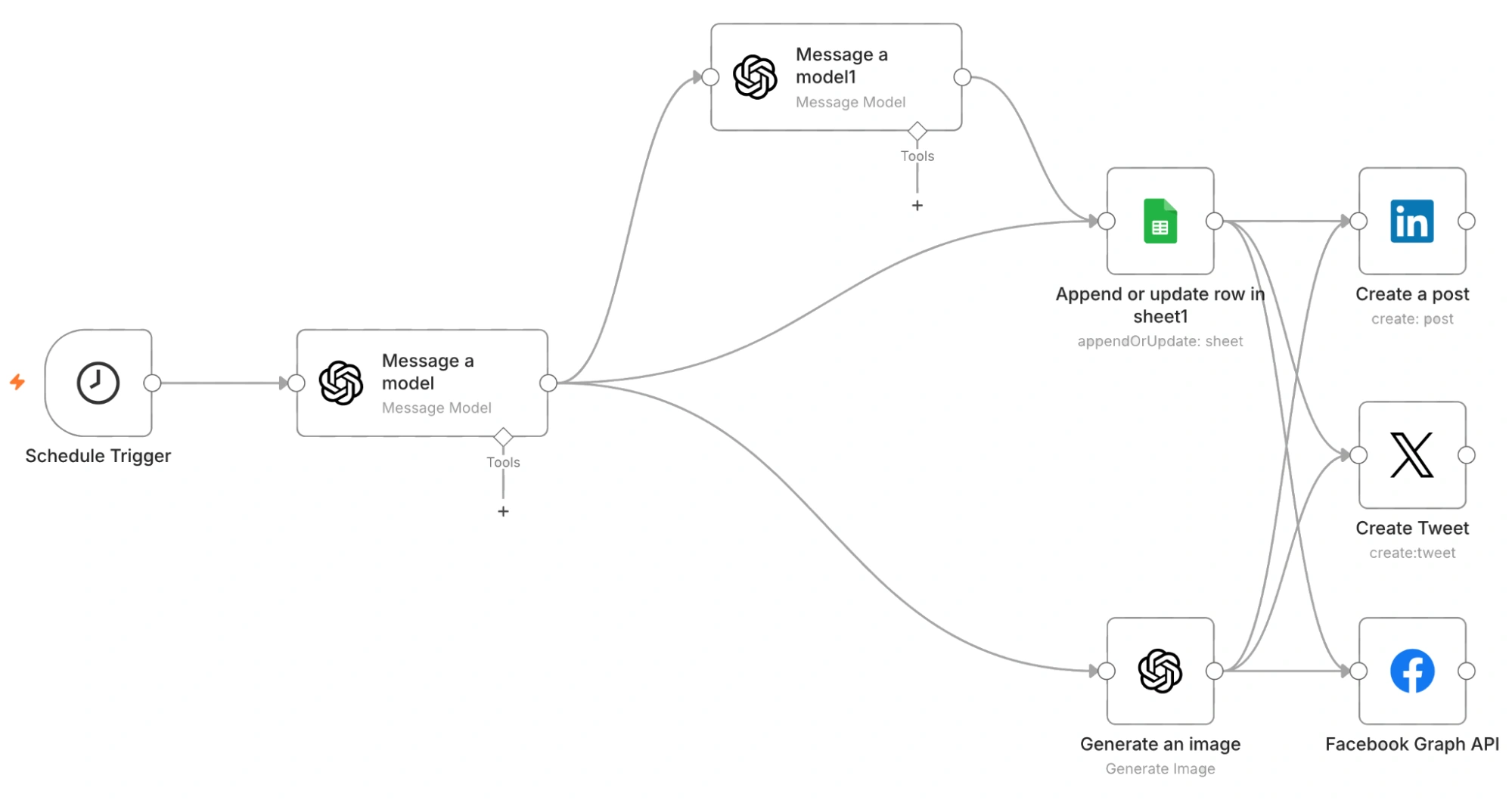
Consistency is the primary metric for success on social media, yet the manual labor of posting across X (formerly Twitter), LinkedIn, and Facebook is significant. Advanced n8n workflows can now generate both the text and the accompanying imagery for social posts using DALL-E 3 or Midjourney.
By setting a thematic prompt for the month, the AI can generate a month’s worth of content in one batch, schedule the posts, and even vary the tone of voice to suit the specific audience of each platform. This ensures a brand remains active even during periods of high internal workload.
8. Content Repurposing and Cross-Channel Promotion
A single high-quality blog post contains enough information for dozens of social media “snippets.” However, few teams have the time to manually deconstruct their long-form content. Repurposing workflows detect when a new article is published on a CMS like WordPress, scrape the text, and use an LLM to rewrite it into various formats: a thread for X, a professional summary for LinkedIn, and a script for a short-form video. This maximizes the Return on Investment (ROI) of every piece of original content created.
9. AI-Enhanced Lead Generation and Enrichment
In the B2B sector, lead generation is often a manual process of searching through LinkedIn and company websites. Automation has revolutionized this by connecting tools like Hunter.io for email finding with Perplexity for company research.
An automated n8n workflow can take a list of company names, find the relevant decision-makers, verify their contact information, and then—crucially—research the company’s recent news to draft a personalized outreach email. This level of personalization at scale was previously impossible without a massive sales development team.
10. Intelligent Document and Invoice Processing
Manual data entry for accounting is not only time-consuming but prone to human error, which can lead to significant financial discrepancies. AI-powered OCR (Optical Character Recognition) workflows can now “read” PDF invoices, extract the vendor name, date, amount, and tax information, and then automatically populate a Google Sheet or an accounting software like QuickBooks.
By implementing validation steps—where the AI checks the invoice total against a known purchase order—businesses can automate their accounts payable process with a high degree of confidence.
Broader Impact and Implications for the Future of Work
The integration of these ten workflows signals a fundamental change in the “unit of work.” As AI takes over the execution of repetitive tasks, the human role is shifting toward “Workflow Architecture.” The value of a professional is increasingly measured by their ability to design and oversee these automated systems rather than their ability to perform the tasks within them.
Industry experts suggest that this “automation first” approach will lead to a significant “productivity dividend.” For small to medium-sized enterprises (SMEs), these low-code tools provide a competitive advantage previously reserved for large corporations with massive R&D budgets. By reducing overhead costs and increasing operational speed, SMEs can compete more effectively in a globalized market.
However, this transition also necessitates a focus on “AI literacy.” As these tools become more prevalent, the ability to understand and manipulate low-code environments like n8n will become a core competency across all departments, from HR to Finance. The timeline for this shift is accelerating; what was considered an advanced technical setup two years ago is now accessible via a template. The conclusion for professionals is clear: the most efficient way to navigate the AI era is to stop fighting the technology and start building the workflows that harness it. By starting with one small, repetitive task, the path to a fully automated professional life becomes not just a possibility, but an inevitability.