rifanmuazin
The landscape of online search is undergoing a profound transformation, driven by the rapid integration of artificial intelligence. At the heart of this shift lies a complex mechanism known as “query fan-out,” a process where a single user query is broken down into numerous parallel sub-queries by AI models like ChatGPT and Google’s Gemini. This intricate dance of data retrieval is not just a technical detail; it represents a critical new frontier for businesses seeking visibility, traffic, leads, and ultimately, sales in the evolving digital ecosystem.
Recent research has illuminated the significant scale of this phenomenon. A comprehensive study by Ekamoira, analyzing over 72,000 AI-generated queries, revealed that a single prompt in platforms like ChatGPT or Gemini routinely triggers between 8 to 10 parallel queries before a comprehensive answer is formulated. Further research by SEER Interactive, specifically examining Gemini, indicated an even higher average of 10.7 fan-out queries per prompt. This indicates a sophisticated, multi-faceted approach by AI systems to understand and respond to user intent.
This intricate process, termed “query fan-out,” is a fundamental component of how AI-powered search engines and conversational AI models generate their responses. Understanding its mechanics is paramount for businesses aiming to enhance their presence in AI-driven search results, including Google’s AI Overviews (AIOs) and Generative Engine Optimization (GEO).
The implications for content creators and search engine optimization (SEO) professionals are substantial. A study by Surfer SEO highlighted a direct correlation between ranking for these fan-out queries and visibility in AI Overviews. Their research found that businesses are 161% more likely to be cited in Google’s AI Overviews if they also rank for the generated sub-queries, underscoring the strategic importance of this optimization.
While AI Overviews and related optimization strategies are relatively new, the underlying principles of query fan-out are rooted in the way AI models process information. The core idea is that a user’s initial query, often concise and broad, is expanded by the AI into a more detailed set of related questions and concepts. This allows the AI to gather a wider range of relevant information, leading to more nuanced and comprehensive answers.
Deconstructing the Query Fan-Out Process
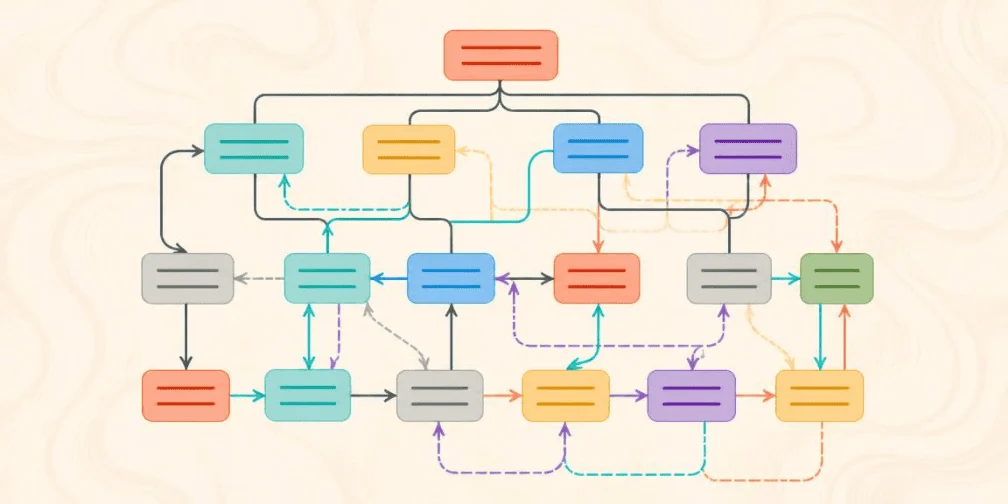
Query fan-out is essentially the AI’s method of deconstructing a user’s initial query into a series of related, often more specific, sub-queries. These sub-queries are then executed in parallel, allowing the AI to retrieve information from a broader spectrum of sources and concepts. This approach mirrors how a human might research a complex topic, breaking it down into smaller, manageable parts.
For example, if a user types “what’s the best CRM software for a small business?” into an AI tool, the system doesn’t simply search for articles containing that exact phrase. Instead, it might generate a series of related sub-queries, such as:
- “CRM software pricing for small businesses”
- “Top CRM features for startups”
- “Salesforce vs. HubSpot for small businesses”
- “Free CRM options for entrepreneurs”
- “CRM implementation guide for SMBs”
By exploring these multifaceted angles, the AI can construct a more informative and tailored response, addressing not just the explicit question but also the implicit needs and considerations of the user. This multi-pronged retrieval process is what enables AI to deliver answers that are often more detailed and contextually relevant than traditional search results.
The underlying technology draws on advanced natural language processing and large language models (LLMs). These systems utilize techniques such as Chain-of-Thought (CoT) reasoning to decompose the initial query. CoT allows the AI to break down a complex problem into a series of logical steps, generating sub-queries that explore different intents, variations in vocabulary, and specific entities relevant to the original query.
The subsequent steps in the query fan-out process involve:
- User Query: The initial search term or prompt is entered into the AI system, along with contextual signals like user location and search history.
- LLM Prompted Expansion: The generative model decomposes the query using CoT reasoning, creating multiple sub-queries with diverse intents, varied vocabulary, and specific entities.
- Parallel Sub-Query Execution: These sub-queries are executed simultaneously across the AI’s index, not sequentially, ensuring a broad and rapid retrieval of information.
- Retrieval, Deduplication, and Ranking: Results from all sub-queries are merged, duplicates are removed, and the information is ranked based on semantic relevance and profile alignment. Pages that address a greater number of sub-queries tend to score higher.
- Synthesized AI Answer: Finally, the AI synthesizes the retrieved and ranked information into a coherent, comprehensive answer, often citing the sources that contributed to its response.
The specific mechanisms of query fan-out can vary between different AI platforms, including ChatGPT, Google’s AI Overviews, and Gemini. However, the fundamental principle of decomposing a single query into multiple parallel searches remains consistent. Research and patent filings from entities like Google offer insights into these sophisticated query expansion techniques, detailing how LLMs generate reformulated search queries from an original prompt, encompassing intent diversification, lexical variation, and entity reformulation.
The Strategic Implications for SEO and AI Search Optimization
The advent of query fan-out fundamentally alters the strategy for achieving online visibility. Traditional SEO often focused on optimizing content for a single, primary keyword. However, in the era of AI search, a single page must be optimized to answer a multitude of related sub-queries.
Surfer SEO’s extensive study, analyzing 173,902 URLs, provides compelling data on this shift. Their findings illustrate a clear inflection point: as a page covers and ranks for more sub-queries, its probability of being cited in AI Overviews increases dramatically. The data suggests that once a page covers 15 or more sub-queries, its citation probability begins to accelerate significantly. This highlights the importance of comprehensive topical coverage rather than a narrow focus on a single head term.
Furthermore, query fan-out optimization offers a new avenue for businesses to gain prominence in AI search, even if they don’t rank highly in traditional search results. The Surfer SEO study revealed a surprising statistic: 68% of pages cited in AI Overviews did not rank within the top 10 positions for the original query. This indicates that AI systems are drawing information from a wider net of content, prioritizing depth and relevance across various related topics, rather than solely relying on established search rankings. The largest segment of these AI-cited pages (22%) fell within positions 11-20 in traditional search, demonstrating that even a strong showing outside the top 10 can lead to AI Overviews visibility.
While ranking in the top 100 positions for a query is generally a prerequisite for being cited, and top 10 rankings contribute significantly (32% of citations), the correlation between ranking for fan-out queries and AI citation is even stronger. The “Fan Out Visibility Multiplier” data from Surfer SEO starkly illustrates this. For content optimized solely for traditional SEO (head term only), AI citation probability plateaus around 10-12%. In contrast, fan-out optimized content, which systematically targets supporting sub-queries, sees its AI citation probability skyrocket. At 15+ sub-queries covered, fan-out optimized content achieves an 85% AI citation probability, compared to a mere 8% for traditional SEO approaches. This represents a 10.6x increase in likelihood, a monumental difference for online visibility.
This paradigm shift means that businesses must re-evaluate their content strategies to encompass a broader range of related topics and keywords. The goal is no longer just to rank for “best CRM software,” but to be the definitive resource that answers questions about CRM pricing, features, comparisons, implementation, and more.
Optimizing for Query Fan-Out: Practical Strategies
To effectively optimize for query fan-out and enhance AI visibility, businesses need to adopt a multi-faceted approach. This involves leveraging specialized tools, creating comprehensive content, and understanding the nuances of AI retrieval.
1. Utilizing Query Fan-Out Tools:
Several tools have emerged to help marketers identify and analyze these fan-out queries. Dejan’s Query Fan-out Tool and iPullRank’s Qforia are free resources that allow users to explore the sub-queries generated by AI models. While direct exposure of fan-out queries by platforms like ChatGPT has become less consistent, these tools provide valuable insights into how queries are likely to be decomposed. Tools like the Resoneo Chrome Extension can also provide fan-out data when specific ChatGPT model versions are selected. These tools are crucial for understanding the “search surface” that AI systems are exploring beyond the initial user prompt.
2. Creating Fan-Out Friendly Content:
The most effective way to rank for fan-out queries is to create content that comprehensively addresses them. Fortunately, many best practices for organic search optimization align with fan-out optimization. These include:
- In-depth Topical Authority: Covering a subject matter extensively, demonstrating deep knowledge.
- Varied Vocabulary: Using synonyms, related terms, and diverse phrasing.
- Entity Recognition: Incorporating specific entities (names, places, dates, products) relevant to the topic.
- Structured Data: Employing schema markup to help AI understand the context and relationships within your content.
- Clear and Concise Language: Presenting information in an easily digestible format.
Tactically, content should directly answer the fan-out queries with specific formatting. This includes using clear headings, bullet points, numbered lists, and well-structured paragraphs. Mike King, creator of the Qforia tool, emphasizes that “citation-worthy content must present facts clearly, avoid speculation, and include attributes like sources or structured claims (semantic triples).” The concept of “content chunks” being semantically relevant to these sub-queries is also critical. AI tools assess whether a specific passage within a larger document is the most relevant answer to a particular sub-query, a process influenced by vector embeddings.
3. Leveraging Fan-Out Calculators and Analyzers:
Tools that can estimate the likelihood of appearing in AI results based on content coverage are invaluable. These calculators help businesses identify gaps in their fan-out coverage and provide actionable tips for improvement. By analyzing how well a passage “beats” competitor passages or existing AI-cited content, marketers can refine their optimization efforts.
The Evolving Landscape of AI Search
The emergence of query fan-out is not an isolated development but part of a broader trend towards more sophisticated AI-driven information retrieval. As AI models become more advanced, their ability to understand complex user intents and synthesize information from diverse sources will continue to grow.
For businesses, this necessitates a proactive and adaptive approach to their digital marketing strategies. Query fan-out optimization is not a one-time task but an ongoing process of understanding how AI systems interpret and respond to queries. The key takeaway is that visibility in AI search is increasingly determined by the breadth and depth of a website’s topical coverage across a multitude of related sub-queries, rather than just its ranking for a single primary term.
The implications extend beyond just organic search. Understanding how AI models decompose queries can inform paid search strategies, content marketing, and even product development, ensuring that businesses are aligned with the evolving ways users seek and consume information. As AI continues to integrate into the core of search, mastering the intricacies of query fan-out will be a defining factor in achieving digital success.
The technical blueprints behind query fan-out are increasingly being documented in public patent filings and research papers. Google’s patent US20240289407A1, titled “Search System with Stateful Chat-Based Interaction,” provides a foundational understanding of how a single user query is decomposed into multiple sub-queries, routed to various retrieval systems, and then merged into a unified AI-generated response. Similarly, patent WO2024064249A1 details “Prompt-Based Query Generation for Search,” explaining how LLMs reformulate original prompts into diverse queries covering intent, lexicon, and entities. These documents, along with academic research papers like “Query Expansion by Prompting Large Language Models” (arXiv:2305.03653), collectively illustrate the sophisticated engineering that underpins AI-driven search.
Empirical studies are also shedding light on the real-world impact. SurferSEO’s large-scale study of 173,902 URLs found that a significant majority of AI-cited pages (68%) did not rank in the traditional top 10, reinforcing the idea that AI Overviews create new citation opportunities independent of classic SEO positions. Semrush and Ahrefs have also reported on the prevalence and click impact of AI Overviews, noting a trend where citations are increasingly drawn from pages that might not have historically ranked high, further emphasizing the advantage of fan-out optimization.
Ultimately, making optimization for query fan-out a core component of a comprehensive search strategy is no longer optional. It’s a necessity for any business aiming to thrive in the AI-powered future of search, ensuring that content is not only discoverable but also integral to the very fabric of AI-generated knowledge.