rifanmuazin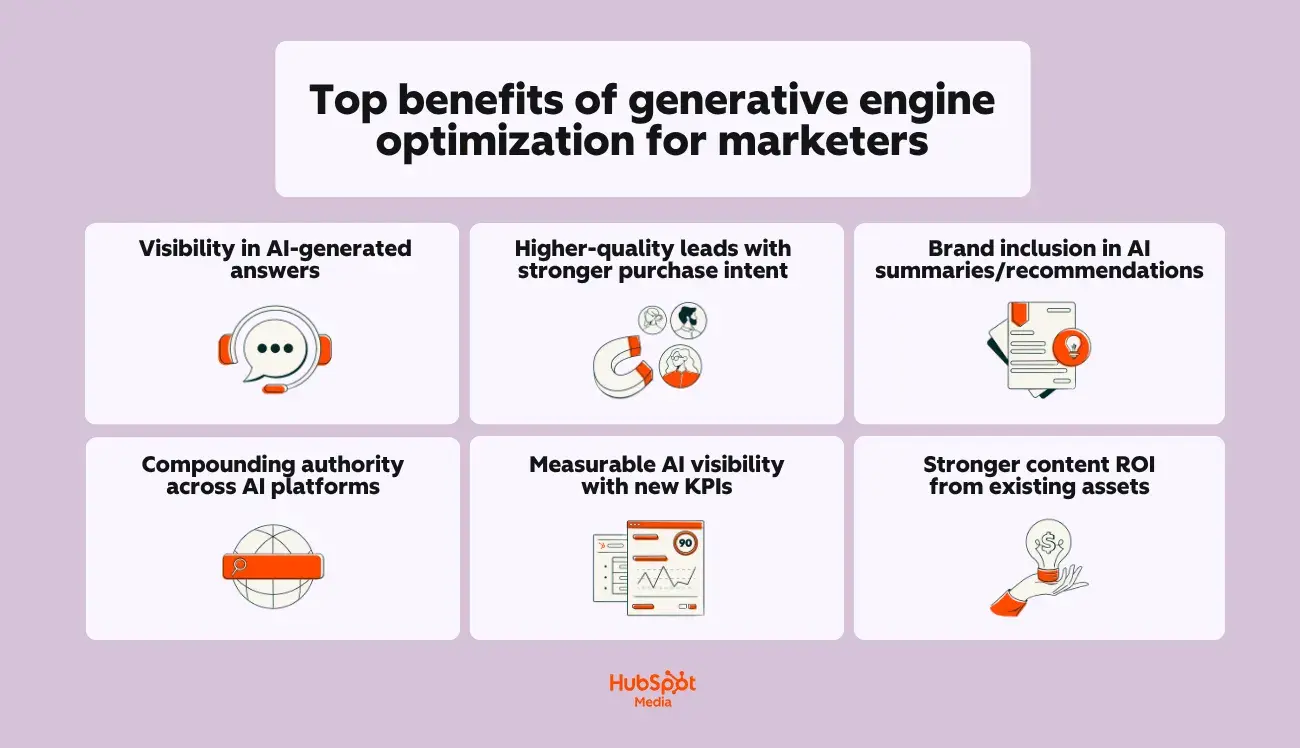
The landscape of how consumers discover brands is undergoing a profound transformation, moving at a pace that often outstrips the readiness of many marketing departments. This shift is not merely an evolution of traditional search engine optimization (SEO) but a fundamental reorientation towards generative engine optimization (GEO), a critical discipline for securing brand presence in the age of artificial intelligence. As audiences increasingly turn to AI platforms for answers, brands face a stark choice: be cited as a credible source or become entirely invisible in these crucial conversational interactions.
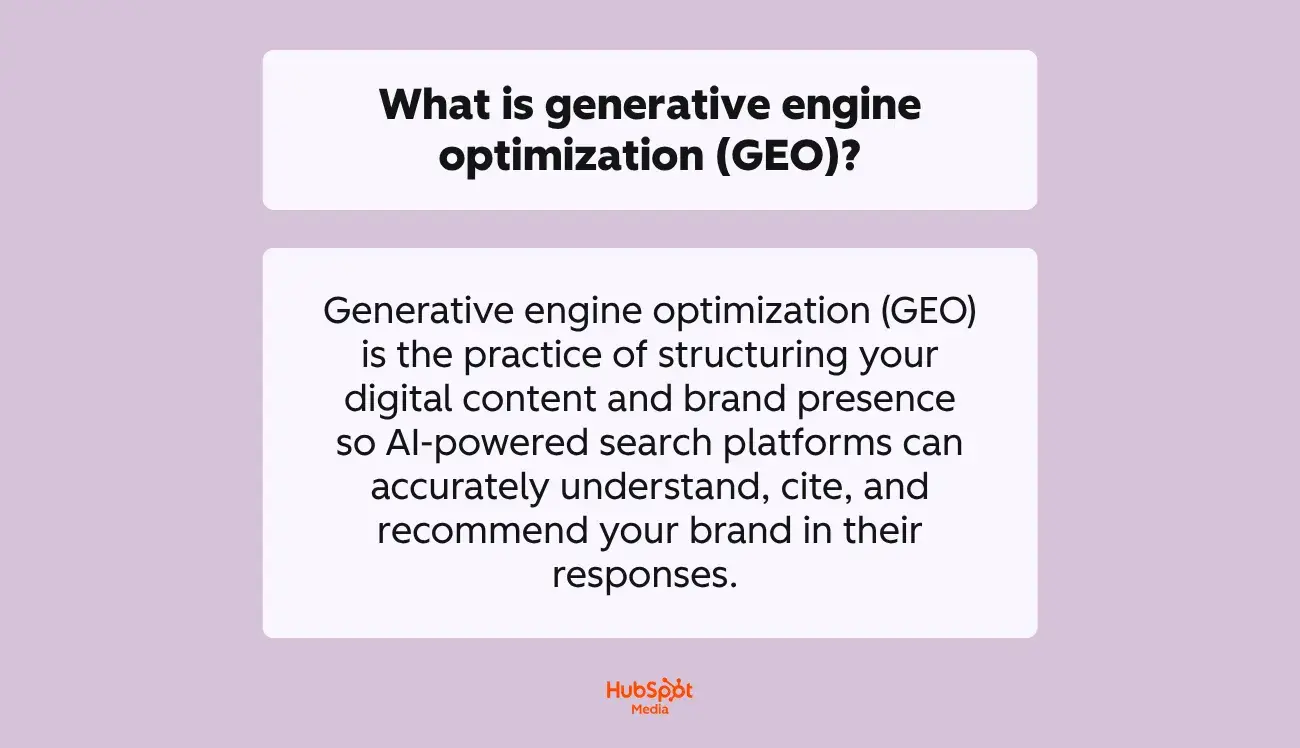
Generative Engine Optimization (GEO) is the strategic practice of structuring digital content and brand presence to ensure that AI platforms—such as ChatGPT, Google AI Overviews, Perplexity, and Gemini—can accurately comprehend, reference, and recommend a brand in their generated responses. This discipline marks a significant departure from traditional SEO, which historically focused on link-based rankings, by prioritizing structured data and machine-friendly content. Importantly, GEO does not supersede existing SEO investments; rather, it amplifies them, building on foundational search strategies to secure visibility in a new dimension of discovery.
Despite the clear trajectory of this digital evolution, many marketing teams remain hesitant. Common barriers include uncertainty regarding the measurement of AI visibility, challenges in implementation, and valid concerns about risks such as AI hallucination. This article aims to demystify GEO by outlining its tangible, measurable benefits for marketers and providing practical steps for immediate implementation, grounded in data and expert analysis.
The Evolving Digital Landscape: Why GEO’s ROI is Higher Than Ever
The rise of AI-powered answer engines has irrevocably altered the digital marketing ecosystem. Generative engine optimization is no longer a futuristic concept but a present-day imperative for brands seeking to future-proof their organic visibility. While traditional SEO remains foundational, GEO introduces a layer of optimization that directly addresses how AI models process and present information.
Data from HubSpot’s 2026 State of Marketing Report underscores this shift, revealing that nearly half of marketers (49%) report a decrease in web traffic from traditional search due to the proliferation of AI answers. However, a significant majority (58%) also observe that AI referral traffic exhibits a much higher intent compared to conventional search engine traffic. This indicates a qualitative improvement in leads generated through AI channels, presenting a compelling case for investment in GEO.
The distinction between GEO and SEO lies in their core mechanisms. Traditional SEO primarily focuses on ranking web pages through factors like keywords, backlinks, and content relevance, aiming to secure top positions in a list of search results. GEO, conversely, emphasizes making content intelligible and trustworthy for AI models, ensuring that a brand is not just found, but cited and recommended within a synthesized AI response. This requires a focus on structured data, entity disambiguation, and clear, factual content that AI can easily extract and integrate. While distinct, these two strategies are complementary; a strong SEO foundation often provides the high-quality, relevant content that GEO then optimizes for AI consumption.
Key Benefits of Generative Engine Optimization for Marketers
The advantages of adopting a deliberate GEO strategy are multifaceted, extending beyond mere visibility to impact lead quality, brand authority, and overall marketing ROI.
-
Unparalleled Visibility in AI-Generated Answers: The most immediate and impactful benefit of GEO is gaining direct presence within the AI-generated responses themselves. When a prospective customer queries an AI platform with specific intent—for instance, “What’s the best CRM for remote teams?”—a brand that appears in that answer reaches the buyer at their moment of highest consideration. This bypasses the traditional competition for clicks within a list of ten blue links, placing the brand directly into the buyer’s curated solution. HubSpot’s 2026 State of Marketing Report indicates that nearly 24% of marketers are actively updating their SEO strategy for generative AI, acknowledging this critical shift. Furthermore, research highlighted by Semrush demonstrates that marketers already investing in GEO are capturing higher-intent traffic that converts at 4.4 times the rate of traditional organic search, proving GEO as a measurable revenue advantage available now.
-
Higher-Quality Leads with Stronger Purchase Intent: AI-referred traffic is not merely about volume; it consistently delivers superior outcomes in terms of lead quality. Visitors arriving from answer engines have often already absorbed context about a product or service, compared alternatives, and formed an initial opinion based on the AI’s synthesis. This pre-qualification translates into leads with significantly stronger purchase intent, streamlining the sales funnel. For marketing strategists focused on pipeline targets, this conversion advantage signifies that GEO not only expands the top of the funnel but also compresses the journey from initial discovery to a decisive action.
-
Enhanced Brand Inclusion in AI Summaries and Recommendations: Generative engines do not present ranked lists of websites; instead, they synthesize information from multiple sources to provide a curated, conversational answer. When a brand is explicitly included in this synthesis—cited alongside or even ahead of competitors—it confers a powerful signal of authority and trust to the buyer. However, this inclusion is not automatic. Brands earning these coveted mentions are those proactively supplying high-quality, structured data, clear entity disambiguation, and consistent, verifiable information across their digital footprint.
-
Compounding Authority Across AI Platforms: A significant, yet often underappreciated, benefit of GEO is the compounding nature of citation authority. Similar to how domain authority accrues in traditional SEO, consistent citations in one AI platform (e.g., ChatGPT) strengthen a brand’s presence and credibility across others (e.g., Perplexity, Gemini, Google AI Overviews). This occurs because AI models draw from overlapping training data and real-time retrieval sources. By building robust entity authority through consistent schema markup, authoritative content, and widespread third-party mentions, brands can create a self-reinforcing “citation flywheel” across all major AI platforms.
-
Measurable AI Visibility with New KPIs: A common concern for marketing teams exploring GEO is the perceived difficulty in measurement. Traditional metrics like rankings, impressions, and click-through rates (CTR) do not adequately capture how AI engines represent a brand. Fortunately, dedicated measurement frameworks have emerged. Key Performance Indicators (KPIs) in GEO now include citation frequency, sentiment analysis of brand mentions, entity confidence scores, and share of voice within AI-generated responses. Tools like HubSpot’s AEO Grader offer a free baseline assessment across five dimensions, enabling brands to benchmark their AI visibility against competitors and track improvements over time.
-
Stronger Content ROI from Existing Assets: GEO does not necessitate a complete overhaul of content strategy or the creation of entirely new assets. In fact, the content that performs best in AI citations is often the same content that already ranks well in traditional search. This means one of the highest-ROI GEO moves is to optimize existing, high-performing content. By restructuring existing blog posts, guides, and product pages with direct-answer formats, clear headings, factual claims, and schema markup, brands can unlock significant AI visibility from assets they have already invested in.
Navigating the Common Challenges in Generative Engine Optimization
While the benefits of GEO are substantial, realizing them requires navigating a unique set of challenges fundamentally different from those encountered in traditional SEO. Many obstacles relate less to content quality and more to data infrastructure, technical implementation, and monitoring.

-
Data Fragmentation Across Platforms and Tools: GEO demands that brand information be consistent, accurate, and machine-readable across every digital surface AI models might pull from—websites, social media profiles, knowledge panels, and third-party review sites. Most marketing teams manage these surfaces with disparate tools, leading to fragmented entity signals that can confuse AI engines. Conflicting information across platforms (e.g., LinkedIn vs. Google Business Profile vs. website schema) reduces “entity confidence,” the AI model’s internal certainty about a brand’s identity and offerings, increasing the risk of misrepresentation or invisibility. The fix involves consolidating data management, implementing a unified schema strategy, and establishing a single source of truth for core brand information.
-
Entity Clarity and Disambiguation: AI engines “resolve” entities rather than merely matching keywords. Brands with generic names or those sharing names with other companies, or those lacking distinct entity signals, face challenges. Ambiguous entities can lead AI models to misattribute information, omit the brand entirely, or confuse it with competitors. Unlike traditional SEO, where domain authority resolves disambiguation, GEO relies on robust entity resolution. This requires creating a unique entity profile through consistent naming conventions, comprehensive schema markup, and establishing strong third-party mentions that clearly define the brand’s unique identity.
-
AI Hallucination and Brand Misrepresentation: Large Language Models (LLMs) predict statistically likely word sequences, not retrieve facts. When encountering gaps or ambiguous signals, they can generate confident-sounding but entirely fabricated responses. For brands, this poses a risk of AI generating false claims about products, attributing incorrect features, or even fabricating negative information. While complete elimination of hallucinations is impossible, brands can substantially reduce their frequency and impact by providing unambiguous, highly structured, and verifiable data, proactively monitoring AI mentions, and implementing feedback mechanisms.
-
Schema Markup Complexity and Implementation Barriers: Structured data, particularly schema markup, acts as the essential translation layer between a brand’s content and AI systems. Despite its critical importance, many marketing teams find schema implementation technically daunting. Common errors include mismatched schema types, stale data, or missing entity connections, all of which hinder AI’s ability to reliably understand and cite content. Overcoming this requires prioritizing core schema types (Organization, Product, FAQPage), using JSON-LD for clean implementation, and validating markup with tools like Google’s Rich Results Test.
-
Measurement Gaps and KPI Uncertainty: As noted, traditional SEO metrics are insufficient for GEO. The absence of established, universally accepted KPIs for AI visibility creates uncertainty for marketers attempting to justify investment. A brand can rank #1 in Google for a keyword but be entirely absent from the AI-generated answer appearing above the listing. The solution lies in adopting new measurement frameworks focusing on citation frequency, sentiment, entity confidence, and tracking AI referral traffic through custom GA4 channel groupings.
-
Privacy, Compliance, and Data Governance: GEO introduces new privacy and compliance considerations. AI models train on vast datasets, meaning publicly available brand information, employee details, and customer testimonials may be ingested and surfaced in AI responses in unanticipated ways. This raises questions about data accuracy obligations, potential liability for AI-generated claims, and compliance with evolving AI transparency regulations, especially for businesses in regulated industries. A proactive approach involves clear data governance policies, regular audits of public data, and careful consideration of what information is exposed to AI models.
A Strategic Roadmap for Immediate GEO Implementation
Achieving the benefits of generative engine optimization does not require a lengthy roadmap or an entirely new technology stack. The most effective GEO strategies build directly upon existing SEO foundations. The fastest path to AI visibility leverages content and infrastructure already invested in by the marketing team.
Step 1: Establish Your AI Visibility Baseline
Before any optimization, understanding current AI representation is crucial. Most teams lack insight into how (or if) AI engines mention their brand. Start by using tools like HubSpot’s AEO Grader to score brand presence across five dimensions (sentiment, presence quality, brand recognition, share of voice, market position). Supplement this with manual testing: query ChatGPT, Perplexity, and Gemini with 10-15 prompts relevant to your target audience. Document brand appearances, characterizations, and competitor citations to identify urgent content gaps. For a comprehensive overview, explore resources on answer engine optimization tools that systematically track AI visibility.
Step 2: Restructure Your Highest-Value Content for AI Extraction
AI engines process content differently than humans, scanning for direct, extractable answers, typically within the first 40-60 words of a section. They prioritize content structured with question-based headings, factual claims, and cited statistics. To achieve rapid, measurable impact, identify your five highest-traffic blog posts or landing pages and apply these changes: start sections with direct, concise answers; use Q&A formats; incorporate specific statistics; and add temporal markers where relevant. Resources on the best content types for AI search can provide further guidance.
Step 3: Implement Core Schema Markup on Priority Pages
Structured data and schema markup are critical for AI understanding, yet many sites either lack it or implement it incorrectly. Focus initially on the three schema types offering the most GEO value: Organization schema (for brand identity), Product schema (for detailed product attributes), and FAQPage schema (for direct Q&A answers). Implement using JSON-LD in the document head, which is Google’s recommended format for AI parsing. Validate every page using Google’s Rich Results Test before publishing to ensure correctness.
Step 4: Set Up AI Referral Traffic Tracking in Google Analytics 4 (GA4)
Measurement is a persistent challenge, but the fix is straightforward. Create custom channel groupings in GA4 to segment traffic from AI referral sources (e.g., Perplexity, ChatGPT). This enables isolation of AI-referred sessions, separate measurement of conversion rates from traditional organic traffic, and the creation of a reporting infrastructure connecting GEO efforts to pipeline outcomes. Track two parallel metric streams: AI visibility (e.g., citation frequency) and AI referral performance (e.g., conversion rates). Both are essential for a holistic view, as confirmed by HubSpot’s 2026 State of Marketing Report, which still ranks SEO as a top channel for ROI.
Step 5: Build Entity Authority Beyond Your Own Domain
AI platforms often trust third-party sources more than brand-owned content. Therefore, a brand’s website alone, no matter how optimized, will struggle to earn citations without independent validation. Prioritize building external authority signals: ensure consistent brand information on Wikipedia, Crunchbase, G2, and other authoritative industry directories. Leverage press releases and industry mentions to create a consistent, verifiable entity profile that AI agents can confidently process. Resources on AI agent types provide context on how these retrieval mechanisms operate.
Step 6: Integrate GEO into Your Existing Content Workflow
The perception that GEO requires a parallel workstream is a significant barrier to adoption. In reality, GEO integrates seamlessly into existing content production processes. Embed GEO practices by adding a “GEO brief” section to content outlines, including schema recommendations in content templates, integrating AI visibility checks into the content review process, and training content creators on AI-friendly writing techniques. Solutions like HubSpot’s Marketing Hub and Content Hub, particularly their AEO Product, support this integration by unifying data, content automation, and performance tracking within a single CRM-connected system.
Step 7: Monitor, Iterate, and Scale
GEO is not a one-time project. AI models update frequently, competitors are constantly optimizing, and answer engine optimization trends evolve rapidly. Establish a monthly review cadence: re-run AI visibility checks, analyze AI referral traffic in GA4, audit schema markup for accuracy, and monitor competitor AI citations. The compounding nature of citation authority means consistent effort builds structural advantages that late adopters will struggle to close.
Choosing the Right Tools for Your GEO Stack
Operationalizing GEO doesn’t demand an enterprise budget. Many foundational actions—content restructuring, schema implementation, FAQ creation, manual prompt testing—cost only team time. Budget becomes most valuable for monitoring and automation. Dedicated generative engine optimization tools can automate citation tracking, competitive benchmarking, and content audit recommendations at a scale unachievable manually. Evaluate tools based on specific challenges, such as data fragmentation, measurement gaps, or content optimization needs. Marketers benefit most when GEO is treated as a complement to SEO, leading to increased AI search visibility, improved lead quality, and stronger brand inclusion.
Frequently Asked Questions (FAQ) About Generative Engine Optimization
-
How long does it take to see benefits from GEO?
Initial GEO benefits can appear within 2 to 4 weeks, significantly faster than traditional SEO’s typical 3 to 6-month timeline. AI models update their knowledge bases more frequently, allowing structured improvements to existing content to be picked up quickly. The timeline depends on the optimization target: schema updates can show results in days, while entity authority building takes longer.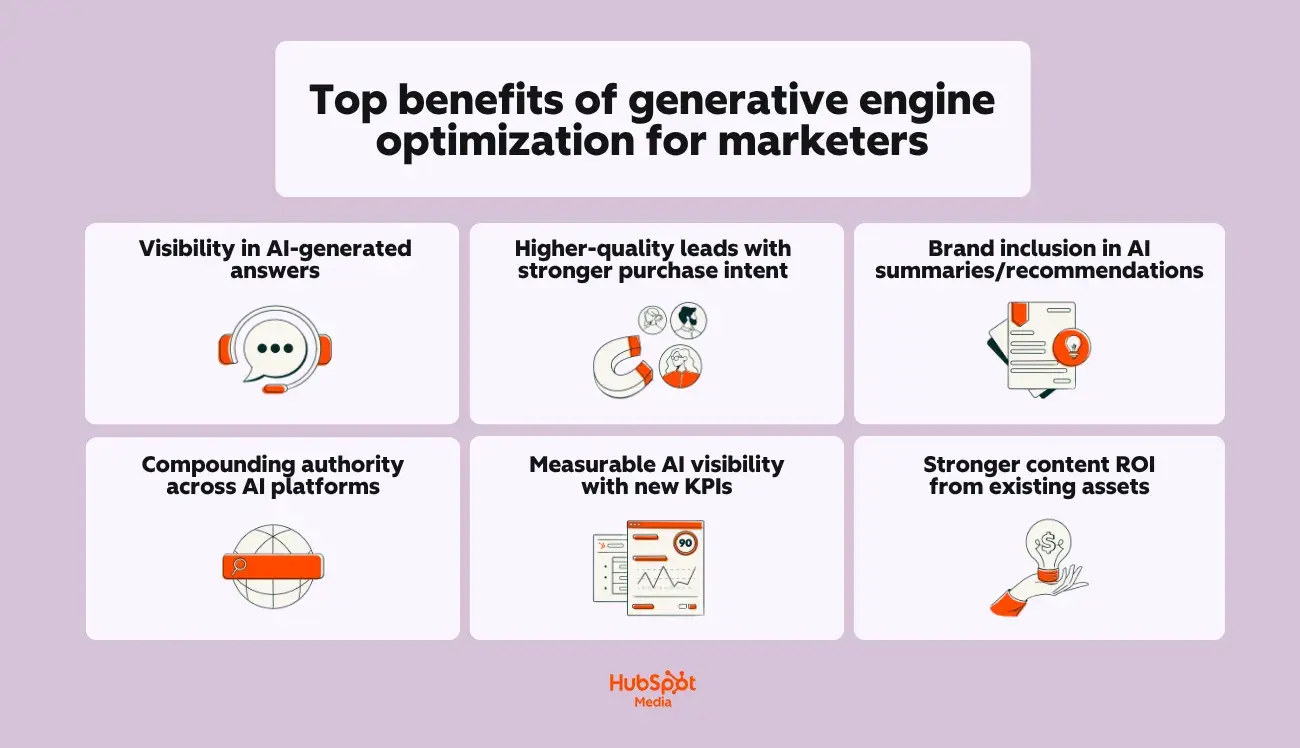
-
Can small teams get value from GEO quickly?
Yes. GEO’s highest-ROI actions prioritize time investment over budget. Even a small team can see results by restructuring existing content and implementing basic schema. A realistic week-one plan for a small team includes running an AEO Grader report, optimizing top-performing content, adding basic schema to core pages, and setting up GA4 tracking for AI referrals. Consistent execution of fundamentals is key, not enterprise tooling. -
How do I reduce the risk of AI hallucinations about my brand?
While eliminating AI hallucinations entirely is impossible, their frequency and impact can be substantially reduced. This involves providing robust and consistent structured data, clearly articulating factual claims on your website, establishing strong external validation (e.g., Wikipedia, trusted reviews), and actively monitoring AI-generated content for misrepresentations to provide feedback where possible. -
Should I update my existing content or create new content for GEO?
Start with existing content, as it’s faster and offers higher ROI. Pages already ranking well in organic search are prime candidates for GEO optimization, as AI engines disproportionately cite content performing well in traditional search. Restructuring these assets (adding direct answers, FAQ schema, specific statistics) unlocks AI visibility from existing investments. Create net-new content to address identified citation gaps, prioritizing formats like comprehensive guides, data-rich reports, and interactive tools. An effective approach is a 70/30 split: 70% on optimizing existing high-performers, 30% on new content for uncovered opportunities. -
What’s the best way to align GEO with sales and service?
GEO delivers maximum business value when integrated with CRM and revenue operations. Align GEO across marketing, sales, and service by training sales teams on how to leverage AI-generated insights in conversations, equipping service teams with AI-optimized knowledge base content, and integrating AI referral data into CRM for lead scoring and segmentation. This ensures every customer-facing team understands how buyers discover and evaluate the brand through AI, fostering a modern, cohesive revenue engine.
GEO: The Present and Future of Content Marketing
Generative engine optimization is not merely the future of search; it is the current reality for brands seeking to remain visible and relevant. The measurable benefits are clear: higher-intent leads, stronger brand inclusion in critical buyer decisions, and a compounding visibility advantage for early movers.
However, the challenges are equally real. Newer measurement frameworks, the technical effort of schema markup, and the inherent risks of AI hallucination and entity ambiguity demand proactive management. Yet, every one of these obstacles is solvable with the right tools and a systematic approach. Brands that are pulling ahead are those that treat these challenges as solvable implementation problems, rather than reasons for delay. They proactively establish their AI visibility baselines, restructure content for machine readability, implement robust schema, build entity authority across platforms, and integrate GEO into their core content workflows.
Ready to assess how AI search engines are representing your brand today? HubSpot’s AEO Grader offers a free, quick assessment across ChatGPT, Perplexity, and Gemini, providing a scored baseline to pinpoint exactly where to focus your initial GEO efforts.