
 rifanmuazin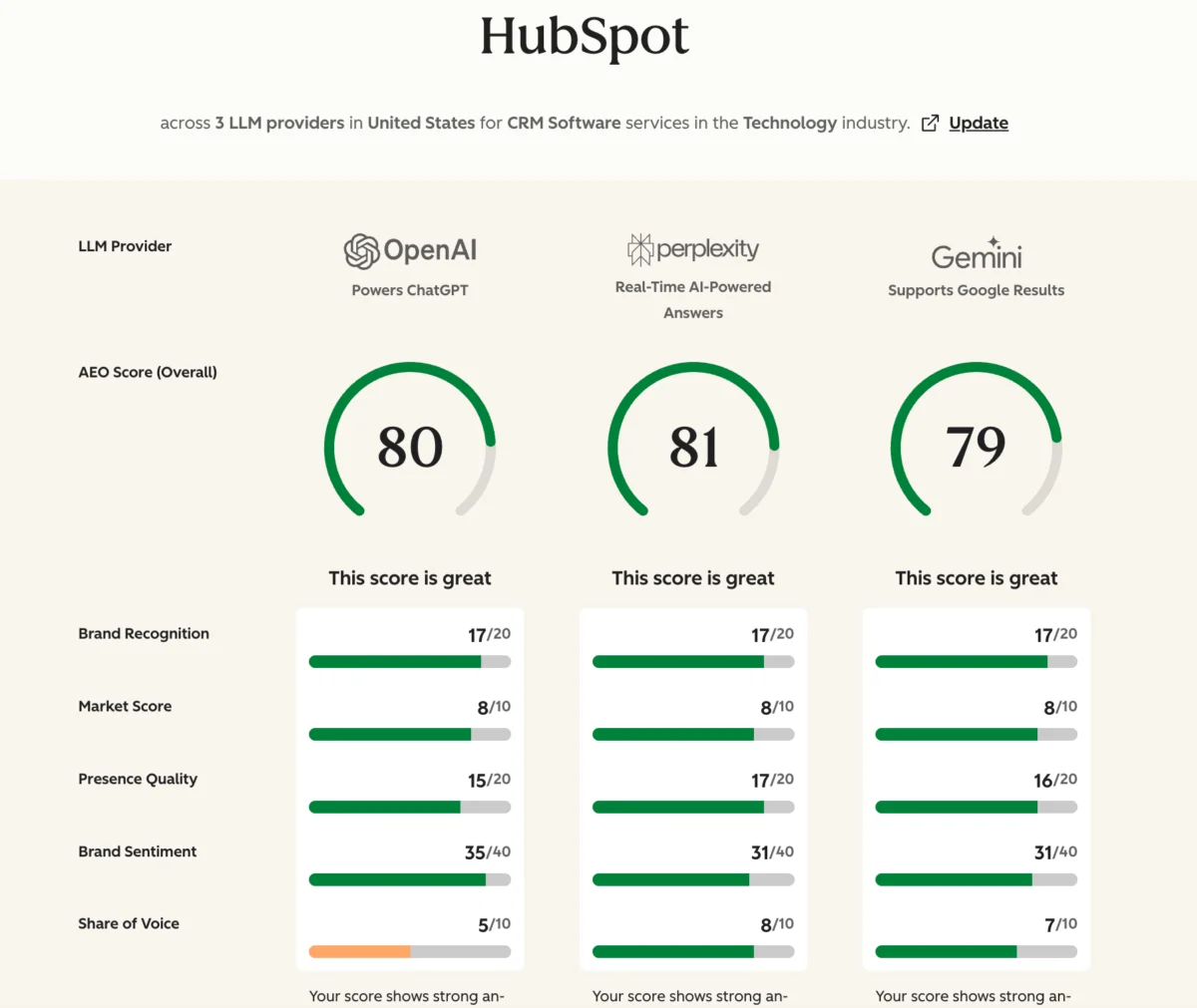
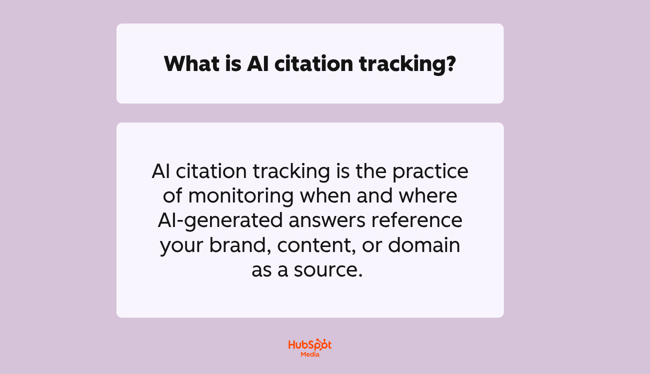
Traditional brand tracking dashboards, social listening tools, and public relations platforms, while valuable, increasingly fail to capture a crucial new dimension of consumer engagement: how a brand appears when a buyer seeks recommendations from generative AI platforms like ChatGPT, Perplexity, or Gemini. This fundamental shift in information consumption necessitates a new approach to brand monitoring, spearheaded by AI citation tracking – a specialized discipline focused on understanding and optimizing a brand’s presence within AI-generated answers.
The Evolving Landscape of Information Discovery
For decades, search engine optimization (SEO) has been the primary battleground for digital visibility. Brands meticulously crafted content to rank on Google’s search engine results pages (SERPs), vying for clicks and organic traffic. Social listening tools then emerged to monitor brand mentions and sentiment across social media platforms, providing insights into public perception. Public relations efforts focused on securing media coverage, aiming for earned mentions in news articles and industry publications. These traditional metrics—brand awareness, mention volume, and media hits—provided a comprehensive, albeit static, snapshot of a brand’s footprint.
However, the advent of generative AI has fundamentally disrupted this established order. The public release of ChatGPT in late 2022 marked a pivotal moment, rapidly accelerating the integration of AI into daily information seeking. Users increasingly turn to AI models not just for factual queries, but for complex recommendations, comparisons, and summaries that bypass traditional search results altogether. Google’s own “AI Overviews,” alongside dedicated answer engines like Perplexity and Microsoft Copilot, signify a widespread industry embrace of this conversational, AI-driven search paradigm.
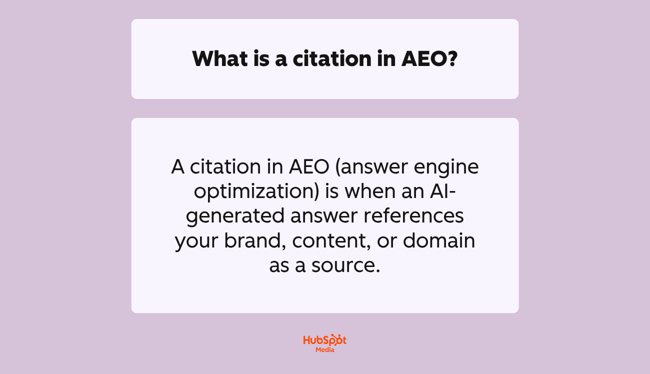
In this new environment, a brand’s ability to be “cited” by an AI becomes paramount. An AI citation occurs when an AI-generated answer references a brand, its content, or its domain as a credible source. It’s more than a mere mention; it’s a direct recommendation, an endorsement from an increasingly trusted digital authority. When a prospective buyer asks, “What’s the best CRM for small businesses?” and the AI responds, “According to HubSpot’s 2026 Marketing Report…” or links directly to a company’s product page, that constitutes a powerful citation. This selection by the AI, from the vast ocean of indexed web content, imbues the cited brand with significant authority and influence, often before the user even considers visiting a website.

Understanding the Nuances of AI Citations
AI citations typically manifest in three forms, each carrying distinct weight and implications for brand visibility:
- Direct Links: Explicit hyperlinks to a brand’s website or specific content pages. These are the most direct forms of attribution and drive traffic.
- Brand Mentions: The explicit naming of a brand or product within the AI’s answer, without a direct hyperlink. This establishes brand recognition and authority.
- Indirect References: The AI incorporates concepts, data, or insights originating from a brand’s content without explicitly naming the brand or linking to it. While harder to track, these still indicate the brand’s influence on the AI’s knowledge base and contribute to its topical authority.
Many traditional monitoring tools are ill-equipped to capture this full spectrum of AI citations. Focusing solely on direct URL citations, for example, leads to a significant underestimation of a brand’s true presence and influence in AI-generated answers. A comprehensive AI citation tracking strategy must account for all three types to accurately gauge visibility and identify areas where a brand holds implicit authority but isn’t receiving explicit credit.
The Strategic Imperative for Marketers
The shift to AI-driven information consumption has profound implications for marketing and brand strategy. AI citations influence buyer behavior in ways that traditional search rankings cannot. When an answer engine cites a brand’s content, it simultaneously:
- Establishes Authority: The AI validates the brand as an expert or a reliable source in its field.
- Builds Trust: Users are more likely to trust information presented as an authoritative source by an AI.
- Reduces Friction: The AI acts as a pre-filter, delivering curated, credible information, potentially shortening the buyer’s research journey.
- Shapes Perception: The narrative presented by the AI about a brand can significantly impact early-stage buyer sentiment and market positioning.
This makes AI citation tracking an urgent priority for marketing leaders, SEO strategists, and public relations teams. Failure to monitor and optimize for AI citations means a brand risks becoming invisible in a rapidly growing segment of the buyer journey, ceding influence to competitors who are actively managing their AI presence.
Differentiating AI Citations from Traditional Metrics
It is crucial to distinguish AI citations from other, more established uses of the term “citation” in marketing and academia.
- Traditional SEO Citations: In local SEO, a citation often refers to a Name, Address, Phone (NAP) listing in an online directory, primarily used for local business visibility.
- Academic Citations: In scholarly work, citations are formal footnotes or bibliographical references acknowledging sources.
- PR Media Mentions: In public relations, a media mention signifies a brand being referenced in a news article or broadcast, typically tracked through media monitoring services.
An AEO citation, in contrast, is a source reference within an AI-generated answer. Its significance lies in the AI’s active selection and recommendation of content, which directly impacts the user’s perception and decision-making process. This fundamental difference necessitates a distinct toolkit and strategy. Traditional PR dashboards and social listening tools, designed for human-generated content and conventional web search, simply cannot provide the granular data needed for effective AI citation tracking. Specialized AEO tools are required to query LLMs directly, analyze responses, and log instances where a brand’s domain, content, or name appears as a source.
Key Stakeholders and Their AI Citation Tracking Needs
The widespread impact of AI on information discovery means that various marketing functions now require AI citation tracking to achieve their objectives:
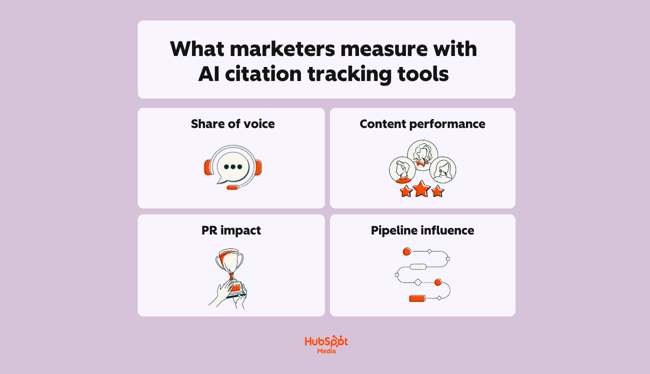
- SEO and Content Strategists: These teams leverage AEO citation tracking to identify which content pieces are most frequently cited by AI, understand the specific prompts that trigger these citations, and pinpoint content gaps where competitors are gaining visibility. This data informs content optimization strategies, helping them create or refine content that is highly “AI-citable,” emphasizing entity-based optimization, clear definitions, and structured data that AI models can easily process and attribute.
- PR and Communications Teams: For PR professionals, AI citation tracking extends their reach into the generative AI space. They monitor how their brand is being portrayed in AI answers, assessing sentiment and identifying potential “AI reputation risks” or opportunities for positive brand association. This allows for proactive messaging, crisis management in the AI realm, and quantifying the impact of their communication efforts on AI-driven narratives.
- Marketing Operations and Leadership: At a strategic level, marketing leadership uses AEO citation data to measure overall brand visibility in the AI era, benchmark against competitors, and justify investments in AI optimization. Integrating citation data with CRM records allows for a holistic view, connecting AI-driven brand exposure to tangible business outcomes like lead generation, pipeline acceleration, and revenue contribution. This closed-loop reporting is crucial for demonstrating ROI in a rapidly evolving channel.
- Thought Leadership Programs: Establishing a brand or individual as a thought leader in the AI era means ensuring their expertise is recognized and cited by AI systems. Tracking AI citations helps these programs assess the effectiveness of their content in shaping AI narratives, identifying key topics where their experts are gaining AI authority, and refining strategies to maximize their influence as go-to sources for AI-generated insights.
Essential Features for Effective AI Citation Tracking Tools
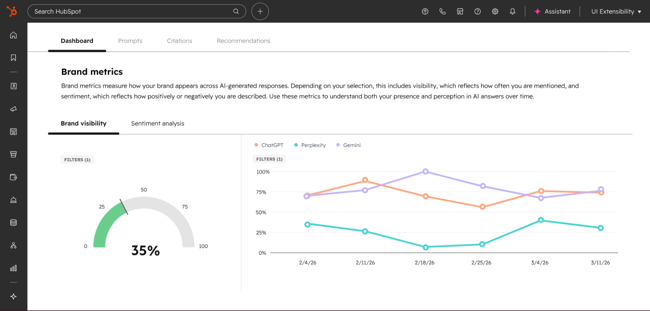
Given the unique demands of AEO, marketers require purpose-built tools with specific capabilities that go beyond traditional monitoring.
-
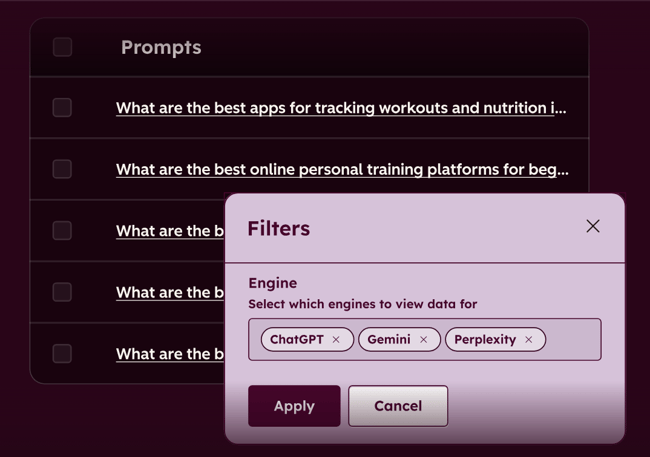
Tracking Across Multiple LLMs: The generative AI landscape is fragmented, with ChatGPT, Perplexity, Gemini, Copilot, Claude, and Grok each operating with different underlying models, training data, and indexing methodologies. A robust AEO tool must query and analyze responses from all major answer engines to provide a comprehensive view of a brand’s presence. A tool that only monitors one LLM offers an incomplete and potentially misleading picture. Vendors should transparently disclose which models they query, how frequently results are refreshed, and the number of prompt variations used to ensure reliability.
-
Comprehensive Brand Mention Capture: Effective tools must track all three types of citations: direct links, explicit brand mentions, and indirect references. Overlooking brand mentions or indirect references means undercounting a brand’s true influence. Granular reporting that distinguishes between these citation types helps marketers understand not just if they are visible, but how their content is being leveraged by AI, revealing patterns in domain authority and content format preference.
-
Share of Voice and Competitive Positioning: Knowing one’s own citation count is valuable, but knowing it in relation to competitors is actionable. The best tools provide robust competitive analysis, showing how often a brand is cited compared to its rivals for key queries. This “AI share of voice” differs from traditional SERP share, as multiple sources can appear in a single AI response. Competitive insights reveal where rivals consistently earn citations, where a brand is losing ground, and where strategic gaps exist for market penetration.
-
Actionable Insights and Recommendations: A dashboard full of raw citation data is only useful if it translates into clear, actionable strategies. Leading AEO tools go beyond mere reporting, offering prioritized recommendations for content creation, optimization, and entity reinforcement. This includes identifying specific content pieces that need restructuring, suggesting new topics based on AI query patterns, and flagging instances where a brand has lost citations. The ultimate goal is to enable marketers to move from insight to execution seamlessly.
Evaluating AI Citation Tracking Tools: A Strategic Framework
Choosing the right AI citation tracking tool is a strategic decision that depends on an organization’s existing tech stack, budget, team capabilities, and primary objectives. A structured evaluation framework is essential to navigate the burgeoning market of AEO tools. The following four dimensions provide a comprehensive scorecard:
- Coverage: This foundational dimension assesses which answer engines and data types a tool monitors. A high score indicates broad LLM coverage (ChatGPT, Perplexity, Gemini, Copilot, Claude, Grok, Google AI Overviews), the ability to track direct links, brand mentions, and indirect references, and customizable prompt variations for nuanced query analysis.
- Integrations: A tool’s utility is significantly enhanced by its ability to integrate with existing marketing workflows. A high score here means seamless connections to CRM systems (e.g., HubSpot), analytics platforms (e.g., GA4), content management systems, and other marketing automation tools. This prevents data silos and enables end-to-end reporting from AI citation to business outcome.
- Cost: Pricing models vary widely and can obscure true costs. A fair evaluation requires normalizing pricing by calculating the “cost per tracked query per engine per month.” This helps compare tools with different prompt limits, refresh rates, and included engine coverage, revealing the actual investment required for the desired level of monitoring.
- Team Fit: The most sophisticated tool is useless if a team cannot effectively utilize it. This dimension assesses the user experience, the clarity of insights, the level of analytical expertise required, and the availability of training and support. A tool that provides clear, prescriptive recommendations (e.g., “optimize this page for entity X”) is often a better fit for smaller teams than one requiring a dedicated data analyst.
Leading Tools in the AI Citation Tracking Landscape
Several platforms are emerging to meet the demands of AI citation tracking, each with distinct strengths:
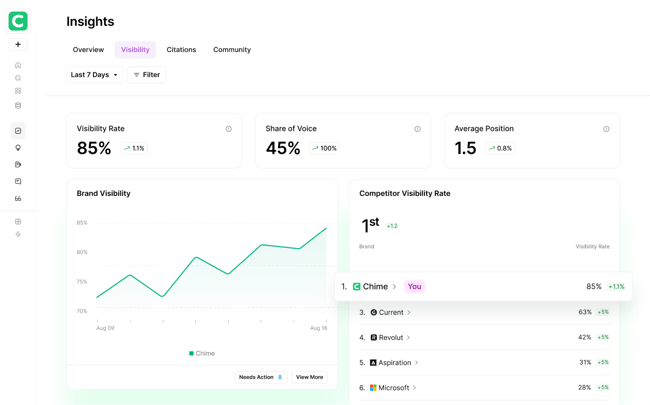
- HubSpot AEO: Positioned as an all-in-one solution, HubSpot AEO combines citation tracking with content insights and optimization workflows. It offers multi-engine tracking (ChatGPT, Perplexity, Gemini), competitive benchmarking, sentiment analysis, and prioritized recommendations. Its strength lies in its ability to move from insight to action within a single platform, especially for teams seeking to integrate AEO into broader marketing strategies.
- HubSpot Marketing Hub Pro and Enterprise: For existing HubSpot users, AEO features are integrated directly into Marketing Hub, extending SEO, content, and analytics tools. This offers a closed-loop reporting system, connecting AI visibility directly to CRM data, leads, and revenue, making it ideal for enterprise teams seeking comprehensive, attributable ROI from their AEO efforts.
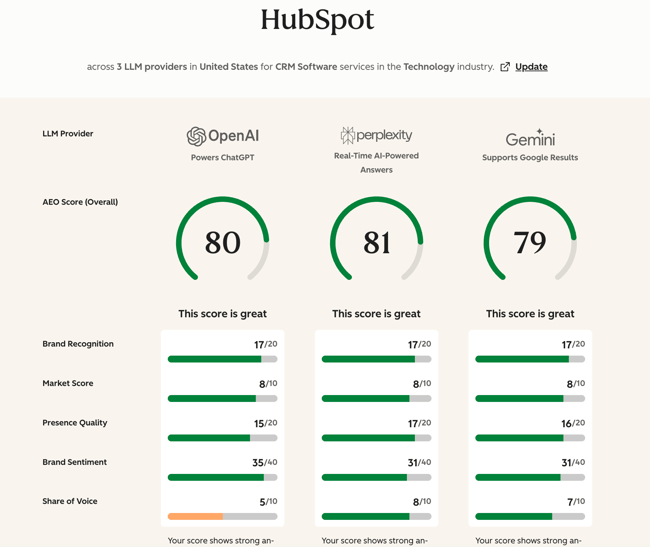
- HubSpot AEO Grader: A free benchmarking tool, the AEO Grader provides an immediate baseline of brand visibility across key answer engines. It scores brands on recognition, sentiment, share of voice, market positioning, and presence quality, serving as an excellent starting point for any marketer exploring their AI presence without initial financial commitment.
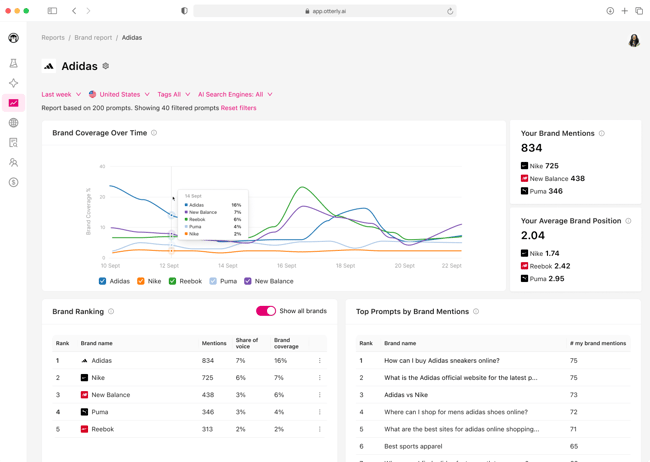
- Otterly.ai: A subscription-based platform focusing on automated monitoring across ChatGPT, Google AI Overviews, Perplexity, and Microsoft Copilot, with Gemini as an add-on. It’s designed for continuous tracking of defined prompts, offering competitive analysis and sentiment tracking, making it suitable for small to mid-size teams and agencies.
- AirOps: This tool differentiates itself as an end-to-end content operations platform, integrating AI visibility tracking within a broader content production system. It tracks presence across multiple LLMs, identifies citation gaps, and provides the infrastructure (Power Agents, Grids, CMS integrations) to create and publish content designed to close those gaps. Best for established content teams needing scalable content workflows.
- Profound: Billing itself as a “read/write” marketing platform for AI, Profound tracks millions of citations daily across a broad spectrum of LLMs (ChatGPT, Perplexity, Google AI Overviews, Gemini, Copilot, Claude, Grok). It emphasizes deep competitive intelligence and compliance-grade security (SOC 2 Type II), catering to enterprise brands and large agencies.
- Peec.ai: A pure-play AEO analytics platform, Peec.ai offers focused visibility tracking across major answer engines without bundling content creation tools. Its clean interface, strong UX, and Looker Studio integration make it attractive for teams that prefer specialized analytics and custom reporting.
- Scrunch AI: This platform provides broad answer engine coverage (seven LLMs) and a key differentiator: GA4 integration. Scrunch AI tracks AI crawler bot traffic to a site, offering traffic attribution from AI platforms, allowing teams to connect citation data to actual site visits and conversions. Ideal for mid-market to enterprise organizations needing comprehensive coverage and ROI attribution.
Navigating Challenges and Best Practices
The dynamic nature of AI presents unique challenges for citation tracking. AI models can “hallucinate” citations, referencing non-existent sources or misattributing claims. Marketers must implement robust verification workflows, including checking URLs, validating claims, and testing multiple prompt variations to ensure citation consistency. Weekly audits for high-priority queries and monthly for broader keyword sets are advisable, given the non-deterministic nature of LLM outputs.
To improve AEO metrics, content teams should adopt best practices that cater to AI understanding. This includes structuring content with clear definitions, using consistent entity names, organizing information with question-based headings, and ensuring topical authority. The goal is to make content highly digestible and attributable for AI systems.
The Indispensable Role of AEO Tracking Tools
The era of AI-generated answers is not a distant future; it is the present reality of how decision-makers consume information. Brands that fail to adapt their measurement and optimization strategies to this new paradigm risk being left behind. AI citation tracking tools are no longer optional but are becoming an indispensable part of a modern marketing stack. They provide the necessary visibility and insights to compete effectively, establish authority, and drive business outcomes in an increasingly AI-driven world. As generative AI continues to evolve, the ability to monitor, understand, and strategically influence AI citations will be a defining characteristic of successful brands.









