rifanmuazin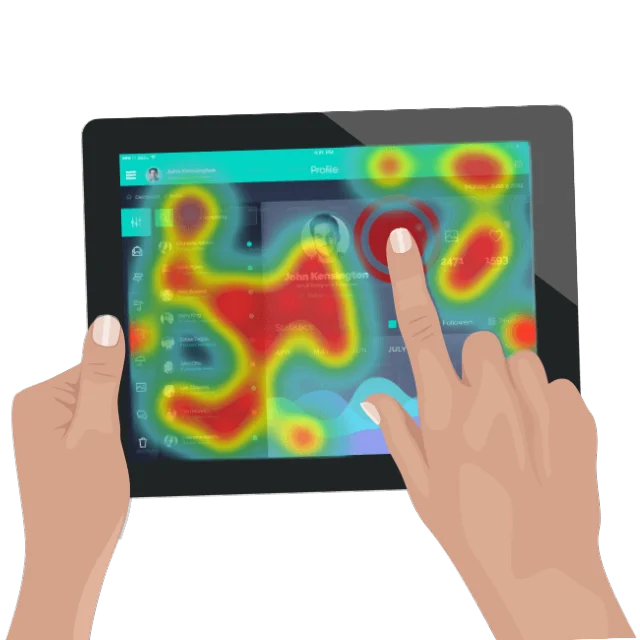
The global mobile application industry has reached a state of unprecedented saturation, with millions of apps vying for consumer attention across the Apple App Store and Google Play Store. In this hyper-competitive landscape, mobile app professionals have long relied on quantitative analytics to measure success and identify failures. However, a growing consensus among industry experts suggests that traditional numerical data—while essential—is fundamentally limited. The modern analytics workflow is undergoing a paradigm shift, moving away from a purely quantitative approach toward a hybrid model that incorporates qualitative analytics to bridge the gap between “what” is happening and “why” it is happening.
The Limitations of Quantitative Data in the App Economy
For over a decade, the standard for app optimization has been built upon quantitative metrics. Key Performance Indicators (KPIs) such as Daily Active Users (DAU), Monthly Active Users (MAU), churn rates, and conversion funnels provide a high-level overview of an app’s health. These metrics are vital for identifying friction points; for instance, a quantitative report can reveal that 40% of users drop off at the registration screen. However, these numbers are silent regarding the underlying cause. Is the form too long? Is a specific button unresponsive on certain devices? Is the “Sign Up” call-to-action confusing?
Industry data highlights the urgency of solving these mysteries. According to recent studies by Gartner and Statista, nearly 25% of mobile apps are abandoned after only one use. Furthermore, the average 30-day retention rate across all industries hovers around 6% to 10%. These figures underscore a critical flaw in traditional workflows: numbers alone cannot diagnose the nuances of user behavior or the subtleties of user experience (UX) friction. To combat these high abandonment rates, developers are increasingly turning to qualitative tools—specifically touch heatmaps and user session recordings—to gain a holistic view of the user journey.
Chronology of the Analytics Evolution
The trajectory of mobile analytics has evolved through three distinct phases:
- The Quantitative Era (2008–2014): Early mobile analytics focused on vanity metrics and basic technical performance. Success was measured by total downloads and crash logs. Developers viewed user behavior as a linear path, and optimization was largely a guessing game based on aggregate numbers.
- The Behavioral Era (2015–2019): Tools began to offer deeper event-based tracking. Developers could see exactly which buttons were pressed and how long a user stayed on a screen. This allowed for better funnel analysis, but still left developers “blind” to the visual reality of the user interface.
- The Qualitative Integration Era (2020–Present): The current era is defined by the democratization of qualitative tools. Real-time session replays and visual interaction maps have become standard components of the tech stack. This phase prioritizes the “human element,” acknowledging that user interaction is often non-linear and influenced by visual cues that quantitative data cannot capture.
Deep Dive into Qualitative Tools: Heatmaps and Recordings
Qualitative analytics introduces a visual layer to data science, primarily through two technological implementations: touch heatmaps and user session recordings.
Touch Heatmaps and the Science of Interaction
Touch heatmaps aggregate every gesture made by users—taps, double-taps, swipes, and pinches—across every screen of the application. By layering this data visually, app professionals can identify hot and cold zones of interaction. This data is instrumental in validating UI design. If a primary “Buy Now” button is in a “cold” zone, it indicates a fundamental layout issue.
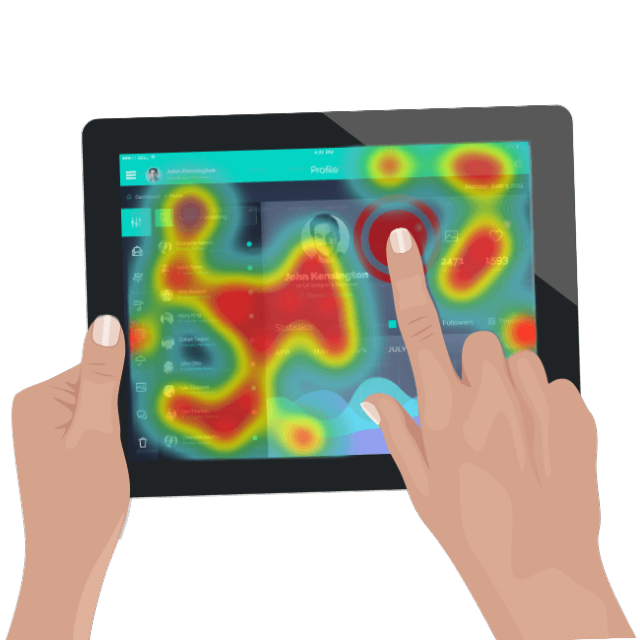
Perhaps more critically, heatmaps reveal “unresponsive gestures.” These occur when a user taps an element they believe to be interactive (such as an icon or a text string) but receives no response from the app. These “dead clicks” are a primary driver of user frustration. Market research indicates that users who encounter frequent unresponsive elements are 50% more likely to uninstall an app within the first 24 hours. Identifying these “false buttons” allows designers to either make the element functional or change its visual style to manage user expectations.
User Session Recordings: The Unbiased Witness
User session recordings provide a frame-by-frame reconstruction of a user’s journey through the app. Unlike traditional user testing, which often takes place in a controlled laboratory environment where participants may alter their behavior (the Hawthorne Effect), session recordings capture “in the wild” interactions. This tool allows developers to witness the exact sequence of events leading up to a crash or a conversion.
For example, a session recording might reveal that users are struggling with a specific input field because the mobile keyboard covers the “Next” button. This is a technical nuance that quantitative data would merely report as a “drop-off” at that step. By seeing the struggle through the user’s eyes, the development team can implement a fix—such as adjusting the screen’s scrollable area—within hours rather than weeks of speculation.
Data-Fueled Optimization and Proactive Troubleshooting
The integration of qualitative data transforms the standard optimization workflow into a more efficient, three-step cycle: Alert, Investigate, and Resolve.
Data-Fueled Optimization
In a traditional setup, quantitative data acts as the alarm system. A sudden spike in cart abandonment is the “alarm.” In a revamped workflow, the professional then turns to qualitative data to “investigate.” By watching recordings of users who abandoned their carts, the team might discover that a promo code field is malfunctioning or that a mandatory registration step is perceived as too intrusive.
Supporting data from the E-commerce industry suggests that streamlining the checkout process based on qualitative insights can increase conversion rates by as much as 35%. This synergy ensures that optimization efforts are based on evidence rather than intuition.
Proactive Troubleshooting
Quantitative analytics is inherently reactive; it requires a statistically significant sample size before a problem becomes visible in the charts. Qualitative analytics, however, allows for proactive troubleshooting. By reviewing session recordings of early adopters or new version releases, developers can spot usability issues before they impact a large percentage of the user base.
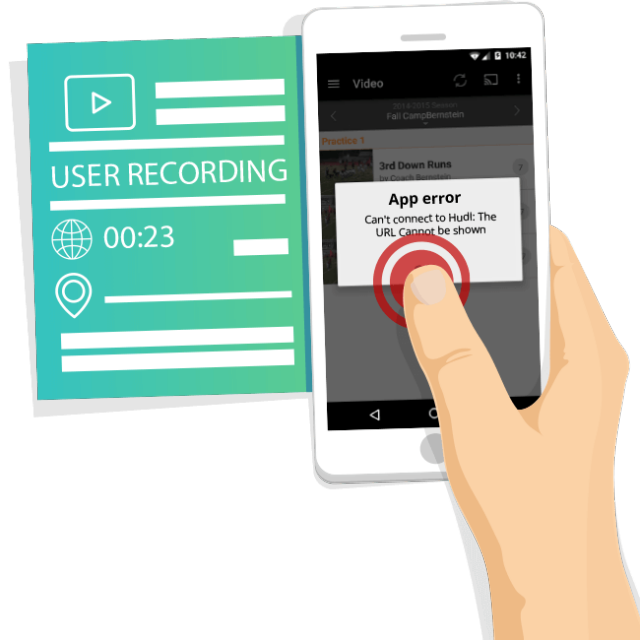
Consider a scenario where a new social media integration is added to an app. A developer might notice in a single session recording that the login pop-up is failing to load correctly on a specific model of an iPad. By catching this “edge case” early through visual observation, the team can deploy a patch before the broader quantitative metrics show a decline in overall retention. This proactivity is essential for maintaining a high rating in app stores, where a single bug-laden update can lead to a flood of negative reviews.
Industry Perspectives and Market Implications
The shift toward qualitative insights has drawn reactions from various stakeholders in the tech community. Product managers argue that qualitative data “humanizes the spreadsheet,” allowing teams to empathize with the user’s frustration. UX designers claim it provides the “smoking gun” needed to justify design changes to stakeholders who are often focused solely on the bottom line.
From a broader market perspective, the rise of qualitative analytics is also intersecting with increasing concerns over data privacy. Modern qualitative tools have had to adapt to regulations such as the General Data Protection Regulation (GDPR) and the California Consumer Privacy Act (CCPA). Leading providers now offer “privacy by design” features, such as automatic masking of sensitive personal information (credit card numbers, passwords, and names) during session recording. This ensures that while developers see the behavior, they do not see the private data, maintaining a balance between optimization and ethical data handling.
Future Outlook: The Role of AI in Qualitative Analysis
As the volume of mobile data continues to grow, the next frontier for qualitative analytics is the integration of Artificial Intelligence (AI) and Machine Learning (ML). The primary challenge of qualitative data has always been scalability; it is impossible for a human team to watch every single session recording.
Emerging AI tools are now capable of “watching” recordings and “reading” heatmaps automatically. These systems can flag “rage clicks” (repeatedly tapping a button in frustration) or “circular navigation” (users moving back and forth between screens because they are lost). By automating the identification of these patterns, AI will allow app professionals to gain the benefits of qualitative insights at the scale of millions of users.
Conclusion
The “flaw” in modern app analytics is not the presence of quantitative data, but the absence of qualitative context. As the mobile landscape becomes increasingly crowded, the ability to understand the user’s “why” is no longer a luxury—it is a competitive necessity. By combining the “what” of numbers with the “why” of visual behavior, mobile app professionals can move beyond reactive fixes toward a strategy of proactive excellence. This holistic approach not only improves the user experience but directly correlates with higher retention, better conversion rates, and ultimately, a more successful product in the global digital marketplace.