rifanmuazin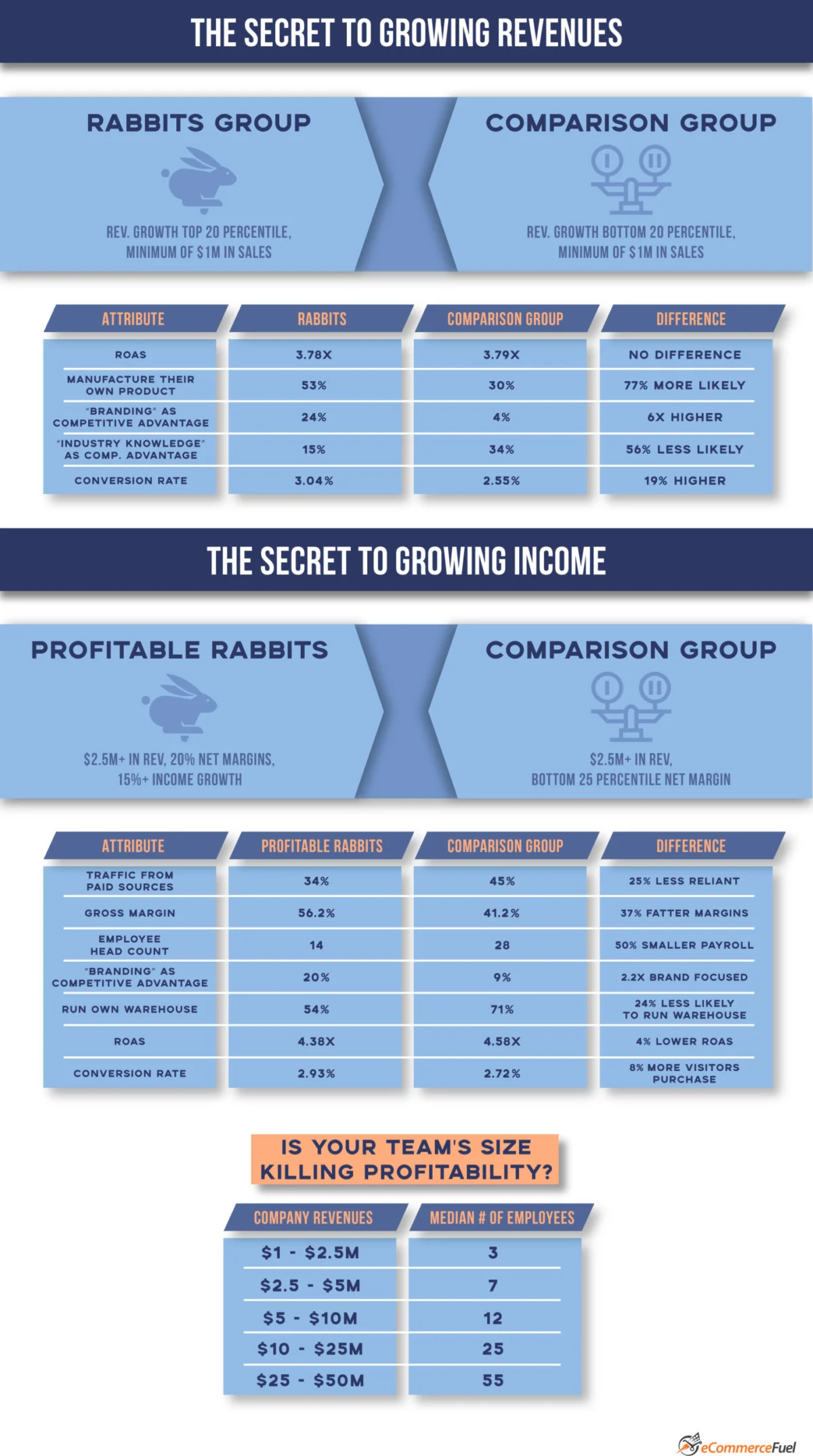
A paradigm shift is quietly redefining success in the e-commerce landscape, moving away from the traditional emphasis on aggressive marketing and scaling headcount towards a more strategic focus on operational leanness and intelligent tax optimization. Contrary to the widely held belief that business growth inherently necessitates a larger workforce and increased marketing spend, a growing body of evidence and anecdotal success stories suggests that prioritizing efficiency and financial acumen can yield superior profitability and reduced operational stress.

One compelling illustration of this principle comes from a small business owner who, faced with stagnant profitability despite solid revenue, made a series of decisive strategic adjustments. This individual, who managed a team of 35 employees, found himself perpetually stressed by the demands of managing a sizable workforce, which he described as a “full-time job on top of your full-time job.” The constant pressure stemmed from a business model where profitability margins were consistently tighter than desired, despite consistent revenue streams.
The turning point for this owner involved a calculated pivot towards a leaner operational structure. Key decisions included transitioning to a remote-first work model, outsourcing warehouse operations to a third-party logistics (3PL) provider, and strategically replacing many full-time employees with a more flexible workforce of freelancers and independent contractors. The outcome was transformative. Today, the business operates with a significantly reduced core team of just one employee and eight contractors. This restructuring has not only led to unprecedented profit margins but has also dramatically lowered the owner’s stress levels. This narrative, while seemingly counterintuitive to conventional business growth narratives, highlights a broader trend observed across numerous successful e-commerce ventures.

Research into the operational efficiencies of profitable e-commerce businesses further corroborates this shift. An analysis of hundreds of businesses revealed that the primary differentiator between highly profitable and struggling enterprises was not marketing prowess, as one might expect. Studies indicated that the return on ad spend (ROAS) between top-performing and bottom-performing stores showed negligible differences. Businesses excelling in profitability were not necessarily outperforming competitors in areas like Facebook advertising or search engine optimization (SEO).
Instead, the critical distinction lay in operational lean-ness. The data indicated that top performers maintained payrolls approximately half the size of their less profitable counterparts. Furthermore, these highly successful businesses were 25% more likely to outsource their warehouse operations and exhibited a 25% reduced reliance on paid traffic. This suggests that operational efficiency and cost management can indeed outweigh even the most sophisticated marketing strategies. The findings imply that a strategic focus on “operational leanness” consistently outperforms “marketing cleverness” in driving sustainable profitability.

The concept of “lean” in business extends far beyond simply reducing headcount. It encompasses a holistic review of all overheads, including physical office spaces that may no longer be necessary in a post-pandemic remote work environment, underutilized warehouse facilities that could be more cost-effectively managed by a 3PL, and the accumulation of various Software as a Service (SaaS) subscriptions that often auto-renew unnoticed. A useful framework for evaluating these expenditures involves identifying what is truly core to a brand’s unique value proposition. For instance, if graphic design is a critical element of a brand’s identity, maintaining an in-house designer might be justifiable. However, if tasks like packing and shipping boxes do not represent a competitive advantage, outsourcing these functions can lead to significant cost savings and improved efficiency. Successful business owners are not merely cutting costs indiscriminately; they are making deliberate decisions about resource allocation, prioritizing investments that directly contribute to their core competencies and brand differentiation.
The ability to navigate these operational adjustments often hinges on a willingness to engage in difficult conversations. The adage that “your success in life is measured by the number of hard conversations you’re willing to have” resonates strongly in the business world. Many entrepreneurs delay these critical discussions until they are compelled by external pressures, such as economic downturns, cash flow crises, or a significant decline in profitability. However, highly profitable business owners tend to address these issues proactively. They engage in rigorous self-assessment, questioning the necessity of certain roles, evaluating the true value of recurring software expenses, and contemplating potential cuts even when not facing immediate financial distress. This intentional approach to resource management, rather than reactive crisis management, is a hallmark of sustainably profitable businesses.

Beyond operational efficiencies, another often-overlooked lever for enhancing profitability lies in strategic tax planning. While many business owners perceive taxes as a fixed cost, a closer examination reveals significant opportunities for optimization. Owners who actively engage in tax-efficient strategies can pay a fraction of what their peers do on similar income levels, not through illicit means, but through deliberate planning and utilizing available legal deductions and credits.
Consider a hypothetical scenario involving two e-commerce store owners, both generating $2.5 million in revenue and $250,000 in profit annually, with identical personal circumstances. Owner A pays approximately $75,000 in taxes each year. Owner B, however, manages to reduce their tax liability to around $21,000, a difference of over $54,000 per year. This substantial disparity is achieved through intentional financial planning:

- Profit Sharing: Owner B contributes $45,000 to retirement accounts through profit-sharing plans, significantly exceeding standard 401(k) contributions. This strategy alone can yield tax savings of approximately $13,500, assuming a 30% marginal tax rate.
- Appreciated Stock Donations: When making charitable contributions, Owner B donates stock that has appreciated in value rather than cash. This strategy allows them to avoid capital gains tax entirely while still receiving a full tax deduction, potentially saving around $3,500.
- Maxed Health Savings Account (HSA): By contributing the maximum family limit of $8,500 to an HSA, Owner B utilizes a triple-tax-advantaged account, leading to tax savings of approximately $2,550.
- Paying Children for Work: Owner B employs their three children for legitimate work within the business, paying each $7,000. These payments are deductible for the business owner, and the children can invest the earnings in Roth IRAs, allowing for tax-free growth for decades. This strategy can result in savings of around $6,300.
- Inventory Donations: A particularly impactful strategy involves donating slow-moving inventory to charities. Owner B donated $60,000 worth of old inventory, taking a deduction at fair market value instead of liquidating it at a loss. This single action can yield tax savings of approximately $18,000, a strategy often underutilized in the e-commerce sector.
The cumulative effect of these deliberate tax strategies creates a significant advantage. The reason such opportunities are often missed is that tax information is typically fragmented across personal returns, business filings, brokerage accounts, and payroll reports, lacking a consolidated view. This fragmentation prevents many business owners from fully comprehending their total tax burden and exploring avenues for reduction.
A simple yet effective test for the efficacy of one’s tax professional is to assess their proactivity. If a Certified Public Accountant (CPA) primarily answers questions and processes filings rather than proactively offering strategic advice, it may indicate a missed opportunity. While having a competent accountant is essential, truly exceptional CPAs bring forward innovative ideas tailored to the client’s specific situation, leading to substantial financial benefits. The $54,000 difference between Owner A and Owner B exemplifies the impact of intentional, proactive tax planning.

In conclusion, while marketing investments like ROAS, customer acquisition cost (CAC), and lifetime value (LTV) rightly receive considerable attention, the e-commerce owners who consistently achieve superior profitability often leverage two less-discussed but equally critical levers: operational lean-ness and strategic tax optimization. By focusing on reducing overhead, outsourcing non-core functions, and meticulously planning tax liabilities, businesses can significantly increase their net profits, often more effectively than through aggressive marketing campaigns alone. The shift towards these fundamental financial and operational disciplines represents a more sustainable and less stressful path to long-term business success.
For those seeking to delve deeper into building leaner, more profitable operations, insights from communities of established seven- and eight-figure business owners offer invaluable guidance. Regular updates and strategic advice are available through dedicated newsletters and forums, providing a continuous stream of actionable intelligence for navigating the evolving e-commerce landscape.