
 rifanmuazin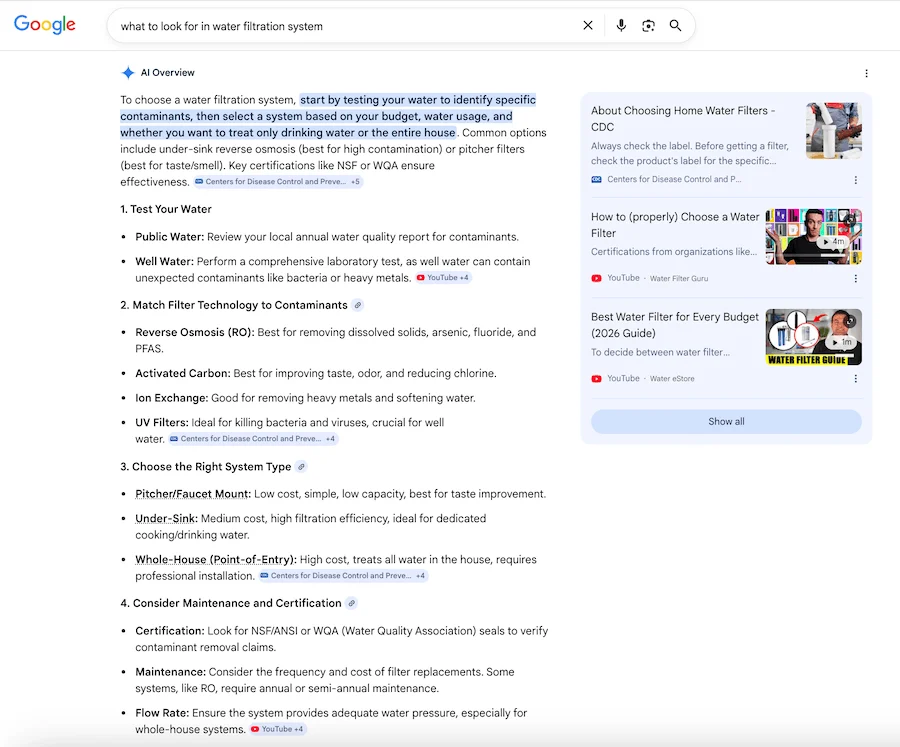
A significant shift is underway in how consumers research and make purchasing decisions. The traditional path, where search engines directed users to websites for initial evaluation, is rapidly being supplanted by artificial intelligence (AI) tools. Buyers are increasingly turning to AI chatbots and assistants, posing complex questions and receiving comprehensive, pre-digested answers. These AI-generated responses not only explain problems and list options but also crucially define who each option is for and outline their respective tradeoffs. This fundamental change means that by the time a potential customer lands on a business’s website, their perception has already been significantly shaped by an AI’s interpretation. The role of the website has transformed from an introductory platform to one that must now react to a pre-existing framework, either by confirming, correcting, or risking the loss of the customer. This article delves into how AI answers are altering the buyer’s journey before the initial click, how these systems are describing businesses, and where strategic messaging breaks down when it is vague or inconsistent. It will also provide actionable strategies for businesses to enhance their positioning within AI responses and improve conversion rates post-click.
The Evolving Landscape of the Buyer’s Journey
For seasoned marketers and business owners, the classic buyer funnel was a familiar sequence: a user performed a search, landed on a web page, and then began evaluating options directly on that page. Messaging, website structure, and persuasive content were the primary tools for guiding this evaluation. However, the contemporary buyer’s journey is markedly different. It often follows a pattern of: ask, summarize, narrow down, decide, and only then, perhaps, click.
In this new paradigm, AI tools are not merely guiding users through funnel stages; they are effectively bypassing many of them. A single query can yield a single, comprehensive answer that explains the problem, identifies potential solutions, and narrows the field of choices. This AI-generated response can now substitute for the time previously spent reading multiple blog articles, comparison pages, and other forms of sales collateral. The image below illustrates a typical AI overview answering a full-funnel question, demonstrating how much information is consolidated into a single output.
[Image placeholder: A screenshot of an AI overview answering a comprehensive question about choosing a water filtration system, showing problem explanation, options, and tradeoffs.]

By the time a consumer decides to click through to a specific website, their objective is no longer to learn about the category or options from scratch. Instead, they are primarily verifying or cross-referencing the information they’ve already received from the AI.
The Practical Implications of AI-Driven Evaluation
The most significant consequence of this shift is not necessarily a reduction in website traffic, but rather the timing at which the evaluation process begins. Consumers now arrive at websites having already:
- Understood the problem they are trying to solve.
- Identified a shortlist of potential solutions or providers.
- Formed initial opinions about the pros and cons of each option.
- Established a set of criteria for making a final decision.
Consequently, a business’s website is now tasked with confirming a decision that has largely already been made, rather than actively shaping it from the outset.
The Erosion of Nuance in AI Summaries
A critical casualty in this AI-driven process is nuance. If a business’s unique selling proposition or differentiation requires in-depth explanation or context, it often fails to survive the summarization process inherent in AI responses. AI systems prioritize information that can be quickly and confidently processed and presented. This tendency can lead to many businesses sounding remarkably similar in AI-generated summaries, even when they possess distinct qualities in reality.
Real-World Impact: The HVAC Industry Example
The impact of this phenomenon is vividly illustrated within the regional HVAC (Heating, Ventilation, and Air Conditioning) industry. Consider Morris-Jenkins, a family-owned HVAC company serving North and South Carolina. Their website consistently emphasizes their specialization in residential heating and cooling, rapid response times, and transparent pricing. They also clearly delineate their HVAC services from plumbing and electrical work.
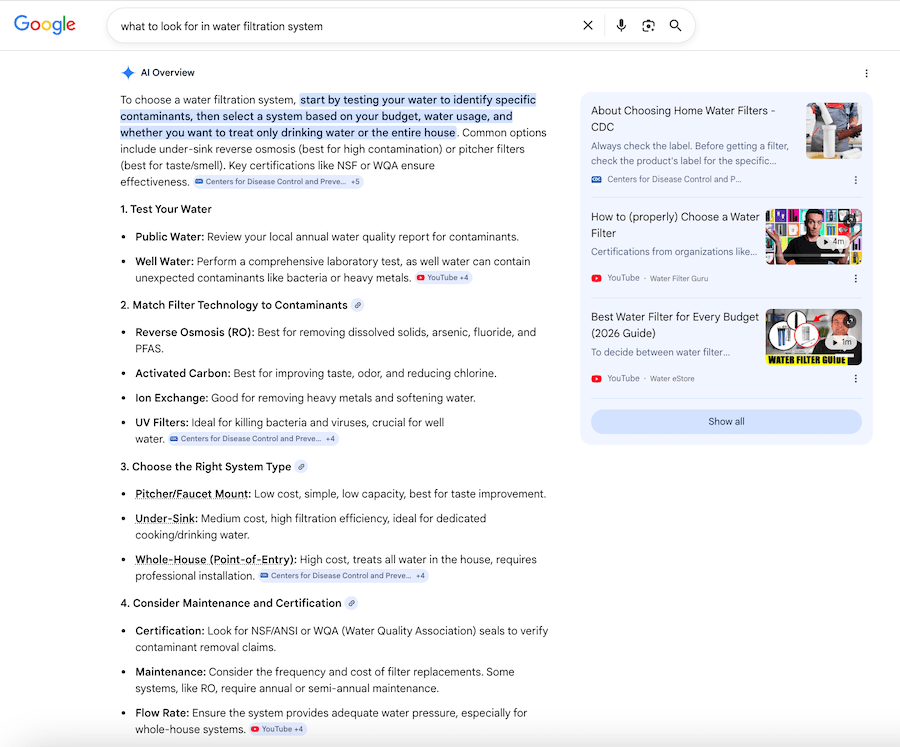
[Image placeholder: A screenshot of the Morris-Jenkins homepage highlighting their services and focus.]
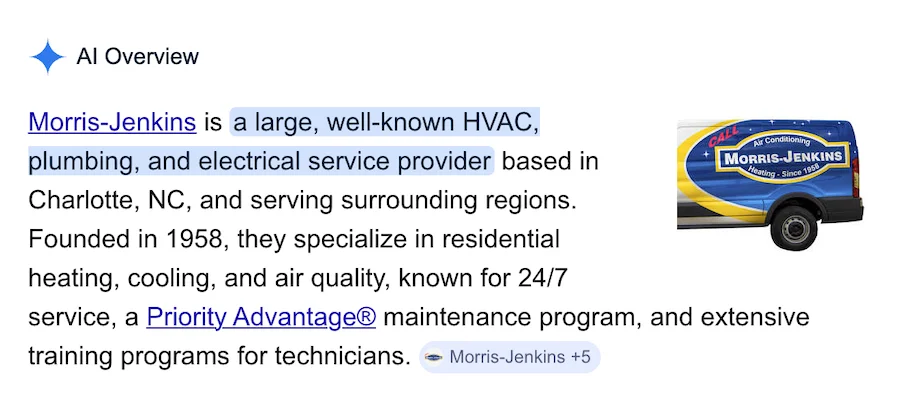
When AI tools describe Morris-Jenkins, they typically label it a "residential HVAC specialist," a description that remains consistent across various AI outputs.
[Image placeholder: A screenshot of an AI overview describing Morris-Jenkins as a residential HVAC specialist.]
In contrast, smaller regional HVAC businesses that employ more generic website copy often fare less well in AI summaries. These businesses might use broad terms like "home services" or simply list a wide array of offerings without clear prioritization. Consequently, AI might present them merely as names on a list, or in some cases, mischaracterize them as general contractors or companies offering bundled home services. This is not a reflection of the quality of their services but rather a consequence of their websites failing to clearly articulate their specific areas of expertise.
How AI Fills the Informational Gaps
When a business’s website lacks clear, concise statements about its core competencies, AI tools are forced to fill the informational void. They scan available data, and if distinct signals are absent, they may default to more general classifications. This can lead to a business being perceived as a generalist, even if a significant portion of its revenue or customer base is concentrated in a specific niche.
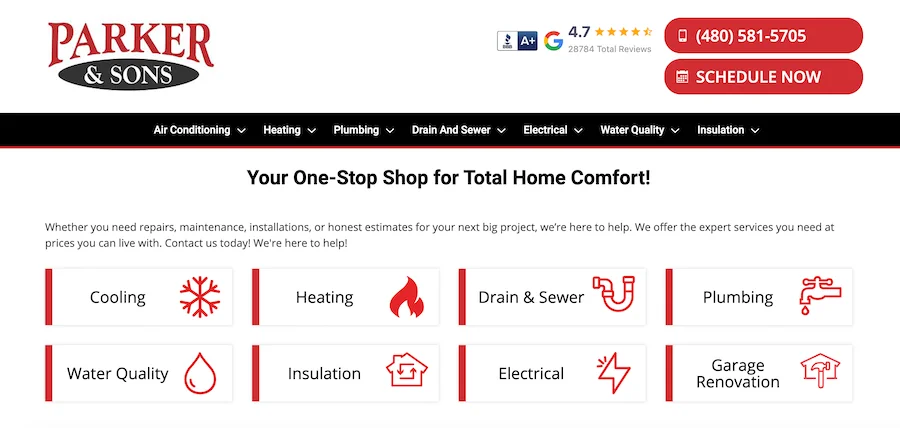
Many small and medium-sized businesses (SMBs) have begun to address this by implementing straightforward changes to their online presence. For instance, Parker & Sons in Arizona has taken steps to clearly differentiate between HVAC installation and repair services, highlight their focus on energy-efficient systems, and explicitly state which services they do not prioritize. Their website employs plain language and avoids making broad, unspecific claims.
[Image placeholder: A screenshot of the Parker & Sons website showing how they break down their services.]
As a result of these efforts, AI summaries tend to describe Parker & Sons as a specialist in residential HVAC and energy-efficient systems, rather than just another name in a crowded field.
The Funnel Reinforcement Effect
Once an AI system frames a business as a "specialist" or merely "another option," this perception tends to persist. Buyers who click through to a website with these pre-formed assumptions are already in a narrower frame of mind. They may arrive with expectations that align with the AI’s description, making them more receptive to confirmation of that specific niche. The AI has, in essence, pre-qualified or pre-disqualified options before the user even reaches the business’s digital doorstep. This means the narrowing process has already occurred, leaving the website to either reinforce that specific perception or risk alienating a buyer who was steered in a particular direction.
What AI Looks For When Shaping Buyer Perception
AI tools are not swayed by clever marketing copy or sophisticated rhetoric. Instead, they actively seek out early decision-making signals that can be reliably reused without ambiguity. When a user queries an AI about a business, the system scans for specific, easily identifiable data points that can be stated with a high degree of confidence. These signals are instrumental in determining how the business is subsequently described to the potential buyer.
Core Signals AI Extracts
Across various SMB categories, several key signals consistently emerge as influential in AI summarization:
- Clear Specialization: Explicit statements about what the business does and for whom. For example, "We provide [service] for [target audience]."
- Core Services: A well-defined list of primary offerings, such as "installation," "repair," "maintenance," or specific product categories.
- Geographic Focus: A clear indication of the service area, especially important for local businesses.
- Unique Selling Proposition (USP): Any distinctive features, such as "fastest response time," "energy-efficient solutions," or "family-owned and operated for three generations."
- Key Differentiators: Elements that set the business apart, like "eco-friendly practices" or "24/7 emergency service."
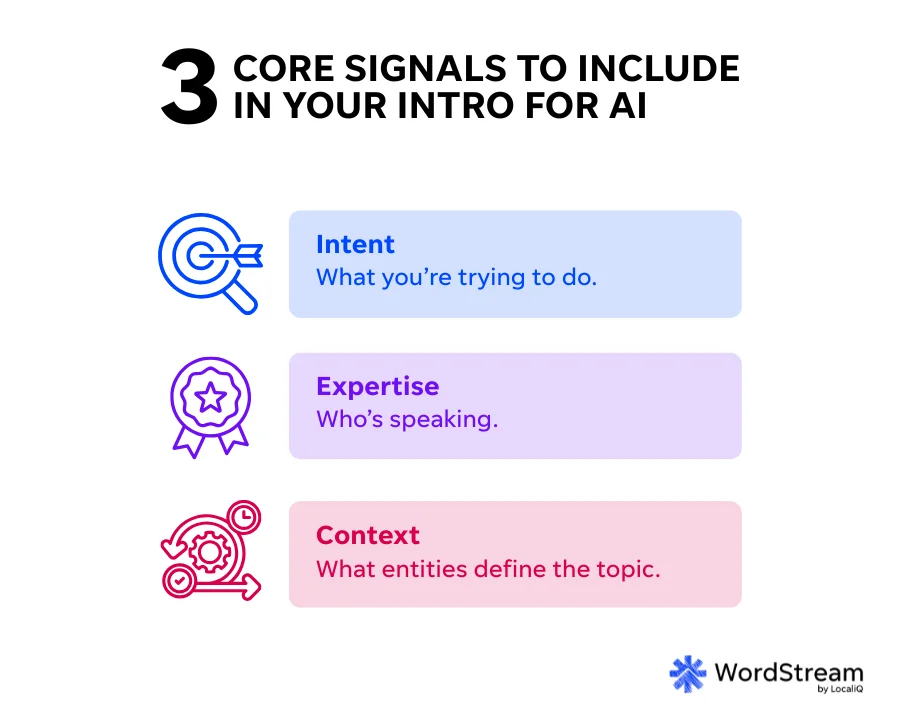
These crucial signals are most effectively captured from the initial 200 words of key pages, including homepages, service pages, and FAQ sections. These introductory sections are often the most critical for AI to anchor its understanding.
[Image placeholder: A graphic illustrating the concept of core signals within content intros for AI visibility.]
If these initial sections are vague or lack specificity, AI has no solid foundation upon which to build its summary. This ambiguity often leads to a blending of information, resulting in generalized descriptions.
The Paramountcy of Consistency Over Persuasion
AI algorithms prioritize low ambiguity. If a business’s homepage conveys one message, its service pages suggest another, and customer reviews imply a third, AI does not attempt to discern the "best" or most persuasive version. Instead, it averages these conflicting signals, often producing a safe but ultimately unhelpful description that lacks clarity.
Real-World Impact: The HVAC Company Revisited
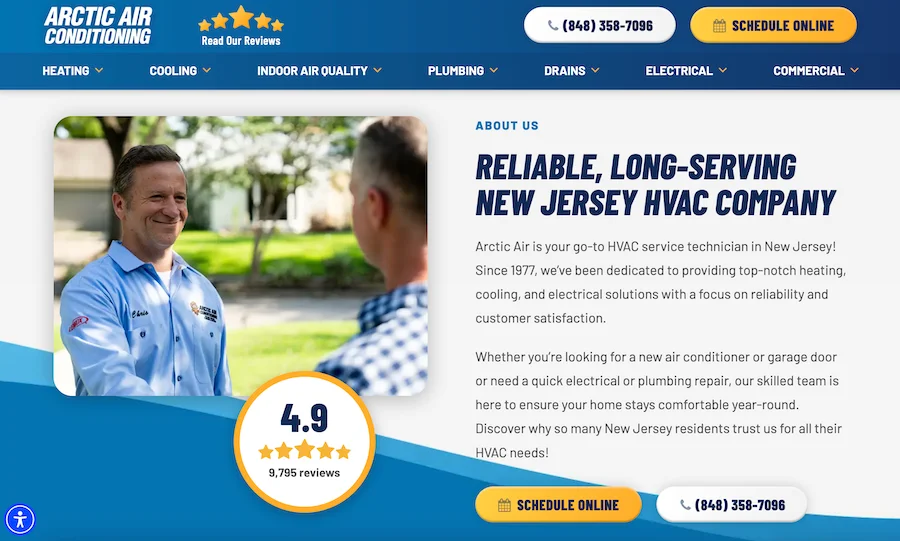
Consider Arctic Air Conditioning, a regional HVAC company. Their website clearly and repeatedly states their focus on residential air conditioning, electrical, and plumbing repair services within New Jersey. This specialization is prominently featured on their homepage, service pages, and Google Business Profile.
[Image placeholder: A screenshot of the Arctic Air Conditioning homepage.]
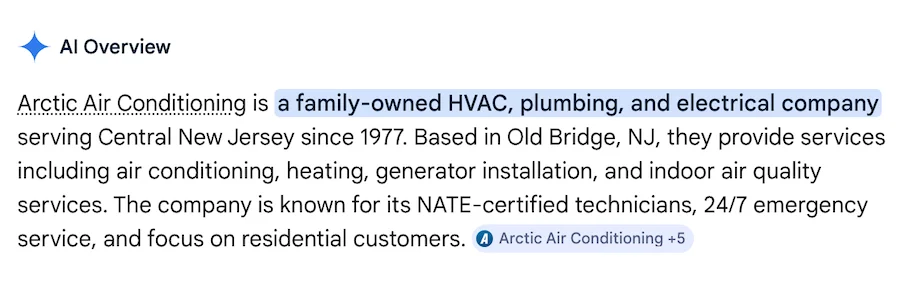
Consequently, AI tools consistently describe Arctic Air Conditioning with a stable and accurate portrayal of their services.
[Image placeholder: A screenshot of an AI overview describing Arctic Air Conditioning.]
Contrast this with many smaller HVAC businesses whose websites might offer a more diffuse message. These sites might list an extensive range of services without clear prioritization, use identical copy across various location pages, or feature customer reviews that mention a wide, sometimes unrelated, mix of services. When AI draws from such fragmented information, it tends to blend these signals. The business might then be described simply as "an HVAC contractor" with no defined specialization, even if a substantial portion of its revenue originates from a specific service, such as AC installations or particular types of system maintenance.
AI’s Approach to Filling Information Gaps
When a business’s website fails to explicitly state its focus, AI infers that the business offers a broad range of services. If both residential and commercial work are mentioned equally, AI treats them as equivalent priorities. Without a clear signal indicating a superior capability or focus, AI often removes differentiation altogether.
Several HVAC SMBs have successfully navigated this challenge through simple but effective adjustments. By explicitly stating their primary focus, such as "specializing in residential AC repair and installation" or "providing emergency plumbing services for homeowners," they provide AI with clear, actionable signals. Once these signals become consistent across their online presence, AI summaries begin to reflect this specialization, moving away from generic descriptions towards more targeted portrayals.
Sources of Buyer Signals for AI
AI systems do not rely on a single piece of information. Instead, they seek corroboration and repetition across multiple sources to build a reliable understanding of a business.
Primary Inputs for AI Reliance
These sources carry the most weight in shaping AI’s perception:
- Google Business Profile (GBP): This is often the first and most crucial data point. The business name, category, services listed, and summary are heavily weighted.
- Website Content: Particularly the homepage, main service pages, and "About Us" sections. AI prioritizes clear, concise language that directly addresses what the business does.
- Industry Directories and Review Sites: Platforms like Yelp, Angie’s List, and specialized industry directories provide aggregated information and customer feedback.
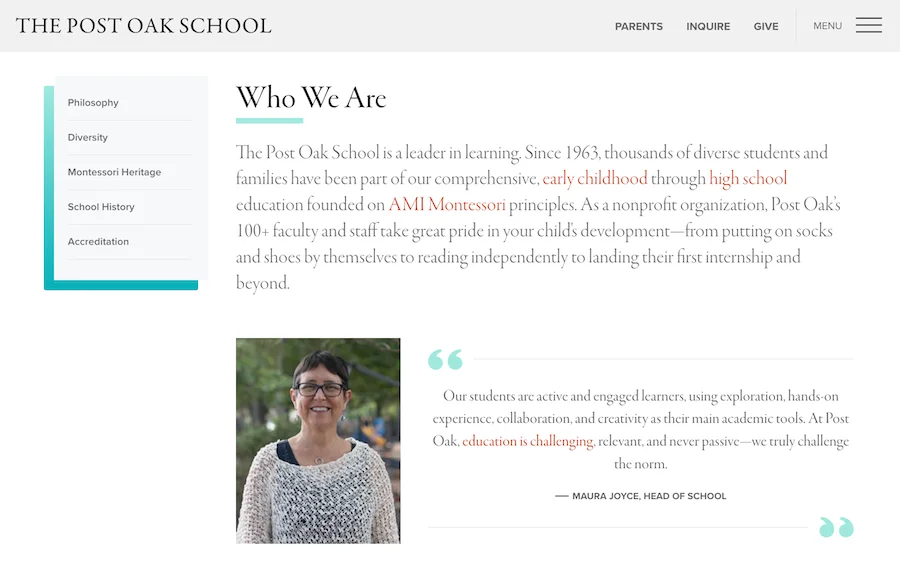
[Image placeholder: A screenshot of the "About Us" page for Post Oak School, illustrating clear and descriptive content.]
When these primary sources align in their messaging, AI treats the resulting framing as highly reliable.
Secondary Inputs: Reinforcement or Dilution
These sources can either reinforce the primary signals or dilute them if they introduce conflicting information:
- Customer Reviews: While valuable, reviews can be inconsistent. A few negative or off-topic reviews can introduce noise.
- Social Media Profiles: Company bios and posts can provide context but are often less structured and may not always reflect core business priorities.
- News Articles and Press Releases: These can offer insights but may be dated or focus on specific events rather than ongoing business strategy.
If secondary sources repeat the same core message as the primary inputs, the AI’s understanding is solidified. However, if they introduce conflicting information, AI will often smooth out these discrepancies, leading to a more generic output.
Key Insight: AI places greater trust in repetition across multiple sources than in polished, singular content on a single page. This underscores the importance of consistency in language and messaging across a business’s entire online footprint, from its website and GBP to its FAQs and customer reviews.
Influencing AI’s Presentation of Your Business
Businesses that consistently appear accurately in AI-generated summaries share a common trait: they make themselves easy to explain. The prevailing assumption that positioning is a late-stage activity, occurring on landing pages or during sales calls, is no longer valid. In the contemporary buyer’s journey, this assumption is flawed because buyers arrive with a pre-formed understanding.
Structural Changes in Positioning
The shift necessitates a re-evaluation of how businesses structure their online presence:
- Early Clarity is Paramount: Positioning must be established at the very beginning of the buyer’s interaction with AI.
- Concise Summaries are Key: If an AI cannot distill the essence of a business into a short, coherent paragraph, its positioning is likely incomplete or poorly defined.
Effective Practices in Action
Successful businesses implement several key strategies:
- Specific Service Descriptions: Instead of listing "HVAC services," they specify "residential AC installation and repair," or "commercial heating system maintenance."
- Target Audience Identification: Clearly stating who the services are for, e.g., "Serving homeowners in the Phoenix metropolitan area" or "Specializing in small business IT solutions."
- Benefit-Oriented Language: Focusing on the tangible outcomes for the customer, such as "saving you money on energy bills" or "ensuring your comfort year-round."
- Unique Differentiators: Highlighting what makes the business stand out, like "guaranteed 24-hour service" or "eco-friendly product options."
The Unrefined Bakery provides an excellent example of this clarity. Their website clearly states the types of ingredients they use and, crucially, those they avoid, such as refined sugars and artificial additives. This specific and unambiguous statement is not just clever marketing; it’s highly reusable information for AI.
[Image placeholder: A screenshot of the Unrefined Bakery website, showing their clear stance on ingredients.]
Consistent Failures in Messaging
Conversely, certain types of language consistently fail to translate well in AI summaries:
- Vague Adjectives: Terms like "trusted," "modern," "high-quality," or "leading" are too abstract for AI to assign concrete meaning.
- Overly Broad Claims: Statements like "we do it all" or "your complete home solution" lack the specificity AI requires.
- Jargon and Industry Acronyms: Unless clearly defined, these can confuse AI systems.
Real-World Impact: The Legal Industry Example
The legal profession offers a pertinent illustration. Many small law firms adopt generic self-descriptions such as "full-service law firm," "experienced attorneys," or "dedicated to client success." While these phrases might sound professional, they are vague to AI. When potential clients ask AI tools about needing a "personal injury lawyer" versus a "general attorney," AI is more likely to direct them towards firms like Rob Levine Law, where the specialization in personal injury is immediately apparent.
[Image placeholder: A screenshot of an AI overview recommending a type of lawyer.]
Generalist firms, even if they handle a significant volume of a specific case type, often get categorized broadly as "local law firms." However, firms that proactively and clearly articulate their specialization—be it personal injury, workers’ compensation, or immigration law—experience a different outcome. AI explanations become more focused, filtering out irrelevant inquiries and attracting more qualified leads. This doesn’t necessarily mean an increase in overall traffic, but rather a reduction in unsuitable leads and a rise in conversions from genuinely interested prospects.
Defining Success in the AI-Assisted Buyer’s Journey
The SMBs that have successfully adapted to this evolving landscape have not necessarily seen immediate, dramatic spikes in website traffic. Instead, their success is often measured by:
- More Qualified Leads: The inquiries they receive are from individuals who have a clearer understanding of the business’s offerings and are a better fit.
- Higher Conversion Rates: Because leads are better qualified, the likelihood of converting them into paying customers increases.
- Reduced Bounce Rates: Visitors who arrive are more likely to be genuinely interested and therefore spend more time on the site.
- Stronger Brand Perception: The business is consistently presented in AI summaries as a specialist or expert in its defined niche.
This form of influence, where the AI shapes initial perceptions, is a subtle yet powerful indicator of success in the new buyer’s journey. Traditional metrics like direct clicks and attribution often lag behind these foundational shifts in buyer perception.
Winning by Influencing the Entire Buyer’s Journey
Consumers continue to evaluate, compare, and make decisions, but the arena for this critical work has largely moved inside AI systems. Businesses that have embraced this reality are not necessarily working harder; they are clarifying their messaging earlier and more effectively. To succeed in this new buyer’s journey, the focus must shift to shaping decisions and perceptions before a website even loads, ensuring that when a buyer does click, they are already well-aligned with what the business offers.










