rifanmuazin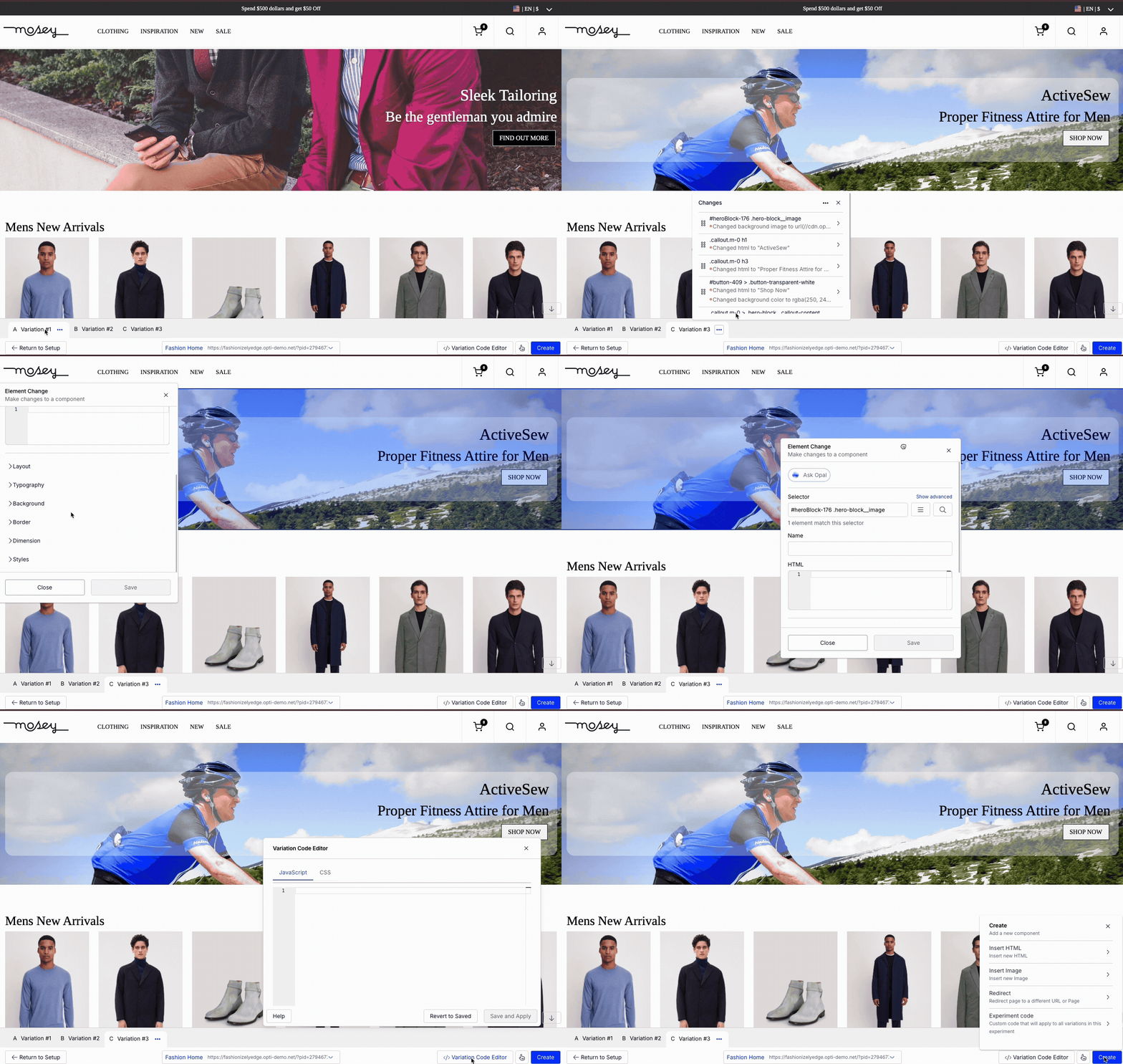
The digital economy’s shift toward data-driven decision-making has transformed website optimization from a luxury for tech giants into a fundamental requirement for businesses of all sizes. Within this competitive landscape, two platforms, Crazy Egg and Optimizely, have emerged as industry leaders, though they increasingly cater to divergent market segments. As organizations seek to maximize their return on ad spend (ROAS) and improve user experience (UX), the choice between an all-in-one behavioral suite and a high-end digital experience platform (DXP) has become a pivotal strategic decision for Chief Marketing Officers and product managers alike.
The primary distinction between the two lies in their operational philosophy: Crazy Egg offers a self-serve, consolidated toolkit designed for rapid deployment by marketing teams, whereas Optimizely provides a sophisticated, multi-product ecosystem tailored for enterprise-level experimentation that often requires significant engineering and data science support.
Historical Evolution and Market Positioning
To understand the current rivalry, it is essential to examine the chronology of these platforms. Crazy Egg was founded in 2006 by Hiten Shah and Neil Patel, pioneers in the SaaS space who recognized a gap in the market for visual analytics. At the time, web analytics were largely limited to the quantitative data provided by tools like Google Analytics. Crazy Egg’s introduction of heatmap technology democratized behavioral data, allowing small and medium-sized businesses (SMBs) to see exactly where users were clicking and scrolling without needing a degree in data science.
Optimizely followed in 2010, founded by Dan Siroker and Pete Koomen. Siroker, who had served as the director of analytics for the 2008 Obama campaign, sought to bring the rigorous A/B testing methodologies used in political campaigning to the corporate world. While Optimizely began as a relatively accessible A/B testing tool, its trajectory changed significantly over the next decade. In 2020, Optimizely was acquired by Episerver, a global content management system (CMS) provider backed by Insight Partners. This merger completed Optimizely’s transition into a comprehensive Digital Experience Platform, moving it away from the self-serve market and into the enterprise sphere where it now competes with the likes of Adobe Experience Cloud and Oracle Marketing Cloud.
Technical Analysis of Experimentation Capabilities
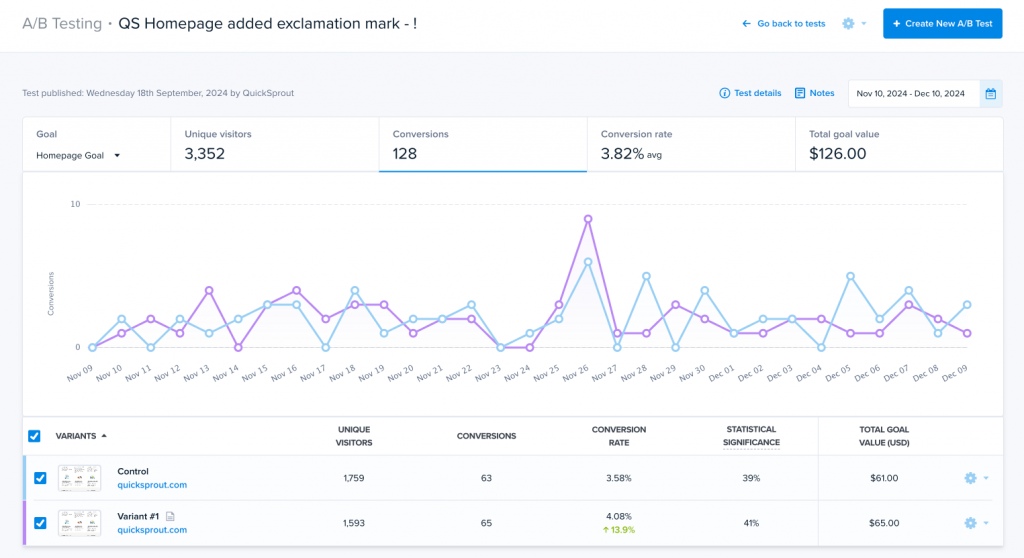
Experimentation remains the core of both platforms, yet the depth of their offerings reflects their different target audiences. Crazy Egg’s experimentation module is designed for the “marketer-as-optimizer.” It focuses on standard A/B testing and split-URL testing. A notable feature of Crazy Egg is its use of the Multi-Arm Bandit (MAB) algorithm. Unlike traditional A/B tests that split traffic 50/50 until a winner is declared, MAB tests dynamically shift traffic to the higher-performing variant in real-time, minimizing the “cost” of showing users a sub-optimal version of a page during the testing period.
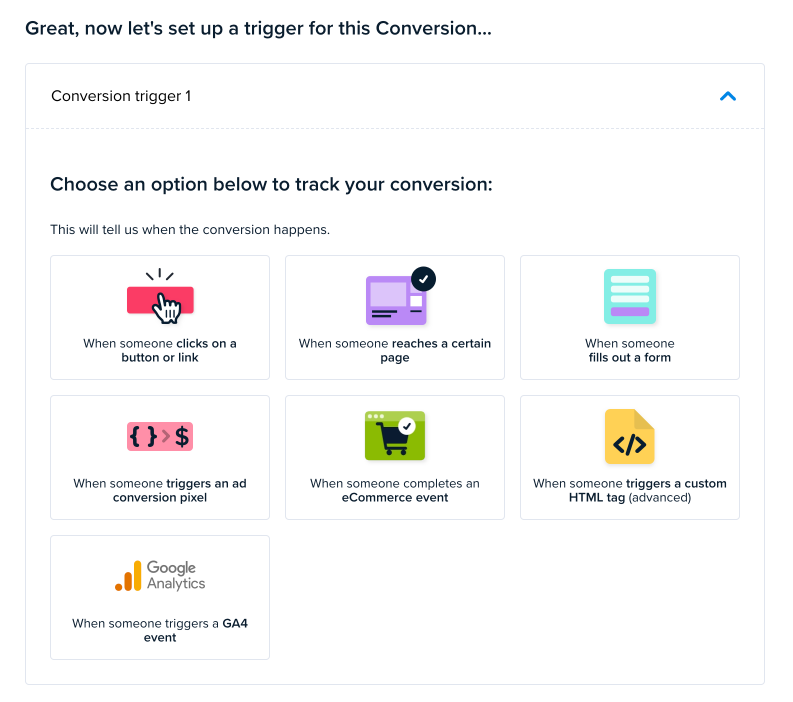
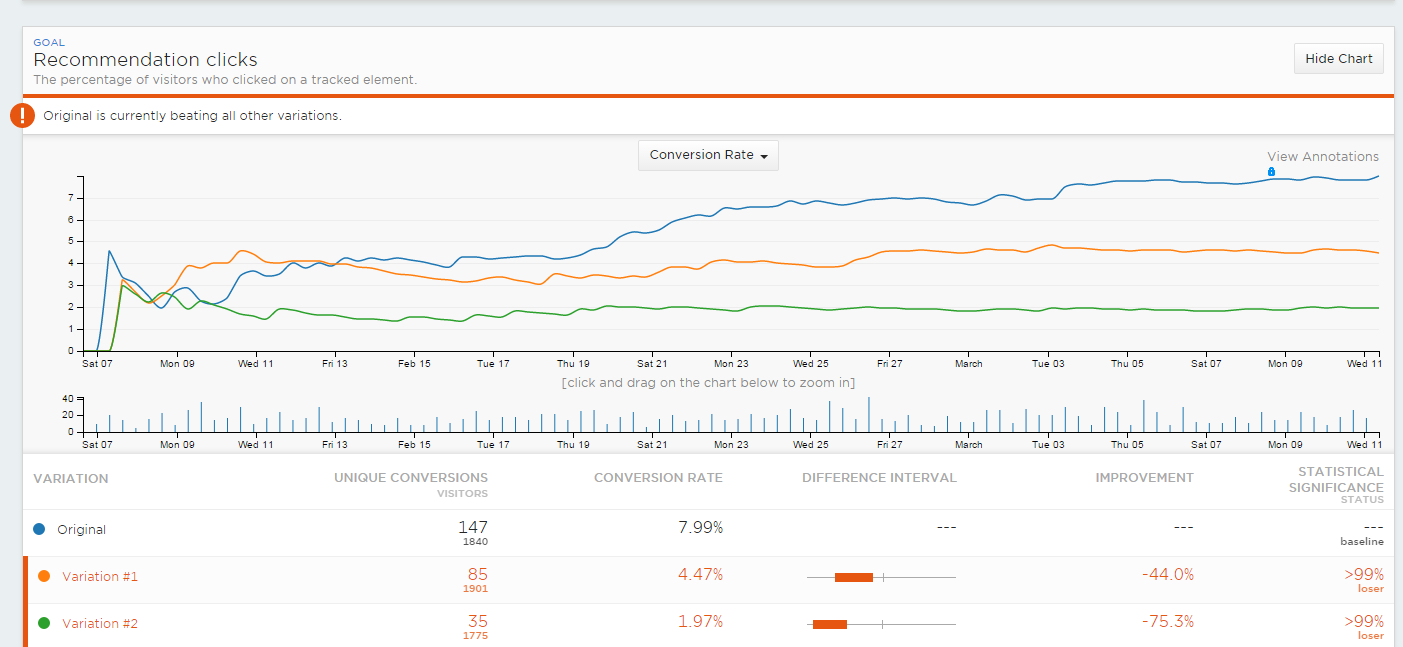
In contrast, Optimizely’s Web Experimentation product is built for high-velocity, high-complexity environments. It supports multivariate testing (MVT), which allows teams to test multiple variables simultaneously to see how they interact—an essential capability for high-traffic sites where subtle changes in color, copy, and layout must be optimized in tandem. Furthermore, Optimizely offers “Feature Experimentation,” a server-side testing product that allows developers to run experiments on the backend. This is critical for testing product features, pricing algorithms, or search logic that occurs before the page even renders in a browser.
Behavioral Insights and the “Voice of the Customer”
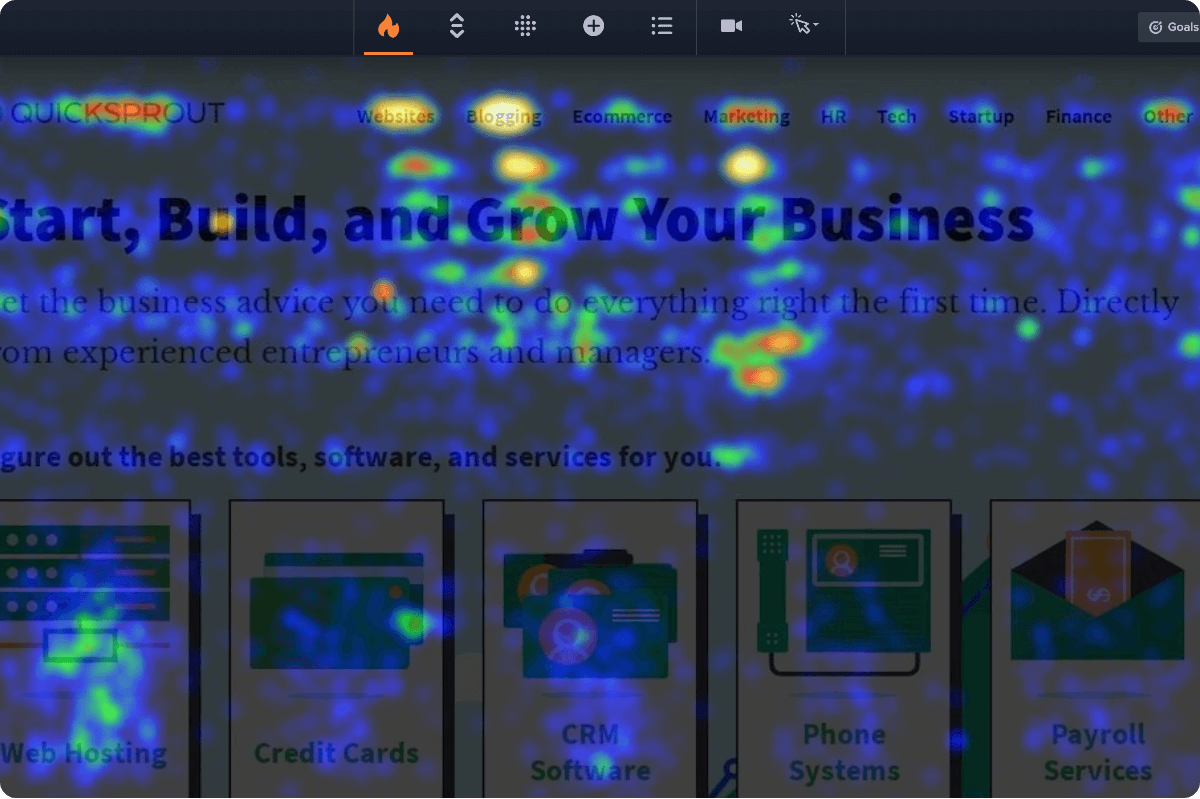
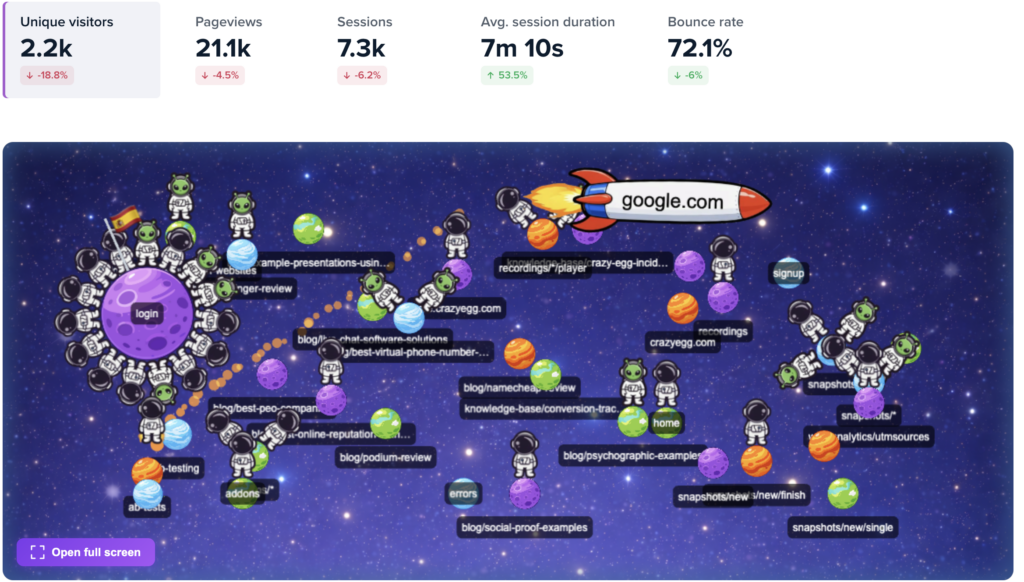
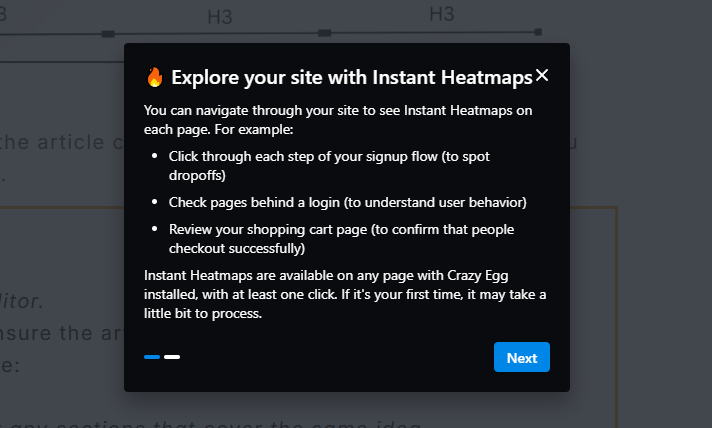
A significant divergence occurs in how these platforms handle qualitative data. Crazy Egg has maintained its lead as a behavioral powerhouse by bundling heatmaps, session recordings, and surveys into a single subscription. Its heatmap suite includes five distinct views: traditional heatmaps, confetti maps (which segment clicks by referral source), scroll maps, overlay maps, and list maps. These tools provide immediate visual evidence of “friction points”—areas where users are confused or disengaged.
Optimizely has moved away from native behavioral tools, choosing instead to focus on its “Warehouse Native” strategy. It does not offer built-in heatmaps or session recordings. Instead, Optimizely users must integrate third-party tools such as Hotjar, Contentsquare, or Microsoft Clarity. While this allows enterprise teams to use “best-of-breed” specialized software, it introduces additional costs and implementation complexity. For an SMB, the convenience of Crazy Egg’s integrated session recordings—which are automatically tagged for events like “rage clicks” or “dead clicks”—often outweighs the modular flexibility of the Optimizely approach.
The Role of Artificial Intelligence in Optimization
As 2024 and 2025 mark the era of generative AI integration, both platforms have launched sophisticated AI initiatives, though with different objectives. Crazy Egg’s AI focus is on “Top Insights.” The platform uses machine learning to scan thousands of hours of session recordings and millions of data points from heatmaps to generate plain-English summaries. This reduces the “analysis paralysis” often felt by small teams, providing them with a prioritized list of what to fix on their website.
Optimizely’s AI, branded as “Opal,” is an orchestration layer that spans its entire suite. Opal is designed to act as a co-pilot for large marketing departments. It can assist in experiment planning, generate content for variations, and even interface with developer tools through a Model Context Protocol (MCP) server. This allows data scientists to query experiment results directly from within environments like VS Code or Claude. The implication is clear: Crazy Egg uses AI to simplify the workload for a single user, while Optimizely uses AI to synchronize the efforts of a large, multi-departmental team.
Supporting Data: Market Trends and Economic Impact
Recent industry data suggests a growing trend toward “MarTech consolidation,” where companies prefer fewer tools that do more. According to Gartner’s 2023 Marketing Technology Survey, 71% of CMOs report that they lack the resources to fully utilize their existing tech stack. This environment favors Crazy Egg’s “all-in-one” model for the mid-market.
However, the “Conversion Rate Optimization (CRO) Software Market” is projected to grow at a CAGR of 10.5% through 2030, according to Grand View Research. This growth is driven by the rising cost of customer acquisition (CAC). As it becomes more expensive to drive traffic via Meta or Google Ads, the economic value of converting a higher percentage of existing traffic increases. For enterprise companies with annual revenues exceeding $500 million, a 1% increase in conversion rate can result in millions of dollars in incremental revenue, justifying Optimizely’s reported contract values of $36,000 to over $100,000 per year.
Implementation and Operational Requirements
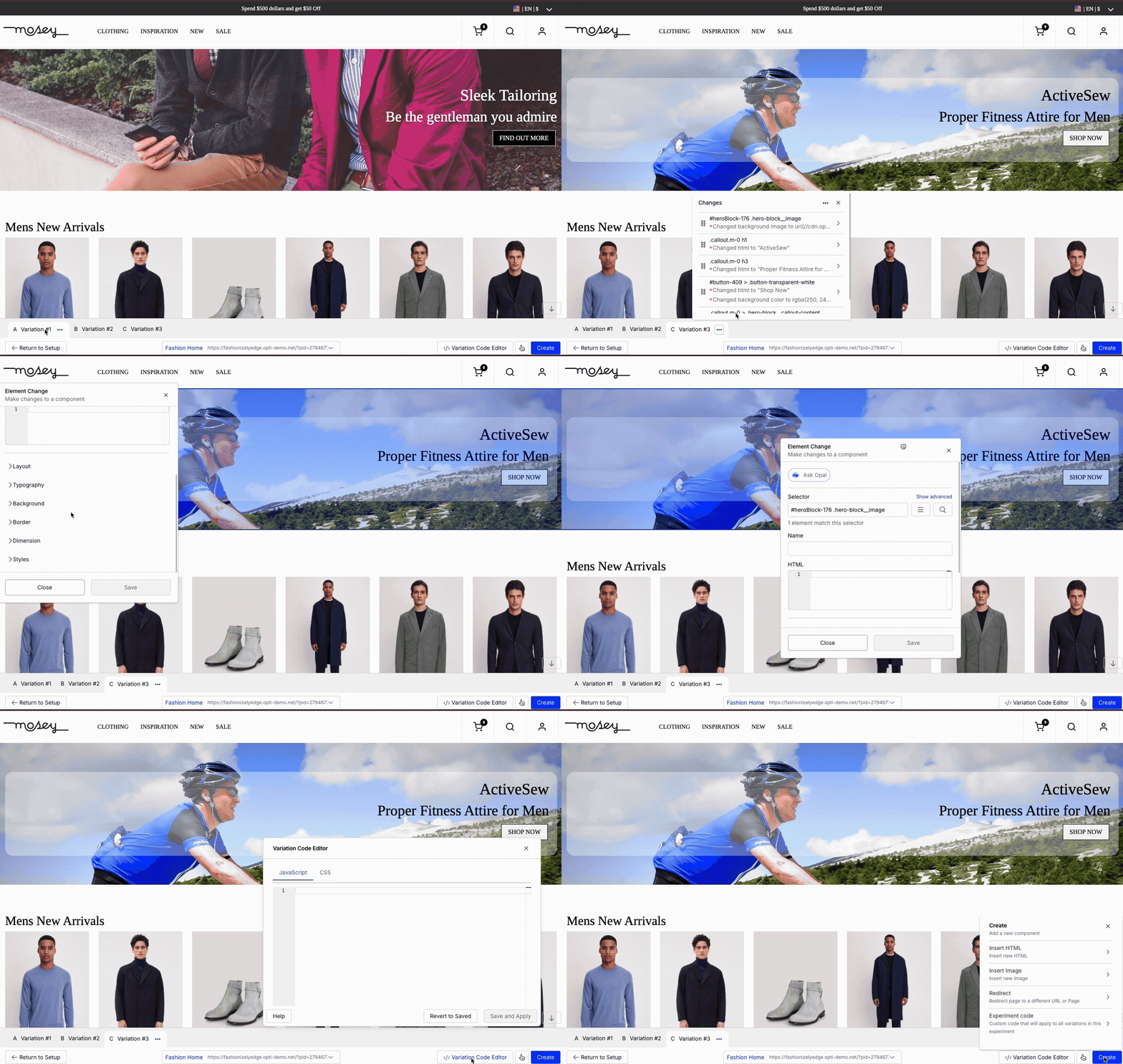
The “hidden cost” of optimization tools often lies in the human capital required to run them. Crazy Egg is designed for “no-code” or “low-code” environments. A marketing manager can typically install a single JavaScript snippet and begin launching tests via a visual editor within an hour.
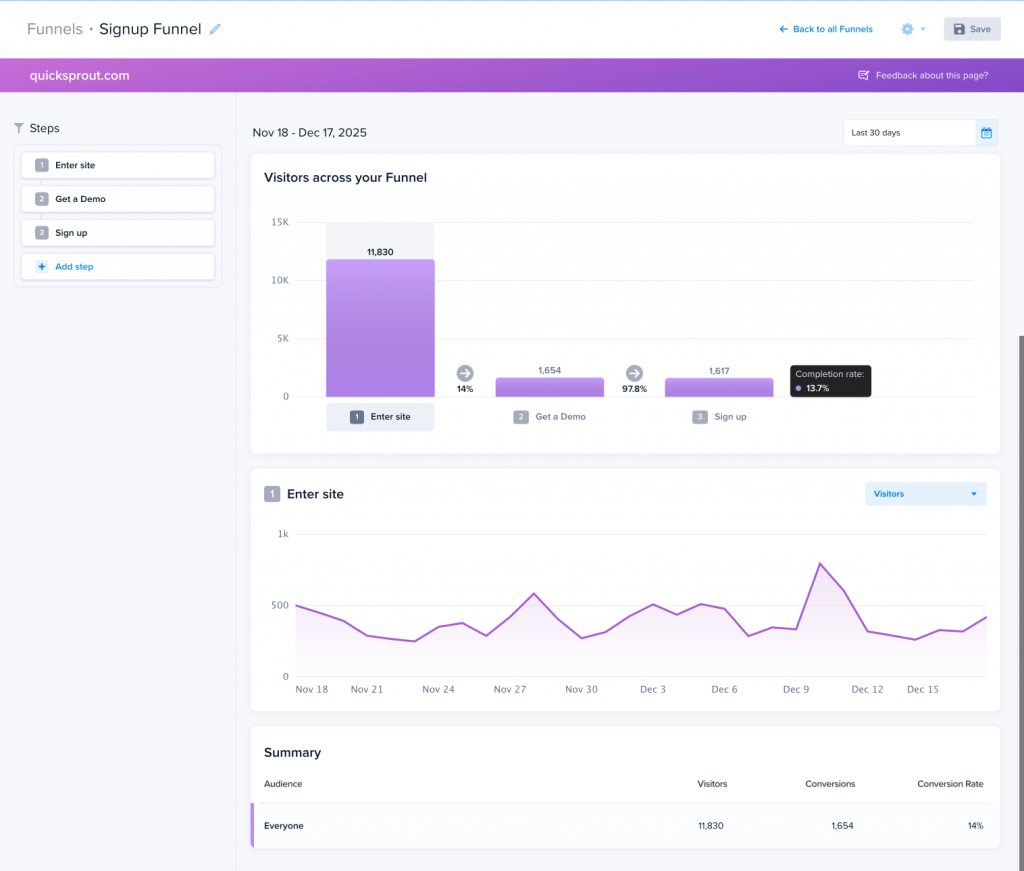
Optimizely’s implementation is a more rigorous undertaking. Because it often involves server-side testing and deep integration with a company’s data warehouse (such as Snowflake or BigQuery), it requires a collaborative effort between marketing, IT, and data engineering. Organizations choosing Optimizely must be prepared for a multi-week onboarding process and the ongoing need for technical staff to manage “mutually exclusive groups” and “custom attribute” mapping.
Official Responses and User Sentiment
While neither company provides public statements on their direct competition, user sentiment on platforms like G2 and TrustRadius reflects the market split. Crazy Egg is frequently praised for its “ease of use” and “instant value,” particularly among agencies managing multiple client sites. Common criticisms involve its lack of advanced multivariate testing for high-traffic scenarios.
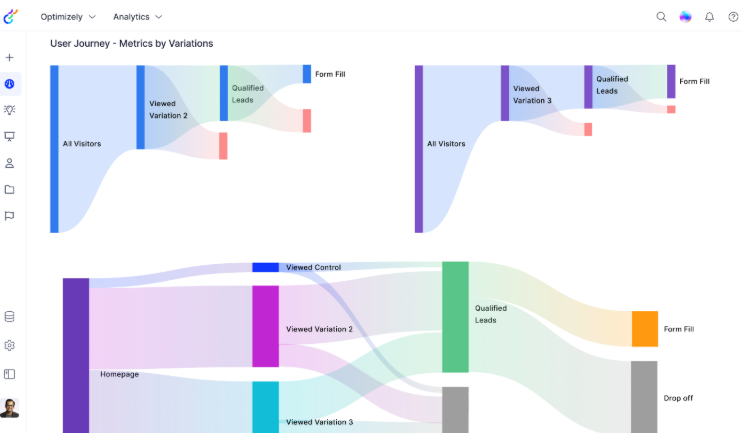
Optimizely is regarded as the “gold standard” for enterprise experimentation. Users highlight its robust statistical engine, “Stats Engine,” which uses sequential testing to provide valid results faster than traditional frequentist methods. However, a recurring theme in user reviews is “price transparency” and the “steep learning curve,” with some users noting that the platform can feel “over-engineered” for teams that only need to run simple A/B tests.
Broader Impact and Industry Implications
The competition between Crazy Egg and Optimizely mirrors a broader bifurcation in the software industry. On one side is the movement toward “Product-Led Growth” (PLG), exemplified by Crazy Egg, where software is transparently priced, easy to trial, and focused on individual productivity. On the other side is the “Digital Experience” movement, where Optimizely resides, focusing on the total digital lifecycle, including content management, asset management, and commerce.
For the broader market, this means that “one-size-fits-all” software is largely a thing of the past. The choice between these two platforms is less about which tool is “better” and more about the organizational maturity of the user. A startup or a mid-sized e-commerce brand will likely find the most ROI in Crazy Egg’s consolidated behavioral suite. Conversely, a Fortune 500 financial institution or a global retailer with complex backend systems will require the governance, security, and advanced experimentation capabilities that only a platform like Optimizely can provide.
As data privacy regulations like GDPR and CCPA continue to evolve, both platforms are also investing heavily in privacy-first tracking. Crazy Egg’s first-party data collection and Optimizely’s warehouse-native approach both aim to reduce reliance on third-party cookies, ensuring that website optimization remains a viable strategy in a “cookieless” future. The ultimate implication is that while the tools are changing, the necessity of understanding user behavior remains the most critical factor in digital success.