rifanmuazin
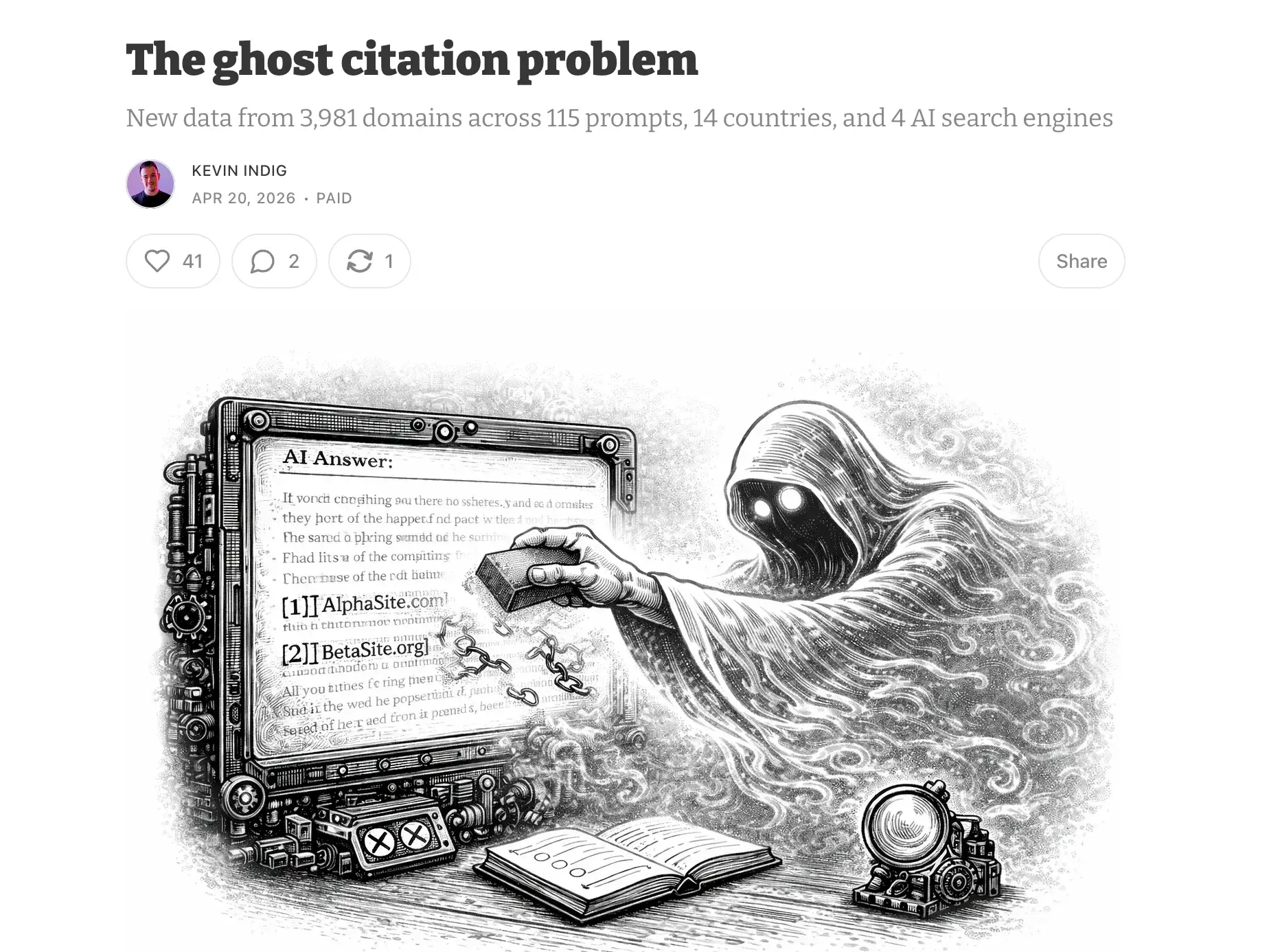
The digital landscape for content dissemination has undergone a fundamental transformation, driven by the rapid advancements in artificial intelligence. Where once a query to a search engine yielded a list of ten blue links, users are now increasingly met with AI Overviews, concise paragraphs, and a handful of citations, often generated by sophisticated Large Language Models (LLMs) like Google’s AI Overviews, ChatGPT, or Perplexity. This shift signifies a profound change for content creators and marketers: the primary gatekeepers of information are no longer solely traditional search algorithms but intelligent machines that summarize, synthesize, and present information before a human ever reaches a brand’s owned property.
This new reality presents a critical challenge. When a brand’s message is fortunate enough to be cited, it frequently appears stripped of its original style, nuance, and the carefully crafted point of view that once differentiated it. Headlines painstakingly developed by editorial teams are rewritten, and the distinct voice cultivated over years can be flattened into a generic, committee-approved tone. The story, in essence, is no longer entirely the brand’s own. Marketers must now master the intricate art of speaking to two distinct audiences simultaneously: the human customer, with their complex motivations and mercurial emotions, and the robotic algorithms that extract, rewrite, and rank ideas, all without sacrificing the compelling quality of their content. The winners in this new era will be those whose ideas not only resonate with people but also survive the translation process by machines.
The Evolving Landscape of Content Consumption: A Chronology
The journey to this dual-audience paradigm began subtly, with search engines gradually moving beyond simple keyword matching. The early 2010s saw Google’s Hummingbird update, focusing on conversational search and semantic understanding. This laid the groundwork for a more nuanced interpretation of user intent. The mid-2010s brought the rise of voice assistants like Amazon Alexa and Google Assistant, which inherently provided direct answers, often bypassing traditional search results pages. However, the true acceleration of this shift occurred in the late 2010s and early 2020s.
Google’s BERT (Bidirectional Encoder Representations from Transformers) update in 2019 marked a significant leap in understanding natural language, followed by MUM (Multitask Unified Model) in 2021, capable of processing information across multiple modalities. These updates signaled Google’s intent to deliver more comprehensive answers directly within search results. The landscape irrevocably changed with the public release of OpenAI’s ChatGPT in late 2022. Its ability to generate coherent, human-like text from simple prompts democratized access to powerful LLMs and sparked an industry-wide race. Companies like Google responded swiftly with their own generative AI capabilities, integrating them into search as AI Overviews (initially Search Generative Experience, SGE) throughout 2023 and into 2024. Perplexity AI also emerged as a prominent AI-native search engine, prioritizing synthesized answers with citations.
This chronology illustrates a clear trend: search is transitioning from a navigational tool to an answer engine. This transition profoundly impacts content distribution, leading to what many refer to as the "zero-click search" phenomenon, where users find answers directly on the search results page without needing to click through to a website. Data from SparkToro indicates that over 65% of Google searches in 2020 ended without a click, a figure likely to have significantly increased with the widespread deployment of generative AI in search. For marketers, this means understanding not just how to rank, but how to be chosen for inclusion and accurately represented in these AI-generated summaries.
The Two Audiences Problem: A Deeper Examination
The core challenge for contemporary marketers is serving two fundamentally different information processors: the human mind and the algorithmic model. Each requires a distinct approach to content creation, yet both must be satisfied for a brand’s message to achieve maximum impact and reach.
Creating Content for Human Connection
Despite the rise of machines, human beings remain the ultimate decision-makers in purchasing and sharing. Ipsos research consistently highlights a strong preference among audiences for human-created content, even within marketing contexts. This underscores the enduring value of authenticity and relatability. Content that sounds overly mechanical or generic, even if technically accurate, fails to forge the emotional connection necessary for brand loyalty and advocacy.
- What Moves People: Humans are moved by stories, not just facts. They respond to emotional resonance, relatable experiences, and unique perspectives. A compelling narrative, a distinct brand voice, original thought, and empathy are crucial for capturing and retaining human attention. People seek content that feels both familiar and fresh, useful and inspiring. They want to feel understood by the content creator.
- The Challenge: In an environment saturated with AI-generated text, standing out becomes increasingly difficult. The risk is that content, optimized purely for machine consumption, loses its soul and becomes indistinguishable from automated output. Brands must resist the temptation to dilute their unique identity for algorithmic favor, as genuine human connection remains the bedrock of lasting relationships.
- Implications for Marketers: The focus for human-centric content must be on cultivating unique insights, fostering authentic narratives, and building genuine rapport. Marketers must invest in strong storytelling, compelling copywriting, and a distinct brand personality that cannot be easily replicated by AI. This content aims to earn attention, not just capture it, by offering value that goes beyond mere information—value rooted in understanding, inspiration, or entertainment.
Creating Content for Machine Extraction
Parallel to catering to human emotion is the imperative to create content legible to AI engines and LLMs. These systems operate on logic, structure, and data. They tokenize, extract, and rank information based on specific criteria that prioritize clarity over lyrical prose. The number of hours a writing team spent perfecting a tagline or a turn of phrase is irrelevant to an algorithm.
- Machine Priorities: AI models prioritize explicit claims, verifiable evidence, clear context, and structured data mapped to recognizable entities. They seek unambiguous answers to questions. Key elements include:
- Clarity and Conciseness: Direct language, avoiding ambiguity.
- Structured Data: Headers, lists, tables, and schema markup that explicitly define content elements.
- Factual Accuracy and Sourcing: Explicit citation of sources and data points.
- Consistent Terminology: Using standardized terms for concepts, products, and services.
- Entity Recognition: Clearly identifying people, places, organizations, and concepts.
- Freshness: Emerging data suggests that AI assistants tend to prefer citing fresh, up-to-date content, indicating that regular updates and new content production are increasingly important.
- The Challenge: The primary challenge lies in balancing the need for creative expression with the demand for machine readability. Overly complex sentences, abstract concepts, or highly nuanced arguments can be misinterpreted or flattened by AI. Marketers must avoid making their content so "clever" that it becomes opaque to algorithms, thereby reducing its chances of being cited or surfaced.
- Implications for Marketers: Content must be designed with the model in mind. This involves standardizing terms, labeling answers clearly, and providing verifiable evidence. The goal is "citation-ready" content—lines or paragraphs that can be confidently lifted by an AI to answer a user’s query. This means clarity, not cleverness, is the currency for machine visibility. Implementing structured data, such as Schema.org markup, becomes a fundamental practice, enabling machines to understand the semantic meaning of content beyond mere keywords.
Strategies for Bridging the Divide: Standout Storytelling and Extraction-Ready Structure
To thrive in today’s search-and-summary landscape, brands require a dual-pronged content strategy that simultaneously captivates human audiences and caters to AI parsers. The art lies in crafting content that reads beautifully and evokes emotion in people, while simultaneously providing machines with the clean, structured signals they need to understand, process, and amplify the brand’s narrative. Here are five actionable strategies:
1. Lead with a Scene; Label with Structure.
For humans, content must immediately engage. Begin every piece with a compelling hook—a thought-provoking question, a relatable conflict, or a vivid visual—that draws readers into a moment or problem. This storytelling approach fosters connection and encourages deeper engagement. For machines, the content needs clear scaffolding. Ensure that subheadings (H2, H3, etc.), bullet points, numbered lists, and meta-descriptions clearly outline the main takeaways. Implement schema markup where appropriate to define content types and relationships. Humans remember stories; machines rely on structured logic and explicit labels to interpret and summarize. For example, an article might open with an anecdote about a customer’s struggle, immediately followed by an H2 that clearly states "The Three Key Solutions to [Customer Problem]."
2. Make Every Claim Quotable and Parsable.
When presenting an insight, data point, or unique perspective, phrase it in a way that resonates with human readers while also being easily extractable by AI. Back every claim with verifiable data, explicitly name your sources, and present the information concisely. Think of it as writing for direct citation: a sentence or phrase should be robust enough to stand on its own in an AI Overview without losing its meaning or context. For instance, instead of burying data within a long paragraph, state it clearly: "A Q3 2023 industry report by [Research Firm] found that 72% of consumers prioritize sustainable packaging, representing a 15% increase year-over-year." This format is ideal for both human comprehension and machine extraction.
3. Design Visuals that Speak in Two Languages.
Visual content is powerful for humans, conveying emotion, context, and complex information at a glance. For machines, visuals require textual interpretation. Ensure all images, infographics, and charts have descriptive filenames, robust alt text, and clear captions that accurately describe the content and its relevance. Use structured metadata to categorize and tag visuals. For a human, a striking infographic might tell a story about market trends. For an AI, the alt text and caption should meticulously describe the data points, axes, and conclusions presented within that infographic, making it machine-readable and searchable.
4. Use Video to Teach Twice – Once to Viewers, Once to Models.
Video content is increasingly dominant, particularly in short-form formats. For human viewers, the first three seconds are paramount – they serve as your video’s "headline," needing to be impactful and immediately engaging. For machines, optimize every aspect of the video’s presentation. Include full transcripts and closed captions, ensure keywords are spoken naturally within voiceovers, and utilize a structured description when uploading to platforms like YouTube. Implement chapter markers and video schema markup. This dual approach helps algorithms surface your video to relevant queries and provides humans with a compelling reason to engage beyond the initial scroll.
5. Keep Your Message Stable Across Every Touchpoint.
Consistency is vital for both audiences. Machines learn from repetition and alignment, building a stronger understanding of entities and relationships when information is presented uniformly. Humans build trust and brand recognition through consistent messaging, tone, and visual identity. Use the exact same product names, taglines, brand values, and key phrasing across all content, from blog posts and website copy to social media updates, press releases, and video titles. This reinforces your brand identity for human recall and helps AI models confidently associate specific information with your brand.
Statements and Reactions from Related Parties: An Industry Shift
The marketing and SEO industries are rapidly adapting to this new paradigm. SEO agencies, once focused primarily on keyword density and link building, are now emphasizing "semantic SEO," entity optimization, and the creation of comprehensive knowledge graphs. Content strategists are increasingly advocating for "AI-friendly content frameworks," where content is not just written but "architected" for discoverability.
Industry experts, like those at Contently (as referenced in the original article), are developing platforms and tools designed to help brands build "AI-ready content," indicating a market demand for solutions that address this dual imperative. The role of a "content architect" or "semantic engineer" is emerging, focusing on structuring information for machine consumption while preserving human appeal. Platform providers are responding by integrating AI tools into their content management systems (CMS) to assist with schema markup, content summaries, and entity extraction. This reflects a broad industry consensus that ignoring the machine audience is no longer viable.
Measuring Success in a Zero-Click Era: New Key Performance Indicators
As AI summaries become the primary "first impression" for many users, traditional traffic metrics alone no longer paint a complete picture of content effectiveness. A significant increase in visibility within an AI Overview may not translate into a direct click, but it can profoundly shape brand perception, recall, and ultimately, buying behavior. New Key Performance Indicators (KPIs) are emerging, living at the intersection of influence and algorithmic alignment:
- Share of Voice (SOV) in AI Overviews/Summaries: How frequently and prominently is a brand, its products, or its unique insights cited or featured within AI-generated summaries across various platforms? This metric moves beyond traditional search rankings to assess visibility in synthesized answers.
- Brand Mention Volume and Sentiment in AI Responses: Beyond mere citations, how often is the brand name mentioned, and is the sentiment positive, neutral, or negative? Tools for monitoring AI-generated content will become crucial for tracking this.
- Entity Recognition and Alignment Score: This advanced metric assesses how well AI models understand and connect a brand’s specific entities (products, services, executives, values) across the web. A high score indicates strong semantic clarity and consistency.
- First-Party Data Engagement: As external traffic becomes less predictable, direct engagement on owned channels (email sign-ups, direct website traffic, app usage, conversions directly attributable to brand-owned properties) gains even greater importance. This measures the strength of the direct relationship with the audience.
- Content Freshness and Update Frequency: Given AI’s preference for current information, KPIs related to the regular updating and creation of new, relevant content become vital for maintaining authority and visibility.
- Audience Retention and Engagement (for human-centric content): Metrics like time on page, scroll depth, social shares, comments, and direct interactions with content (e.g., webinar attendance, e-book downloads) remain critical. These demonstrate the effectiveness of human-focused storytelling and its ability to build community and drive deeper interest.
Broader Impact and Implications
This paradigm shift carries broad implications for the future of content, marketing teams, and business strategy:
- AI as a Co-Pilot: AI will increasingly serve as a co-pilot for marketers, assisting with content generation, optimization, and distribution, rather than simply being a threat to human creativity. This requires marketers to develop proficiency in AI tools and prompt engineering.
- Investment in Content Infrastructure: Brands will need to invest in robust content management systems (CMS) capable of handling structured data, sophisticated tagging, and multimodal content. Implementing comprehensive content governance policies will be essential to ensure consistency and quality across all channels.
- Ethical Considerations and Trust: As AI summarizes and synthesizes information, ethical considerations surrounding accuracy, bias, and potential misinformation become paramount. Brands must ensure their content is not only factual but also presented in a way that minimizes misinterpretation by AI, upholding journalistic integrity even in fragmented summaries.
- The Premium on Human Creativity and Original Thought: While machines can process and synthesize, true originality, creative insight, unique perspectives, and profound emotional understanding remain distinctly human. These qualities will become even more valuable differentiators, commanding a premium in a world flooded with AI-generated text.
- Skill Shift for Marketers: The role of the marketer will evolve from pure copywriter or SEO specialist to encompass "content architecture," data analysis, semantic optimization, and a deep understanding of AI’s capabilities and limitations. Adaptability and continuous learning will be key.
- Competitive Advantage: Brands that master this dual approach—seamlessly blending compelling human storytelling with precise machine-readable structure—will gain a significant competitive advantage in visibility, authority, and ultimately, market share. They will be better positioned to influence perceptions and drive action in an AI-dominated information ecosystem.
In conclusion, the current era demands that marketers embrace a hybrid approach to content. We have spent years optimizing for people and platforms; now, the focus shifts to optimizing for people and parsers. This does not necessitate stripping the soul from compelling narratives but rather involves intelligently teaching machines how to carry those stories forward, ensuring their essence remains intact as they are summarized and redistributed. The marketers who can adeptly navigate this complex interplay of art and science will undoubtedly own the next era of digital visibility and influence.
Frequently Asked Questions (FAQs):
What does it mean to create "machine-readable" content?
Machine-readable content is structured and formatted in a way that artificial intelligence systems, search engines, and voice assistants can effortlessly interpret, process, and summarize. This involves more than just keywords; it means using clear, consistent terminology, logical headings (H1, H2, H3), bullet points, and numbered lists. Crucially, it includes implementing structured data (like Schema.org markup) to explicitly define entities, relationships, and the context of your content. The goal is unambiguous claims and clear evidence, allowing AI to extract your ideas accurately without losing their original meaning or nuance, facilitating its inclusion in knowledge graphs and AI overviews.
Should marketers still care about SEO if AI Overviews and chatbots dominate search?
Yes, but the definition of SEO is evolving. Traditional keyword-stuffing tactics are becoming less effective. Instead, SEO now revolves around "structuring for understanding" rather than merely "ranking for keywords." This includes advanced semantic SEO, entity optimization (ensuring AI understands your brand’s unique entities), and establishing topical authority by covering subjects comprehensively and accurately. First-party credibility, unique data, and clear attribution matter more than ever. While direct clicks from traditional search results may decrease, being the authoritative source that AI systems cite will become the new measure of search engine optimization success.
Does this shift change how we approach video and visual content?
Absolutely. In the age of multimodal AI, every visual and video asset must serve as both a captivating story for humans and a clear signal for machines. For humans, visuals need to be emotionally engaging and tell a story quickly. For machines, this means providing comprehensive metadata: descriptive filenames, detailed alt text for images, clear captions, and structured descriptions for videos. For video, transcripts, closed captions, and spoken keywords within voiceovers are critical. Implementing video schema markup and utilizing chapter markers helps algorithms understand the content, context, and key moments, increasing its discoverability in AI-driven search and summary results.