rifanmuazin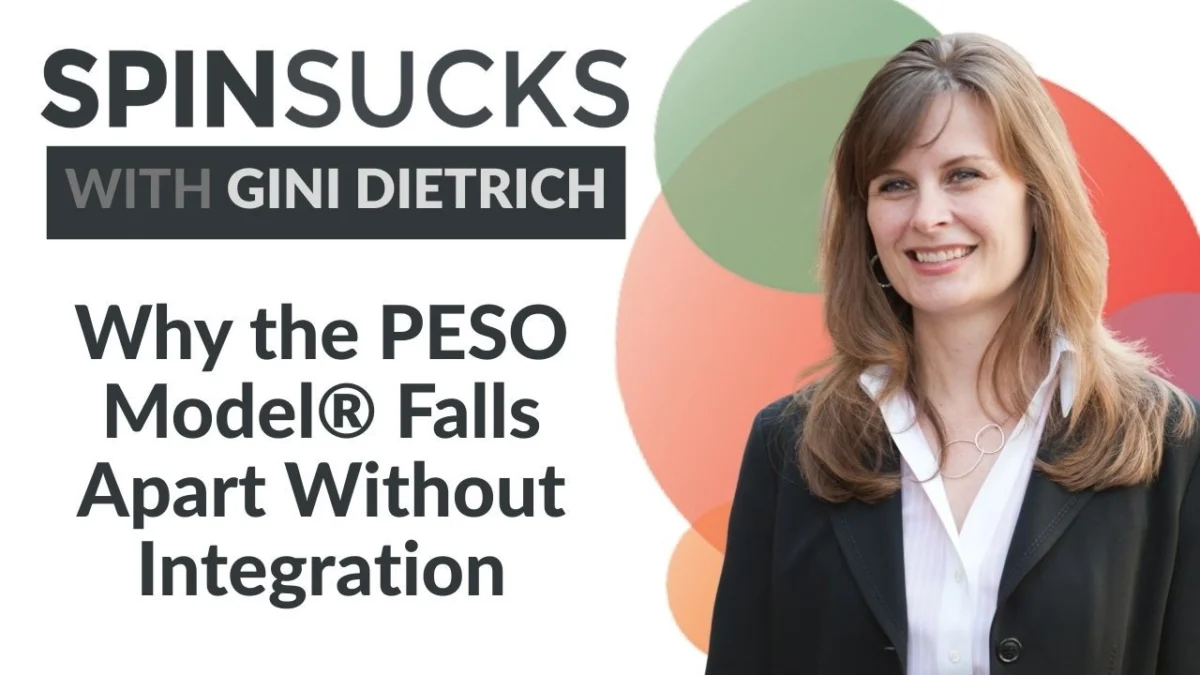
The communication industry is currently witnessing a fundamental shift in how the PESO Model—an acronym for Paid, Earned, Shared, and Owned media—is implemented within organizational structures, moving away from a collection of isolated tactics toward a unified, integrated operating system. For more than a decade, the PESO Model has served as the industry standard for holistic communication; however, recent market analysis suggests that many organizations continue to struggle with "siloed" execution, where blog posts, social media updates, and earned media placements are treated as disparate activities rather than interconnected components of a single strategic engine. According to industry experts at Spin Sucks, the primary differentiator between mere "activity" and genuine "momentum" lies in the purposeful integration of these four media types, ensuring they feed into one another to build long-term authority and measurable ROI.
The Evolution of the PESO Model: A Decade of Strategic Transformation
The PESO Model was first introduced to the public in 2014 by Gini Dietrich, founder of Spin Sucks and author of Spin Sucks: Communication and Reputation Management in the Digital Age. At its inception, the model provided a much-needed framework for public relations professionals to understand the expanding digital landscape, which was rapidly moving beyond traditional media relations. Initially, the model functioned as a roadmap of tactics categorized under each media type. However, the media landscape of 2014 was vastly different from the current environment, which is now dominated by algorithmic discovery, generative artificial intelligence, and a fragmented consumer attention span.
By 2020, the model began to evolve into a more rigorous "operating system." This transition was prompted by the realization that while many teams were "doing PESO," they were not seeing the compounded benefits of the framework. In 2024 and 2025, the PESO Model Certification was rebuilt from the ground up to address how modern audiences find information. This new iteration emphasizes the "visibility engine"—a synergy between owned and earned media—supported by the distribution power of shared media and the scaling capabilities of paid media. The chronology of the model shows a clear trajectory from a tactical checklist to a sophisticated governance structure for corporate communications.
The Hidden Costs of Fragmented Implementation
When communications teams operate in silos, the financial and operational consequences are significant, though often obscured by a high volume of "output." Data from various marketing efficiency studies indicate that fragmented teams often duplicate up to 30% of their content creation efforts due to a lack of central alignment. In a tactical PESO environment, the owned media team might produce a white paper while the shared media team creates a separate social campaign with a different narrative, and the earned media team pitches a third, unrelated angle to journalists.
This duplication leads to three primary costs:
- Resource Inefficiency: Teams spend excessive time in "alignment meetings" or rebuilding content briefs that have already been developed elsewhere in the organization.
- Brand Dilution: Inconsistent messaging across channels creates confusion for both human audiences and Large Language Models (LLMs). Research into search intent and AI discovery suggests that consistency is a primary factor in how AI agents perceive a brand’s authority and reliability.
- Wasted Advertising Spend: In a disconnected system, paid media is frequently used as a "panic button" to boost underperforming content. When paid media is deployed to support a narrative that lacks the foundation of owned authority or the validation of earned media, the cost-per-acquisition (CPA) typically remains high while conversion rates stagnate.
Professional analysis suggests that the transition to an integrated operating system is not merely a creative choice but a fiscal necessity in an era where marketing budgets are under increased scrutiny.
The Mechanical Intersections of an Integrated System
To function as an operating system, the PESO Model requires literal, mechanical intersections where one media type serves as the direct input for the next. The "Visibility Engine" is the core of this integration, focusing on the relationship between Owned and Earned media.
- Owned Media as the Destination: In a sophisticated operating system, owned media—such as a company blog, resource center, or proprietary research—is the central repository of authority. It is the "proof" that the organization controls.
- Earned Media as Validation: Rather than being a one-off win, earned media (third-party placements) acts as the external validation of the claims made in owned media. It provides the credibility that cannot be purchased, which is then fed back into the system to reinforce owned assets.
- Shared Media as Distribution and Feedback: Shared media (social platforms) is not a place for new messaging but a distribution channel for the core narrative. It also serves as a critical feedback loop, where audience questions and objections inform the next cycle of owned content.
- Paid Media as the Accelerant: In the integrated model, paid media is the final step. It is used to scale the reach of content that has already proven its value through organic engagement or earned validation.
By viewing these intersections as a "workflow" rather than a "list," organizations can ensure that every piece of content stacks upon the previous one, creating a compounding effect on brand visibility.
Establishing an Operating Rhythm and the "Stop List"
A critical component of the PESO operating system is the "Operating Rhythm"—a consistent cadence of decision-making that prevents the system from becoming reactive. Industry leaders suggest that teams should move away from task-based calendars and toward a decision-based rhythm. This involves answering specific weekly questions regarding the core narrative, the distribution of proof, and the identification of gaps in the visibility engine.
Furthermore, successful integration requires the implementation of a "Stop List." Because integration is often perceived as "adding more work," many teams experience burnout when trying to layer a new system over old, inefficient habits. A "Stop List" empowers teams to eliminate disconnected activities, such as:
- Reactive, one-off social media posts that do not point back to owned assets.
- "Random acts of PR" that do not align with the central brand narrative.
- Paid "boosts" for content that lacks a clear conversion path.
By stopping disconnected work, teams can redirect their energy toward deepening existing narratives and reusing high-performing assets, which significantly increases operational efficiency.
The Integration Map: A Tool for Organizational Alignment
To maintain the PESO operating system, experts recommend the use of a "One-Page Integration Map." Unlike a traditional content calendar, which focuses on dates and channels, the Integration Map focuses on the connective tissue between media types. It serves as a visual representation of how a single piece of owned media will be validated by earned media, distributed via shared channels, and accelerated through paid efforts.
This map provides several strategic advantages:
- Rapid Idea Evaluation: New ideas can be quickly vetted by seeing where they fit within the existing map. If an idea does not have a clear path through the four media types, it is likely a distraction.
- Simplified Reporting: When communicating with executive leadership, the map allows communicators to show a "system" rather than a list of tasks. This shifts the conversation from "how many posts did we do?" to "how are we building a strategic asset?"
- AI Optimization: By ensuring all channels are reinforcing the same narrative, the Integration Map helps optimize the brand for AI-driven search and discovery, which relies on consistent data points across the web.
Official Responses and Industry Implications
The move toward an integrated PESO operating system has drawn attention from Chief Marketing Officers (CMOs) and agency leaders who are under pressure to demonstrate the business impact of communication. Gini Dietrich and the team at Spin Sucks have noted that the 2024/2025 rebuilding of the PESO Model Certification was a direct response to this market demand for "momentum over activity."
"Running PESO as four separate tactics is the fastest way to lose budget and trust," Dietrich has stated in various professional forums. The certification now focuses on teaching practitioners how to build the "connective tissue" that allows the model to compound.
The broader implications for the industry are clear: public relations and marketing are no longer separate disciplines but are merging into a single function centered on "reputation and revenue." Organizations that continue to operate in silos risk being outpaced by competitors who have adopted an integrated operating system. As AI continues to change the way information is indexed and retrieved, the need for a consistent, authoritative, and validated presence across all four PESO pillars will only become more critical.
In conclusion, the PESO Model is no longer just a framework for understanding media; it is a rigorous system for managing the modern communication landscape. By focusing on integration, establishing an operating rhythm, and utilizing tools like the Integration Map, organizations can move beyond busywork and begin building a sustainable engine for growth and visibility. The transition from tactics to an operating system is the defining challenge for the next generation of communication professionals.