rifanmuazin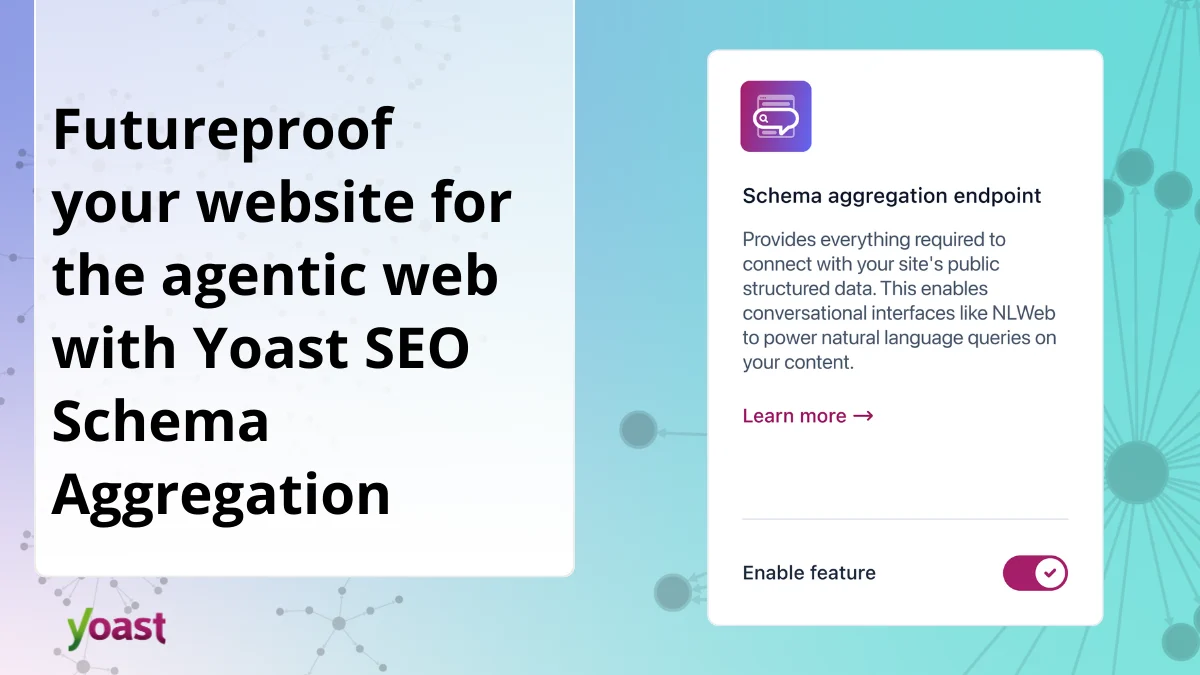
Yoast, a global leader in WordPress SEO, has officially launched its groundbreaking Schema Aggregation feature, marking a significant milestone in its strategic collaboration with Microsoft’s NLWeb. This innovative, opt-in functionality is designed to revolutionize how websites present their structured data to search engines and, critically, to the burgeoning landscape of AI-driven systems, ensuring content is not just discovered but deeply understood and capable of engaging in conversational interactions.
The Genesis of Innovation: Yoast and NLWeb Collaboration
The foundation for this pivotal release was laid in November 2025, when Yoast announced its partnership with NLWeb, an open web protocol developed by Microsoft. NLWeb’s core mission is to simplify the creation of conversational interfaces for the web, fostering a more interactive and intelligent online experience. This collaboration was born from a shared vision: to empower website owners to navigate the evolving digital ecosystem, particularly as artificial intelligence increasingly shapes how users find and consume information. The joint effort aimed to extend existing open web standards, ensuring that WordPress sites, which power over 43% of the internet, could confidently participate in what is being termed the "agentic web."
Understanding Schema Aggregation: Bridging Discovery to Conversation
At its core, Yoast SEO Schema Aggregation is an advanced structured data management system that consolidates a website’s semantic information into a clearer, more consistent format. Structured data, often implemented using Schema.org vocabulary in JSON-LD format, provides search engines and AI systems with explicit signals about the content, its author, relationships between different pieces of information, and the overall context of the website. By enabling this feature, site owners facilitate a more accurate and comprehensive understanding of their digital presence by intelligent agents, large language models (LLMs), and conversational assistants like Microsoft Copilot.
This feature introduces a novel concept: the "schemamap." Traditionally, structured data is embedded within individual web pages, describing only the content on that specific page. While effective for page-level understanding, this approach presents inefficiencies for AI systems attempting to grasp the entirety of a website’s knowledge base. The schemamap aggregates all relevant structured data—including articles, authors, products, organizational details, and more—into a single, optimized output. This means that instead of an AI crawling hundreds or thousands of individual pages to piece together information, it can retrieve a holistic representation of the site’s structured data in one streamlined request, dramatically improving efficiency and accuracy.
The Evolution of Web Understanding: From Keywords to AI Agents
Yoast has a storied history of pioneering advancements in how WordPress websites are represented on the open web. The company has consistently adapted to the shifting paradigms of search and content consumption.
- 2019: The Schema Graph and API: Yoast introduced the industry’s first-of-its-kind schema graph and API. This innovation moved beyond simple keyword-based optimization, helping search engines understand content in a more interconnected, semantic way as they evolved into sophisticated discovery engines. This foundational work laid the groundwork for the current aggregation capabilities, establishing a robust framework for structured data management within WordPress.
- Today: The Agentic Web: The digital landscape is now transitioning towards the "agentic web," where AI agents and conversational interfaces play a central role in information retrieval and interaction. This shift demands more than just discovery; it requires deep comprehension and the ability to engage in meaningful conversation with digital content. Yoast’s Schema Aggregation is the next logical step, ensuring WordPress sites can transition seamlessly from being merely discovered to being understood and interacted with conversationally.
This new feature establishes a standardized connection between a website’s structured data and the systems powering AI-driven discovery and interaction. This standardization is crucial for ensuring that published content is correctly interpreted by AI, which is becoming an increasingly integral part of how people find and utilize online information.
Key Benefits for Publishers and AI Systems
The Schema Aggregation feature offers a multitude of benefits, addressing both the practical needs of website owners and the operational requirements of AI systems:
- Enhanced AI Comprehension: By presenting a consolidated and connected view of structured data, websites become far easier for LLMs and AI agents to understand. This leads to more accurate summaries, better answers in conversational AI, and a more faithful representation of the content.
- Improved Crawling Efficiency and Reduced Server Load: Instead of AI systems repeatedly crawling individual pages, they can access a comprehensive schemamap via a single endpoint. This drastically reduces the number of requests to a website’s server, conserving resources and improving overall site performance.
- Data Consistency and Clarity: The aggregation process inherently leads to a more consistent and unified representation of a site’s data, eliminating potential discrepancies that might arise from disparate page-level schema implementations.
- Privacy-First Approach: Acknowledging widespread concerns about AI access to data, Yoast designed Schema Aggregation with privacy as a paramount consideration. The opt-in nature of the feature gives site owners explicit control over whether their aggregated structured data is exposed via the new endpoint. This empowers users to manage how their content is accessed by AI, reinforcing data governance.
- Future-Readiness: The "agentic web" is still in its nascent stages, but its trajectory is clear. By adopting Schema Aggregation, websites are proactively preparing for a future where AI-driven interactions are commonplace, ensuring their continued relevance and visibility.
- Standardization at Scale with Personalization: While providing a standardized output for AI systems, the feature also caters to developers and technical users who require more control. Yoast’s developer documentation on schema markup explains how to inspect and extend the schema graph, allowing for maximum personalization while maintaining standardization.
Alain Schlesser, Principal Architect at Yoast, emphasized this control, stating, “You can’t stop the AI wave, but you can direct it. Our integration with NLWeb puts you back in charge. It allows you to manage server load efficiently and ensures that when AIs do access your content, they get the rich, semantic understanding necessary to represent you correctly.” This sentiment underscores the core philosophy behind the feature: empowering website owners in an AI-driven world.
Technical Deep Dive: How the Schemamap Works
The new endpoint in Yoast SEO (available in the free version) exposes a site’s full structured data graph in the proposed new standard, the schemamap. This is a crucial distinction from traditional page-level schema:
- Before: Each page on a website would output its own structured data, describing that specific page (e.g., an article, its author, publication date). Search engines and AI would then have to parse countless individual JSON-LD blocks to build a comprehensive understanding of the entire site.
- After (with Schema Aggregation): Yoast consolidates all this disparate information. Instead of isolated page descriptions, the schemamap presents a connected, site-level view. It deduplicates common entities like authors, organizations, and products, presenting them once and then linking them to all relevant content across the site. This creates a cohesive knowledge graph for the entire website, making it exponentially easier for AI systems to understand relationships between articles, authors, categories, and products. The same underlying data is reused but organized in a way that reflects the website’s holistic structure.
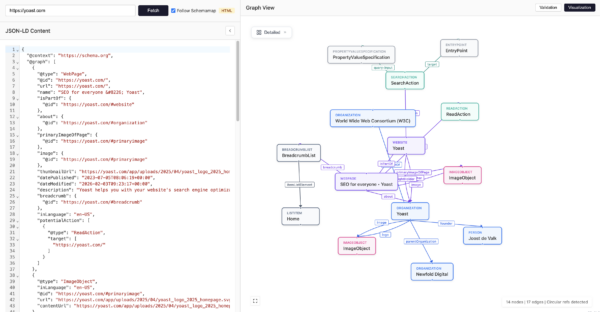
This consolidated output provides a unified perspective, enabling AI systems to grasp how different pieces of content, authors, products, and the organization itself relate to each other across the entire digital domain. An example of a schemamap can be visualized using the Yoast SEO Schema Visualizer, demonstrating its comprehensive and interconnected nature.
Industry Perspectives and Official Statements
While specific official statements from Microsoft’s NLWeb team regarding this immediate launch were not independently available, the ongoing collaboration itself speaks volumes. The involvement of R.V. Guha, co-founder of Schema.org, within the NLWeb team further validates the importance of this integration in extending open web standards. This partnership signifies a shared commitment to developing responsible and future-ready solutions for the evolving web. The SEO community and web developers are expected to welcome this feature as a critical tool for maintaining visibility and accurate representation in the increasingly AI-centric digital landscape, especially given the privacy-conscious implementation.
Collaborative Development and Rigorous Testing
Developing a feature of this magnitude for millions of websites necessitates meticulous testing and validation. Yoast approached this launch with a commitment to reliability and scalability. The feature was developed with advanced users and agencies in mind and underwent rigorous testing in controlled environments.
Yoast collaborated closely with Syde, its Innovation Partner, to test the new feature across a diverse range of real-world client scenarios. This practical testing ensured that the schema aggregation logic was robust, scalable, and delivered consistent output quality before its public deployment. Syde’s feedback was instrumental in refining the feature, highlighting the value of collaborative innovation in building resilient web solutions. Both parties anticipate continuing this partnership to ensure clients remain visible and accurately represented as AI-driven systems continue to evolve.
Broader Implications for the Future of the Web
The launch of Yoast SEO Schema Aggregation is more than just a new feature; it represents a significant step towards a more structured, intelligible, and privacy-conscious web. As AI agents and conversational interfaces become the primary gateway to information for many users, the ability for websites to communicate their content effectively to these systems will determine their relevance and reach.
By providing a standardized, connected, and deduplicated schemamap, Yoast and NLWeb are empowering website owners to proactively shape how AI understands and interacts with their content. This initiative fosters responsible AI development by giving AI systems clearer, more accurate data, which can help mitigate issues like misinterpretation or "hallucinations." It also champions the principles of the open web, ensuring that content creators retain control and visibility rather than being marginalized by proprietary AI models. The future of discovery is conversational, and Yoast is positioning WordPress websites at the forefront of this transformation.
Availability and Call to Action
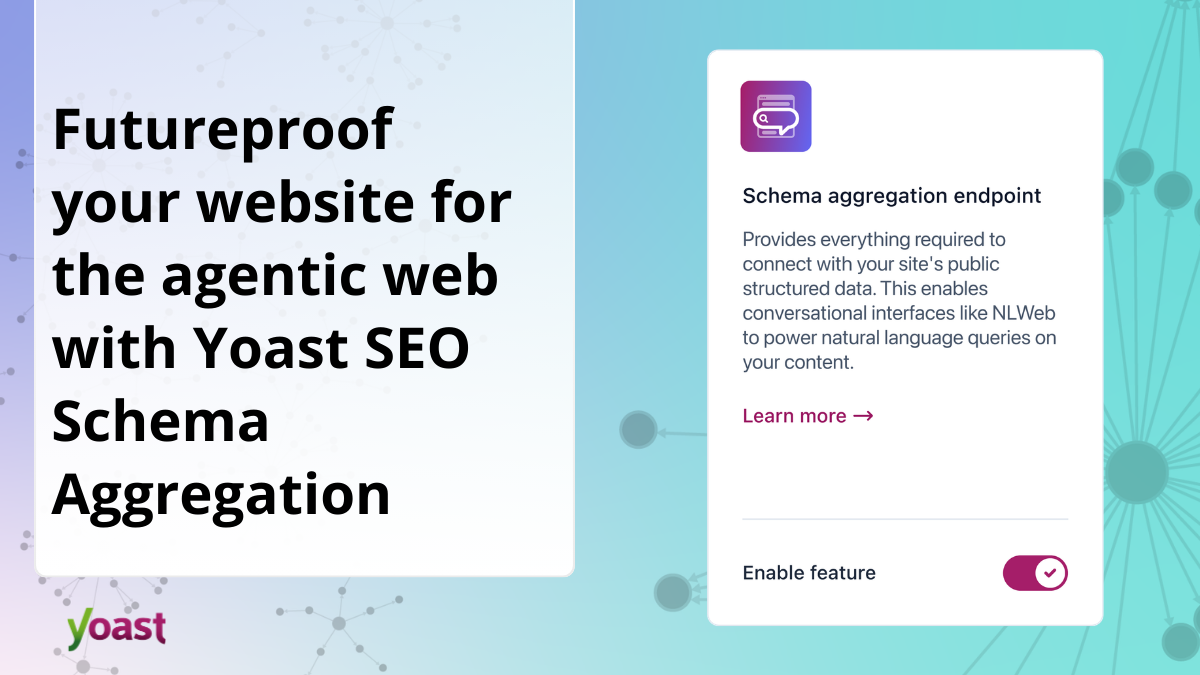
The Schema Aggregation feature is now available to all Yoast SEO customers who update to version 27.1 or later. Upon logging in, users will encounter a short guided walkthrough introducing the feature and demonstrating how to enable it via a simple toggle in their Yoast SEO settings. For detailed instructions on enabling Schema Aggregation, users can refer to the dedicated help article on the Yoast website. By activating this feature today, website owners can ensure their digital presence is not only visible but also deeply understood and ready for the conversational future of the web.