rifanmuazin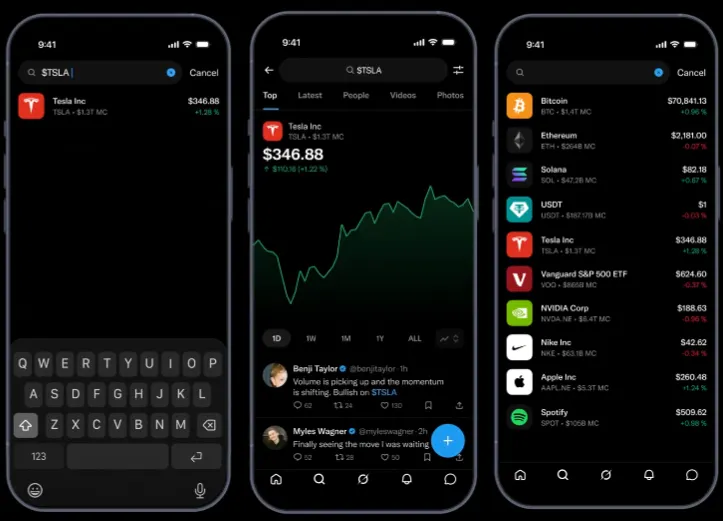
In a pivotal move advancing its ambitious financial integration strategy, X, formerly Twitter, has officially launched its updated Cashtags display to all users on iOS devices worldwide. This feature, which was initially previewed in January, provides users with embedded market information for active asset listings, allowing them to tap through for real-time price data and relevant discussions directly within the platform. The global rollout, confirmed by Nikita Bier, X’s head of product, marks a tangible step in CEO Elon Musk’s long-standing vision to transform the social media platform into an "everything app" capable of facilitating a full spectrum of financial activities.
Diving Deeper into Cashtags: Functionality and User Experience
The newly implemented Cashtags represent a significant upgrade from their previous iteration, moving beyond simple tagging to offer dynamic, interactive financial data. Users can now incorporate Cashtags—such as $TSLA for Tesla stock or $BTC for Bitcoin—into their posts. When these Cashtags are tapped, a pop-up or integrated display appears, presenting real-time price charts, market capitalization, trading volumes, and a curated feed of other posts mentioning that specific asset. This integration is designed to make X an immediate and comprehensive source for financial news and market sentiment.
Nikita Bier elaborated on the feature’s capabilities, stating, "X has always been the best source of financial news for traders and investors. Billions of dollars are allocated every day based on what people read on Timeline. Today we’re launching our new Cashtags feature in the US and Canada on iPhone, bringing real-time financial data to X." Shortly after this initial announcement, Bier confirmed the feature’s expanded availability, noting, "Cashtags are now available globally on iOS."
The system is engineered for intuitive use. X will automatically suggest relevant stocks or cryptocurrency tokens as users type a Cashtag address, aiming to streamline the process of finding and discussing financial instruments. Bier emphasized the benefit of this seamless integration: "Anyone who taps a Cashtag will see posts mentioning it along with its price chart – without ever leaving X. This ensures that you’re always matched to the chatter for the right stock or token." This functionality not only enriches the user experience but also positions X as a direct competitor to specialized financial news platforms and trading apps for market-related discourse and data aggregation.
The "Everything App" Vision: A Decade-Long Ambition
The introduction of enhanced Cashtags is not an isolated product update but rather a foundational element of Elon Musk’s much grander ambition for X. His concept of an "everything app" dates back to the early 2000s, when his original X.com online banking platform merged with Confinity, eventually becoming PayPal. Musk’s enduring fascination with integrated financial services has found a new canvas in X, where he envisions users managing their entire financial portfolio—from payments and savings to investments and even loans—within a single application.
The primary inspiration for this "everything app" model is often cited as WeChat, China’s ubiquitous multi-purpose messaging, social media, and mobile payment application developed by Tencent. WeChat transcends typical social networking by integrating a vast array of services: users can chat, make video calls, hail taxis, order food, pay utility bills, book medical appointments, transfer money, invest, and even apply for government services, all without leaving the app. It has become an indispensable part of daily life for hundreds of millions in China, demonstrating the immense potential for user engagement and economic activity within a unified digital ecosystem.
Musk has frequently articulated this vision since acquiring Twitter in October 2022. During a staff meeting in late 2022, just months after the acquisition, he reportedly told employees that he wanted X to eventually facilitate payments, stock trading, and "everything else that’s currently offered by banks." His bold declaration, "If it involves money. It’ll be on our platform," encapsulates the expansive scope of his financial aspirations. The strategic rationale behind this push is multifaceted: increased user retention and engagement by making X indispensable, diversification of revenue streams beyond advertising, and leveraging the platform’s vast user base for a potentially massive financial services market.
Chronology of X’s Financial Push
The journey towards X becoming a financial powerhouse has been marked by several key developments and announcements:
- October 2022: Elon Musk completes the acquisition of Twitter, immediately rebranding it to X Corp. and frequently discussing his "everything app" ambitions.
- Early 2023: Reports surface of X forming a dedicated payments team and beginning the process of applying for money transmitter licenses across various U.S. states. Musk reiterates his desire for X to handle "all financial life."
- Mid-2023 onwards: News emerges that X is facing significant regulatory hurdles, including denials or prolonged delays in obtaining money transmitter licenses in several states. This indicates the complexity and scrutiny involved in entering the financial services sector.
- January 2024: X previews its updated Cashtags display, offering a glimpse into the enhanced financial data integration.
- February 2024: The new Cashtag format officially launches globally on iOS, providing real-time market data directly within posts.
- Late January/Early February 2024: Senator Elizabeth Warren publicly raises significant concerns about X’s proposed financial services, questioning consumer safety and national security implications.
This timeline illustrates a clear, albeit challenging, progression from conceptualization to initial feature rollout, juxtaposed with growing regulatory and political resistance.
Navigating the Regulatory Labyrinth
While the Cashtags launch signifies a technical achievement for X, the path to becoming a fully functional financial platform, particularly in the United States, is fraught with regulatory complexities. A critical first step for any entity seeking to facilitate payments and money transfers is obtaining money transmitter licenses (MTLs). These licenses are typically regulated at the state level, meaning X must secure approval from individual financial regulatory bodies in each of the 50 U.S. states, as well as comply with federal regulations from agencies like the Financial Crimes Enforcement Network (FinCEN).
Reports indicate that X has encountered significant pushback and denials in its efforts to acquire these licenses. The process is rigorous, often requiring extensive documentation of a company’s financial stability, compliance protocols (including Know Your Customer/Anti-Money Laundering or KYC/AML measures), data security infrastructure, and leadership integrity. Regulatory groups have reportedly expressed concerns about X’s business makeup, investor structure, and, crucially, the leadership style and public criticisms of various regulatory and government organizations by Elon Musk. This perceived volatility and antagonism from X’s owner could naturally intensify scrutiny on the proposed "X Money" model.
The fragmented nature of U.S. financial regulation, where each state can have unique requirements, presents a substantial operational and compliance burden. Unlike a single federal license, X must navigate a patchwork of different rules, application processes, and ongoing compliance obligations, which can be time-consuming and costly. Furthermore, expanding globally would introduce another layer of diverse national and international financial regulations, each with its own set of challenges.
Political Scrutiny and Consumer Safeguards
The regulatory challenges are compounded by increasing political scrutiny, particularly from lawmakers concerned about consumer protection and systemic risks. This week, The Verge reported that Senator Elizabeth Warren, a prominent voice on financial regulation, explicitly raised questions about the safety elements of the X Money proposal. Warren reportedly stated that "consumers, our national security, and the stability of the financial system" could be at risk, directly citing Musk’s "track record operating X."
Senator Warren’s concerns are not without precedent. X, under Musk’s ownership, has faced criticism regarding its content moderation policies, data security, and leadership stability. Critics point to instances of platform instability, significant layoffs impacting critical teams (including trust and safety), and controversies surrounding content policies as indicators that the platform might not be a suitable steward of sensitive financial data and transactions. The potential for rapid dissemination of misinformation, which could impact market stability, is another latent concern in integrating financial services with a real-time social media feed.
Furthermore, the integration of financial services into a social media platform raises profound questions about data privacy and the potential for targeted advertising or manipulation based on users’ financial behaviors. Ensuring robust safeguards against fraud, cyberattacks, and the misuse of financial data would be paramount, and regulators are likely to demand the highest standards from a company seeking to operate at such a scale. The ability of X to meet stringent KYC/AML requirements, especially given its relatively open platform architecture, is also a significant area of focus for authorities.
Market Implications and Competitive Landscape
Should X successfully navigate these hurdles, its entry into comprehensive financial services could have profound implications for the broader market. It would position X as a direct competitor not only to traditional banks and payment processors but also to emerging fintech companies and other tech giants that have explored financial offerings.
Traditional financial institutions, with their established regulatory frameworks and customer trust, would face a new kind of challenger—one with a massive, engaged user base and a deep understanding of digital interactions. Fintech companies, which often specialize in niche financial services, might find themselves competing with a broad, integrated offering from X. Other social media giants, such as Meta (with its past attempts at cryptocurrency like Diem/Libra), have largely retreated from direct financial service provision due to similar regulatory and political pressures, suggesting the difficulty of this undertaking.
For users, the prospect of an "everything app" could offer unparalleled convenience, but it also consolidates significant power and data within a single entity. User adoption would hinge on trust, security assurances, and the actual utility and reliability of the financial services offered. The potential for X to generate substantial revenue through transaction fees, premium financial features, or highly targeted advertising based on financial data is immense, offering a powerful incentive for Musk to persist despite the challenges.
The Road Ahead for X Money
Despite the significant regulatory and political headwinds, X is determined to push ahead with its financial ambitions. The company plans to release an early access model for "X Money" soon, indicating its readiness to test and iterate on these new services. However, without widespread licensing approval and amidst persistent questions from authorities about the project’s safety and viability, the full realization of Musk’s "everything app" vision, particularly its financial components, remains uncertain.
The launch of Cashtags, while a relatively minor piece of the larger puzzle, is undeniably a concrete step. As Nikita Bier articulated, Cashtags are "the first step in our commitment to be the best destination for the finance and crypto community." This statement underscores that X views this as just the beginning of a long and complex journey. The success of X’s financial venture will ultimately depend on its ability to build trust with users, demonstrate unwavering compliance with stringent financial regulations, and effectively address the legitimate concerns raised by lawmakers and consumer advocates. The ambition is clear, but the path forward is undeniably arduous and uncertain.