rifanmuazin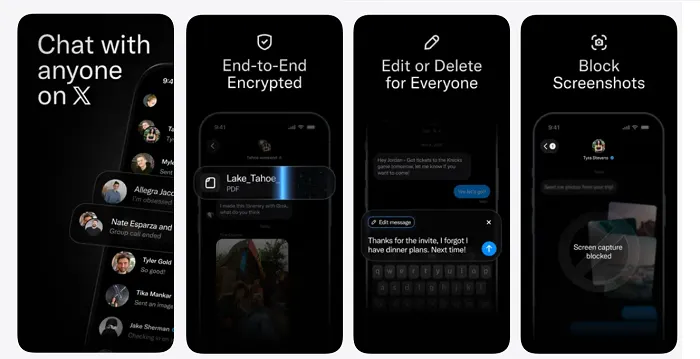
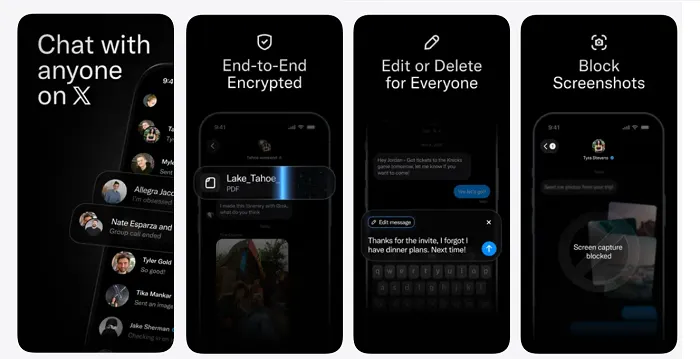
X, formerly known as Twitter, has officially rolled out its standalone X Chat application, providing a dedicated platform for direct messages (DMs) after a month-long beta testing phase with select users. The new app, currently available for iOS devices, positions itself on a foundation of user privacy, prominently claiming "no ads and no tracking" and asserting that "every message is end-to-end encrypted with a key pair unique to you, protected by a PIN that never leaves your device." This launch marks a significant development in Elon Musk’s ambitious vision to transform X into an "everything app," mirroring super-apps prevalent in Asian markets. However, the app’s core claim of robust end-to-end encryption (E2EE) has immediately drawn skepticism and criticism from cybersecurity experts, echoing historical vulnerabilities in X’s messaging security.
The Genesis of X Chat: A Strategic Move Amidst Transformation
The introduction of X Chat comes at a pivotal moment in X’s ongoing evolution under Elon Musk’s ownership. Since acquiring Twitter in October 2022, Musk has relentlessly pursued a radical transformation, rebranding the platform to X and articulating a grand vision for it to become an "everything app"—a comprehensive digital ecosystem offering social networking, news, content creation, and crucially, financial services. This concept draws heavily from successful models like China’s WeChat, which seamlessly integrates communication, social media, mobile payments, and various daily services into a single platform.
Direct messaging has always been a fundamental component of social media platforms, facilitating private conversations between users. For X, DMs serve as a critical channel for interaction, and enhancing their security and functionality is logically aligned with building a more robust and trustworthy platform. Prior to this standalone app, DMs were integrated directly into the main X application, offering a basic messaging experience that, for a long time, lacked advanced security features like true end-to-end encryption. The move to a separate app, while seemingly counter-intuitive for an "everything app" aiming for integration, suggests a strategic decision, potentially driven by regulatory considerations or a desire to highlight a distinct security posture for private communications.
The beta testing phase, which commenced approximately a month prior to the official launch, allowed X to gather user feedback and refine the application. While the specifics of the beta program were not widely publicized, it likely focused on testing the app’s core messaging functionalities, user interface, and the performance of its underlying encryption mechanisms. The positive reception from beta testers, if any, remains largely undisclosed, but the swift transition from beta to public release indicates X’s urgency in pushing this product to market.
Features and Availability: A Closer Look at X Chat
As per its description on the Apple App Store, X Chat is presented as a minimalist and privacy-focused messaging application. Key advertised features include:
- Dedicated DM Experience: By separating DMs from the main X app, X Chat aims to provide a cleaner, more focused environment for private conversations, free from the distractions of the public feed.
- No Ads and No Tracking: This claim is a significant differentiator, especially in an era where data monetization through advertising and tracking is standard practice for many free messaging services. If upheld, it could appeal to privacy-conscious users.
- End-to-End Encryption (E2EE): The cornerstone of the app’s privacy claims, promising that only the sender and intended recipient can read messages, with X itself purportedly unable to access message content. The description emphasizes that encryption keys are "unique to you, protected by a PIN that never leaves your device."
- iOS Exclusivity (Initial Launch): The app is currently only available for Apple’s iOS ecosystem, a common strategy for new product launches to focus resources on a single platform before expanding to others like Android.
The decision to launch a separate app rather than deeply integrating enhanced E2EE into the existing X platform raises questions about the long-term architectural strategy. While it could be a way to expedite the rollout of a secure messaging component, it also fragments the user experience, requiring users to switch between applications for public interactions and private messages. This fragmentation stands in contrast to the holistic, integrated experience typically associated with "everything apps."
The Encryption Conundrum: Claims Versus Reality
The most contentious aspect of X Chat’s launch is its assertion of end-to-end encryption. The App Store description boldly states, "No one can read your conversation. Not even X." However, this claim has been met with immediate and strong rebuttals from independent cybersecurity researchers, who point to a documented history of vulnerabilities and design flaws in X’s E2EE implementation.
X’s journey towards implementing E2EE for direct messages has been fraught with challenges and delays. While other major messaging platforms like WhatsApp, Signal, and Apple’s iMessage have long offered robust E2EE, X (then Twitter) was slower to adopt it. When X finally began rolling out E2EE for DMs in phases, starting in April 2023 for some premium users, it was quickly scrutinized. Reports from security experts highlighted significant architectural weaknesses, leading to what some described as a "paused" or incomplete implementation.
A critical analysis was published in November of last year by software engineer David Nepozitek. In his detailed blog post, Nepozitek provided an overview of X’s encryption system, uncovering several security flaws. His primary concern revolved around the management of "conversation keys." As Nepozitek explained, "X Chat encrypts messages using a shared secret called a conversation key. This key is generated at the start of the conversation and then used to encrypt all messages in that conversation. The problem is that this conversation key basically never changes. That makes all the potential attacks way worse. If the conversation key is ever compromised, all past and future messages can be decrypted."
This flaw is significant because robust E2EE protocols, such as those used by Signal, employ "perfect forward secrecy" (PFS) and "future secrecy." PFS ensures that even if a long-term key or a current session key is compromised, past communications remain secure because new, ephemeral keys are generated for each message or short session. Future secrecy, similarly, protects future communications. X’s system, as described by Nepozitek, appears to lack these crucial safeguards, making it vulnerable to a single point of failure if the static conversation key is ever exposed.
Following the X Chat launch announcement on Friday, the iOS development team Mysk, known for its privacy and security research, reiterated these concerns. In a post on X, Mysk stated that "XChat’s claim of ‘end-to-end encrypted’ chats is misleading at best," directly attributing this to the foundational weaknesses in its encryption architecture. Mysk further elaborated that X Chat’s encryption is "vulnerable to the controlling entity," meaning that X itself, as the service provider, could potentially read messages exchanged within the app if it chose to do so, or if compelled by legal means. This contradicts X’s explicit statement, "Not even X" can read conversations. Such a vulnerability undermines the very essence of E2EE, which is designed to prevent service providers from accessing user communications.
The implications of these identified flaws are substantial. For users, it means that despite the app’s strong privacy claims, their private conversations may not be as secure as they believe. For X, it represents a significant trust deficit, especially as it attempts to venture into sensitive areas like financial services, where data security and privacy are paramount.
The Regulatory Nexus: X Chat and the Path to X Money
Beyond providing a separate messaging utility, the X Chat app plays a potentially critical role in X’s broader strategy, particularly concerning its ambitions in financial services. Elon Musk has long championed the concept of X Money, a payments and money transfer system integrated into the "everything app." This would allow users to send and receive funds directly within X, transforming it into a formidable player in the fintech landscape.
However, the path to launching X Money has been fraught with regulatory challenges. To facilitate payments, X needs to obtain various licenses, primarily "payment transmitter" approvals, in all relevant jurisdictions. While X has made progress, securing these approvals in most U.S. states, some key jurisdictions have reportedly rejected X’s applications. The reasons cited for these rejections include concerns regarding X’s "funding partners and ownership." Regulators, particularly in the financial sector, demand stringent compliance with anti-money laundering (AML) and know-your-customer (KYC) regulations, along with robust data security and privacy frameworks. Any perceived instability in ownership or lack of transparency regarding funding can raise red flags for financial regulators.
This is where the X Chat app, despite its contested encryption claims, might fit into X’s strategic puzzle. By creating a separate app that claims enhanced security measures, X might be attempting to demonstrate to regulators its commitment to user data protection, particularly for sensitive communications. The narrative that X Chat offers "no ads and no tracking" and is end-to-end encrypted, even if challenged by experts, could be presented to regulatory bodies as evidence of a serious effort to safeguard user privacy. This could be a crucial factor in swaying hesitant regulators, particularly those scrutinizing X’s ability to handle sensitive financial information securely.
The timeline for X Money’s launch has also been pushed back repeatedly. Musk initially suggested a late 2024 launch, only to later revise this to a more definitive April 2026. These delays underscore the complexity and stringency of financial regulations and the difficulties X has faced in securing necessary approvals. Without full U.S. regulatory approval, X cannot launch X Money in its home market, and the company has indicated it is not looking to expand the option to other international markets before achieving a successful U.S. rollout.
Therefore, the X Chat app, with its emphasis on privacy and encryption, could be interpreted as a tactical maneuver to address regulatory concerns head-on. If X can convince regulators that its messaging infrastructure is secure, it might pave the way for critical approvals for X Money, unlocking the next major phase of the "everything app" vision.
Market Implications and Competitive Landscape
The launch of X Chat introduces a new player into an already crowded and highly competitive messaging app market. Major contenders include:
- WhatsApp: Dominant globally, known for its widespread E2EE and feature set.
- Telegram: Popular for its channel features and optional "secret chats" with E2EE.
- Signal: The gold standard for E2EE, highly recommended by privacy advocates.
- Apple iMessage: E2EE by default between Apple users.
- Meta Messenger: Offers optional E2EE and deep integration with Facebook.
X Chat faces an uphill battle to gain significant traction beyond X’s existing user base. Its primary appeal initially seems to be for users who are heavily invested in the X ecosystem and desire a more private or dedicated space for their DMs. The "no ads, no tracking" promise could be a compelling selling point, but its effectiveness will depend heavily on whether the app can build and maintain user trust, especially concerning its E2EE claims.
The strategic paradox of a separate chat app for an "everything app" also needs consideration. While it might serve a regulatory purpose, it could fragment the user experience. Will users be willing to download and regularly use a separate app for DMs when other platforms offer integrated, demonstrably secure messaging? The success of X Chat will likely hinge on its ability to offer unique value propositions that outweigh the inconvenience of app switching, or if it indeed becomes a critical enabler for X Money, drawing users into the broader X financial ecosystem.
The Path Forward: Trust, Security, and Ambition
The launch of X Chat is a multifaceted development. On one hand, it represents a tangible step in X’s ambitious transformation into an "everything app," aiming to enhance the platform’s utility and appeal. The creation of a dedicated, supposedly secure messaging environment aligns with broader industry trends towards privacy-focused communication.
On the other hand, the immediate and persistent challenges to its core encryption claims cast a long shadow over its prospects. For X to truly succeed in its "everything app" vision, particularly with the integration of financial services, building unshakeable user trust and regulatory confidence is paramount. This trust hinges on demonstrably robust security, especially for private communications and financial transactions. The current debate surrounding X Chat’s E2EE vulnerabilities suggests that X still has significant work to do to meet industry standards and convince both users and regulators of its capabilities.
Ultimately, X Chat is more than just a new messaging app; it is a strategic piece in Elon Musk’s grand design for X. Its success or failure, both in terms of user adoption and regulatory acceptance, will provide critical insights into the feasibility of the "everything app" vision and X’s ability to navigate the complex landscape of digital trust, privacy, and financial regulation. For now, it remains another option for X users, but one whose foundational security merits continued scrutiny.