Meta’s social media platform, Threads, has significantly broadened the availability of its flair icon feature for community posts, allowing all eligible members to integrate these visual tags into their contributions. This strategic expansion is designed to further streamline engagement and foster more precise connections within the platform’s burgeoning array of topical discussions, marking a crucial step in Threads’ evolution as a distinct social networking environment. The move, initially tested in a limited capacity, now empowers users to visually categorize their posts within specific communities, enhancing discoverability and contextual relevance for fellow members.
Understanding the Functionality of Community Flair
Flair, in the context of online communities, refers to small, descriptive icons or emojis that serve as visual identifiers for subtopics or categories within a larger group. As depicted in preliminary usage examples, these icons are designed to provide immediate visual cues about the nature of a post, even before a user clicks into the full content. For instance, within a hypothetical "BookThreads" community, a user discussing romance novels could affix a rose icon to their post, while another inquiring about writing techniques might opt for a pencil or quill icon. This granular categorization allows community members to quickly identify and engage with content that aligns precisely with their interests, bypassing less relevant discussions.
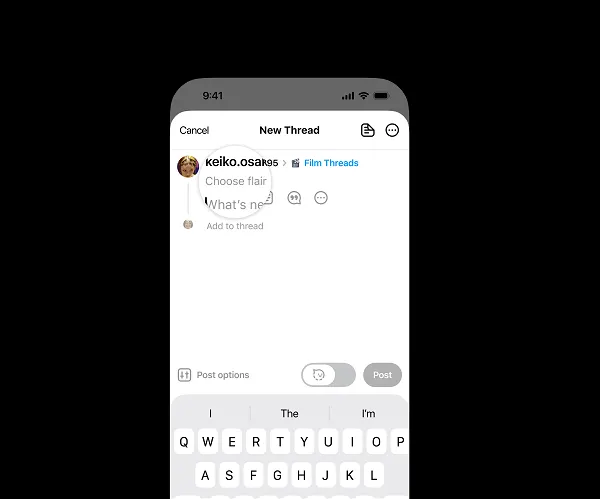
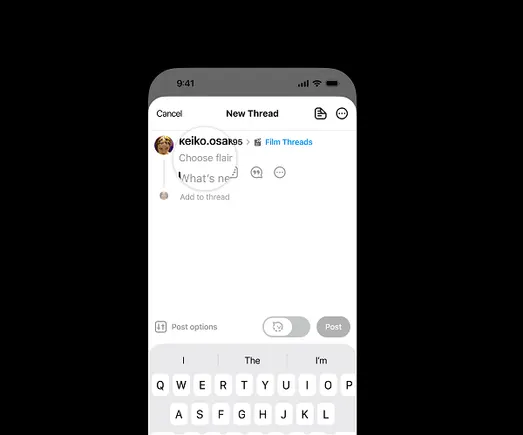
The implementation is straightforward: when a user composes a post within a community that has enabled flair, they are presented with an option to select a relevant icon from a predefined list. Once chosen, this flair is prominently displayed directly beneath the user’s username on the community post. A notable convenience feature is that the selected icon will automatically default to subsequent posts made by that user within the same community, although users retain the flexibility to change their flair at any time, adapting it to the specific subject matter of each new contribution. This persistent yet adaptable display ensures consistent visual context while allowing for dynamic topic shifts.
This mechanism is not merely an aesthetic addition; it represents a functional enhancement aimed at deepening the utility of Threads’ community structure. By enabling users to self-categorize their content, the platform empowers them to more effectively signal their interests and the specific nature of their contributions. This, in turn, facilitates more efficient navigation for other users, who can quickly scan community feeds for posts adorned with flairs that resonate with their current focus. The underlying principle is to reduce information overload and enhance the signal-to-noise ratio, a perennial challenge in large online forums.
A Strategic Evolution for Threads: Chronology and Context
The rollout of community flair is the latest development in Threads’ ongoing effort to cultivate a robust, topic-centric social experience, a strategy that distinguishes it from more generalist microblogging platforms. The foundational step in this journey occurred in October when Threads made its topic-based communities available to all users. This pivotal moment marked a significant shift from a more open, Twitter-like feed to one that actively encouraged the formation and growth of specialized interest groups. Since then, the platform has consistently expanded its array of discussion groups, with any topic demonstrating substantial user traction eventually earning its own dedicated community designation. This organic growth model ensures that new communities emerge based on genuine user demand and engagement, rather than arbitrary platform curation.
The overarching vision behind these communities is to foster more focused discussions and create environments where users can more easily discover and connect with like-minded individuals. This contrasts sharply with the often chaotic and broad discourse found on other platforms, where specific discussions can quickly get lost in a deluge of unrelated content. Threads’ approach is designed to create pockets of highly engaged users around shared passions, hobbies, professional interests, or current events. Indeed, the platform has observed that many of these initial communities are naturally branching off into increasingly niche subgenres. It is precisely in these evolving, granular sub-communities that the new flair option becomes particularly instrumental, providing the necessary tools for finer categorization and improved navigation.
The concept of community flair was not immediately available to all users from the outset. Threads initiated an initial test of community flair in December, a common practice in software development to gather feedback and refine features before a wider deployment. This phased rollout allowed developers to assess user adoption, identify potential technical issues, and gauge the effectiveness of the feature in real-world community settings. The successful conclusion of this test phase paved the way for the current expansion, indicating that the initial trials yielded positive results and reinforced the perceived value of flair as a tool for community organization and engagement.
Enhancing User Experience and Discoverability
The introduction of widespread community flair has profound implications for the overall user experience on Threads. Primarily, it significantly enhances content discoverability. In a large and active community, sifting through hundreds or thousands of posts to find specific topics can be a daunting task. Flair acts as an immediate visual filter, allowing users to quickly identify posts related to their specific interests without having to read every headline or opening sentence. This efficiency not only saves time but also reduces cognitive load, making the platform feel more organized and user-friendly.
Furthermore, flair contributes to a more personalized and relevant feed within communities. By consistently using specific flairs, users effectively signal their content preferences, which could, in the future, inform algorithmic recommendations, leading to an even more tailored experience. For content creators within communities, flair provides a straightforward method to reach their intended audience more effectively. A user posting a technical question in a gaming community, for example, can use a "Tech Support" flair, ensuring that their query is immediately visible to those most likely to offer assistance. This targeted communication fosters more productive exchanges and reduces instances of misdirected information.
Beyond mere organization, flair can also subtly influence community culture. It encourages users to be more deliberate about the content they post and how they categorize it, leading to a more structured and respectful dialogue. When subtopics are clearly defined by flair, discussions tend to remain more focused, minimizing off-topic tangents and fostering a greater sense of shared purpose among participants. This level of self-organization, driven by user-generated tags, can significantly reduce the burden on community moderators, allowing them to focus on more complex issues rather than basic content categorization.
The Competitive Landscape and Meta’s Vision
Threads’ strategic investment in features like community flair must be viewed within the broader context of the competitive landscape, particularly its ongoing rivalry with X (formerly Twitter). While X has traditionally focused on a real-time, broad public square model, it has struggled with effectively organizing niche discussions and fostering stable, focused communities. The rapid, unfiltered nature of X often leads to content overload and difficulty in navigating specific topics without advanced search queries or third-party tools.
Meta, with Threads, appears to be taking a deliberate, almost antithetical approach. By prioritizing structured communities and providing tools like flair, Threads is positioning itself as a destination for in-depth, focused engagement, rather than just rapid-fire updates. This strategy leverages Meta’s extensive experience in building communities through platforms like Facebook Groups, where topic-based organization and administrative tools have long been central. The success of Reddit, a platform built almost entirely on the concept of highly organized, flair-rich subreddits, serves as a powerful precedent for the efficacy of this approach. Reddit’s flair system, which has been a cornerstone of its community management for years, allows users to categorize posts, identify user roles, and even filter content, proving that such features are critical for fostering vibrant, manageable online ecosystems.
The inferred intent behind Threads’ continued development of community features is clear: to establish itself as the premier platform for structured, interest-based conversations. This differentiates it from X and offers a compelling alternative for users seeking more signal and less noise. By providing robust tools for organization and engagement, Threads aims to cultivate a loyal user base deeply invested in their chosen communities, thereby increasing platform stickiness and daily active user metrics. This also aligns with Meta’s broader strategy of building interconnected platforms that cater to diverse communication needs, from broad public discourse to intimate group interactions.
Potential and Challenges Ahead
While the expansion of community flair is a positive step, its long-term success will depend on several factors. One key aspect is the effective management and standardization of flair options across different communities. If every community develops a chaotic or overly complex flair system, the benefits of organization could be negated by user confusion. Threads will likely need to provide robust tools for community administrators to create, manage, and perhaps even suggest flair categories to ensure consistency and usability. This might include guidelines for flair creation, moderation tools for misapplied flairs, and analytics to identify popular or underutilized tags.
Another consideration is user adoption. While the feature is now broadly available, its effectiveness hinges on users consistently utilizing it. Education and gentle nudges within the platform may be necessary to encourage widespread adoption. The default setting for subsequent posts with the same flair is a smart move in this regard, subtly encouraging habit formation. However, users must also be empowered to easily discover and understand the purpose of flair within each specific community.
From an analytical perspective, the data generated by flair usage could be invaluable for Threads. By observing which flairs are most popular, which discussions they facilitate, and how they correlate with engagement metrics, the platform can gain deeper insights into user interests and community dynamics. This data could inform future feature development, algorithmic improvements, and even strategic partnerships. While direct monetization isn’t explicitly tied to flair, a more organized and engaged user base inherently creates a more attractive environment for advertisers, should Meta choose to introduce more comprehensive advertising models to Threads in the future. Highly segmented communities with clear topical indicators could allow for incredibly precise ad targeting, a significant advantage for marketers.
In conclusion, Threads’ expansion of community flair icons represents more than just a minor aesthetic update; it is a significant functional enhancement that underscores the platform’s strategic direction. By empowering users with granular tools for content categorization and discoverability, Threads is actively building a more organized, engaging, and ultimately more valuable social networking experience focused on niche communities. This move positions Threads as a serious contender in the social media landscape, offering a compelling alternative for users who prioritize focused discussion and meaningful connections over generalist, real-time noise. As the platform continues to mature, the evolution of features like community flair will be critical in shaping its identity and securing its place within the digital ecosystem.