admin
admin
Trust, the bedrock of every significant business-to-business decision, is more critical than ever in today’s increasingly complex marketplace. Recent research from LinkedIn, highlighted in their 2025 B2B Marketing Benchmarks report, underscores this fundamental truth, with a staggering 94% of marketers agreeing that trust is the key to unlocking success in the B2B arena. As potential clients move from initial awareness toward the crucial stage of commitment, the question of trust intensifies. They begin to scrutinize more rigorously: whose counsel is genuinely reliable, what empirical evidence underpins their claims, and what will be their ultimate accountability once a decision is finalized?
This pivotal juncture in the B2B buyer’s journey has been the central focus of an ongoing exploration into the evolving landscape of B2B marketing. The initial phase of this series delved into the essential task of understanding the intricate challenges and objectives that B2B buyers are navigating. Subsequently, the focus shifted to examining how an integrated marketing strategy empowers brands to establish a consistent and compelling presence across the entirety of the buyer’s journey. The current installment now addresses the critical question of what happens when buyers transition from evaluating options to deciding whom to believe. The overarching consensus is that trust is not a static achievement but rather a dynamic force, meticulously built and continuously reinforced through the very moments that shape purchasing decisions. Forward-thinking brands are recognizing these pivotal moments not as mere touchpoints, but as deliberate opportunities to cultivate and solidify buyer confidence.
Reinforcing Trust Throughout the Complex B2B Buying Journey
In an era where B2B marketing initiatives are increasingly stretched across a multitude of channels and extended timelines, the imperative to earn and sustain trust escalates. This is not because buyers have suddenly developed a heightened appreciation for trust, but rather because marketers face diminished opportunities to recover from any faltering in buyer confidence. The erosion of trust, once it begins, can be significantly more challenging to reverse in a protracted sales cycle.
The recent report, "Answer Engine: The State of B2B Thought Leadership in 2026," offers a compelling practitioner’s perspective on this evolving dynamic. It meticulously details how marketing teams are adapting their strategies in response to heightened buyer scrutiny and increasingly fragmented customer journeys. This comprehensive study, based on extensive interviews and surveys with B2B marketing leaders, paints a clear picture of an industry grappling with the challenge of maintaining credibility in a trust-scarce environment.
Marketers Adapting to Heightened Scrutiny
The findings from the "Answer Engine" report reveal a significant strategic pivot among marketers as they strive to maintain credibility across the critical evaluation, decision-making, and post-sale stages of the buyer’s journey. An overwhelming 97% of respondents acknowledged the indispensable role of thought leadership in achieving full-funnel success. However, a sobering reality emerged: fewer than half of these organizations consistently extend their thought leadership efforts beyond the initial acquisition phase into later stages, where reassurance and reinforcement of the buyer’s decision are paramount.

This data point is particularly significant, as it suggests a widespread misunderstanding of how trust is truly built and maintained. While the initial attraction of a brand might be driven by compelling thought leadership content that addresses immediate pain points, the true test of that leadership – and the brand’s credibility – occurs when the buyer is on the cusp of making a significant investment. At this juncture, they are not just looking for information; they are seeking validation and assurance that their chosen path is the correct one.
The implications of this gap are profound. Marketers who fail to extend thought leadership into the latter stages of the funnel risk losing buyers to competitors who are more adept at providing ongoing support and reinforcing the value proposition. This can lead to increased customer churn, a higher cost of acquisition, and ultimately, a diluted brand reputation.
Where Trust Devolves Across the B2B Funnel
The chasm between awareness and commitment becomes increasingly apparent as B2B marketing programs mature. A substantial one-third of marketers cited a lack of clear visibility into funnel performance as a primary impediment to achieving their objectives. Compounding this challenge, another third pointed to an over-reliance on a limited selection of marketing channels. These constraints collectively make it exceedingly difficult for brands to sustain a coherent and consistent narrative over extended periods. Furthermore, they hinder the ability to definitively demonstrate that the guidance a brand offers remains steadfast and reliable as prospective clients move closer to making a firm commitment.
This lack of visibility and channel saturation often leads to fragmented communication, inconsistent messaging, and a failure to address the evolving needs of buyers at different stages. When buyers encounter conflicting information or a lack of support during critical decision-making moments, their confidence can quickly wane, leading them to seek alternatives.
Divergent Strategies of High-Performing Teams
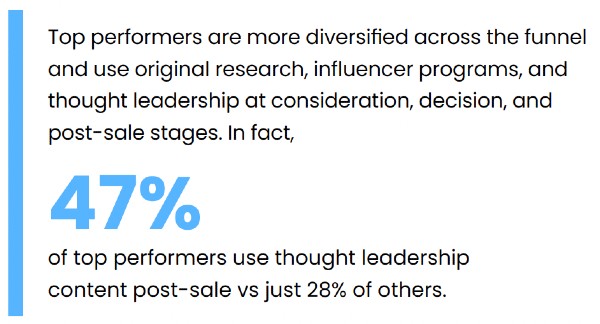
In stark contrast to these challenges, high-performing B2B marketing teams exhibit a distinct approach to cultivating trust. They recognize that trust is not a singular event but an ongoing process, actively reinforcing it at multiple junctures throughout the buyer’s journey, rather than treating it as a credential earned once and then forgotten. The report findings illuminate a clear pattern: marketers who achieve a high return on investment are significantly more inclined to leverage thought leadership during the crucial decision-making and post-sale phases. Specifically, 47% of these high-ROI marketers extend their thought leadership efforts into post-sale engagement, a practice adopted by only 28% of their lower-performing counterparts.
This discernible trend suggests a deliberate and strategic effort by top-tier organizations to bolster buyer confidence even after the deal has been signed. This post-sale reinforcement is critical, as it demonstrates a commitment to the client’s long-term success and solidifies the brand’s reputation as a trusted partner, not merely a transactional vendor.

The implications of this strategy are far-reaching. By continuing to provide valuable insights and guidance after the sale, high-performing brands foster customer loyalty, reduce the likelihood of churn, and create opportunities for upselling and cross-selling. Moreover, satisfied customers who feel supported are more likely to become brand advocates, generating valuable word-of-mouth referrals that can significantly enhance future lead generation efforts.
The Cumulative Impact of Consistent Trust Building
Taken in aggregate, these findings underscore a fundamental principle: trust is not forged in the crucible of a single campaign or confined within the boundaries of a solitary channel. Instead, it is meticulously cultivated and strengthened through a persistent presence, the presentation of evidence-backed ideas, and repeated validation across all stages of the buyer’s journey. This is particularly true for those stages that marketers themselves acknowledge are inherently more challenging to measure and effectively support.
The subsequent sections of this analysis will delve into the methodologies employed by leading B2B organizations to deliberately design for these trust-building moments, and explore the essential elements required to forge a robust and sustainable trust system without sacrificing its essential human element. This systematic approach to trust is becoming a defining characteristic of market leaders in the B2B space.
How Leading Brands Cultivate and Fortify Trust
High-performing B2B brands do not passively wait for trust to materialize once initial awareness has been established. Instead, they actively and thoughtfully nurture it, with a particular emphasis on those critical moments when buyers are rigorously evaluating their options, justifying their choices to internal stakeholders, or seeking definitive confirmation that they have made the correct decision. The patterns identified in the aforementioned report, substantiated by years of practical observation and market analysis, offer a clear roadmap for how these organizations achieve this critical objective.
Fortifying Credibility with Verifiable Evidence
At its core, credibility takes root when ideas are not merely presented but are demonstrably supported by evidence that buyers can confidently reference and rely upon. The incorporation of original research and data-informed insights provides a robust structural framework for thought leadership, grounding it in something far more enduring and tangible than mere opinion. This rigorous approach to evidence empowers buyers to articulate and internally defend their decisions with a greater degree of conviction and certainty. When a brand can back its claims with original data, case studies, or expert analysis, it signals a deeper understanding of the subject matter and a commitment to factual accuracy, which are crucial for building long-term trust.
Integrating Human Voices into Evaluation Phases
Trust is significantly amplified when buyers engage with authentic human voices, rather than solely interacting with impersonal corporate pronouncements. Experts, satisfied customers, and strategic partners bring invaluable perspectives that static content, however well-crafted, cannot fully replicate. The authentic voices of B2B influencers and content creators allow buyers to gauge whether the underlying thinking behind an idea reflects genuine experience, practical judgment, and a nuanced understanding of real-world challenges. This is particularly vital during the pressure-testing of claims or when comparing disparate options, as it provides a relatable and credible human element to the decision-making process. This human touch helps to demystify complex solutions and build a personal connection with potential clients.
Maintaining a Consistent Presence Post-Decision
The importance of trust does not diminish once a contractual agreement has been finalized. Brands that proactively continue to offer relevant guidance and support to their clients after the initial decision has been made play a crucial role in helping buyers navigate the subsequent stages of implementation and outcome realization. This sustained presence signals that the relationship extends far beyond the immediate transaction and that the principles and guidance upon which the buyer relied remain applicable and valuable. This ongoing engagement fosters a sense of partnership and mutual commitment, leading to higher customer satisfaction and retention rates.
Reducing Friction Through Unwavering Consistency
Consistency, though often understated, plays a silent yet profoundly critical role in the sustained cultivation of trust over time. When a brand’s core narrative remains coherent and unwavering across diverse channels and throughout various stages of the buyer’s journey, prospective clients are freed from the cognitive burden of reconciling conflicting messages. This allows them to dedicate their energy to solidifying their confidence in their chosen path. A familiar and consistently delivered message becomes inherently easier to trust as decisions progress toward commitment and beyond. This narrative stability creates a predictable and reliable experience for the buyer, reinforcing their belief in the brand’s integrity and expertise.
Building a Robust Trust System: A Strategic Imperative
The development of effective "Trust Systems" within B2B organizations is not an instantaneous process. It is an evolutionary journey that unfolds through repeated exposure, consistent reinforcement, and demonstrable follow-through as buyers progress from initial consideration through to final commitment and the subsequent stages of their engagement.
Identifying Vulnerable Points of Confidence
A critical first step in strengthening trust involves a thorough identification of the specific moments within the buyer’s journey where confidence tends to waver. These are often characterized by a noticeable slowdown in the buyer’s progression, the emergence of more probing and complex questions, or a clear need for internal justification of their potential decision. These critical junctures represent the most opportune moments where trust requires deliberate and targeted reinforcement.
Empowering Decision-Making with Evidence-Based Guidance
To effectively support these crucial decision points, brands must ground their guidance in credible research and data-informed insights. This provides buyers with a durable foundation of knowledge that they can reliably reference and depend upon as their decisions take shape. The ability to point to concrete evidence lends weight and authority to the brand’s recommendations, making them more persuasive and trustworthy.
Leveraging Human Validation for Reassurance
Where reassurance is particularly vital, introducing the authentic perspectives of human voices becomes indispensable. Expert opinions, testimonials from satisfied customers, and valuable input from trusted partners serve to powerfully reinforce ideas, especially when buyers are actively evaluating options or seeking confirmation of their choices. This human element adds a layer of credibility and relatability that is essential for building deep and lasting trust.
Ensuring Seamless Consistency Post-Commitment
Maintaining an unbroken thread of consistency through the decision and post-sale stages is paramount. A steady and predictable narrative serves to significantly reduce friction in the buyer’s experience and helps them feel confident that the guidance they initially trusted remains relevant and applicable. This continuous alignment builds a strong foundation for long-term client relationships.
Measuring Trust Holistically, Beyond Conversion
Ultimately, the true measure of trust lies not solely in the initial conversion event but in its sustained impact over time. Engagement metrics, continued participation in brand activities, and the development of enduring relationships offer far more profound signals of genuine trust than isolated, one-time actions. By focusing on these long-term indicators, businesses can gain a more accurate understanding of their ability to foster lasting trust.
Trust: The Catalyst for Clarity and Confidence
While clarity empowers buyers to comprehend their available options, it is trust that ultimately inspires them to commit. When the guidance provided by a brand consistently withstands scrutiny, when its narrative remains steadfast and coherent across pivotal moments, and when the individuals behind the ideas lend their credible voices to the conversation, buyers gain the essential confidence needed to move forward with their decisions. This synergy between clarity and trust is the driving force behind successful B2B transactions and the foundation for sustained business growth.
For those seeking deeper insights into how leading B2B marketers are strategically reinforcing trust during these critical decision-making junctures, the comprehensive report, "Answer Engine: The State of B2B Thought Leadership in 2026," offers invaluable research and actionable strategies. To further equip your organization to ascend to the ranks of a "Best Answer Brand," the "Best Answer Marketing Playbook" provides a practical roadmap for implementing these insights and elevating your marketing efforts to achieve sustained success.