


In the intricate world of digital marketing, where subject lines are meticulously crafted, calls-to-action are A/B tested to perfection, and preview text is agonizingly optimized, one crucial element often remains an afterthought: the email footer. Frequently dismissed as mere boilerplate, a forgotten section where last campaign’s details are simply copied and pasted, the footer is, in fact, a powerful, legally regulated, and strategically vital piece of digital real estate. Overlooking its potential is not just a missed opportunity for brand reinforcement and subscriber engagement; it’s a significant compliance risk that can jeopardize an entire email program and erode sender reputation.
The Foundational Importance of the Email Footer
The email footer, despite its position at the bottom of a message, holds immense significance for several reasons. It is the most consistent component across every email communication a business sends, providing a constant anchor of information and identity. More critically, it is one of the few parts of an email message that is explicitly governed by legal frameworks worldwide. Getting the footer right is not just a matter of good practice; it is a fundamental requirement that shields a business from legal penalties, cultivates trust with subscribers, and subtly but consistently reinforces brand identity with every single send. When approached thoughtfully, the footer clearly identifies the sender, offers accessible avenues for contact, and, crucially, provides an unequivocal exit strategy for recipients who no longer wish to receive communications.

A Chronology of Compliance: The Evolution of Email Regulations
The necessity for robust email footers emerged from the early, unregulated days of email marketing, which quickly became synonymous with unsolicited bulk email, or "spam." As the volume of unwanted emails grew exponentially in the late 1990s and early 2000s, governments recognized the need for regulation to protect consumers and legitimate businesses alike. This led to a global effort to establish legal frameworks that govern commercial electronic messages.
- CAN-SPAM Act (Controlling the Assault of Non-Solicited Pornography And Marketing Act) – United States, 2003: This landmark legislation set the first national standards for the sending of commercial email in the U.S. Key provisions relevant to email footers include the requirement for a clear and conspicuous unsubscribe mechanism that is functional for at least 30 days after the email is sent, and the inclusion of the sender’s valid physical postal address. It also prohibits deceptive subject lines and misleading header information.
- CASL (Canada’s Anti-Spam Legislation) – Canada, 2014: Considered one of the strictest anti-spam laws globally, CASL mandates explicit consent for sending commercial electronic messages. For footers, it requires clear identification of the sender, contact information (such as a mailing address, email address, or phone number), and an unsubscribe mechanism that is easy to use and processes requests within 10 business days.
- GDPR (General Data Protection Regulation) – European Union, 2018: While not exclusively an email marketing law, the GDPR significantly impacts how personal data, including email addresses, is collected, stored, and processed within the EU. It reinforces the need for transparent communication, easy withdrawal of consent (which directly translates to a clear unsubscribe process), and the right to information about who is sending the message and how they obtained consent. Data privacy is central, making the footer a critical component in demonstrating compliance and respecting user rights.
Beyond these major regulations, various other regional laws, such as Australia’s Spam Act 2003 and the UK’s Privacy and Electronic Communications Regulations (PECR), also impose similar requirements. The overarching trend across these legislations is a demand for transparency, accountability, and user control, all of which are directly addressed by a well-structured email footer.
The Mandates: Legal Imperatives of the Email Footer
For commercial email senders, certain elements in the footer are consistently non-negotiable across most jurisdictions. Neglecting these can result in substantial fines, reputational damage, and severe impacts on email deliverability.
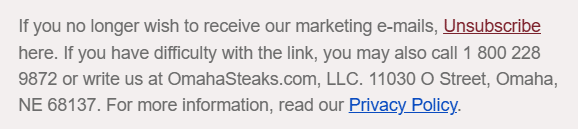
- Physical Postal Address: This is a universal requirement under laws like CAN-SPAM and CASL. The address must be a valid physical street address for the sender. This ensures accountability, allowing recipients and regulatory bodies to identify and contact the sending entity. Fines for CAN-SPAM violations, which can include the absence or inaccuracy of this address, can reach up to $50,120 per individual email. Industry experts consistently advise that this address must be current and verifiable, not merely a P.O. box unless explicitly allowed by specific local regulations.
- Clear and Conspicuous Unsubscribe Mechanism: This is perhaps the most critical component. All major regulations demand an easy, clear, and prominent way for subscribers to opt-out of future communications. Hiding this link, making it difficult to find, or requiring multiple steps to unsubscribe is a direct violation.
- CAN-SPAM: Requires a "clear and conspicuous" unsubscribe link that works for at least 30 days and processes requests within 10 business days.
- CASL: Mandates an unsubscribe mechanism that is "readily performed" and acted upon within 10 business days.
- GDPR: Emphasizes the right to withdraw consent as easily as it was given.
Legal counsel repeatedly stresses that attempting to obscure the unsubscribe link is a self-defeating strategy. While marketers might fear losing subscribers, a frustrated recipient who cannot easily unsubscribe is far more likely to mark an email as spam. Spam complaints severely damage sender reputation, leading to lower deliverability rates across the board, which is far more detrimental than a legitimate opt-out. Data from email service providers frequently shows that emails with easily accessible unsubscribe options tend to have lower spam complaint rates, thereby preserving sender reputation and improving overall inbox placement.
- Sender Identification: The footer must clearly state who is sending the email. This can be the company name, brand name, or individual sender, provided it clearly identifies the commercial entity responsible for the message. This ties into the transparency requirements of all major regulations.
A quick self-assessment for marketers: if all elements in your footer were removed except for the physical address and the unsubscribe link, would your email still be compliant? If the answer is no, then critical elements are missing, and immediate action is required.
Beyond Compliance: Strategic Opportunities in the Footer
Once the legal boxes are checked, the email footer transforms from a mere regulatory necessity into a powerful tool for brand building and subscriber engagement. Smart marketers leverage this consistent real estate to enhance the user experience and drive strategic objectives.
- Brand Reinforcement: Including a company logo in the footer, as seen in many effective examples, reinforces brand identity. Consistent use of brand colors, fonts, and messaging here contributes to a cohesive brand experience, making each email instantly recognizable and trustworthy. This consistent branding helps build long-term recognition and loyalty.
- Enhanced User Experience and Engagement:
- Preference Centers: Instead of a simple unsubscribe, offering a link to a preference center empowers subscribers to customize their email experience. They can choose the types of content they receive, adjust frequency, or pause subscriptions, significantly reducing outright unsubscribes. This respects user autonomy and helps maintain a more engaged subscriber base.
- Social Media Links: Links to a brand’s social media profiles extend the engagement beyond the inbox, allowing subscribers to connect on their preferred platforms and become part of a broader community. This can increase brand visibility and foster deeper relationships.
- Contact Information and Support: Providing additional contact options, such as a customer service email, phone number, or a link to a "Contact Us" page, signals professionalism and accessibility. It assures subscribers that help is readily available if they need it.
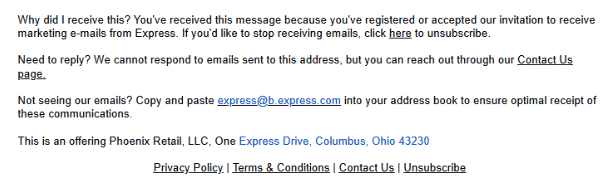
- "Why You’re Receiving This This Email" Statement: A brief, clear statement explaining why the recipient is receiving the email (e.g., "You’re receiving this email because you registered on our website" or "You subscribed to our newsletter") is a powerful tool for transparency. This simple reminder can drastically reduce spam complaints, as a common reason for marking an email as spam is simply not remembering having signed up.
- "Forward to a Friend" Option: This organic growth mechanism encourages subscribers to share valuable content with their networks, acting as a subtle endorsement and expanding reach to potential new subscribers.
- Privacy Policy Link: In the age of data privacy concerns, linking to a comprehensive privacy policy demonstrates transparency about how user data is handled, further building trust and ensuring compliance with regulations like GDPR.
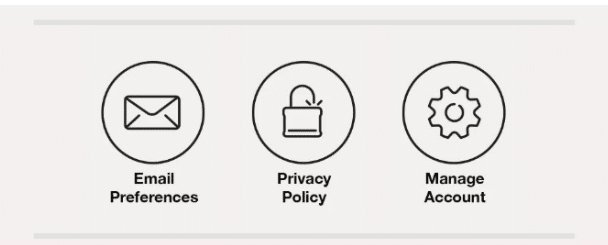
The example from Omaha Steaks, featuring large, CTA-style buttons for key links like "Manage Preferences" or "Contact Us," illustrates an excellent approach to accessibility and user-friendliness. Such design choices make it effortless for subscribers to interact with these important options, enhancing their overall experience, even while maintaining a traditional unsubscribe link. Similarly, examples that explicitly remind subscribers of their opt-in reason effectively pre-empt spam complaints by fostering transparency.
Crafting an Effective Footer: Best Practices for Marketers
Designing a footer that is both compliant and strategic requires adherence to several best practices:
- Keep it Clean and Concise: A cluttered footer crammed with a dozen links and disclaimers is overwhelming, especially on mobile devices. Prioritize the legally required elements, then judiciously add only a few extras that genuinely add value and enhance the user experience. Simplicity aids readability and ensures key information is easily found.
- Don’t Bury the Unsubscribe Link: This cannot be overstressed. Hiding or obscuring the unsubscribe link is a counterproductive tactic. It doesn’t prevent subscribers from leaving; it merely frustrates them, pushing them to mark your email as spam. Spam complaints are far more damaging to your sender reputation and deliverability than a straightforward opt-out. Email deliverability specialists consistently highlight clear unsubscribe paths as crucial for maintaining a healthy sender score.
- Design for Mobile-First: The vast majority of email opens now occur on mobile devices. Footer text must be large enough to read without zooming, and clickable links should be spaced adequately apart to allow for accurate tapping on smaller screens. Responsive design principles are paramount here.
- Stay Consistent: Maintain a consistent footer format, including fonts, colors, and layout, across all email campaigns. This consistency builds brand recognition and reinforces trustworthiness over time. Subscribers come to expect certain elements in certain places, contributing to a seamless and professional brand experience.
- Rigorous Testing of Links: Broken unsubscribe links, dead social media icons, or defunct contact forms are common, yet entirely avoidable, mistakes. Before any email send, especially after template updates or platform migrations, thoroughly test every link within the footer. A broken link undermines trust and can lead to compliance issues.
- Revisit Periodically: Email regulations evolve, and so does your business. An address that was accurate two years ago, or a social media channel your company no longer actively uses, can quietly become a liability or a dead end. Conduct a comprehensive review of your email footer at least once a year, or whenever there are significant changes to your business, legal environment, or marketing strategy.
Broader Impact and Implications: The Footer as a Trust Signal
In the broader landscape of digital communication, the email footer plays a subtle yet profound role in establishing and maintaining trust. In an era where consumers are increasingly wary of unsolicited messages and protective of their data, a transparent and compliant footer acts as a powerful trust signal. It communicates to the recipient that they are dealing with a legitimate, responsible, and respectful organization.
This proactive approach to compliance and user experience helps foster a healthy sender reputation, which is the bedrock of successful email marketing. Internet Service Providers (ISPs) and email clients heavily scrutinize sender behavior, and a history of low spam complaints and high engagement, often facilitated by a well-managed footer, contributes directly to better inbox placement. Conversely, a poorly designed or non-compliant footer can lead to emails being quarantined, marked as spam, or blocked entirely, effectively crippling an email marketing program.
The shift in email marketing is increasingly towards building relationships rather than just executing transactional sends. The footer, by offering control, transparency, and alternative engagement points, supports this relationship-centric approach. It transforms a mandatory legal section into an active component of the customer journey, demonstrating respect for the subscriber’s inbox and their right to choose.
Conclusion

The email footer, often relegated to an afterthought, carries an outsized responsibility in the realm of email marketing. It is the silent guardian of compliance, a steadfast builder of subscriber trust, and a consistent extension of a brand’s identity. Neglecting this small section can lead to significant legal penalties, eroded sender reputation, and ultimately, diminished marketing effectiveness. By treating the footer with the same intentionality and strategic thought applied to the rest of an email campaign, marketers can transform it from a mere legal requirement into a powerful asset that safeguards their business, enhances user experience, and reinforces brand loyalty. Don’t let a footer misstep derail your meticulously crafted campaigns; embrace its potential and let it work diligently for your brand. Insights from industry leaders, such as those at Validity Engage, underscore how AI-powered email intelligence can further assist in ensuring every send remains compliant, deliverable, and perfectly on-brand.
Originally published on August 26, 2026, with insights from Julie Stuck, Sr. Email Strategist at Validity.








