In the meticulously crafted world of email marketing, where subject lines are honed to perfection, calls-to-action are A/B tested rigorously, and preview texts are strategically optimized, one crucial element often remains an afterthought: the email footer. Far from being a mere digital formality or a place to haphazardly paste leftover information, this unassuming section holds significant strategic weight, serving as a linchpin for legal compliance, a cornerstone for building subscriber trust, and a powerful, consistent reinforcement of brand identity with every single message dispatched. Neglecting its careful construction is not just a missed opportunity for enhanced engagement but, in an increasingly regulated digital landscape, a substantial compliance risk that can severely impact sender reputation and legal standing.
The Mandate of the Footer: A Legal Imperative
The evolution of email marketing, from its nascent stages in the early 1970s to its widespread commercial adoption in the 1990s, was quickly followed by the proliferation of unsolicited commercial email, or "spam." This deluge necessitated governmental intervention to protect consumers and regulate business practices. Consequently, the email footer transformed from an optional addendum into a legally mandated component, acting as a vital safeguard against deceptive practices and a guarantor of consumer rights.
Key legislative frameworks globally underscore the critical role of the email footer. In the United States, the CAN-SPAM Act of 2003 established requirements for commercial messages, mandating clear identification of the sender, a physical postal address, and a conspicuous, functional unsubscribe mechanism. Non-compliance can lead to hefty penalties, with fines potentially reaching tens of thousands of dollars per violation. Similarly, Canada’s Anti-Spam Legislation (CASL), enacted in 2014, imposes stringent rules on commercial electronic messages, requiring explicit consent, clear identification of the sender, and an easy opt-out process. CASL carries some of the steepest penalties globally, with fines up to CAD 10 million for organizations.

Across the Atlantic, the European Union’s General Data Protection Regulation (GDPR), implemented in 2018, significantly elevated data privacy standards, impacting email marketing profoundly. GDPR emphasizes transparent data processing, explicit consent, and the absolute right for individuals to withdraw consent easily. For email footers, this translates to unambiguous unsubscribe links, clear links to privacy policies, and sometimes, even details on how subscriber data is processed. Violations of GDPR can result in fines up to €20 million or 4% of annual global turnover, whichever is higher. Other regions, such as California with the California Consumer Privacy Act (CCPA) and Australia with its Spam Act 2003, also enforce similar principles, demanding transparency and opt-out options.
These regulations collectively underscore that the email footer is not merely a courtesy but a legal necessity. Industry experts frequently reiterate that a failure to include mandatory elements like a physical address and a clear unsubscribe link is a fundamental breach that can swiftly attract regulatory scrutiny. "Many marketers mistakenly believe that hiding the unsubscribe link makes subscribers stay," notes an email deliverability consultant, "but in reality, it just forces them to mark your email as spam, which is far more detrimental to your sender reputation and deliverability rates than a straightforward opt-out." This sentiment is echoed by data from leading email service providers, which show a direct correlation between difficult unsubscribe processes and elevated spam complaint rates, severely impacting future inbox placement.
Beyond Legalities: Cultivating Trust and Professionalism
While compliance forms the bedrock of a well-constructed email footer, its utility extends far beyond avoiding legal repercussions. A thoughtfully designed footer is a powerful instrument for cultivating trust, signaling professionalism, and reinforcing brand credibility with subscribers. In an era saturated with digital communication, where skepticism towards unsolicited messages is high, a legitimate-looking email footer can be the decisive factor between an engaged recipient and a message relegated to the spam folder.
A footer that conspicuously displays a real company address, a functional unsubscribe link, and clear sender information immediately communicates legitimacy. It tells subscribers that the sender is a verifiable entity, not a fly-by-night operation. Conversely, a footer lacking these details, or one with broken links, can instantly raise red flags, causing even a meticulously crafted marketing campaign to appear suspicious. Research consistently shows that consumers are more likely to engage with brands they perceive as trustworthy. A study by Edelman found that 81% of consumers consider trust a deal breaker or a deciding factor in their purchase decisions. In the context of email, this trust begins with fundamental transparency.
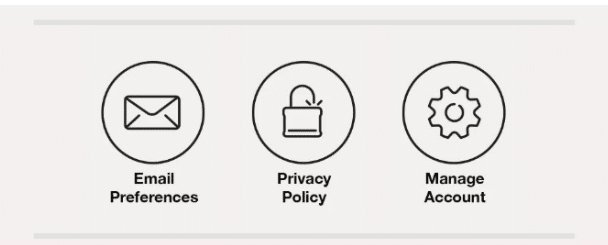
Furthermore, a comprehensive footer fosters a sense of respect for the subscriber’s inbox. Providing an easy exit option, such as a clearly visible unsubscribe link or a preference center, empowers recipients and gives them control over their communication preferences. This approach, far from leading to mass unsubscribes, often results in a more engaged and higher-quality subscriber list. Subscribers who feel respected are less likely to report emails as spam, even if they decide to opt-out. Data indicates that emails with prominently placed unsubscribe links often experience lower spam complaint rates compared to those that attempt to obscure them, primarily because the alternative (marking as spam) is perceived as more punitive by the user.
Transparency can also be enhanced by including a brief explanation of why the recipient is receiving the email—for instance, "You are receiving this email because you subscribed to our newsletter on [date] or through [website]." This simple reminder can significantly reduce spam complaints, as a common reason for reporting spam is the subscriber forgetting they opted in. This proactive approach builds a foundation of transparency that elevates the entire brand perception. Industry analyses frequently highlight that companies prioritizing clear communication and easy opt-out processes maintain healthier email lists and superior deliverability over time.
A Strategic Brand Touchpoint: Maximizing Engagement
Once the legal obligations are met and a foundation of trust is established, the email footer transforms into a valuable piece of marketing real estate, offering strategic opportunities to deepen brand connection and drive further engagement. Far from being a static boilerplate, it can be a dynamic extension of a brand’s digital presence.
Incorporating a company logo, consistent brand colors, and typography within the footer reinforces brand identity with every message. This visual consistency aids in brand recognition and professional perception. For example, a global consumer brand might use its iconic logo alongside its corporate information, subtly embedding its identity even in the message’s final section. This consistency is not just aesthetic; it’s a psychological anchor that helps recipients instantly identify the sender and reinforces brand recall.
Beyond visual branding, the footer serves as a gateway to other brand touchpoints. Including links to social media profiles (Facebook, Twitter, LinkedIn, Instagram, TikTok) allows subscribers to connect with the brand on their preferred platforms, fostering a multi-channel relationship. A link to a blog or news section can drive traffic to valuable content, while a link to the main website or a specific product page can encourage immediate conversion or exploration. Customer service contact information, whether an email address, phone number, or a link to a help center, further demonstrates a commitment to customer support and accessibility.
Perhaps one of the most underutilized yet impactful elements is the preference center link. Instead of a blanket unsubscribe, a preference center allows subscribers to tailor the types of emails they receive, the frequency, or even pause subscriptions temporarily. This granular control is invaluable for retaining subscribers who might otherwise opt out entirely. For instance, a subscriber interested in product updates but not daily promotions can adjust their settings, maintaining a connection with the brand on their own terms. This personalized approach aligns with modern marketing trends that prioritize customer choice and engagement, ultimately leading to higher customer lifetime value. Statistics consistently show that personalized emails generate significantly higher open and click-through rates compared to generic messages, and a preference center extends this personalization to the subscription management itself.
Designing for Impact: Best Practices for Effective Footers
An effective email footer is not merely about what information it contains, but also how that information is presented. Adhering to design and usability best practices ensures that the footer fulfills its multi-faceted role efficiently.
-
Clarity and Conciseness: A crowded footer can overwhelm and deter recipients. Prioritize essential legal elements, then carefully select only a few additional links that genuinely add value and align with strategic goals. Minimalism often translates to better readability and a more professional appearance. Use clear headings or subtle dividers to organize information logically.
-
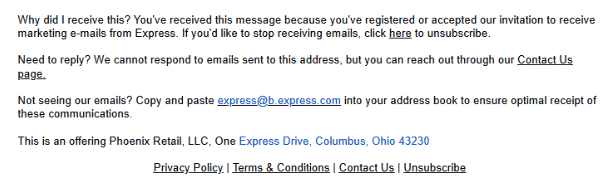
Unsubscribe Visibility: This cannot be overstressed. The unsubscribe link must be easy to find, clearly labeled, and functional. Hiding it, using tiny fonts, or placing it in an obscure location is a common, yet counterproductive, tactic. As noted by email deliverability experts, frustrated subscribers will opt for the "report spam" button rather than painstakingly search for an unsubscribe link, severely damaging the sender’s reputation and potentially leading to blacklisting. A prominent link signals transparency and respect, preserving sender reputation even when subscribers choose to leave.
-
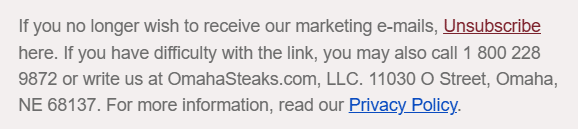
Mobile Responsiveness and Accessibility: With over half of all emails being opened on mobile devices, the footer must be designed with mobile users in mind. Text should be legible without zooming, typically at least 12-14 points. Links should be spaced sufficiently apart (a minimum of 44×44 pixels is a general accessibility guideline for touch targets) to prevent accidental taps. Contrast between text and background colors should be high to ensure readability for users with visual impairments. Examples like Omaha Steaks, which utilize larger, button-like links for key actions in their footer, demonstrate a commitment to accessibility and ease of use, making it simple for users to manage preferences or unsubscribe.
-
Brand Consistency: Maintain a consistent look and feel across all email footers. This includes fonts, colors, imagery (like logos), and tone of voice. Consistency across campaigns builds familiarity and trust, making the sender instantly recognizable and reinforcing brand standards. Any deviation can lead to confusion and erode brand identity.
-
Rigorous Testing: Before every send, especially after template updates or platform migrations, every link within the footer must be tested for functionality. Broken unsubscribe links, dead social media icons, or outdated privacy policy links are common errors that undermine professionalism and can lead to compliance issues. Automated testing tools can be invaluable in catching these oversights.
-
Periodic Review: The digital landscape is dynamic. Regulations evolve, business contact information changes, social media platforms rise and fall, and brand strategies shift. A footer that was perfectly compliant and optimized two years ago might now be outdated or even non-compliant. A thorough review of the email footer should be conducted at least annually, or whenever significant business changes occur, to ensure all information is current, links are functional, and it adheres to the latest legal requirements and best practices.

The Evolving Landscape: Future of Email Footers
As email marketing continues to evolve, so too will the role and design of the email footer. Anticipating future trends and regulatory shifts is crucial for marketers seeking to maintain optimal performance and compliance. We can expect an increased emphasis on hyper-personalization, potentially leading to footers that dynamically adjust content based on subscriber segments or past interactions. For instance, a footer might display specific customer service contacts for VIP members or offer targeted content links based on demonstrated interests.
Furthermore, with advancements in AI and machine learning, tools capable of automatically optimizing footer content for engagement and compliance may become more prevalent, reducing the manual effort required while maximizing impact. The ongoing global push for data privacy will likely introduce new requirements, demanding even greater transparency regarding data handling and consent mechanisms, making the privacy policy link and data processing explanations within the footer more critical than ever. The footer may also see integration with emerging technologies, such as blockchain for enhanced data security verification or interactive elements that allow for quick surveys or feedback collection directly within the email.
Conclusion
The email footer, often relegated to the periphery of an email campaign’s design process, carries an outsized responsibility. It is far more than a simple legal obligation; it is a critical component for maintaining compliance with a complex web of international regulations, a powerful tool for building and sustaining subscriber trust, and a consistent extension of a brand’s identity and engagement strategy. By treating the footer with the same intentionality, strategic foresight, and design rigor applied to other elements of an email, marketers can transform this often-overlooked section into a diligent workhorse that protects their business, enhances their reputation, and contributes significantly to overall email marketing success. Its thoughtful construction ensures not just legal safety, but a stronger, more respected, and ultimately, more profitable connection with every subscriber.