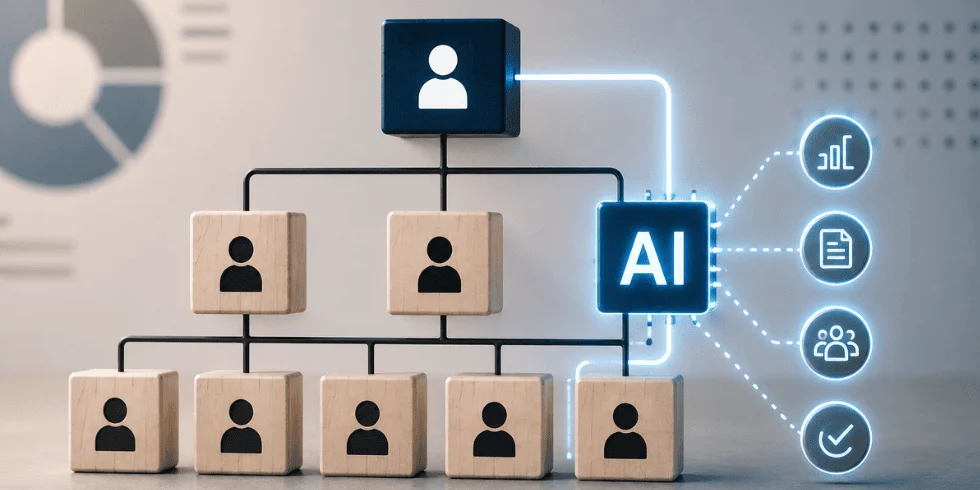
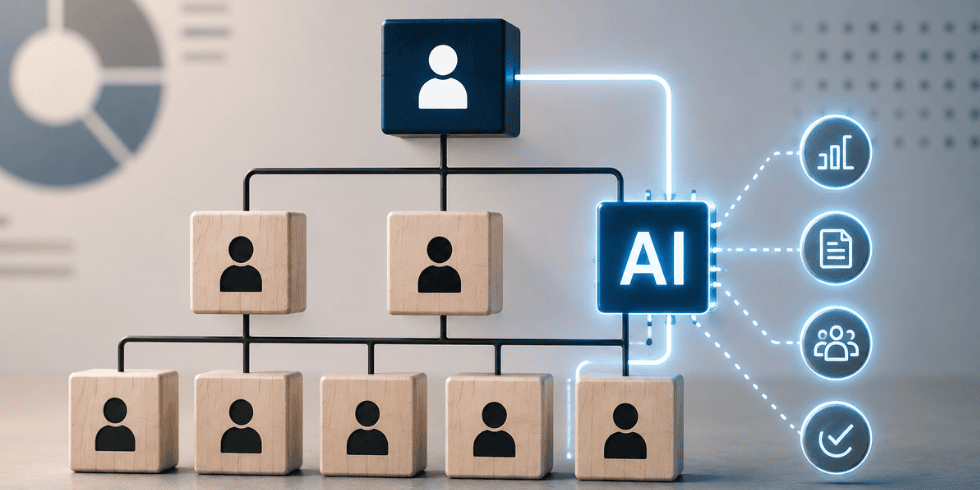
The modern marketing landscape is undergoing a seismic shift, primarily driven by the rapid integration of Artificial Intelligence (AI). Yet, many marketing organizations continue to operate under structures, workflows, and assumptions that predate this technological revolution. This disconnect is increasingly becoming a bottleneck, hindering teams from fully capitalizing on AI’s potential. Chief Marketing Officers (CMOs) are now tasked with critically evaluating their existing organizational frameworks and reimagining roles and capabilities to foster greater adaptability in an AI-powered future.
Brenna Lofquist, Senior Consultant at Heinz Marketing, observes that most CMOs inherit their marketing organizations rather than designing them from scratch. These structures are typically the product of incremental evolution, shaped by factors like company growth, the emergence of new marketing channels, technological advancements, and evolving business priorities. While not inherently flawed, these inherited structures were built on a different set of assumptions. Marketing operated at a slower pace, with greater functional specialization. Campaigns followed more predictable processes, and technology was often adopted to support individual functions rather than to orchestrate end-to-end workflows.
AI fundamentally challenges these foundational assumptions. It automates tasks that once demanded significant human effort, drastically compresses timelines, reshapes the skill sets required for various roles, and blurs the lines between traditional marketing functions. However, the mere adoption of AI tools does not automatically translate into organizational effectiveness. In many instances, it can amplify existing inefficiencies and expose structural weaknesses. For example, if a campaign launch requires the involvement of five distinct teams and three sequential approval steps, AI can accelerate individual tasks, but the overall launch process can remain protracted, taking weeks to complete.
The critical question for CMOs is not merely "How should we restructure marketing for AI?" but rather, "Which assumptions underpinning our current organizational design are no longer valid in the current environment?" This probes deeper, encouraging a re-evaluation of the fundamental principles upon which marketing teams are built.
The Org Chart as a Relic of Past Workflows
Historically, marketing organizations were meticulously structured around functional specialization. Dedicated teams managed content creation, demand generation, product marketing, and marketing operations, overseeing technology and data. Digital marketing, communications, and sales enablement often operated with their own distinct responsibilities and processes. This specialized approach was logical and effective for its time. As marketing sophistication grew, specialization allowed for the development of deep expertise and the management of increasingly complex channels.
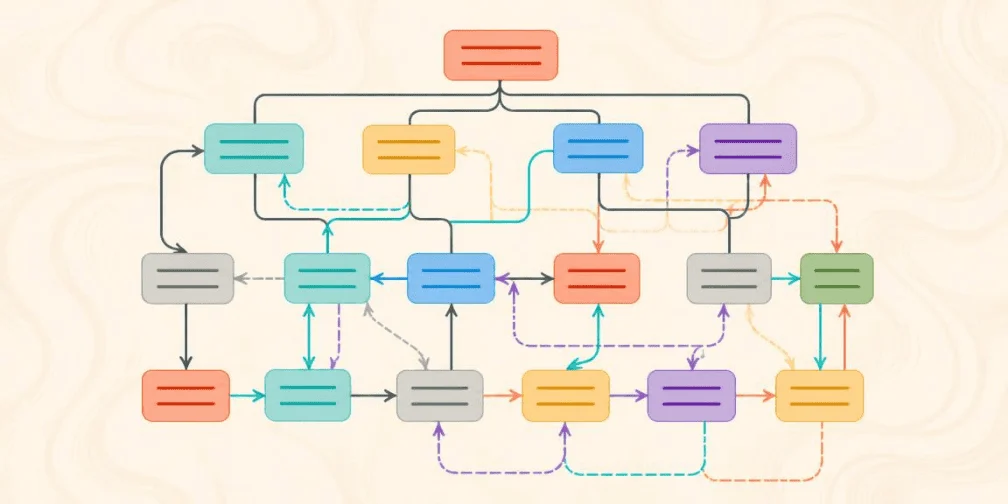
However, the nature of marketing work itself has become far less linear. A single campaign today can involve a complex interplay of functions: product marketing defines target audiences and messaging, content teams develop collateral, demand generation builds the campaign infrastructure, marketing operations manages the underlying technology and data, paid media specialists execute the outreach, sales teams follow up, and analytics teams measure performance. AI introduces another layer of complexity, as tasks previously siloed within specific functions can now be automated, augmented, or shared across multiple departments. This creates a notable disconnect where the organizational chart still reflects a functional ownership model, while the actual execution of work increasingly spans across these traditional boundaries.
This doesn’t necessitate the complete dismantling of functional teams or a wholesale reorganization solely around AI. Rather, it calls for CMOs to acknowledge when the way work is actually performed no longer aligns with the organization’s established structure. The issue isn’t necessarily the org chart itself, but the widening gap between the designed structure and the practical realities of how work gets done.
Five Indicators Your Marketing Structure is Hindering Progress
Several tell-tale signs suggest that an existing marketing organizational structure may be impeding efficiency and innovation, especially in the context of AI adoption.
Sign #1: Work Gets Stuck in Handoffs
A common symptom of an outdated structure is when campaigns or projects routinely get "stuck" as they move between different teams. If a campaign launch requires a sequence of five distinct team handoffs, the bottleneck may not be the inefficiency of any single team, but rather the inherent delays, potential for miscommunication, need for rework, and competing priorities introduced at each transition point. When no single entity owns the entire workflow, responsibility can become diffused, leading to a situation where each team is accountable for its segment, but no one is ultimately accountable for the overall outcome.
AI tools can accelerate individual tasks within this process, such as faster content generation or quicker campaign setup. However, if the work still must traverse the same linear sequence of individuals and approvals, the overall process speed may see only marginal improvement. A crucial question for CMOs to consider is: "Where does work routinely pause, waiting for another team or individual?" Identifying these points of friction is key to streamlining operations.
Sign #2: Everyone Owns an Activity, But Nobody Owns the Outcome
Marketing organizations often exhibit clear ownership of specific activities: one person may own campaigns, another content, and a third marketing operations. The critical question then becomes: what happens between these defined activities? Who is responsible for the transition from a Marketing Qualified Lead (MQL) to an actual sales pipeline? Who ensures that content effectively contributes to campaign performance? Who owns the holistic process from audience insight generation through to campaign activation and rigorous measurement?
These "gray areas" become particularly problematic as AI streamlines individual task execution. When the pace of execution accelerates, the importance of coordination, strategic decision-making, and overarching accountability intensifies. If accountability terminates upon the completion of a discrete activity, the organization risks becoming highly productive in executing individual tasks but ultimately ineffective in achieving broader business objectives. The fundamental question to ask is: "Where do responsibility and accountability diverge within our team?"
Sign #3: Job Descriptions Don’t Reflect Current Realities
AI is fundamentally altering the day-to-day responsibilities of marketers. Roles that once demanded extensive hours in research, drafting, analysis, and formatting may now shift towards directing AI tools, reviewing AI-generated outputs, making strategic decisions, and ensuring that AI-enabled work aligns with overarching business goals. However, job descriptions often lag behind these evolving realities, continuing to describe the "old job" rather than the "new job." This creates a disconnect where the organization is technically staffed for past functions rather than current needs.
This also complicates the hiring process. Instead of defining roles based on a realistic combination of evolving capabilities, organizations sometimes seek a single individual who can simultaneously act as a strategist, data analyst, AI expert, technologist, content creator, and campaign operator. This often points to a role-design problem rather than a talent deficit. A pertinent self-assessment question is: "If we rewrote every marketing job description based solely on what each individual actually does today, how significantly would it differ from the current version?"
Sign #4: AI Has Been Added Without Workflow Changes
Perhaps one of the most evident warning signs is the adoption of AI tools without any corresponding adjustments to existing workflows. A team might implement an AI tool for content generation, another for research, and marketing operations might introduce automation. While individual productivity may increase, the underlying workflow—including approval processes, inter-team handoffs, system integrations, and review stages—remains largely unchanged. This essentially means that individual steps are executed faster, but the overall process speed sees only marginal gains.
While AI can undoubtedly drive significant productivity improvements without major organizational restructuring, the pursuit of transformative improvement necessitates a different approach. The critical question becomes: "Are we using AI to simply do the old work faster, or are we leveraging it to fundamentally rethink how the work gets done?"
Sign #5: The Organization Moves Slower Than the Market
The ultimate test of an organization’s agility is its speed. How long does it take to transform an idea into a launched campaign? How many meetings are required? How many individuals need to review it? How many systems need to be updated? How many times is the work handed off between team members? When this internal process duration is compared to the pace at which buyers consume information, shift priorities, and engage with competitors, a significant disparity can emerge. If a marketing organization requires weeks to respond to market changes that occur in days, it indicates an organizational problem, not necessarily a talent deficiency.
Adding more personnel is not always the solution. The constraint may not be a lack of capacity, but rather the inherent limitations of the structure through which that capacity must operate.
Re-evaluating the Foundations: Questioning Organizational Assumptions
The incremental nature of organizational development means that most marketing structures are not the result of a single, comprehensive design. Each decision, made at a specific point in time, may have been perfectly logical then. However, these decisions often remain unchallenged as the business landscape evolves. AI provides a compelling impetus for CMOs to revisit and question these underlying assumptions.
Instead of immediately focusing on whether a particular role should exist, a more productive approach involves asking:
- What are the core capabilities our marketing organization needs to deliver on our business objectives?
- How do these capabilities interact to drive value for our customers and our business?
- What are the critical assumptions about how work should flow, and do they still hold true?
- Where are the biggest bottlenecks in our current processes, and what is their root cause?
The answers to these questions may not always lead to the elimination of teams or the consolidation of roles. In many instances, the existing structure may still be sound. However, organizations must be able to articulate a clear rationale for their current design. The objective is not to create a radically different structure solely because AI is pervasive, but to ensure that the current structure accurately reflects the business being operated today, rather than the one from years past.
Redesigning Roles Around Capabilities, Not Just Titles
As the organization evolves, so too must its roles. AI is shifting many marketers away from direct execution and towards directing, evaluating, and applying AI-enabled work. Some roles may require broader skill sets to encompass these new responsibilities, while others might become more specialized in areas where human expertise remains paramount.
Rather than attempting to find an elusive "AI marketer" capable of performing every task, organizations should focus on identifying the essential capabilities required and determining where those capabilities should reside within the structure. The goal is not to eliminate roles because AI can perform certain tasks, but to ensure that human expertise is optimally deployed where it can generate the greatest value.
The Ultimate Goal: An Adaptable Organization, Not an "AI-First" One
There is no single, universally applicable marketing organizational chart for the AI era. The ideal structure will vary significantly based on a company’s size, go-to-market strategy, marketing maturity, technological infrastructure, and talent pool. What truly matters is the organization’s capacity for adaptation as the nature of marketing work continues to evolve.
CMOs do not necessarily need to undertake a complete overhaul of their marketing organizations simply because of AI. However, they absolutely must question whether the assumptions that shaped their current structure remain relevant. The fundamental question is not "What should our AI org chart look like?" but rather, "Does our marketing organization still make sense for the way marketing works today?"
If the answer is no, then AI may not be the catalyst for redesign, but rather the undeniable indicator that a structural re-evaluation is long overdue.
For organizations seeking to navigate this evolving landscape, a complimentary brainstorm session is available by emailing [email protected]. This offers an opportunity to explore the specific changes needed within a marketing organization to thrive in the AI era.