
 rifanmuazin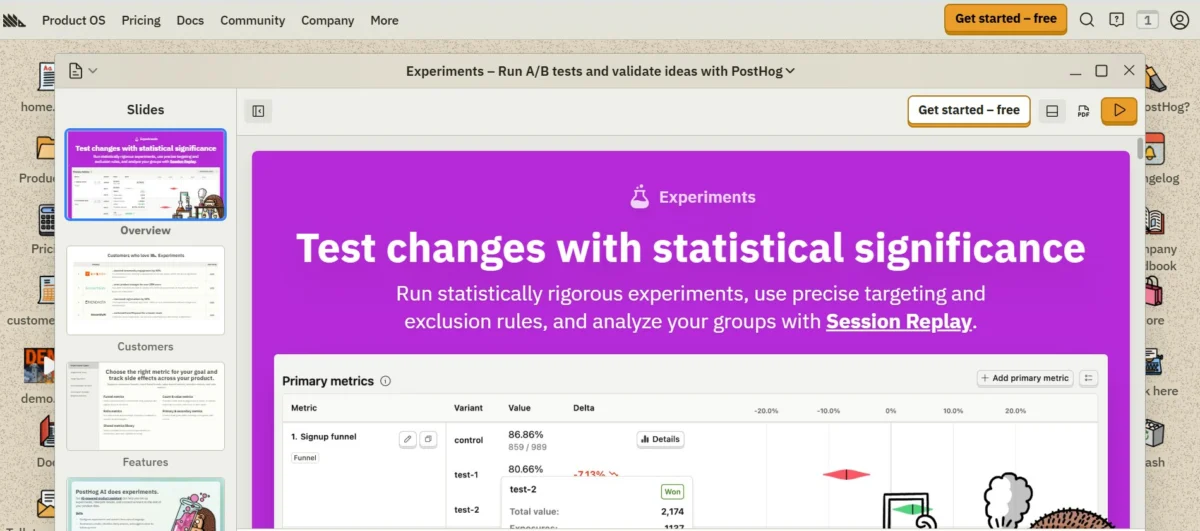
The landscape of digital experimentation has undergone a fundamental transformation as we move through 2026, driven by a decisive shift away from high-cost proprietary platforms toward open-source A/B testing frameworks. For years, enterprise-grade experimentation was synonymous with massive monthly retainers, often costing organizations thousands of dollars before a single hypothesis could be validated. Today, the democratization of these tools allows teams to initiate testing cycles earlier in the product lifecycle, maintain absolute sovereignty over their data infrastructure, and cultivate experimentation maturity without the prohibitive barrier of upfront platform licensing fees.
This shift is not merely a budgetary consideration but a strategic response to the increasing complexity of data privacy regulations and the technical demands of modern software stacks. Open-source A/B testing tools—defined as platforms where the underlying source code is publicly accessible and modifiable—offer a level of transparency and flexibility that proprietary Software-as-a-Service (SaaS) models struggle to match. By allowing organizations to inspect the logic, modify the codebase, and self-host the infrastructure, these tools have become the preferred choice for developer-centric organizations and industries with high compliance burdens.
The Economic and Technical Drivers of Open Source Adoption
The rise of open-source experimentation tools is rooted in several critical advantages that align with the 2026 technological environment. Chief among these is cost efficiency at scale. Unlike traditional SaaS models that utilize usage-based pricing—often penalizing successful experimentation programs that increase their test volume—open-source tools carry no licensing fees. This allows early-stage startups and large-scale enterprises alike to run an unlimited number of experiments without budgetary constraints.
Furthermore, the “warehouse-native” movement has redefined how data is utilized. Modern open-source tools are designed to integrate directly with data warehouses such as Snowflake, BigQuery, and Redshift. This eliminates the need to sync sensitive user data to external third-party analytics platforms, reducing latency and ensuring that experimentation is conducted on the “single source of truth” already established within the organization’s data ecosystem.
Data privacy remains a paramount concern in 2026. With the tightening of global regulations like the GDPR in Europe and various state-level privacy acts in the United States, the ability to self-host an experimentation platform is a significant compliance advantage. By keeping all experiment and user data within their own firewalls, companies can mitigate the risks associated with third-party data processing, which is particularly vital for sectors such as healthcare (HIPAA compliance) and fintech.
Leading Open Source Platforms in 2026: A Comparative Analysis
The current market features several dominant open-source players, each catering to different organizational needs and technical architectures.

GrowthBook: The Warehouse-Native Leader
GrowthBook has solidified its position as the premier choice for data-driven teams that prioritize warehouse integration. By connecting directly to existing metrics in systems like BigQuery or Snowflake, it minimizes the overhead of data duplication. Its architecture supports both Bayesian and Frequentist statistical engines, allowing data scientists to apply their preferred methodologies to experiment analysis. While its interface is noted for its minimalism, its flexibility in user targeting and traffic splitting makes it a robust choice for teams with existing technical support.
PostHog: The All-in-One Analytics Suite
PostHog offers a comprehensive “all-in-one” approach, combining A/B testing with session recordings, heatmaps, and feature flags. This developer-focused platform is designed for teams that want a holistic view of the user journey. While the core features remain open source, PostHog provides a managed cloud offering for those who prefer not to handle the maintenance of self-hosting. In 2026, its AI-powered product assistant has become a key differentiator, helping teams interpret complex data sets more efficiently.
Unleash and Flagsmith: Feature Management Specialists
Platforms like Unleash and Flagsmith focus heavily on the intersection of feature management and experimentation. Unleash is built with a focus on privacy and governance, providing robust multi-language SDKs that enhance developer productivity. Flagsmith, on the other hand, emphasizes remote configuration and staged rollouts. Both tools allow teams to decouple code deployment from feature release, enabling safer testing environments where changes can be rolled back instantly if performance metrics dip.
Mojito and FeatBit: Lightweight and Scalable Solutions
For engineering-led teams seeking minimal performance overhead, Mojito provides a lightweight (5.5 kb) front-end library that integrates into existing Git and CI/CD workflows. It is a “DIY” favorite for those who want full control over bucketing and tracking. FeatBit has also gained traction by offering unlimited team members and projects in its open-source version, making it an attractive option for large organizations looking to scale their experimentation culture without incremental costs.
Historical Context: The Path to Open Source Dominance
The trajectory toward open-source dominance began in the early 2020s when the “Modern Data Stack” gained mainstream momentum. Prior to this, experimentation was often siloed within marketing departments using “black-box” proprietary tools. However, as product engineering teams took a more active role in growth and optimization, the demand for “experimentation as code” grew.
By 2024, the limitations of traditional SaaS tools—such as data latency, lack of transparency in statistical calculations, and escalating costs—created a market vacuum that open-source contributors quickly filled. The period between 2024 and 2026 saw a surge in community contributions to these platforms, leading to the development of sophisticated features like multi-arm bandits and automated URL redirects that were previously exclusive to high-end enterprise software.
Industry Perspectives and Official Responses
Industry analysts suggest that the shift toward open source is a sign of a maturing market. “We are seeing a move away from ‘tool-first’ experimentation toward ‘infrastructure-first’ experimentation,” says one lead data architect at a Fortune 500 fintech firm. “The goal is no longer just to run a test; it’s to integrate experimentation into the very fabric of our deployment pipeline. Open source is the only way to achieve that level of deep integration.”

However, the transition is not without its critics. Some IT directors point to the “hidden costs” of open source. While the software is free, the engineering hours required for setup, maintenance, and security patches can be substantial. “You aren’t paying a vendor, but you are paying your DevOps team,” noted a CTO during a recent industry summit. This has led to a hybrid market where many organizations use open-source code but pay for managed hosting to offload the operational burden.
Implementation Best Practices for 2026
To succeed with open-source A/B testing, organizations must adopt a structured approach to experimentation. Experts recommend the following best practices:
- Standardize Data Models: Since analysis often occurs within the organization’s own data stack, it is crucial to maintain consistent naming conventions and event tracking across all experiments.
- Rigorous Hypothesis Definition: Open source provides the tools, but not the strategy. Every test must begin with a clear hypothesis, defined success metrics, and a calculated sample size to ensure statistical significance.
- Feature Flag Hygiene: The ease of creating feature flags can lead to “technical debt” if flags are not removed after an experiment concludes. Teams should implement automated reminders to clean up stale code.
- Cross-Functional Collaboration: While these tools are developer-oriented, the insights must be accessible to non-technical stakeholders. Organizations should invest in creating dashboards that translate raw data into actionable business insights.
Broader Impact and the Limits of Open Source
As experimentation programs reach a certain level of scale and complexity, some organizations find that open-source tools eventually hit a ceiling. This is particularly true in areas such as behavioral analytics, visual editing for non-developers, and complex personalization.
The enterprise platform VWO, for instance, has positioned itself as the logical “next step” for companies that have outgrown open-source frameworks. By offering a Visual Editor, VWO allows marketing and UX teams to launch experiments without constant engineering intervention. A notable case study involves the energy company Vandebron, which used advanced behavioral insights to identify friction in its sign-up flow. By testing a simplified date-of-birth field, they achieved a 16.3% increase in sign-ups—a level of granular optimization that often requires the specialized tools found in premium platforms.
Furthermore, the integration of AI-driven personalization (such as VWO Personalize) allows companies to move beyond simple A/B testing into the realm of automated user experience tailoring. For many, the ultimate goal is a hybrid approach: using open-source tools for core product engineering and feature flagging, while utilizing enterprise platforms for high-velocity marketing experiments and deep-dive user research.
Conclusion: The Future of Experimentation
As we look toward the remainder of 2026, the influence of open-source A/B testing tools is expected to grow. The democratization of these capabilities has lowered the entry barrier for data-driven decision-making, forcing the entire industry to innovate more rapidly. While proprietary platforms will continue to hold value for their ease of use and advanced specialized features, the “engine” of modern experimentation is now firmly rooted in the open-source community. Organizations that embrace these tools today are not just saving on licensing costs; they are building a more resilient, transparent, and scalable foundation for the future of their digital products.








