

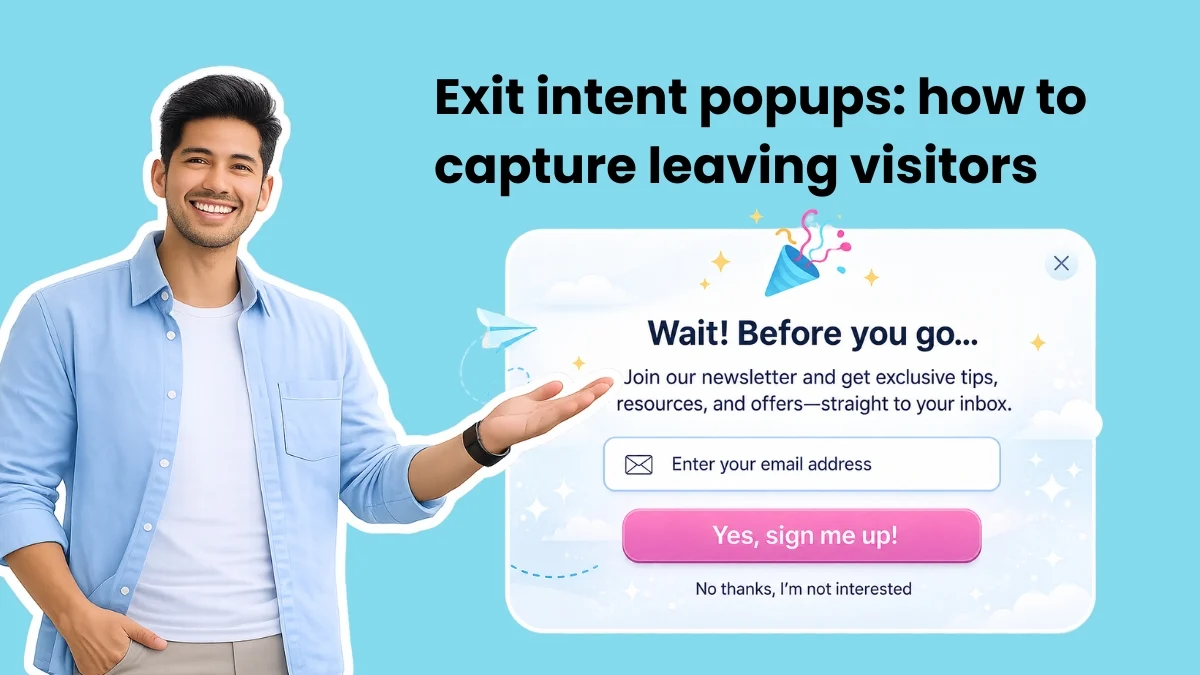
An exit-intent popup is a sophisticated signup form designed to appear when a website visitor signals an imminent departure from a page. This timely intervention offers a crucial, final opportunity to engage and convert individuals who are seconds away from leaving a site, potentially forever. Unlike traditional popups that can disrupt a user’s browsing experience, exit-intent technology leverages precise timing, activating only after a visitor has consumed content, formed an initial judgment, and made the decision to navigate away. At this critical juncture, a well-crafted and relevant offer can reframe the act of leaving into a new decision point, transforming a potential lost lead into a valuable engagement.
The effectiveness of exit-intent popups is rooted in their non-intrusive nature. Standard popups, which often appear after a set time or scroll depth, can interrupt a user mid-read or mid-task, leading to frustration and an immediate close. Exit-intent, by contrast, waits for the user to complete their primary interaction with the content. The browsing experience is already winding down, making the appearance of a targeted offer less disruptive and more akin to a helpful, last-minute suggestion. This strategic timing taps into psychological principles of urgency and the “last chance” effect, compelling users to reconsider their exit in light of a compelling value proposition.
On desktop platforms, the mechanism behind exit-intent detection relies on a small JavaScript script that meticulously tracks the visitor’s mouse movements. When the cursor accelerates toward the top edge of the browser window – specifically targeting areas like the close button, tab bar, or address bar – the script interprets this as a clear signal of intent to leave. Upon detecting this pattern, the popup is triggered, presenting its offer before the page can be fully closed. This predictive capability allows businesses to intercept potential leavers at their most receptive moment.
Mobile environments, lacking a traditional cursor, necessitate a different approach to exit-intent detection. Here, triggers are configured to respond to specific user behaviors indicative of departure. These signals typically include pressing the device’s back button, switching between browser tabs, or rapidly scrolling back to the very top of a page. Advanced mobile exit-intent solutions may also monitor patterns like idle time or even the velocity of scrolling to infer intent. The adaptation of this technology to mobile has been critical, given the pervasive use of smartphones and tablets for web browsing and the unique interaction patterns inherent to these devices.
The Evolution of Conversion Tactics: A Brief History of Exit-Intent Technology
The concept of exit-intent technology first emerged in the early 22nd century, representing a significant leap forward in conversion rate optimization (CRO) strategies. Prior to its widespread adoption, marketers primarily relied on traditional popups, banners, and embedded forms to capture leads. While effective to some extent, these methods often suffered from high bounce rates due to their intrusive nature. The innovation of exit-intent offered a more user-friendly alternative, allowing businesses to engage users without interrupting their primary content consumption.
Early iterations of exit-intent popups were relatively basic, primarily focusing on desktop mouse tracking. Over time, as user behavior evolved and mobile browsing surged, the technology matured. Developers invested in more sophisticated algorithms to detect intent on various devices and platforms, leading to the mobile-specific triggers we see today. The integration of A/B testing capabilities, advanced targeting rules, and seamless connections with email marketing platforms further cemented exit-intent as an indispensable tool for digital marketers. This chronological development underscores an industry-wide commitment to refining user engagement tactics to be both effective for businesses and respectful of user experience.
Quantifying Impact: Data and Industry Benchmarks
The efficacy of exit-intent popups is not merely anecdotal; it is substantiated by compelling data from numerous case studies and industry reports. While conversion rates can vary widely depending on the industry, offer relevance, design quality, and traffic source, well-optimized exit-intent popups typically achieve conversion rates ranging from 2% to 10%. Some highly targeted campaigns, particularly those in e-commerce with compelling discount offers or content marketing with valuable resource upgrades, have reported conversion rates as high as 15% or even 20%.
For e-commerce businesses, exit-intent popups have proven particularly effective in combating cart abandonment, a significant challenge that costs retailers billions annually. By presenting a discount, free shipping offer, or a “before you go” reminder, businesses can recover a substantial percentage of otherwise lost sales. For content publishers and lead generation sites, these popups are powerful tools for growing email lists, capturing leads for gated content, and driving sign-ups for webinars or free trials. Industry benchmarks suggest that websites implementing exit-intent strategies often see a 10-50% increase in email subscribers, a critical metric for long-term customer relationship building and marketing automation. This data underscores the technology’s tangible contribution to key business objectives, solidifying its status as a high-return investment in the digital marketing toolkit.
Building Engagement: Traditional vs. AI-Powered Approaches
The process of creating and deploying exit-intent popups has evolved, offering businesses two primary pathways: the conventional workflow using drag-and-drop builders, and the emerging, streamlined approach powered by artificial intelligence.
The Conventional Workflow: Form Design and Trigger Configuration
The traditional method involves a two-step process, common across most drag-and-drop form builders, whether they are standalone popup tools or plugins integrated with platforms like WordPress or Shopify. The initial step focuses on the visual design of the form. Marketers use a visual editor to select a layout, incorporate a compelling headline, add necessary fields (typically just an email address), customize colors to align with brand guidelines, and connect the form to their chosen email marketing platform. This stage demands careful attention to user interface (UI) and user experience (UX) principles to ensure the popup is visually appealing and easy to complete.
The second, distinct step involves configuring the trigger and display settings. Within the targeting or display options of the builder, marketers explicitly select “exit intent” as the activation trigger. Beyond this, they define critical parameters such as where the popup should appear (specific pages, categories, or sitewide), the frequency of its display (e.g., once per visit, once per week, or based on cookies), and whether it should be shown on mobile devices, often with mobile-specific designs. While this two-step process offers granular control over both design and behavior, it necessitates separate decision-making for each aspect. This can lead to a fragmented setup experience, potentially requiring design adjustments after trigger logic has been established, and can be more time-consuming for marketers.
The Rise of AI in Marketing Automation: Streamlined Creation with AI
A more recent and increasingly popular approach leverages artificial intelligence to simplify the entire process. Platforms like AWeber’s AI Signup Form Builder exemplify this innovation by creating exit-intent popups from a single, intuitive text prompt. Instead of manually designing and then configuring, a marketer can simply describe their desired outcome, such as “create a popup offering my free email marketing checklist, triggered on exit intent.” The AI then generates a fully designed form, complete with relevant copy, brand-aligned colors, and the exit intent trigger pre-configured.
This AI-driven method significantly reduces the time and effort required for setup. The AI is trained on best practices for conversion and design, aiming to produce effective popups quickly. Once the AI generates the form, deployment is simplified: a single JavaScript snippet is installed on the website. Any subsequent modifications made within the AI builder platform automatically update the live popup on the site, eliminating the need for further manual code adjustments. This integrated approach not only accelerates deployment but also ensures consistency between the form, subscriber data, tags, and automated sequences within the email marketing platform, removing the complexities of syncing data between disparate tools. This represents a broader trend in marketing technology, where AI is increasingly used to automate and optimize creative and operational tasks, making sophisticated tools accessible to businesses without large marketing teams.
High-Impact Strategies: Six Proven Exit-Intent Patterns
Effective exit-intent popups are tailored to specific user contexts and business objectives. Here are six high-performing patterns, detailing their structure, angle, and optimal use cases:
-
The Content Upgrade:
- Best for: Blog posts, resource pages, educational content.
- Style Idea: Often features a small preview thumbnail of a downloadable asset (e.g., PDF, checklist) on one side, with a compelling headline and a single email field on the other.
- Elaboration: This pattern capitalizes on a visitor’s engagement with existing content. If someone has just finished reading a blog post about email marketing tips, an exit-intent popup offering a “Free Email Marketing Checklist” or a “Deep Dive Guide to Lead Nurturing” acts as a logical next step, extending the value proposition. It leverages the recency of content consumption, making the offer highly relevant and increasing the likelihood of conversion by providing additional, complementary value.
-
The Discount Offer:
- Best for: E-commerce sites, service businesses with introductory pricing.
- Style Idea: Characterized by a bold background color from the brand palette, a large percentage number (e.g., “15% OFF!”) as the focal point, minimal supporting copy, and a high-contrast call-to-action button with a single email field.
- Elaboration: This is a powerful tactic for mitigating cart abandonment or encouraging first-time purchases. When a user is about to leave an e-commerce store, a discount offers a direct monetary incentive to reconsider. It addresses potential price sensitivity or hesitation, providing that final push needed to convert. The urgency created by a limited-time discount or a “first-purchase only” offer further enhances its effectiveness.
-
The Quiz or Assessment:
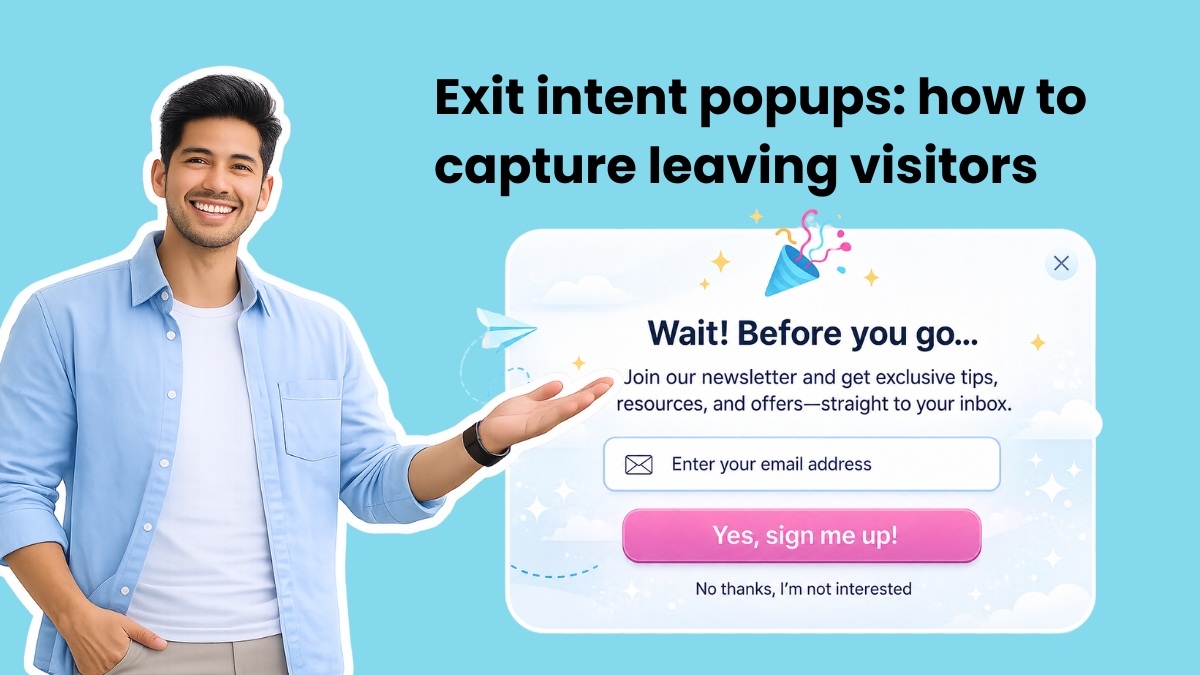
- Best for: Consultants, coaches, SaaS companies with multiple plans, lead qualification.
- Style Idea: Often includes progress dots at the top to indicate advancement, displaying one question at a time. Soft gradients or illustrated backgrounds can make it feel approachable rather than overly corporate.
- Elaboration: Quizzes and assessments are highly engaging. They offer users personalized insights or recommendations in exchange for their information. For a SaaS company, a “Which Plan Is Right For You?” quiz helps qualify leads and guides users to the most suitable product tier. For coaches, an “Assess Your Business Growth Potential” tool provides value upfront while gathering crucial data about the prospect’s needs, paving the way for a more targeted follow-up.
-
The Newsletter/Community Signup:
- Best for: News outlets, community-driven businesses, content creators.
- Style Idea: Minimalist design, with a large, bold number (e.g., “Join 50,000 Subscribers!”) as the hero element, supported by one or two short lines of copy. Features a single email field.
- Elaboration: This pattern focuses on building an audience and fostering a sense of belonging. Highlighting a large subscriber count leverages social proof, encouraging others to join a thriving community. The value proposition is centered around ongoing engagement, exclusive content, or regular updates, appealing to users who want to stay informed or connected to a particular topic or brand.
-
The Free Tool/Resource:
- Best for: SaaS companies, financial services, marketing tools, B2B services.
- Style Idea: Often uses a dark background with a screenshot or animation showcasing the tool in action. The headline directly addresses the output or benefit, such as “See your email ROI in 30 seconds” or “Calculate Your Savings Instantly.”
- Elaboration: Offering a free tool or resource provides tangible value that demonstrates a product’s utility or expertise. For a SaaS company, a free calculator, template, or mini-tool acts as a powerful lead magnet, allowing users to experience a taste of the product’s capabilities without commitment. This builds trust and showcases the brand’s problem-solving ability, making it ideal for converting users who are exploring solutions to a specific challenge.
-
The “Before You Go” Reminder:
- Best for: Cart abandonment, pricing pages, product comparison pages.
- Style Idea: A compact card format, often with a product image or a screenshot of the page content on the left, short reminder copy on the right, and a prominent call-to-action button in a contrasting color. Crucially, this pattern often requires no email field if the primary goal is return-to-cart.
- Elaboration: This strategy is designed to address immediate hesitations or forgotten items. On a pricing page, it might remind a user of a free trial option or a key benefit they might have overlooked. For cart abandonment, it serves as a gentle nudge to complete a purchase, perhaps highlighting items left in the cart or reinforcing a value proposition like free shipping or easy returns. It’s a direct, non-invasive way to prompt a user to reconsider their exit and complete an action they were close to taking.
It is worth noting that modern AI-driven form builders can generate these diverse patterns with remarkable speed, often in less than a minute, by simply interpreting a text prompt that describes the desired offer and trigger.
Optimizing for Success: Best Practices for Maximizing Conversions
While exit-intent technology provides a powerful mechanism, its true potential is unlocked through adherence to best practices that prioritize both conversion and user experience.
Ask for One Field Only:
Simplicity is paramount in exit-intent popups. The primary goal is to capture a lead, and every additional field (e.g., name, phone number, company) introduces friction and increases the likelihood of the visitor closing the popup without completing it. The email address is usually sufficient for initial lead capture. More detailed demographic or preference information can be progressively collected later through a welcome email sequence or subsequent interactions, ensuring a smoother initial conversion path.
Contextual and Page-Specific Offers:
A one-size-fits-all popup displayed sitewide is a missed opportunity. A visitor contemplating leaving a pricing page has a vastly different intent and set of concerns than someone exiting a blog post about industry trends. The pricing page visitor might be swayed by a free trial offer or a limited-time discount, while the blog reader is more likely to respond to a related resource, a content upgrade, or an invitation to subscribe for more insights. Implementing page-specific or category-specific popups allows for highly relevant and targeted offers, significantly boosting conversion rates by aligning the offer with the user’s immediate context and intent.
Control the Frequency to Avoid Annoyance:
Over-saturation can quickly turn a helpful intervention into an irritating nuisance. If a user closes a popup on Monday and encounters the exact same popup again on Tuesday, it signals a lack of responsiveness and can damage trust. A judicious approach to frequency control is essential. For most websites, displaying a specific exit-intent popup once per week per user (tracked via cookies) is a balanced approach. For high-traffic sites with low repeat visitors, “once per session” might be more appropriate. Striking the right balance prevents user fatigue while maximizing conversion opportunities.
Make Closing Easy and Transparent:
An ethical and user-friendly design dictates that closing a popup should be effortless. A clearly visible “X” button and an explicit “No thanks” or “Decline offer” link build trust and respect the user’s decision. Conversely, tiny, hidden close buttons, or “shame-based” decline copy (e.g., “No, I don’t want to grow my business”) generate resentment and can negatively impact brand perception. The popup should feel like an optional suggestion, not a coercive trap.
Design for Mobile Responsiveness and Compliance:
Given the prevalence of mobile browsing, designing exit-intent popups specifically for smartphones and tablets is critical. Full-screen takeovers, while sometimes effective on desktop, can be highly disruptive and penalized by search engines like Google if they block content on mobile devices. Instead, mobile-optimized designs such as bottom banners, half-screen overlays, or modal windows that allow easy content viewing are preferred. Additionally, ensure close buttons are large enough to be easily tapped without accidentally triggering the signup button, enhancing usability on smaller touchscreens.
Test the Offer, Not Just the Design:
While design certainly plays a role, the core offer is often the primary driver of conversion. Marketers should prioritize A/B testing different value propositions rather than solely focusing on aesthetic tweaks. For instance, testing “10% off” against “free shipping” for an e-commerce site, or a “PDF checklist” against a “video course” for a content upgrade, can yield surprising insights into what truly resonates with an audience. Similarly, comparing messaging like “Join 10,000 subscribers” with “Get weekly tips” helps refine the value proposition. Rigorous testing of the offer ensures that the most compelling incentive is presented, maximizing the popup’s effectiveness.
Integration and Implementation: Navigating the Ecosystem
Deploying exit-intent popups involves integrating specialized tools with your website’s content management system (CMS) or e-commerce platform.
WordPress and CMS Solutions:
For websites built on WordPress, numerous dedicated popup plugins such as OptinMonster, Sumo, and Thrive Leads offer robust exit-intent detection as a built-in trigger. The process typically involves installing the plugin, designing the popup within its interface, and then setting the trigger to “exit intent.” These plugins often provide advanced targeting rules, A/B testing capabilities, and analytics dashboards.
Alternatively, for users of integrated email marketing platforms like AWeber, a simpler path exists. The signup forms created using AWeber’s AI builder are designed to function seamlessly on any WordPress site. Instead of a separate popup plugin, users install AWeber’s Universal JavaScript snippet into their site’s header (a task easily accomplished with plugins like WPCode). With this single snippet, the exit-intent trigger, display frequency, and page targeting are all centrally controlled from within the AWeber platform. This approach offers the significant advantage of consolidating forms, subscriber data, tags, and automation sequences within a single ecosystem, eliminating the need for complex syncing between multiple tools and reducing potential integration headaches.
E-commerce Platforms (Shopify, etc.):
For e-commerce platforms like Shopify, similar integration patterns apply. Many dedicated popup apps are available through their respective app stores, offering direct integration and simplified deployment. Alternatively, email marketing platforms with built-in form builders often provide specific integration instructions or dedicated apps for these platforms, allowing businesses to manage their popups and email marketing from a unified dashboard.
Standalone Tools vs. All-in-One Platforms:
The choice between a standalone popup tool and an integrated solution within an email marketing platform depends largely on specific business needs and existing tech stacks.
- Standalone Popup Tools (e.g., OptinMonster, Sumo, Wisepops): These tools specialize in advanced targeting rules, sophisticated A/B testing frameworks, and often offer a wider array of popup types and animation effects. They are ideal for businesses that require highly granular control over every aspect of their popup campaigns and may already have a separate email marketing solution. Their focus is solely on conversion optimization through popups.
- Integrated Email Marketing Platforms (e.g., AWeber, Mailchimp, ConvertKit): Many modern email marketing platforms now include robust built-in form and popup builders. The primary advantage here is seamless integration. When a subscriber signs up via an exit-intent popup built within the email platform, their data is immediately available for segmentation, tagging, and enrollment in automated email sequences. This eliminates the need for third-party integrations, data syncing, and potential delays, streamlining the entire lead capture and nurturing process. Platforms like AWeber’s AI Signup Form Builder further enhance this by automating the creation process, connecting new subscribers directly to email lists and automated sequences with minimal setup.
Expert Perspectives and Industry Outlook
Leading marketing strategists consistently underscore the enduring value of exit-intent popups as a crucial component of a comprehensive conversion rate optimization strategy. “In an increasingly competitive digital landscape, every visitor interaction counts,” states a hypothetical CRO specialist. “Exit-intent popups are not just about preventing bounce; they’re about demonstrating value at the exact moment a user is weighing their options. They represent a final, respectful invitation to stay connected or reconsider a decision.”
The future of exit-intent technology is poised for even greater sophistication. Expect continued advancements in hyper-personalization, where popups are dynamically generated based on a user’s entire browsing history, demographic data, and even real-time behavior signals. Predictive analytics will likely play a larger role, allowing systems to anticipate exit intent with even greater accuracy and tailor offers more precisely. Integration with other marketing channels, such as retargeting ads or live chat, could create multi-channel exit strategies. Furthermore, as AI technology continues to evolve, the creation and optimization of exit-intent campaigns will become even more automated, allowing marketers to focus on strategy rather than execution. Ethical AI considerations, particularly concerning user privacy and transparent data usage, will also remain at the forefront of development, ensuring that these powerful tools are used responsibly to enhance, rather than detract from, the user experience.
In conclusion, exit-intent popups have solidified their position as an indispensable tool for digital marketers aiming to optimize conversion rates and build engaged audiences. By leveraging intelligent timing and tailored offers, businesses can effectively re-engage visitors on the brink of departure, transforming potential losses into valuable connections. As technology advances, particularly with the integration of AI, the creation and deployment of these strategic interventions will become even more efficient and effective, cementing their role in the evolving landscape of online marketing.








