admin
admin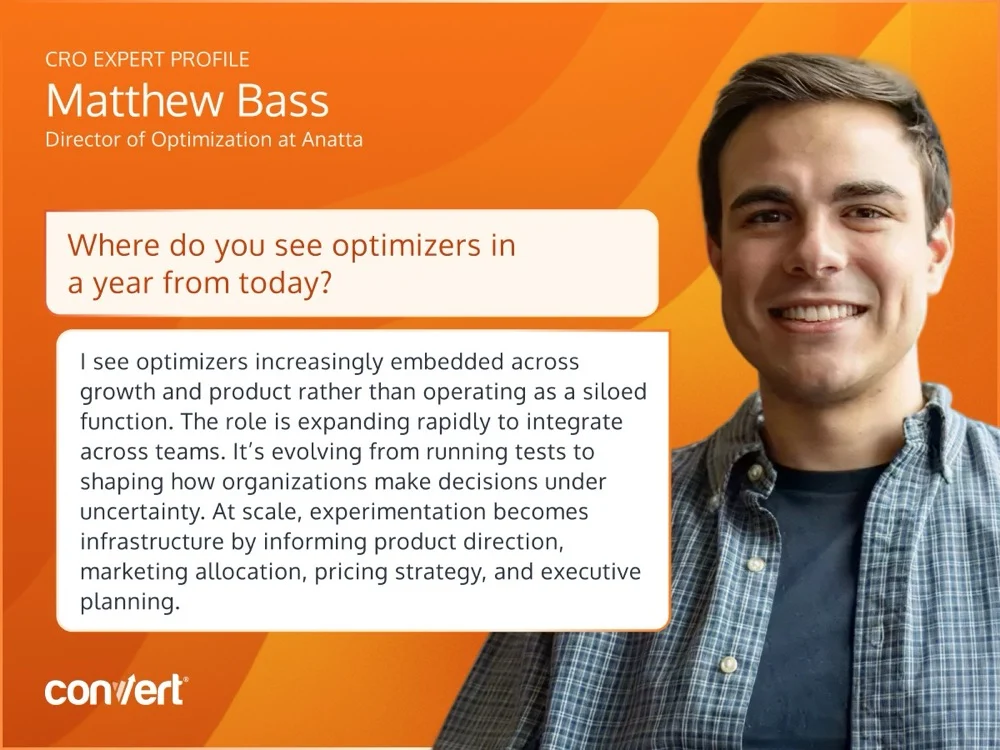
The digital commerce landscape has undergone a radical transformation over the past decade, shifting from a focus on simple traffic acquisition to a sophisticated discipline centered on user experience (UX) and conversion rate optimization (CRO). At the forefront of this evolution is Matthew Bass, the Director of Optimization at Anatta, a leading agency known for scaling high-growth eCommerce brands. In a comprehensive discussion regarding the state of the industry, Bass highlights how the intersection of creative strategy, behavioral data, and artificial intelligence is redefining how brands communicate value and secure long-term growth. As organizations move away from siloed marketing tactics, the role of the optimizer is transitioning from a specialized technician to a core strategic leader capable of shaping organizational decision-making under conditions of uncertainty.
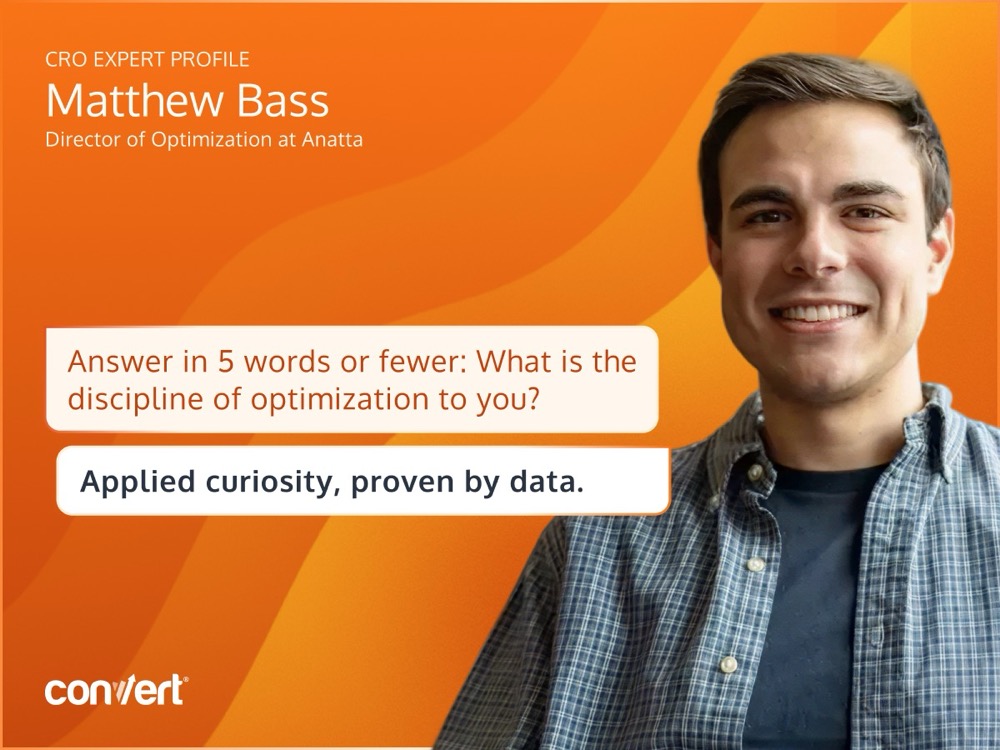
The discipline of optimization, as defined by Bass, is "applied curiosity, proven by data." This philosophy suggests that successful experimentation is not merely about increasing a single metric but about building a bridge between human intuition and empirical truth. For high-growth brands, this bridge is essential for navigating the complexities of modern consumer behavior, where traditional marketing playbooks often fail to account for the nuanced psychological drivers that lead to a purchase.

The Trajectory of a Modern Optimizer
The career path of Matthew Bass illustrates a broader trend within the marketing industry: the convergence of creative and analytical roles. With over seven years of experience, Bass began his journey in upper-funnel acquisition and creative testing. This background provided a unique vantage point, allowing him to view the user journey as a cohesive narrative rather than a series of disconnected touchpoints. By the time he transitioned into full-funnel experimentation and UX research at Anatta, he had developed a framework that connected qualitative insights with commercial strategy.
This professional evolution mirrors the maturation of the CRO industry itself. In the early 2010s, optimization was often treated as an afterthought, frequently limited to "button color" tests and minor layout adjustments. Today, the industry has shifted toward deep-funnel optimization, where the focus is on systemic changes to the business model and value proposition. Data from industry reports suggest that companies that adopt a "testing culture" see significantly higher returns on ad spend (ROAS) and customer lifetime value (LTV) compared to those that rely on gut feeling. For instance, according to recent benchmarks in the digital experience sector, mature experimentation programs can drive a 20% to 30% increase in annual revenue by identifying and removing friction points that would otherwise go unnoticed.
The Role of Creative Strategy in Data-Driven Environments
One of the most significant insights shared by Bass is the importance of creative strategy in the experimentation toolkit. He argues that optimizers with creative backgrounds are uniquely equipped to think in narratives. This narrative-driven approach ensures that experiments are designed to improve the total user experience rather than just local maxima.

Creative strategy allows an optimizer to:
- Develop Holistically: Rather than fixing a single page, the creative-minded optimizer looks at the "scent of the information" from the initial ad click through to the post-purchase experience.
- Enhance Storytelling: As data becomes more complex, the ability to translate technical findings into compelling stories for stakeholders is paramount. This skill is critical for securing buy-in for high-impact, high-risk experiments.
- Humanize Data: Creative strategy forces the experimenter to ask "why" a user is behaving a certain way, leading to more empathetic and effective UX solutions.
In the context of eCommerce, this means moving beyond static merchandising. Bass advocates for a "value-architecture" approach, where the digital storefront is viewed as a dynamic system designed to communicate the brand’s unique benefits at the exact moment of consumer commitment.
Artificial Intelligence: From Analysis to Acceleration
The integration of Artificial Intelligence (AI) into experimentation workflows has become a primary driver of efficiency in 2024 and 2025. Bass notes that AI is not a replacement for strategic thinking but a massive force multiplier for leaders who know how to ask the right questions. At Anatta, AI is utilized to synthesize thousands of disparate data points—ranging from session recordings and survey responses to merchandising analytics—compressing analysis that once took days into a matter of hours.
This acceleration is crucial for maintaining agility in a competitive market. By automating the synthesis of behavioral data, optimizers can spend more time on high-level hypothesis generation and strategic planning. Supporting data from the broader MarTech sector indicates that AI-driven analytics can improve the accuracy of customer sentiment analysis by up to 40%, allowing brands to react to shifts in consumer preference in near real-time.
However, the "Not By AI" movement, which Bass acknowledges through his participation, highlights a critical balance. While AI handles the heavy lifting of data processing, the final strategic direction and the "human" element of the user experience must remain under the purview of experienced professionals. This ensures that the brand’s voice remains authentic and that the experimentation program does not become a victim of algorithmic bias.
Case Study: The Power of Value Architecture
To illustrate the impact of sophisticated testing, Bass points to a significant experiment involving a reimagined Product Detail Page (PDP). In many eCommerce environments, high-value offers or bundles are often buried in navigation menus or secondary pages, making them invisible to the average user.
Through a combination of behavioral analysis and offer strategy, Bass and his team identified that customers were highly motivated by a specific exclusive bundle, yet the site’s layout favored single-unit purchases. By introducing a "Best Value" framing mechanism directly within the core purchase flow, they made the bundle the most "cognitively accessible" option.
The results of this experiment were twofold:
- Commercial Lift: There was a clear increase in key metrics, specifically Average Order Value (AOV) and overall revenue.
- Strategic Realignment: The test changed how the organization perceived value communication. It informed their omnichannel strategy and merchandising decisions, proving that the digital experience could protect direct-to-consumer (DTC) margins by offering differentiated products that weren’t available through third-party retailers like Amazon.
This case study demonstrates that optimization is often about reducing "decision friction." By clarifying the price-per-unit economics at the moment of commitment, the brand helped the user make a more informed, confident decision, leading to higher satisfaction and conversion.

The Future of the Optimization Function
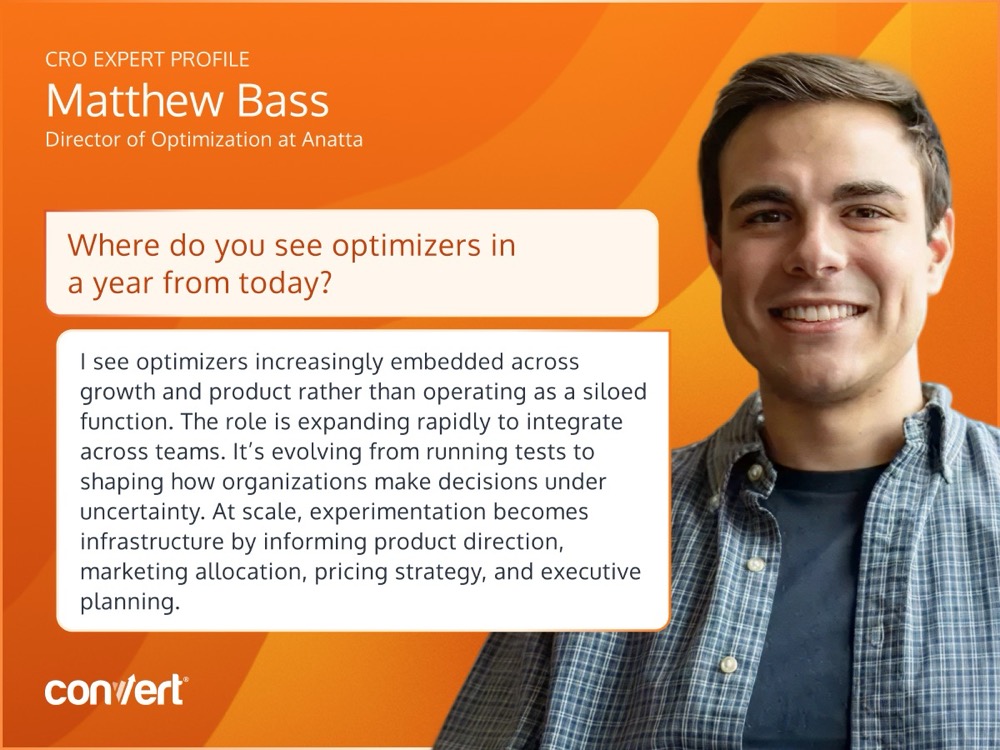
Looking ahead, Bass predicts a significant shift in how optimization teams are structured within organizations. The era of the "siloed" CRO team is coming to an end. Instead, optimizers are increasingly being embedded directly into growth and product teams.
In this new paradigm, experimentation serves as the underlying infrastructure for all business decisions. It informs product direction, marketing budget allocation, pricing strategies, and even executive-level planning. This integration is essential for building a "compounding competitive advantage." When an organization learns how to make better decisions under uncertainty, the benefits are exponential rather than linear.
Industry analysts suggest that by 2026, the majority of leading eCommerce firms will have moved toward this integrated model. The demand for "Growth Engineers" and "UX Strategists" who can navigate both the technical requirements of an A/B testing platform and the psychological requirements of consumer behavior is expected to outpace the demand for traditional digital marketers.

Broader Implications and Strategic Analysis
The insights provided by Matthew Bass suggest that the future of eCommerce lies in the hands of those who can master the "science of the user." As privacy regulations (such as GDPR and CCPA) and changes to tracking (like Apple’s App Tracking Transparency) make traditional attribution more difficult, the importance of on-site experimentation grows. Brands can no longer rely solely on external data to find their customers; they must optimize the experience for the customers they already have.
Furthermore, the emphasis on "Value Architecture" points to a shift in the power dynamic of the digital storefront. The PDP is no longer just a digital flyer; it is a sophisticated sales tool that must adapt to the user’s intent in real-time. Organizations that fail to adopt these advanced experimentation frameworks risk falling behind competitors who are using data to build more empathetic, efficient, and profitable user journeys.
In conclusion, the evolution of optimization from a tactical function to a strategic imperative is well underway. As leaders like Matthew Bass demonstrate, the key to success in this new era is a combination of technical proficiency, creative storytelling, and an unwavering curiosity about human behavior. For high-growth eCommerce brands, the message is clear: the data-driven evolution of the user experience is not just a project—it is the foundation of modern business growth.