In an increasingly complex and competitive digital landscape, businesses are turning to growth experimentation as a strategic imperative to unlock measurable and repeatable expansion. This structured approach involves rigorously testing ideas across the entire customer journey, from initial awareness to post-purchase retention, to identify what truly drives business growth. It marks a significant evolution from traditional marketing tactics, empowering teams to optimize performance, allocate resources efficiently, and adapt rapidly to dynamic market conditions, all while operating under intensified budget scrutiny and escalating demands for content and demonstrable return on investment (ROI).
The Imperative of Growth Experimentation in Modern Marketing
Modern marketing teams face unprecedented pressure. A recent report, HubSpot’s 2026 State of Marketing, starkly highlights this reality, revealing that a staggering 73% of marketers report their budgets and ROI are under greater scrutiny than ever before. Simultaneously, 83% of teams are expected by leadership to deliver an increased volume of content. This twin challenge of doing more with less, coupled with the inherent unpredictability of today’s buyer journeys, makes traditional, linear marketing strategies insufficient. The natural and necessary response for forward-thinking organizations is to embrace a culture of continuous testing and learning.
The digital revolution has fundamentally reshaped how consumers discover, evaluate, and interact with brands. Gone are the days of predictable, channel-specific funnels. Today’s buyer journey is highly fragmented, encompassing diverse touchpoints such from asking sophisticated AI-powered answer engines, engaging with community forums like Reddit, scrolling through personalized feeds on TikTok, and interacting with traditional search engines. This multi-platform engagement means customers are encountering products and services from myriad sources, often in non-linear sequences. For marketers, this fragmentation translates into a critical need to quickly ascertain which channels are most effective for acquisition, which activation experiences foster momentum, and which marketing tactics generate compounding demand worthy of significant investment. Growth experimentation provides the systematic framework to navigate this complexity, transforming uncertainty into actionable insights and strategic advantage.
Evolution of Marketing Strategy: From Campaigns to Continuous Learning
The concept of testing in marketing is not new. Early forms involved direct mail A/B testing or comparing different ad creatives. However, the scope and intent have evolved dramatically. What began as isolated A/B tests to optimize specific elements—such as a headline or button color—gradually expanded into Conversion Rate Optimization (CRO), a more focused discipline aimed at improving the percentage of website visitors who complete a desired action. Growth experimentation represents the next logical step in this evolution, encompassing a far broader strategic vision.

The Shifting Landscape and ROI Pressure
For decades, marketing success was often measured by reach and brand awareness, with less immediate emphasis on direct ROI. However, the advent of digital marketing brought with it unparalleled tracking capabilities, fundamentally altering expectations. Economic fluctuations, increased competition, and a growing emphasis on data-driven decision-making across all business functions have amplified the demand for transparent and attributable marketing performance. Marketing departments are no longer seen as cost centers but as growth engines, expected to demonstrate clear, measurable contributions to the bottom line. This shift has necessitated a move from intuition-based campaigns to rigorously tested strategies.
Beyond A/B Testing: A Holistic Approach
While A/B testing and CRO remain vital tools, they often operate within a narrow scope, optimizing existing assets or micro-conversions. Growth experimentation, by contrast, elevates testing to a strategic level. It’s not just about improving a landing page; it’s about validating a fundamental hypothesis regarding customer segments, value propositions, or entire journey designs. For instance, a growth manager might test a novel customer segment, adjust product positioning, deploy a dedicated landing page tailored to that positioning, and modify subsequent email sequences—all as part of a single, overarching experiment designed to identify repeatable growth levers. This holistic approach ensures that insights gained are not isolated but contribute to a deeper understanding of the customer and the market, enabling scaling of what truly works.
Decoding Growth Experimentation: Scope, Intent, and Methodology
Growth experimentation is distinguished by its structured, hypothesis-driven methodology. Unlike ad-hoc adjustments, each experiment begins with a clear hypothesis about what might drive measurable business growth. Marketers then define specific metrics that will determine success or failure, execute the experiment on a carefully chosen audience segment, and meticulously analyze the results. These findings are then used to inform future marketing decisions, refine strategies, or even improve subsequent tests. This iterative process of "validated learning" ensures that every effort contributes to an accumulating body of knowledge.
Core Principles of Validated Learning

At its heart, growth experimentation champions validated learning. This means moving beyond assumptions and gut feelings to rely on empirical data. A core principle is to establish a clear hypothesis before any test, such as "We believe that personalized onboarding sequences for enterprise clients will reduce churn by 15%." This hypothesis then dictates the experiment’s design, the metrics to track (e.g., churn rate, engagement within the first 30 days), and the specific audience to target. The success or failure of the experiment isn’t just about whether a metric improved, but whether the initial hypothesis was proven or disproven, providing valuable insights regardless of the outcome. This scientific approach minimizes wasted effort and maximizes learning efficiency.
The Strategic Differentiator
The strategic intent behind growth experimentation sets it apart. While CRO aims to convert existing traffic more effectively, and A/B testing compares two variations, growth experimentation seeks to uncover fundamental truths about customer behavior and market response that can be scaled across the entire organization. It’s about identifying new growth channels, optimizing entire customer segments, or fundamentally reshaping the customer experience. This broader scope and strategic ambition make growth experimentation a powerful differentiator for companies seeking sustainable, long-term expansion rather than incremental gains.
Crafting a Robust Growth Experimentation Framework
Building an effective growth experimentation strategy requires more than just running tests; it demands a structured, systematic approach. Successful implementation hinges on clearly defining experiment scope, assigning ownership, and establishing success metrics before execution.
1. Identifying Core Business Challenges:
Instead of starting with tactical ideas like "test a new headline," growth teams begin with a fundamental business question tied to a bottleneck or pain point. This ensures experiments are focused on strategic growth and refinement, not just superficial optimization. For example, rather than "try LinkedIn ads," a growth question might be "Which audience segment converts to pipeline fastest?" This broader question anchors experimentation to meaningful outcomes, guiding a series of experiments such as testing different ideal customer profiles (ICPs) with tailored messaging, comparing various offer types, or experimenting with distinct content formats to engage different segments. Platforms like HubSpot Marketing Hub are designed to support this range of experimentation, allowing marketers to segment campaigns by audience and run adaptive testing across landing pages and campaigns.
2. Fostering Cross-Functional Synergy:
Growth experimentation often falters when executed in silos. True growth requires coordinated efforts across growth marketing, lifecycle marketing, product marketing, and demand generation teams. Each team influences a distinct part of the customer journey, and independent experimentation can lead to conflicting results. For instance, demand generation might boost traffic, but if lifecycle marketing fails to activate those users effectively, the overall growth objective is undermined. Aligning teams around shared growth objectives ensures that experiments complement each other, focusing on stages of the customer journey where the greatest drop-offs or least engagement occur. Leveraging tools like HubSpot CRM to track behavioral events and segment users based on lifecycle milestones can operationalize this cross-functional alignment.
3. Strategic Prioritization: Impact vs. Learning:
Not all experiments are created equal. Growth teams prioritize tests based on their potential impact on business outcomes and their learning value. High-learning experiments address foundational questions, such as "Which ICP responds best to our value proposition?" or "Which onboarding step significantly drives retention?" These insights are reusable and can influence multiple channels simultaneously. Conversely, low-learning experiments, like testing button colors or minor layout tweaks, rarely alter the overall growth trajectory. While they might offer local conversion improvements, they often fail to produce scalable insights. Effective prioritization involves evaluating experiments based on potential impact, confidence in the hypothesis, and the cost/effort involved. For example, testing a new ICP has high learning value because its results can inform paid media, outbound sales, product positioning, and lifecycle campaigns.
4. Designing Multi-Touchpoint Experiences:
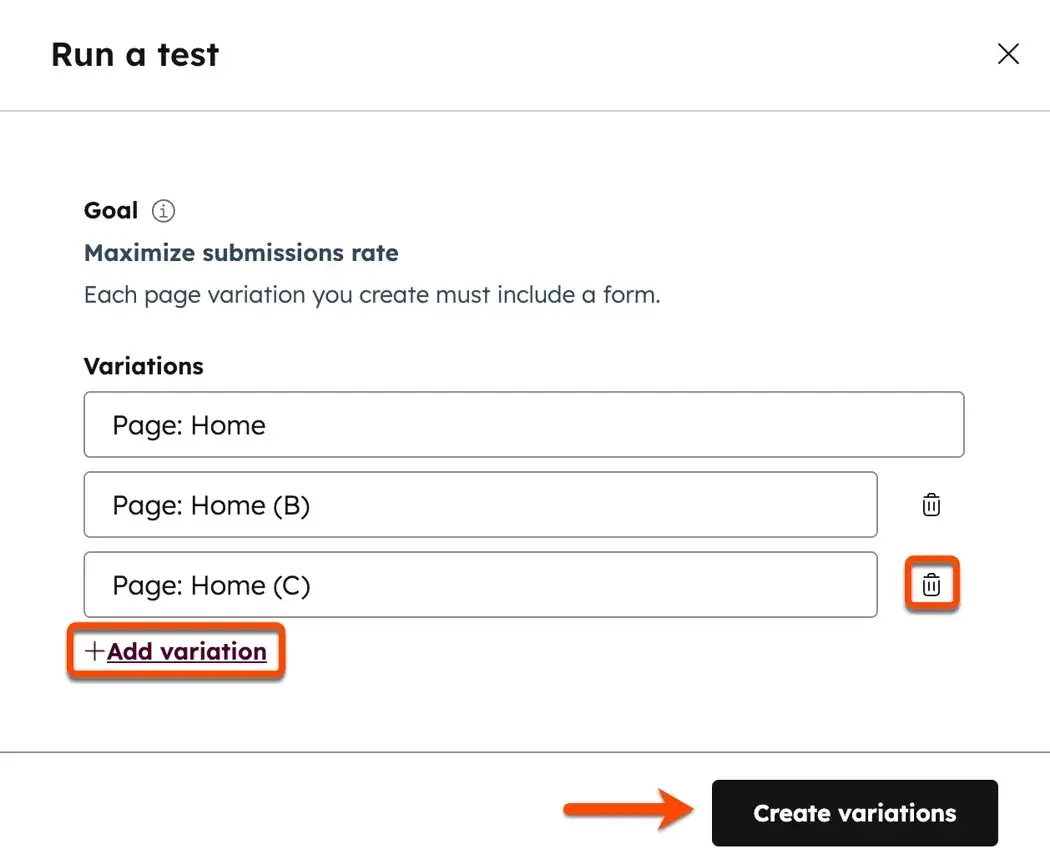
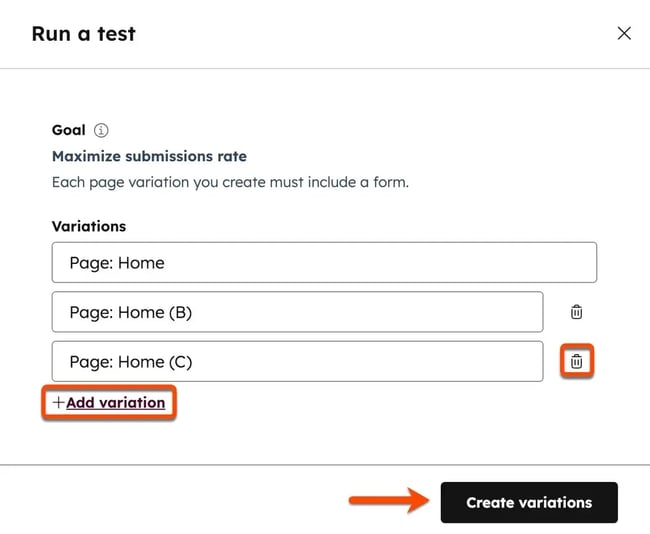
Effective growth experimentation spans multiple assets and tests the full customer experience, not just isolated elements. When various touchpoints are altered simultaneously in alignment with a core hypothesis, the results more accurately reveal the true impact on growth and yield reusable insights. For example, if a team wants to test a "CFO persona," merely running a targeted ad isn’t enough. A comprehensive experiment would involve tailoring ads, dedicated landing pages with CFO-specific messaging, follow-up emails, and even product onboarding flows to truly assess the effectiveness of engaging this persona across the entire journey. HubSpot Marketing Hub facilitates this consolidated approach by combining segmentation, AI-powered A/B testing, and personalization capabilities within a single system.
5. Metrics That Matter: Connecting Experiments to Business Outcomes:
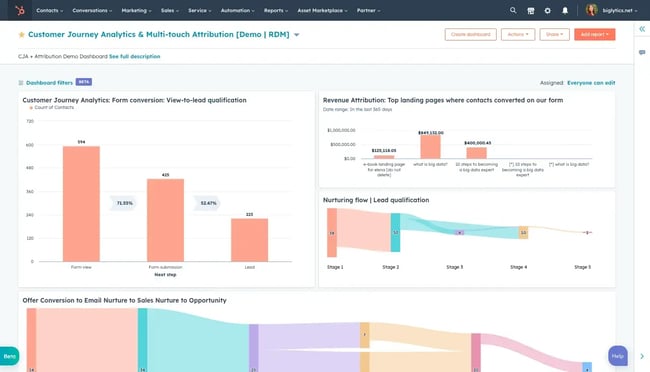
While engagement metrics like click-through rates or page views offer valuable signals, they don’t always correlate with business growth. Growth experimentation demands success metrics directly tied to core business outcomes. Examples include customer acquisition cost (CAC), customer lifetime value (LTV), marketing qualified lead (MQL) to sales qualified lead (SQL) conversion rates, pipeline velocity, and revenue generated. It’s also crucial to track downstream impact—if activation improves, does retention also increase? If sign-ups grow, does pipeline quality remain consistent or improve? HubSpot Marketing Hub’s advanced reporting capabilities allow teams to track experiments across lifecycle stages, connecting campaign performance directly to pipeline and revenue outcomes, ensuring evaluations are based on tangible business impact.
6. Translating Learnings into Scalable Plays:
An experiment’s true value is realized only when validated learnings are scaled beyond the original test. If insights remain confined to a single campaign or page, their impact on overall growth is negligible. Once a result proves consistent across a meaningful sample size or segment, it must be transformed into a "repeatable play." For example, if a new value proposition significantly improves user activation, this insight should then be applied across the entire funnel—updating website language, paid campaign messaging, lifecycle emails, and onboarding prompts. This transforms a successful test into a reusable growth lever for the organization.
Cultivating an Experimentation-Driven Culture
Beyond structured processes, successful growth experimentation thrives in a culture that embraces continuous learning and agility. This requires more than simply encouraging teams to "test more"; it demands shared business goals, lightweight processes, and tight feedback loops that embed experimentation into the daily workflow.
Empowering Teams Through Structured Collaboration:
Building an experimentation culture often starts with structured workshops designed to generate hypotheses and assign ownership. Olga Andrienko, CMO at Foxtery and former VP of Brand at Semrush, describes facilitating in-person sessions where teams brainstorm ideas, divide into groups, and then present concepts. Volunteers then "own" the ideas they champion, leading to further refinement by rotating teams. This format not only fosters creativity but also instills a sense of collective responsibility and keeps ideas moving forward.
Streamlining Processes for Agility:
One of the quickest ways to stifle experimentation is to burden it with heavy, traditional project management overhead. Ryan Carruthers, a growth marketer at Supademo, emphasizes that excessive documentation, review cycles, and approval layers transform experiments into lengthy projects, undermining the rapid feedback loops that make experimentation valuable. At Supademo, Carruthers shifted from detailed planning documents to a lightweight Notion database with simple fields: what to test, what success looks like, what resources are needed, and when to assess. This lean approach allows for quicker execution and maintains momentum.
Anchoring Experiments to Shared Business Goals:
According to Anna Dolynska, Head of Growth at Lemon.io, experiments must connect directly to something the entire company cares about. Abstract mandates to "test more" rarely motivate cross-functional teams. Instead, focusing on concrete business problems that cannot be ignored fosters a shared experimental mindset. Dolynska cites Lemon.io’s experience with high-intent users searching for "React developers" but finding their homepage too generic. This led to a cross-functional project to build over 600 tailored pages for specific roles, technologies, regions, and industries. The success stemmed from everyone—engineering, sales, product, and marketing—understanding why the experiment mattered to the business.
Embracing Agile Feedback Loops:
Experimentation scales more effectively when it’s integrated into an agile operating model. HubSpot’s "Loop Marketing" model, as described by Kaitlin Milliken, Senior Program Manager at HubSpot, exemplifies this. It moves away from linear campaigns where budgets are allocated and results awaited, towards a system where campaigns adapt based on early user feedback. This continuous iteration ensures that experimentation and innovation are deeply embedded in how teams work, allowing for rapid adjustments and sustained growth.
Navigating the Pitfalls: Lessons from the Field
While growth experimentation offers immense potential, it’s not without its challenges. Experienced growth marketers have identified common pitfalls and developed strategies to overcome them.
The Challenge of Scaling Insights:
A common pitfall is validating a hypothesis but failing to scale the insights. Anna Dolynska notes that successful experiments often don’t translate into broader impact because the "artifacts" (the actual implementation) are not scaled. Her team’s success with 600 tailored landing pages, while initially converting at 20% visitor-to-SQL, proved harder to sustain and scale than to achieve. This highlights the critical need for a clear plan to apply learnings across the organization and assign ownership for the subsequent implementation work.
The Importance of Comprehensive Documentation:
In a culture of continuous experimentation, multiple teams may be running tests concurrently. Without proper documentation, teams risk repeating hypotheses or losing valuable insights. Dolynska’s team addresses this by writing a short post-mortem for every experiment, whether successful or failed, covering the hypothesis, setup, results, and key learnings. This prevents teams from re-learning lessons 12-18 months later due to staff or priority shifts.

Bridging Measurement Gaps:
Before launching any experiment, it’s crucial to define what will be measured and how the data will be collected. Measurement gaps can render experiments unactionable. Kaitlin Milliken from HubSpot recounts the initial challenge of measuring performance when pivoting to AI-driven optimization (AEO). They knew they needed to pivot, but lacked the right tools to measure product mentions and keyword saturation in AI contexts. Only after developing specific AEO measurement tools—tracking AI share of voice, sentiment, prompt performance, and competitor presence—could they effectively evaluate and iterate on their experiments. HubSpot AEO, for example, enabled them to achieve a remarkable 1,850% increase in qualified leads from AI, validating their hypothesis and strategic direction.
The Power of Minimum Viable Experiments:
Experiments often stall due to over-scoping. Teams, eager for large-scale impact, design complex initiatives that become too difficult to ship. Ryan Carruthers shared an experience where a simple idea—testing an ungated product experience for nonprofit grant seekers—ballooned into a multi-quarter initiative because it touched too many parts of the user journey and required extensive approvals. The lesson: always ask, "What’s the smallest viable version of this experiment we could actually deploy?" Starting small allows for quicker validation, builds momentum, and reduces the risk of experiments dying before they even begin.
The Future of Growth: AI and the Continuous Experimentation Cycle
The advent of artificial intelligence is not just another channel but a transformative force that will further integrate with and accelerate growth experimentation. AI tools can analyze vast datasets, identify patterns, generate hypotheses, and even automate parts of the experimentation process, from audience segmentation to content generation. This promises to make growth experimentation even faster, more precise, and more scalable. Tools like HubSpot AEO exemplify this integration, providing granular insights into AI visibility and offering concrete recommendations for improvement. As AI continues to evolve, the ability to rapidly experiment and adapt will become an even more critical differentiator for businesses aiming for sustainable growth.
Conclusion: A Pathway to Sustainable Business Expansion
Growth experimentation is no longer a niche tactic; it is a fundamental strategic approach for any organization striving for sustainable business expansion in the modern era. By adopting a structured, hypothesis-driven methodology, aligning cross-functional teams, prioritizing experiments based on impact and learning, and fostering a culture of continuous learning, businesses can navigate the complexities of fragmented buyer journeys. The ability to quickly validate hypotheses, connect insights across the customer journey, and scale what works is paramount. Tools like HubSpot Marketing Hub, with its integrated capabilities for segmentation, A/B testing, personalization, and advanced reporting, empower marketers to operationalize this process effectively. Ultimately, embracing growth experimentation allows teams to move beyond assumptions, make data-driven decisions, and consistently adjust their strategies, transforming insights into repeatable growth levers and securing a competitive edge in an ever-evolving market.