

A recent analysis of high-performing e-commerce businesses reveals a counterintuitive truth: operational leanness and strategic tax planning often contribute more significantly to profitability than aggressive marketing strategies. While conventional wisdom suggests that scaling a business necessitates a proportional increase in headcount and marketing spend, emerging data indicates that a more streamlined approach, coupled with astute financial management, can yield superior results. This paradigm shift is underscored by the experiences of several successful entrepreneurs and corroborated by industry research, challenging long-held assumptions about business growth.
The story of one e-commerce store owner, who previously managed a team of 35 employees, illustrates this point. Despite generating solid revenue, the business consistently struggled with profitability, a common predicament for many growing enterprises. The constant stress associated with managing a large team, in addition to the core business operations, proved to be a significant drain. The owner’s decision to implement substantial operational changes marked a turning point. By embracing a remote work model, outsourcing fulfillment to a third-party logistics (3PL) provider, and transitioning from full-time employees to a lean team comprising one core employee and eight contractors, the business experienced a dramatic transformation. This strategic restructuring not only reduced operational overhead but also significantly boosted profitability, leading to a marked decrease in the owner’s stress levels. This anecdotal evidence, while compelling, is not an isolated incident.
Industry Data Reveals a Leaner Path to Profitability
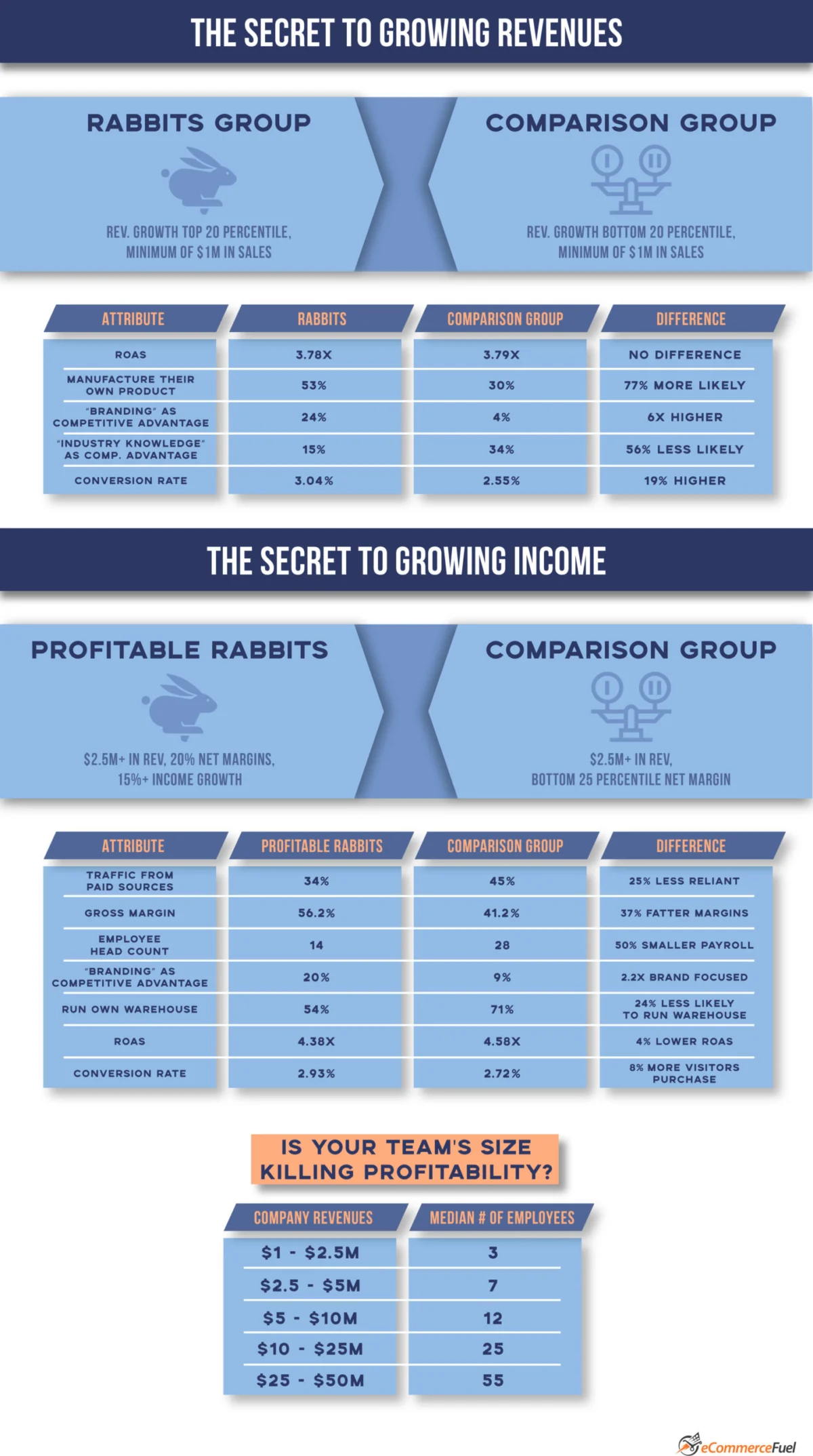
Extensive research conducted across hundreds of e-commerce businesses has identified key differentiators between highly profitable ventures and those facing challenges. Contrary to expectations, the study found that superior marketing prowess, such as higher return on ad spend (ROAS) or more effective search engine optimization (SEO) strategies, was not the primary driver of profitability. Instead, businesses at the top of the profitability spectrum exhibited significantly leaner operational structures.

The data indicates that top-performing companies boast, on average, half the payroll expenses compared to their less profitable counterparts. Furthermore, these leading businesses are approximately 25% more likely to outsource their warehouse operations, leveraging the efficiency and cost-effectiveness of specialized 3PL providers. Concurrently, they demonstrate a reduced reliance on paid traffic, being 25% less dependent on costly advertising channels. This empirical evidence strongly suggests that operational leanness, rather than marketing cleverness alone, is a more potent determinant of financial success.
The forthcoming eComFuel Trends Report is set to refresh this data, offering further insights into these emerging patterns. Businesses are encouraged to participate in the study to validate or challenge these findings, contributing to a more comprehensive understanding of the factors driving e-commerce profitability.
Defining "Lean" Beyond Headcount Reduction
The concept of "staying lean" is often narrowly interpreted as reducing employee numbers. However, true operational leanness extends far beyond headcount. It encompasses a critical evaluation of all overheads, from physical office spaces to recurring software subscriptions. The post-pandemic era, in particular, has highlighted the inefficiencies of maintaining large physical footprints, such as offices or warehouses, when remote work and outsourcing solutions offer greater flexibility and cost savings.
A crucial filtering mechanism for assessing operational efficiency involves identifying core competencies that are fundamental to a brand’s unique selling proposition. For instance, if a company’s competitive advantage lies in its product design, retaining in-house design talent is logical. However, if the primary operational challenge involves the logistics of packing and shipping, outsourcing these functions to a specialized 3PL can be a more strategic and cost-effective decision. Profitable businesses are not simply cutting costs indiscriminately; they are making deliberate choices about where to allocate resources based on their strategic priorities and competitive advantages.

The Imperative of Proactive, Difficult Conversations
A widely cited principle in personal and professional development suggests that success is often correlated with the willingness to engage in challenging conversations. Many entrepreneurs, however, tend to postpone these discussions until forced by adverse circumstances, such as economic downturns, cash flow crises, or significant drops in profitability that threaten the very existence of the business.
Leading businesses, by contrast, are proactive in addressing these critical issues before they escalate. They engage in introspective questioning, such as evaluating the necessity of certain roles, distinguishing between essential tools and habitual expenditures, and identifying areas for potential reduction in the face of financial pressure. By conducting these assessments intentionally and implementing necessary changes before a crisis emerges, these businesses build resilience and maintain a healthier financial trajectory.
The Second Unseen Lever: Strategic Tax Planning
While marketing and operational efficiency are widely discussed, the impact of strategic tax planning on profitability is often overlooked. Many business owners perceive taxes as a fixed cost, a percentage of income to be paid without much consideration for optimization. However, a closer examination reveals significant opportunities to reduce tax liabilities legally and ethically, thereby increasing net profit.

Consider a hypothetical scenario involving two identical e-commerce businesses, each generating $2.5 million in revenue and $250,000 in profit, with owners in similar personal circumstances (married with three children). If one owner pays $75,000 in annual taxes while the other pays only $21,000, the difference of $54,000 annually represents a substantial increase in retained earnings. This discrepancy is not a result of aggressive or questionable tax avoidance schemes but rather a deliberate and strategic approach to managing after-tax outcomes.
Illustrative Tax Optimization Strategies
Several well-established strategies can contribute to such significant tax savings, assuming a marginal tax rate of approximately 30%:
-
Profit Sharing for Retirement: Contributing a substantial amount, such as $45,000, into retirement accounts through profit-sharing plans can yield considerable tax savings. This approach goes beyond standard 401(k) contributions, allowing for significant tax-deferred growth. For example, a $45,000 contribution could result in approximately $13,500 in tax savings.
-
Donating Appreciated Stock: Instead of donating cash to charities, donating stock that has appreciated in value can be highly beneficial. This strategy allows the donor to avoid capital gains tax on the appreciation while still receiving a tax deduction for the full fair market value of the stock. This can result in savings of around $3,500 in the example.

-
Maximizing Health Savings Accounts (HSAs): Contributing the maximum family limit to an HSA ($8,500 in this example) provides a triple tax advantage: contributions are tax-deductible, funds grow tax-free, and withdrawals for qualified medical expenses are also tax-free. This strategy can save approximately $2,550 in taxes.
-
Employing Children: Legally employing children in the business for legitimate work, paying them a reasonable salary (e.g., $7,000 each for three children), offers dual benefits. The payments are deductible business expenses for the owner, and the children can invest their earnings in Roth IRAs, where the growth is tax-free for decades. This strategy can yield approximately $6,300 in tax savings.
-
Donating Unsalable Inventory: A significantly underutilized strategy in e-commerce involves donating old or slow-moving inventory to charities. Instead of liquidating such inventory at a loss, donating it at fair market value allows for a tax deduction. For instance, a $60,000 donation of obsolete inventory could result in substantial tax savings of around $18,000.
Collectively, these intentional tax planning measures can lead to significant annual savings, as demonstrated by the $54,000 difference in the hypothetical scenario.
The Invisible Nature of Tax Optimization

The reason many business owners overlook these tax-saving opportunities is the fragmented nature of tax information. Personal returns, business filings, brokerage statements, and payroll reports are often handled separately, creating a lack of a holistic view of the overall tax burden. This fragmentation prevents owners from realizing their total tax liability and from proactively seeking ways to reduce it. While having a competent accountant is essential for accurate filing, many accountants focus on compliance rather than proactive tax strategy.
A simple test for the efficacy of one’s tax advisor involves asking when they last proactively offered a tax-saving strategy. If the answer is "never" or "I can’t recall," it suggests that the accountant is performing adequately but may not be a strategic partner in optimizing the business’s financial outcomes. Such a situation can lead to substantial missed opportunities, as the $54,000 difference illustrates. It signifies the importance of engaging with tax professionals who are not only knowledgeable about compliance but also innovative in identifying tax-saving strategies.
Conclusion: Prioritizing Profit Retention
In the competitive landscape of e-commerce, marketing efforts rightly receive considerable attention, with metrics like ROAS, CAC, and LTV being standard benchmarks. However, the businesses that consistently achieve superior profitability often do so by focusing on less glamorous but highly impactful levers. Reducing payroll expenses through lean operations, optimizing operational overhead by leveraging outsourcing, and strategically minimizing tax liabilities are critical, often-ignored avenues for enhancing the bottom line. While effective marketing is undoubtedly important, retaining more of the revenue already earned through operational efficiency and intelligent financial planning can be a more immediate and powerful driver of sustained profitability. The focus on these foundational elements, rather than solely on acquiring new customers, represents a more robust strategy for long-term business success.








