
In the fast-paced world of digital marketing, where attention spans are fleeting and competition for inbox real estate is fierce, marketers dedicate countless hours to crafting compelling subject lines, perfecting calls-to-action, and meticulously A/B testing every element of their email campaigns. Yet, a crucial component often receives mere cursory attention: the email footer. Frequently treated as an afterthought, a repository for recycled content from previous sends, this seemingly minor section carries significant weight, serving as a non-negotiable safeguard for compliance, a powerful builder of subscriber trust, and a subtle yet consistent amplifier of brand identity. To dismiss the footer is not merely to miss an opportunity; it is to court potential legal peril and erode the very foundations of customer relationships.
The Evolution of Email Communication and Regulatory Scrutiny
The journey of email marketing from its nascent stages to its current highly regulated environment provides essential context for understanding the footer’s critical role. In the early days of the internet, email was a largely unregulated frontier. Marketers could send messages with little oversight, leading to an explosion of unsolicited commercial email, or "spam." This deluge of unwanted communications quickly overwhelmed inboxes, diminished the effectiveness of legitimate marketing efforts, and fostered a pervasive sense of distrust among recipients.

The widespread irritation and economic disruption caused by spam spurred legislative action across various jurisdictions. The United States led the charge with the CAN-SPAM Act of 2003, a landmark federal law that established requirements for commercial messages, gave recipients the right to have businesses stop emailing them, and spelled out tough penalties for violations. Following suit, Canada introduced the Anti-Spam Legislation (CASL) in 2014, which is considered one of the strictest anti-spam laws globally, requiring explicit consent for sending commercial electronic messages. More recently, the European Union implemented the General Data Protection Regulation (GDPR) in 2018, a comprehensive data privacy law that significantly impacts how personal data, including email addresses, is collected, processed, and managed, placing stringent requirements on consent and transparency.
These regulations, while varying in their specific nuances, universally coalesced around a few core principles designed to protect consumers and maintain the integrity of email as a communication channel. Central to these principles were requirements for clear sender identification, explicit unsubscribe mechanisms, and valid contact information – all elements that primarily reside within the email footer. Thus, what began as a simple space for boilerplate text evolved into a legally mandated cornerstone of responsible email marketing.
Beyond Compliance: Building Trust and Professionalism
While adherence to legal requirements is paramount, the benefits of a well-constructed email footer extend far beyond merely avoiding fines and legal repercussions. A thoughtfully designed and accurate footer is a powerful signal of professionalism and legitimacy, fostering trust between the sender and the recipient. In an era rife with phishing attempts, scam emails, and dubious solicitations, subscribers are increasingly wary of messages that lack clear identification or easy opt-out options.
A footer that conspicuously displays a legitimate physical address, a functional and unambiguous unsubscribe link, and transparent sender information reassures recipients that they are interacting with a credible business. Conversely, the absence of these details, or their deliberate obfuscation, can immediately trigger suspicion, causing even the most expertly crafted campaign to be flagged as spam. Industry data consistently shows a direct correlation between sender reputation, deliverability rates, and the perception of legitimacy. Emails from senders with poor reputations are far more likely to be filtered into spam folders, severely limiting their reach and effectiveness. A legitimate footer actively contributes to a positive sender reputation by minimizing spam complaints and demonstrating respect for subscriber preferences.
Mandatory Elements: Navigating the Legal Landscape
Regardless of geographic location or specific industry, certain elements within the email footer are consistently non-negotiable for commercial communications. These are the bedrock upon which compliance and ethical marketing practices are built:
- Physical Postal Address: Most major anti-spam laws, including CAN-SPAM, mandate that commercial emails include the sender’s valid physical postal address. This can be the business’s physical street address or a Post Office Box registered with the U.S. Postal Service. This requirement provides a tangible point of contact for recipients and serves as a legal anchor for the sender.
- Clear and Conspicuous Unsubscribe Mechanism: This is arguably the most critical element. Regulations universally demand that commercial emails provide a clear, conspicuous, and easy-to-use method for recipients to opt out of future communications. This typically takes the form of a one-click unsubscribe link. Hiding this link, requiring multiple steps, or making it difficult to find is a direct violation of most anti-spam laws and can lead to severe penalties. Furthermore, once a subscriber opts out, their request must be honored promptly, typically within 10 business days, without charging a fee or requiring any personal information beyond the email address.
- Sender Identification: The footer must clearly identify the entity sending the email. This usually includes the company name and, in some cases, a reminder of why the recipient is receiving the email (e.g., "You are receiving this email because you subscribed to our newsletter on [date]"). This transparency helps subscribers recognize the sender and recall their relationship, significantly reducing the likelihood of spam complaints.
A quick self-assessment for marketers: if all elements of your email footer were removed except for the physical address and the unsubscribe link, would your email still meet the minimum legal requirements? If the answer is no, then critical components are missing, posing a substantial compliance risk. As exemplified by well-structured footers, incorporating the company logo alongside these required elements can further reinforce brand identity even in this functional section.

Strategic Opportunities: Enhancing Engagement and Brand Identity
Once the mandatory legal boxes are checked, the email footer transforms from a mere compliance necessity into a valuable piece of marketing real estate. Thoughtful additions can enhance subscriber engagement, provide utility, and deepen brand connection.
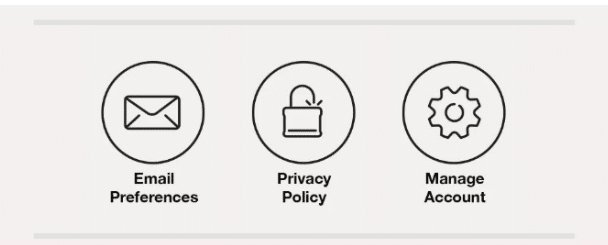
- Preference Center Link: Offering subscribers the ability to manage their email preferences (e.g., frequency, types of content) through a dedicated preference center link empowers them and often prevents full unsubscribes. Instead of opting out entirely, they can tailor their experience, leading to higher engagement and longer-term retention.
- Social Media Links: Including links to your brand’s social media profiles extends the conversation beyond the inbox, driving engagement across multiple platforms and building a more holistic online presence.
- Privacy Policy and Terms of Service Links: These links demonstrate transparency regarding data handling and business practices, further building trust and addressing potential subscriber concerns about privacy.
- Contact Information/Customer Support: Providing an email address or a link to a "Contact Us" page or customer support portal offers a direct channel for questions, feedback, or assistance, improving customer service and satisfaction.
- Referral/Share Options: A "Forward to a Friend" or "Share this Email" link can transform subscribers into brand advocates, leveraging their networks for organic reach.
- Company Logo and Branding Elements: Reinforcing the brand’s visual identity within the footer, as seen in many effective examples, creates a consistent and professional look across all communications.
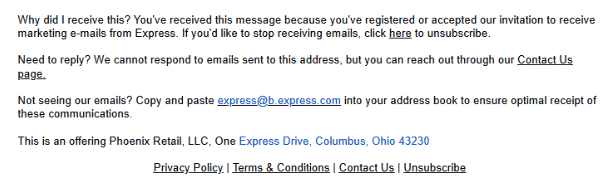
Consider the approach taken by companies like Omaha Steaks, which integrates large, accessible call-to-action (CTA)-type buttons for key links (like managing preferences or contacting support) just above their disclaimer information. This design choice prioritizes accessibility and user experience, making it effortless for subscribers to interact with these important options. Such an approach demonstrates a commitment to user-centric design, which is crucial given the prevalence of mobile email opens. Similarly, some brands proactively remind subscribers why they are receiving an email (e.g., "You are receiving this message because you registered or accepted our invitation to receive marketing messages"). This simple reminder significantly reduces the "I don’t remember signing up" type of spam complaints, which are a major contributor to damaged sender reputation.
Best Practices for Optimal Footer Performance
To maximize the footer’s effectiveness, marketers should adhere to several best practices:
- Keep it Clean and Concise: A cluttered footer with an overwhelming number of links and lengthy disclaimers is counterproductive. It becomes difficult to read, especially on mobile devices, and essential information can be lost. Prioritize the required elements, then judiciously add only a few high-value extras. The goal is clarity and navigability.
- Ensure Unsubscribe Visibility: Burying the unsubscribe link in tiny font, obscure colors, or hidden behind vague phrasing is a critical misstep. While the intent might be to reduce opt-outs, the reality is that it frustrates subscribers, often compelling them to mark the email as spam instead. Spam complaints are far more damaging to sender reputation and deliverability than a clean unsubscribe.
- Design for Mobile-First: With the majority of email opens occurring on smartphones, the footer must be optimized for mobile viewing. Text should remain legible without zooming, and clickable links should have ample spacing (often referred to as "touch targets") to prevent accidental taps. Responsive design principles are crucial here.
- Maintain Brand Consistency: The footer should align with the overall brand identity of the email and the company. Using consistent fonts, colors, and formatting across all campaigns reinforces brand recognition and builds trust over time. This consistency ensures a cohesive and professional brand experience.
- Rigorously Test All Links: Broken unsubscribe links, dead social media icons, or outdated contact pages are common yet entirely avoidable errors. Every link within the footer must be thoroughly tested before a send goes out, particularly after any template updates or system changes. A non-functional unsubscribe link is not just an inconvenience; it’s a compliance violation.
- Periodically Review and Update: The digital landscape is dynamic. Regulations evolve, business information changes, and social media platforms gain or lose relevance. An address that was accurate two years ago or a social channel your company no longer actively uses can quietly become a liability or a dead end. Marketers should schedule a comprehensive review of their email footer at least once a year, or whenever significant company changes occur, to ensure all information remains current and compliant.
Expert Perspectives and Industry Implications
Digital marketing strategists consistently emphasize that email deliverability and sender reputation are paramount in today’s crowded digital environment. According to a spokesperson for a leading digital marketing association, "The email footer is often the last impression an email leaves, and it can significantly impact how an ISP views your sending practices. A compliant, well-structured footer signals legitimacy, which directly contributes to higher inbox placement rates." Legal experts specializing in data privacy further underscore the escalating risks of non-compliance, noting that penalties for GDPR violations, for instance, can reach tens of millions of euros or a percentage of global annual turnover, highlighting the critical need for meticulous attention to every detail, including the footer.
The broader implication is that companies that proactively manage and optimize their email footers gain a competitive advantage. They not only mitigate legal and reputational risks but also cultivate stronger, more trusting relationships with their subscribers. This translates into better engagement metrics, improved conversion rates, and ultimately, a healthier return on investment for email marketing efforts. Tools like Validity Engage, which offer AI-powered email intelligence, are emerging to help marketers automate compliance checks and optimize various aspects of email performance, including footer elements, thereby reducing manual oversight and boosting efficiency.

The Bottom Line: A Small Section with Major Impact
In conclusion, the email footer, despite its often diminutive size, carries an outsized responsibility in the realm of digital communication. It is a critical legal safeguard, ensuring adherence to complex international regulations. It is a fundamental builder of subscriber trust, signaling transparency and professionalism. And it is a subtle yet potent extension of a brand’s identity, offering avenues for further engagement and support. Treating the footer with the same intentionality and strategic thought given to a subject line or a prominent call-to-action is not merely a best practice; it is an imperative for any business serious about maintaining compliance, fostering customer loyalty, and achieving sustainable success in email marketing. Neglecting this small section can, indeed, tank a sender’s reputation and undermine an entire campaign, proving that in email, sometimes the smallest details make the biggest difference.