Google’s search algorithms have undergone a profound transformation, moving far beyond the rudimentary keyword matching that once defined online visibility. What began as a simple system for indexing web documents based on keyword density has evolved into a sophisticated artificial intelligence capable of discerning search intent, contextual relevance, and, most critically, content quality. This paradigm shift renders outdated content strategies that prioritize keyword stuffing and superficial optimization ineffective, necessitating a comprehensive adoption of Google’s E-E-A-T framework: Experience, Expertise, Authoritativeness, and Trustworthiness.
The Evolution of Search: A Paradigm Shift
In its nascent stages, Google’s primary directive was to efficiently connect a user’s search query with relevant keywords embedded within web pages. This foundational mechanism gave birth to the early tenets of "keyword research and optimization," a methodology that, remarkably, many publishers still cling to as their primary ranking strategy. However, the internet landscape has matured, and with it, Google’s algorithms have advanced exponentially.
The journey towards semantic understanding and qualitative assessment has been lengthy and iterative. Key algorithmic updates over the years underscore this evolution. Early innovations like PageRank laid the groundwork for assessing link authority, but subsequent updates deepened Google’s comprehension. Hummingbird (2013) marked a significant leap, enabling Google to understand the meaning behind queries rather than just individual keywords, paving the way for more conversational search. RankBrain (2015) introduced machine learning to interpret ambiguous queries, further enhancing contextual understanding. More recently, BERT (2019) improved the processing of natural language, allowing Google to grasp the nuances of complex sentences, while MUM (Multitask Unified Model, 2021) aimed to tackle complex searches requiring information from multiple sources and formats. These advancements collectively demonstrate Google’s relentless pursuit of delivering the most helpful and reliable information to its users, shifting the focus from what is said to who is saying it and how trustworthy it is.
It was against this backdrop of increasing complexity and the proliferation of information – and misinformation – that Google began to formalize its definition of "quality." Recognizing that "quality" is inherently subjective and dependent on user needs, the company introduced the concept of E-A-T (Expertise, Authoritativeness, Trustworthiness) within its Search Quality Raters’ Guidelines. These extensive guidelines, first published years ago and regularly updated, serve as a manual for human raters, whose feedback is crucial in training Google’s AI algorithms. The addition of the second "E" for "Experience" in late 2022 further refined this framework, emphasizing firsthand engagement with a topic.
Understanding E-E-A-T: The Four Pillars of Trust
E-E-A-T stands for Experience, Expertise, Authoritativeness, and Trustworthiness – attributes Google now assesses for both the website itself and, crucially, the individual content creator. This distinction is vital, as a reputable website can host content from various authors, each needing to demonstrate their own E-E-A-T for specific topics.
- Experience: This refers to the extent of a creator’s direct, personal involvement with the subject matter. For instance, a product review written by someone who has actually used the product extensively demonstrates higher experience than one based purely on research. Similarly, a travel guide written by a resident of a city would inherently possess more experience than one compiled by someone who has never visited.
- Expertise: This denotes specialized knowledge or skill in a particular field. While formal qualifications are a strong indicator, practical experience and a deep understanding of the subject can also establish expertise. A seasoned mechanic writing about car repair or a professional chef sharing recipes exemplifies this pillar.
- Authoritativeness: This is about recognition and reputation within a given industry or field. It signifies that others, particularly other experts and reputable organizations, view the creator or website as a go-to source for reliable information on a specific topic. Citations, mentions, and endorsements from respected peers contribute to authoritativeness.
- Trustworthiness: This is arguably the most critical component, encompassing honesty, transparency, and accuracy. Trustworthy content is factual, unbiased, and provides clear, verifiable information. A website that handles user data securely, offers transparent editorial policies, and consistently delivers accurate content builds trustworthiness.
These four pillars are not static; they are context-dependent. A website might possess high E-E-A-T for medical advice but low E-E-A-T for fashion trends. Google’s human quality raters are trained to make these nuanced distinctions, providing data that continually refines the algorithms’ understanding of what constitutes quality for diverse search queries.
The Criticality of E-E-A-T: Safeguarding Information in YMYL Sectors
While E-E-A-T is important for all content, its significance skyrockets for "Your Money or Your Life" (YMYL) topics. These are subjects where inaccurate, misleading, or low-quality information could directly impact a user’s health, financial stability, safety, or well-being. Google’s stringent application of E-E-A-T in these areas is a direct measure to protect users from potential harm.
Examples of YMYL topics and their E-E-A-T demands include:
- Medical and Health Information: Content covering diagnoses, treatments, medications, or health conditions must exhibit exceptionally high E-E-A-T. Sources should typically be qualified medical professionals (doctors, nurses), recognized scientific institutions, or peer-reviewed journals. For example, an article on vaccine efficacy should cite official health organizations like the CDC or WHO, not personal blogs.
- Financial and Legal Advice: Information pertaining to investments, loans, taxes, insurance, or legal rights requires the expertise and authority of certified professionals (accountants, financial advisors, lawyers) or official government bodies. Providing financial guidance without proper credentials could lead to severe financial repercussions for users.
- News Reporting and Current Events: Articles covering politics, international events, scientific discoveries, or local news demand factual accuracy, journalistic integrity, and the expertise of seasoned reporters from reputable news organizations. Bias and unsubstantiated claims severely diminish E-E-A-T in this sector.
- Public Policy and Civic Information: Content related to voting procedures, legislation, government services, or public safety requires direct citation of official government websites and recognized public policy experts.
- Topics Related to Children: Any advice or information concerning children’s health, education, or development necessitates reliable, evidence-based sources, given the vulnerability of this demographic.
- Product Reviews: While less critical than medical advice, reviews, especially for high-value purchases, benefit from demonstrated experience. A reviewer who has personally tested a product, detailing methodology and comparing it with alternatives, will have higher E-E-A-T than one simply aggregating online opinions. Google explicitly notes that first-hand experience can outweigh a lack of widespread reputation for smaller sites, particularly in niche review contexts.
The emphasis on E-E-A-T for YMYL topics has been particularly highlighted by Google’s "Medic" update in 2018 and subsequent core algorithm updates, which disproportionately affected sites in these sensitive categories that lacked demonstrable E-E-A-T signals. This reinforces Google’s commitment to prioritizing user safety and trust above all else.
Strategic Adaptation: Crafting E-E-A-T Compliant Content
To succeed in the modern search landscape, content creators and marketers must fundamentally rethink their approach, moving away from "gaming" algorithms towards genuinely serving user needs.
1. Beyond Keywords: Embracing Topic Authority
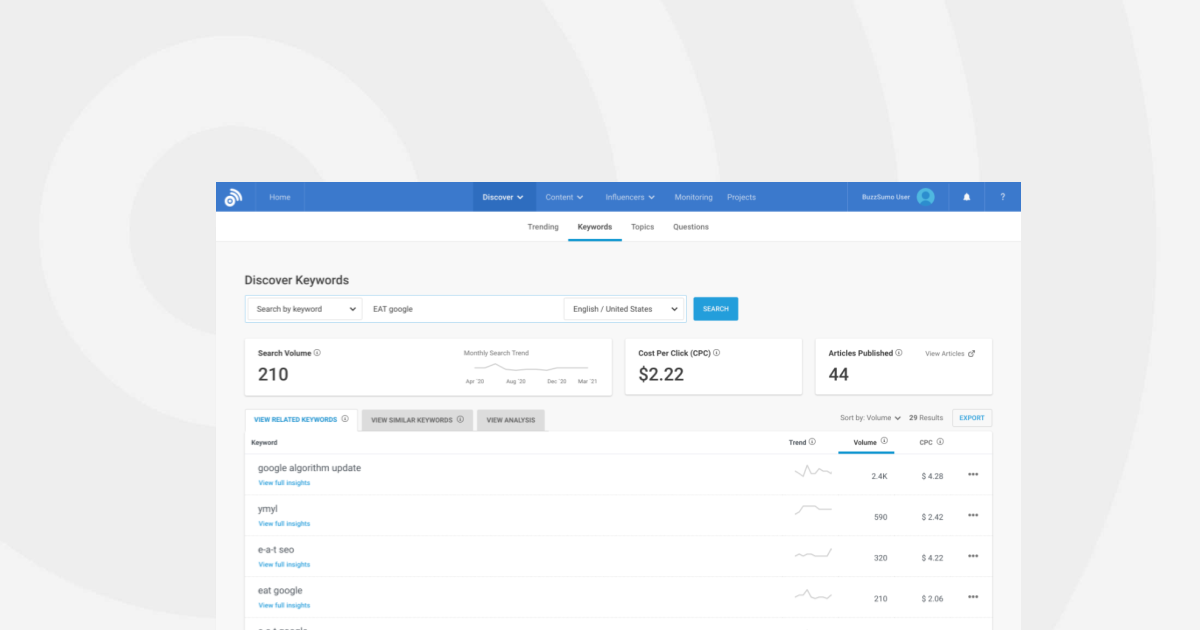
Google’s evolution to understanding topics and entities means that a scattergun approach to keywords is obsolete. Instead, content strategies should be built around topic clusters, where a comprehensive "pillar content" piece covers a broad subject, supported by several "cluster content" articles that delve into specific sub-topics. These cluster pieces link back to the pillar, establishing a clear semantic network and demonstrating deep coverage of a subject. Tools like BuzzSumo’s Topics Explorer can help identify prevalent and engaging sub-topics within a broader niche, guiding the creation of a coherent, authoritative content library. For example, a pillar piece on "Content Marketing Strategy" could be supported by cluster articles on "Blogging for SEO," "Video Marketing Trends," and "Email List Building."
2. Cultivating Credibility: Building Author and Brand Authority
Google actively seeks to identify the credibility of content creators and the organizations behind them. This isn’t merely a bonus; it’s increasingly a prerequisite for ranking, especially in YMYL fields.
- Author Profiles: Ensure authors have clear, detailed bios on your site, showcasing their qualifications, experience, and any relevant affiliations. Link these bios to social media profiles and other reputable publications where the author has contributed.
- Structured Data (Schema Markup): Implement Organization and Author schema markup to explicitly tell search engines about your brand and its contributors. This provides Google with structured information about who created the content and the entity it represents, aiding in the assessment of E-E-A-T.
- External Recognition: Actively seek opportunities for authors to be interviewed, featured on podcasts, or contribute to other authoritative publications. This external validation builds reputation and broadens the author’s recognized expertise. Monitoring established authorities in your niche can reveal opportunities for collaboration or industry trends to address.
- Consolidated Presence: Utilize platforms that centralize an author’s or brand’s various channels and contributions (e.g., a "link in bio" tool) to create a clear, verifiable digital footprint.
3. The Art of Engagement: Learning from High-Performing Content
Understanding what resonates with audiences is key to creating E-E-A-T-friendly content.
- Analyze Engagement: Tools like BuzzSumo’s Content Analyzer can reveal content that garners high social shares, comments, and other forms of engagement. This indicates what topics and formats capture audience interest.
- Examine Backlinks: Identify articles that attract numerous high-quality backlinks. These often signify valuable, authoritative content that others are willing to reference.
- Study Evergreen Content: Content that consistently performs well over time ("evergreen visibility") offers insights into timeless topics and durable content structures.
- Review SERP Rankings: Observe the top-ranking content for your target keywords. This provides direct insight into what Google currently deems high-quality and relevant for specific queries, guiding your own content creation to meet or exceed those standards.
4. Content Depth and User Satisfaction
Google specifies the need for a "satisfying amount" of content, which is highly subjective to the search intent. For a quick factual answer, a concise snippet might be sufficient. However, for complex topics or comprehensive guides, users expect thoroughness.
- Intent-Driven Length: Assess the intent behind a search query. A user searching for "how to fix a leaky faucet" might need a detailed, step-by-step guide (longer content), while a search for "capital of France" requires a brief, factual answer.
- Competitor Analysis: Analyze the length and depth of top-ranking content for similar queries. Tools can help benchmark average content length for high-performing articles in your niche, providing a data-driven target for comprehensiveness. For instance, an analysis might reveal that "Social Media Marketing" guides perform best between 3,000 and 10,000 words, signaling a need for extensive coverage.
5. The Power of Network: Relationships and Referrals
While links remain important, Google’s advanced algorithms can semantically understand brand and author associations even without direct hyperlinks.
- Build Authentic Relationships: Engage with influential journalists, industry experts, and credible publishers in your niche. Use media databases to identify these key figures, understand their interests, and genuinely connect with them. Offer exclusive insights, collaborate on research, or provide valuable resources without immediately asking for links.
- Earned Mentions: When authoritative voices regularly mention or reference your brand, authors, or content – even without linking – it signals to Google that your entity is recognized and valued within the industry, boosting your perceived E-E-A-T. This "dark social" influence is increasingly factored into Google’s understanding of reputation.
6. Verifiable Information: The Cornerstone of Trust
Citing credible sources is non-negotiable for E-E-A-T, particularly in YMYL categories.
- Diverse and Authoritative Sources: Include a variety of sources, prioritizing official government bodies (.gov), academic institutions (.edu), reputable research organizations, and well-established news outlets.
- Direct Evidence: When making factual claims or providing data, link directly to the primary source. For example, when discussing health statistics, link to the official report from a health authority.
- Transparency: Be transparent about your data collection methods, research processes, and any potential biases. This builds trust with both users and search engines.
- Utilize Advanced Search: For critical topics, use Google’s advanced search operators (e.g.,
site:gov vaccine efficacy) to ensure you are referencing official, highly trustworthy information.
Implications for Publishers and Marketers
The shift towards E-E-A-T represents a maturation of search engine optimization. It moves SEO beyond technical tricks and keyword manipulation into the realm of genuine content marketing, brand building, and reputation management. For publishers, this means investing in expert writers, rigorous editorial processes, and transparent attribution. For marketers, it implies a more holistic strategy that integrates public relations, thought leadership, and deep audience understanding.
The long-term benefits of embracing E-E-A-T are substantial: sustainable organic rankings, enhanced brand reputation, increased user trust, and ultimately, higher conversion rates. While challenging, particularly for smaller organizations seeking to establish authority, the principles of E-E-A-T align perfectly with creating truly valuable content that serves a genuine need. As Google’s AI continues to advance, understanding content with near-human precision, the imperative for content creators is clear: focus on delivering authentic experience, undeniable expertise, recognized authoritativeness, and unwavering trustworthiness to your audience. The future of search belongs to those who prioritize quality and user satisfaction above all else.